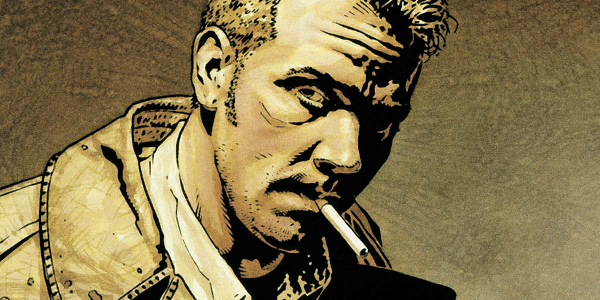
10 Most Controversial Banned Comics

Comics so shocking, you weren't allowed to see them.

Ec Banned The Comic Book Legal Defense Fund are an organisation which, among over things, campaigns against the banning of comic books on the grounds of sexual content, bad language or violence. Every day, books - including comics - are taken out of circulation in schools, libraries or shops for myriad reasons, by campaigners or even publishers themselves. Sometimes those reasons make a kind of sense, sometimes they're fuelled by fear or intolerance. Sometimes it's because somebody decided to take a pot shot at their old boss who was a "nasty S.O.B." and that's super libellous. Whilst the CBLDF do a lot of good work, they can't un-ban everything. Especially not in the cases where publishers are indulging in self-censorship, or where the bans happen outside of the US, or when they happened before the organisation even existed. Comic books have been banned, censored, recalled and pulped for all sorts of reasons, on all sorts of peoples' authority. It can be as simple as a misprint that needs correcting or as drastic as a politically controversial storyline that could land the company in hot water. Or it can just be because of boobs. Here are ten comic books that banned for all those reasons, and more!

10. Ultraman, The Ultra Power: Ultra Controversial

You might not know Ultraman, but in Japan he's kind of a big deal. In that he's 40 metres tall, sure, but also because he's phenomenally popular, appearing in endless TV shows, movies, videogames and comic books. That popularity has, naturally, spilled over to some of Japan's neighbouring nations, including Malaysia to the east. Unfortunately, it looks like the towering hero might not be so hot in Kuala Lumpur for much longer, having had an issue of his comic banned in the country earlier this year. The reason? "Irresponsible use of the word Allah", according to the Malaysian high authority's verdict. An edition of Ultraman, The Ultra Power fell foul of the state's censorship board for use of the word, saying it "undermine public security and societal morals". In 2013 a court ruled that banned non-Muslims from using the word Allah, despite the literal translation - "God" - being used by scores of Malaysian Catholics, as it was in the comic. Because Ultraman is idolised by so many, the ministry continued, invoking Allah in his comic might confuse young Muslim readers. The Catholic church is currently trying to challenge the court ruling, but this particular Ultraman comic remains banned in the country.

9. Elektra Gets Her Kit Off In Vol.2 #3

Elektra3revisedpanels Sometimes things go wrong in comics publishing. Art gets mis-coloured, old versions of scripts are used for the lettering, or Gene Simmons insists on pouring his blood in the ink. Usually publishers expect readers, if they pick up on the error, to cheerfully skip over it they do countless inconsistencies and continuity errors that pop up in the natural course of a comic book (and if they don't they'll receive a No-Prize). Sometimes, though, things go so wrong in comics publishing that entire print runs of issues have to be recalled and destroyed. Which is what happened when Marvel accidentally put out a comic where Elektra was butt-naked. Well, not properly naked, since her unmentionables were concealed by some handy shadows in the controversial four panels. And despite the warning of "MATURE/VIOLENT CONTENT" in big letters on the cover of Elektra vol 2 #3, Marvel figured that was a bit too mature and had all the copies returned, replacing them with a revised version where Elektra put some pants on. Copies of the issue regularly appear on eBay, for people who don't know how DeviantArt works.

8. Universe X Spidey #1: Slander Is Spoken, In Print It's Libel
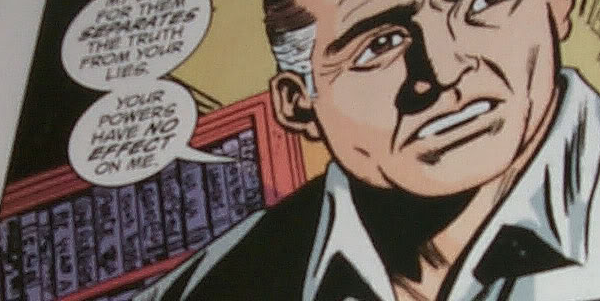
You may just about be able to make out the reason the first issue of this Universe X (one of those dystopian future alternate universe deals) spin-off was immediately recalled and pulped by Marvel. Then again, you might not, since it's been pretty well hidden by inker Al Milgrom. Still, not hidden well enough, since Milgrom was fired for his sneaking of a potentially libellous message into the background of a fairly prosaic "everything sucks for Spidey in the future, same as it ever was" tale. Bob Harras wasn't the most popular editor-in-chief Marvel ever had. Besides overseeing crummy storylines line the Clone Saga and making comics even more impenetrable to new readers than they already were, Harras treated his staff like crap too. So, when he was ousted in 2000, Al Milgrom celebrated with the message he hid on the spines of books in the back of that Universe X Spidey panel: "HARRAS HA HA, HE'S GONE, GOOD RIDDANCE TO BAD RUBBISH HE WAS A NASTY S.O.B." Having noticed the little farewell note and panicking over Harras' less-than-charitable nature, the comic was recalled and an edited version published. Milgrom was fired and quietly rehired a few weeks later. The original printing goes for a pretty penny these days.

7. Cookin' Babies With Elseworlds 80-Page Giant
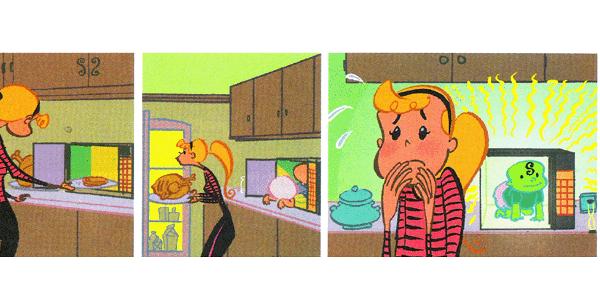
Speaking of a pretty penny, Elseworlds 80-Page Giant would've secured you a decent college fund a few years ago. An anthology of out-of-continuity stories starring DC heroes - including a Lovecraftian Batman yarn where Bruce Wayne faces cthulhu and "Rockumentary", where Lex Luthor becomes the world's most powerful record executive - you can understand why one short in particular got editors in a tizzy. Because it involved a baby in a microwave. Riffing on the popular urban legend, Kyle Baker and Elizabeth Glass's "Letitia Lerner, Superman's Babysitter" saw the ditzy Lerner make the classic blunder of leaving the microwave door open so her toddling charge can climb on in and get zapped by an unhealthy dose of radiation. Luckily for her, the Kryptonian kid can deal with a few minutes on "defrost". Regardless of context, DC didn't think it was a good idea to show a baby getting cooked in an all-ages book, and recalled the title. Since then the Eisner award-winning story has been collected in the mature-readers Bizarro Comics collection.

6. Halle The Hooters Girl #1, Breaking The (Copyright) Law

A lot of comic books are banned because they're perceived to be in some way in bad taste. So you could be forgiven for assuming that was the case with Halle The Hooters Girl, a title that chronicled the adventures of a waitress from the less-than-progressive fried chicken restaurant. But if you did that, you'd be making as ass out of u and ming, since the real reason Halle's adventures were cut off with the first issue are a lot more banal. Although specially produced - with a print run of just 2000 - for a national tour of swimsuit and calendar models who were the basis for the comic, it turns out that publishers Cabbage Comics hadn't bothered to get Hooters' okay with using their copyrighted name and logo for Halle's name, uniform, story, title...basically anything. Not a lot of thinking went into this comic in general. A lawsuit from Hooters saw the title banned, although perhaps don;t bother the Comic Book Legal Defense Fund with it. Because it's naff.

5. Saga #12 And The Mystery Of The Apple Store
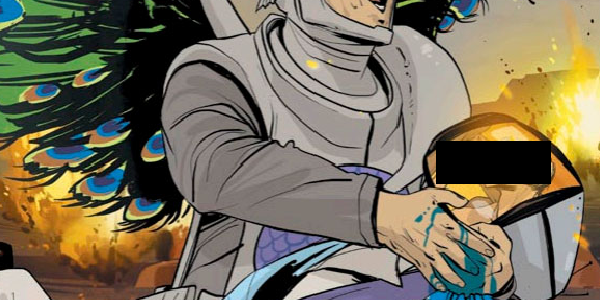
Brian K Vaughan and Fiona Staple's Saga is a brilliant comic book for adults. "For adults" both because it deals with mature themes of family, war and the power of stories. Also because it has some fairly frank depictions of both sex and violence. It's the former that caused trouble when the twelfth issue of the series was published as a digital title; or rather, when it wasn't published. Where previous issues of Saga had seen multiple graphic depictions of heterosexual sex, it was #12 - which included two very brief, very small drawings of sex between two men (displayed on the screen of a robot race that has TVs for heads, long story) - that was missing from Apple's app store on release. Conspiracy theories abounded: Apple had banned the comic! True, the company does have some weirdly strict content rules, even when titles can be put behind age barriers to make sure kids under the age of 18 can access grown-up stuff. But it had allowed straight sex to appear in the comic before? So Apple must be homophobic! It turned out to not involve Apple at all, really. Actually, it was the fault of Comixology, the digital comics app in question. They hadn't bothered to submit it to Apple, based on their reading of the company's content guidelines. And not bothered to explain that to anyone, even Vaughan and Staples themselves. It was a bizarre act of self-censorship that might not bode well for the future of digital comics (but could bode very well for future articles on the topic of banned comics).

4. Tomorrow Stories #8 Upsets Tom Cruise
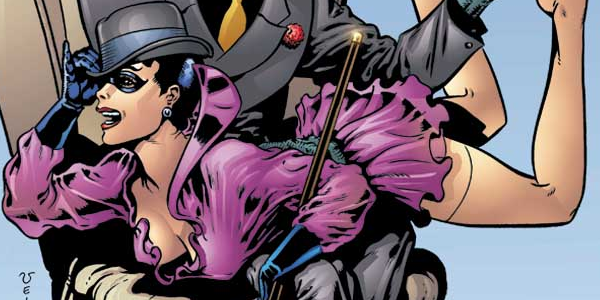
Not Tom Cruise directly, per se, but the reason DC blocked the publication of a particular story in Alan Moore's Tomorrow Stories series was a sort of pre-emptive attempt not to annoy the Church of Scientology. They do so love their lawsuits, the Scientologists, as everyone from South Park to 4chan have discovered. So you can see the publishers feared similar legal action when Moore penned a story linking the Church's enigmatic founder/sci-fi novelist L Ron Hubbard to Satanist John Whiteside Parsons. Just one of the many, many reasons grumpy old man Moore refuses to work with big comic publishers any more (any Moore?), his reaction to DC's shelving of the story in Tomorrow Stories #8 was to withdraw his approval for a 15th anniversary reissue of his and Dave Gibbon's classic Watchmen. The publishers did not relent, however, and the story remained unpublished until Top Shelf Asks The Big Questions was released four years later. In the anthology, the character of Cobweb had her name changed to "La Toile" and was re-drawn by artist Melinda Gebbie to have a different costume for copyright reasons. Otherwise, the story remained the same as when DC banned it. So far, Top Shelf has yet to be sued by the Church of Scientology. Although, er, sorry if this reminds them.

3. Air Pirates Funnies #1 and #2 Not So Funny To Disney
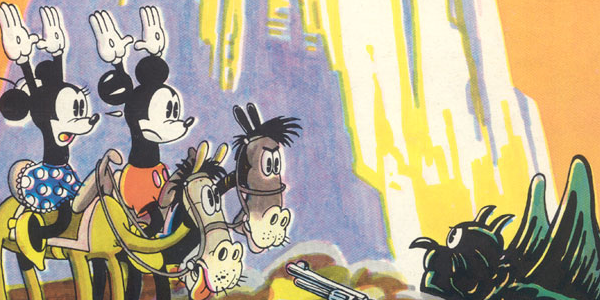
The seventies saw a revolution in comic books, although it was mostly constrained to the underground. Artists like Robert Crumb and Art Spiegelman were experimenting with new ways to take the form, and countless other hippy types were drawing stories about sex, race, and psychedelics. Perhaps the most infamous out of said hippy types were the Air Pirates collective, who not only made comics about sex and drugs, but decided it'd be fun to have Mickey Mouse indulging in them. You know who thought it was less fun? Disney. In a landmark case, Disney took the Air Pirates to court over the contents of Air Pirates Funnies #1 and #2 which featured, amongst other things, Pluto as the king of the underworld and Mickey Mouse begging Minnie to sleep with him. Pirates figurehead Dan O'Neill actually smuggled a copy of issue one into a Disney board meeting, hoping for some controversy. The House of Mouse filed a lawsuit for copyright infringement, trademark infringement and unfair competition against, with the pirates arguing their parodies fell under fair use rules. Obviously the huge international film company beat the hippies. Despite a restraining order that was supposed to prevent him from doing so, O'Neill kept drawing Disney parodies, which were each immediately confiscated, as were the two issues of Air Pirates Funnies. The group had to pay thousands in damages and the comics remain banned to this day.

2. Hellblazer Tackles Columbine

Although recently resurrected as a one-shot graphic novel, Warren Ellis and Phil Jimenez's "Shoot" - a story originally due to appear in Hellblazer #141 - was so controversial at the time of writing it was banned from publication for over a decade. Bearing in mind this was a Vertigo title, DC's mature readers line, and Hellblazer had previously featured as much blood, guts, cursing and nudity as a Tarantino film, what did it feature that was so egregious? A school shooting. Not only that, but a story about a school shooting that was due to come out just weeks after the Columbine massacre. Ellis actually wrote the story months prior to Columbine, as comics usually are produced way in advance. He was reacting to the spate of school shootings the US had already faced throughout the nineties, with John Constantine tangling with both the literal and figurative cultural demons that inspire such atrocities. When the commentary got a little too timely, DC asked Ellis to revise his script. He refused, the issue was binned, and Ellis left the book entirely. The story, with unfinished art, leaked to the internet in the way these things do, but it wasn't until 2010's Vertigo Resurrected one-shot that it was finally published in full, along with previously unreleased stories by Grant Morrison and Brian Azzarello.

1. Everything EC Comics post-1954

Fredric Wertham, MD is responsible for everything bad about comics. Well, not quite, but he certainly tried his best to ruin them with his 1954 bestseller Seduction of the Innocent, a poorly-researched piece of cod-psychology that suggested comic books were going to turn children into murderous, sex-crazed deviants because Batman and Robin are pals and horror comics had zombies in. Despite it being utter nonsense - not that that's stopped people before - the book caught on to such a degree that it inspired a hearing in the senate. As a reaction to all the controversy, comics publishers voluntarily put together the Comics Code Authority, which essentially banned anything good from happening in comic books and forced publishers EC out of business. The Code had many bonkers rules that comics had to be careful not to break, lest they be denied a CCA stamp of approval, which would mean nobody would want to sell the title. Amongst some directly inspired by Seduction of the Innocent - criminal behaviour must not be celebrated, and homosexuality was never to be depicted - were some equally unexplainable criteria, such as not using the word "zombie" or "wolfman", and a strange stance on race. It was these last two especially that sunk EC Comics. Really, how could a publisher that dealt in horror comics survive when it couldn't refer to or even depict zombies, vampires, werewolves, or even feature the words "horror" or "terror" in the titles of its comics? The final nail in the coffin for EC was when they chose to republish "Judgement Day", a pre-Code story about racial prejudice that the CCA wouldn't pass because the main character was black. That was in 1956, and EC never published a horror comic again. The Comics Code, meanwhile, managed to hold out until 2010 before becoming extinct.

 
Posted On: 
Contributor
Contributor

Tom Baker is the Comics Editor at WhatCulture! He's heard all the Doctor Who jokes, but not many about Randall and Hopkirk. He also blogs at http://communibearsilostate.wordpress.com/