10 Most Controversial Marvel Retcons Of All Time

And it was all just a dream...

Continuity will always be a problem for comics; serial fiction will always struggle to progress under the weight of its history. And with characters as old as Spider-Man or the X-Men, Marvel Comics is no exception to the rule. So what do writers do when it feels like their character is collapsing under the weight of 50 years worth of back-stories? They bust out a retcon. Often used to rewrite or explain away a key plot point in a character€™s history, retcons (short for retroactive continuity) can be an extremely tool for a writer whose working on a character that has been around since the dawn of time. However, because the Marvel Universe is already a wacky place where the boundaries of life and death, fiction and reality are blurred, some of Marvel€™s most famous retcons have left many a fan€ shall we say upset? Maybe irate might be a better adjective. Nevertheless, some of Marvel€™s most infamous retcons have paved the way for some of the best and most exciting stories in their cannon. Out of Marvel€™s 76 years of publications, here€™s a list of Marvel retcons €“ some better than others €“ that people are still talking about and arguing over to this day. This article does contain spoilers, so proceeded with caution.


10. Original Sin

Although it€™s the newest retcon on this list, the impact Original Sin had on several characters€™ back-stories and roles in the Marvel Universe has been tremendous. Pitched as the big Marvel summer event of 2014, Original Sin, penned by Jason Aaron with Mike Deodato on art, received mixed reviews, many of which were luke-warm. The story revolves around the murder of The Watcher, Unta, as the heroes of the Marvel Universe try to uncover the identity of Unta€™s killer. As the story unfolds, we learn the secret origin of the original (white) Nick Fury who was recruited by Howard Stark back in the 1950€™s to act as a global mercenary of sorts. Secretly along side his work for the US Army and later S.H.I.E.L.D, Fury would gallivant across the universe, brutally assassinating threats to planet Earth. The Marvel Heroes discover that Fury was the one who killed the Watcher in an attempt to gain information about future threats to planet Earth. One of the major complaints about this story is that it retconed Nick Fury€™s character, making him look somewhat like a villain. It also unleashed a whole onslaught of retcons, as multiple tie-ins focused on the various €œoriginal sins€ of different Marvel characters. Some of these retcons paved the way for interesting stories, such as Thor loosing his ability to wield Mjolnir. Other changes, like Nick Fury€™s back-story, were flops. Nevertheless, in years to come this will undoubtedly be considered one of the most polarising stories in the Marvel canon.

9. Tony Stark: The Iron Teenager

Don€™t you look back on 90€™s comics fondly? 90€™s Marvel produced all the gratuitous violence and Rob Liefield art a testosterone-filled teenager could possibly want (sorry ladies €“ 90€™s comics were far from female friendly)! In fact if Marvel Comics were a person, the 90€™s would be their teenage years; in fact, they were the teenage years for one Mr Tony Stark. That€™s right, during the 90€™s Marvel retconed Tony into puberty in an attempt to make the character hip and fresh. Marvel retconed Tony€™s origin, revealing that he had been under the influence of Immortus all along. It was also revealed that Tony Stark had been committing horrible evil deeds throughout his life, including murder. Naturally, the rest of the Avengers decided it was a good idea to use the time machine in the basement of Avengers Tower to go back in time and grab a younger version of Tony in order to help them defeat this evil Iron Man. The kid ends up replacing the evil Iron Man for a while until he was killed during the Onslaught storyline (more on Onslaught later) and was eventually retconed out of existence during the Heroes Reborn reboot. This is another example of how Marvel crapped all over one of their flagship character just for the sake of telling what could have been a decent €œWhat If€ story. And while many readers have both intentionally and unintentionally forgotten teenage Tony, some are still bitter about how Marvel maligned the character of Tony Stark.

8. Spider-Man: Spider-God

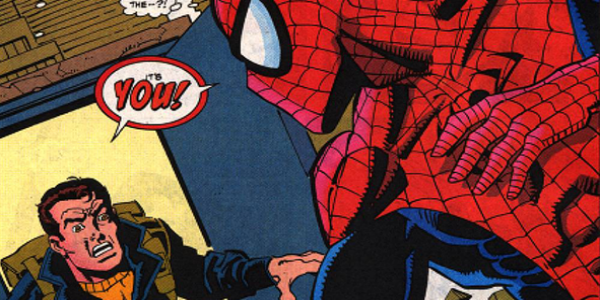
Spider-Man has always been a character rooted in science fiction. Everyone (literally everyone) knows Spider-Man€™s origin: Peter Parker was bitten by a radioactive spider that gave him the proportional strength of a spider, the ability to climb walls, and the capacity to sense threats in advance. Next to maybe Batman, Spider-Man has the most iconic origin story of all time, but apparently Marvel thought it would be a good idea to change it. When J. Michael Straczynski got a hold of the character, he decided (most likely due to pressure from the Marvel big-wigs) to tweak Spider-Man€™s power so that he could produce organic webbing just like the Toby Maguire€™s cinematic incarnation of the character. No longer was Spider-Man€™s origin rooted in science fiction; rather, Straczynski wrote an elaborate retcon that where a Spider-god set into motion the events that led to Peter€™s transformation into Spider-Man. Turns out Peter was chosen to be the Avatar of this Spider-god. At one point in this story, Peter is mortally wounded, ends up cocooning himself in order to heal, and emerges with a new power set derived from his Avatar status. Amongst his many new powers, which included night vision and the ability to speak arthropod, Peter gained the ability to produce his own web. Needless to say, fans were not particularly pleased with Straczynski tampering with a 70-year-old back-story. And while some of these powers were interesting for a while, they eventually disappeared after the much-loved One More Day storyline (more on that later).

7. Xorn-neto

Back in 2001 Marvel hired comic book heavy weight Grant Morrison to reinvent the X-Men. Among the many new ideas Morrison brought to the table €“ which included new costumes, secondary mutations, and a distinct Mutant subculture €“ he also introduced a handful of new mutant characters, Xorn being the most controversial of the lot. Originally, Xorn was a Chinese Mutant who was forced to wear a skull mask and had been imprisoned for many years. He eventually became a teacher at the Xavier school who spent time mentoring the institution€™s more troubled students. During the conclusion of Morrison monumental run, it was revealed that Xorn was actually Magneto (who had presumed dead after the destruction of Genosha), and after a giant battle between him and the X-Men, he died symbolizing the end of a Mutant era. After Morrison left the book, the Marvel big-wigs decided that they wanted to bring back Magneto, so they hired Chuck Austen to retcon both Xorn and Magneto into existence. Apparently, Xorn was a distinct person who was under the influence of someone else. And just to make things more complicated, Marvel introduced a second version of Xorn who was a twin to the original. Needless to say, these retcons cripples the end of Morrison€™s run, and frankly, only confuses the matter of Xorn€™s true identity. However, what makes this retcon even more controversial is Morrison€™s vocal disapproval of Marvel€™s decision. In fact, Morrison took the change as a personal offence and refuses to write for Marvel to this day.

6. Gwen Stacy Got It On With Norman Osborn
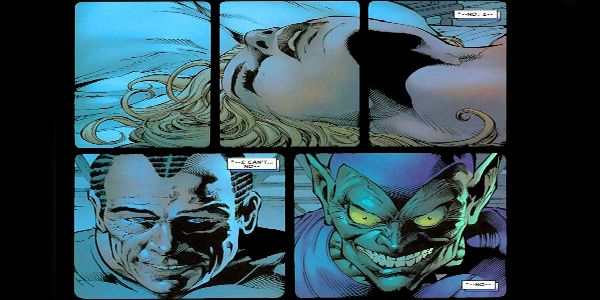
Amongst Spider-Man fans, Gwen Stacy is/was often considered to be a Saint: many of these individuals would have the Catholic Church canonize Gwen Stacy in a heart beat. To this very day, Gwen€™s death at the hands of the Green Goblin is one of the most poignant and heart-wrenching moments within the Spider-Man cannon. And then J. Michael Straczynski came along and crapped all over it. Originally, Straczynski€™s plan was for Peter to have unknowingly fathered two children Gwen; however, yet again the Marvel big-wigs stepped in and decided that having two grown children would €œage€ Spider-Man too much. So Straczynski cooks up the idea that Norman Osborn fathered the kids, kept them locked away, and secretly trained them to kill Spider-Man. Yes, this is for real: the young and saintly Gwen Stacy did the horizontal tango with the creepily old and psychotic Norman Osborn. God bless comic books. It would be an understatement to say that this retcon was a flop, as fans were outraged by the defilement of one of Marvel€™s most beloved female characters. This story not destroyed the Peter and Gwen€™s relationship it also maligned her character. Gwen Stacy€™s death went from a tragedy to someone getting her just-deserts. It was absolutely horrible. This retcon received such a poor reception among fans that the affair was never mentioned again; however, it technically still remains as a part of the Spider-Man cannon.

5. Jonny Storm Marries A Skrull

Alicia Masters was originally introduced in Fantastic Four #8 (1962) as the stepdaughter of the villain, Puppet Master. After the Fantastic Four rescue her from the influence of her stepfather, Alica became a reoccurring character in the series as a love interest for The Thing. After the 1985 Secret Wars event where various Marvel Superheroes where swept away to an alien planet, The Thing decided to remain on this planet where he could change back to his human form. Alica then becomes a major love interest for Jonny Storm, the Human Torch, and two years later in Fantastic Four #300 (1987), Jonny and Alicia end up getting married. Fast-forward four years later, and it turns out that the marriage was a sham. A shape-shifting alien by the name of Lyja had been sent to Earth by the Skrull Empire in infiltrate the Fantastic Four; Lyja had been impersonating Alica since Fantastic Four #265 (1984), before The Thing left for Secret Wars. Once Lyja is outed as a Skrull by The Thing and The Puppet Master, she aids the Fantastic Four in rescuing Alicia who was still in Skrull captivity. From then on, Lyja and Jonny have had an on-again off-again relationship. Like many retcons throughout comic book history, this is another example of companies wanting to undo marriages. It seems that both Marvel and DC enjoy undermining matrimony, as they frequently write away long-standing comic book romances.

4. Spider-Man: Who€™s The Clone?

In response to DC record breaking sales numbers with The Death Of Superman and Batman: Knightfall, Marvel big-wigs pressured their creators to come up with a blockbuster Spider-Man event, thus The Clone Saga was born. The premise of the story derived from an earlier 1970€™s Spider-Man story where the Jackal, Peter€™s biology professor named Miles Warren, cloned both Peter and Gwen. By doing so, the Jackle discovered that Peter was also Spider-Man and therefore created a Spider-Man clone. Both versions of the Spider-Man think that he is the original. One of them dies in an explosion, and the other continues on living life as Peter Parker. Fast-forward to the 90€™s for the second Clone Saga, and Spider-Man€™s clone reappears. The writer€™s retconed the first Clone Saga to where the clone survived his battle Spider-Man and continued living under the name Ben Reilly. Medical tests proved that Peter was actually the clone, and Ben was the original Spider-Man. Peter goes into retirement, and Ben takes up the Spider-Man mantel. Originally, this is where the story was supposed to end; however, due to it€™s popularity at the time, Marvel put pressure on the writers to drag the story out for as long as they could. This led to various changes in direction and major revisions from the original premise. After two long years and various convoluted rewrites, Peter was back in the suit, and Ben took up the title the Scarlet Spider. In short, the whole thing was a convoluted mess.

3. Jean Grey: Dead or Alive?

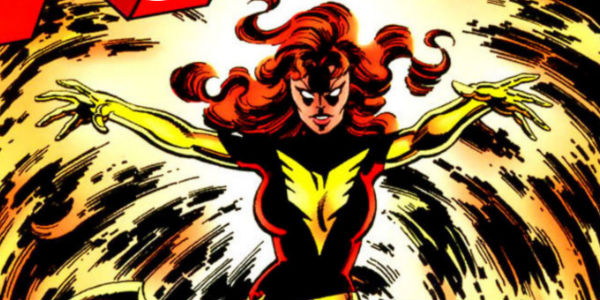
Originally, Jean Grey was one of the weakest members of the X-Men, which was eventually remedied by Chris Claremont in what was retroactively dubbed The Phoenix Saga. During this tale, Jean was exposed large amounts of cosmic radiation while rescuing her teammates as they were falling from space to Earth. Upon landing in the ocean, Jean emerged from the water wearing a new costume and began referring to herself as the Phoenix. This transformation made Jean one of the most powerful characters in the entire Marvel Universe. Eventually, this power corrupted Jean and drover her insane after the villainous Hellfire Club attempted to mind control her. She thus became the Dark Phoenix, a force of pure destruction responsible for the demise of an entire solar system. Upon gaining a moment of clarity, Jean committed suicide in order to protect the universe. Six years after Jean died, the events of the Dark Phoenix Saga were retconed. Turns out that the Phoenix is a cosmic entity known as the Phoenix Force took on Jeans form and saved her life. Jean was then found alive, cocooned at the bottom of the ocean. While these days it seems that comic book characters die and resurrect on a weekly basis, there was once upon a time, death actually meant something in comics. When Chris Claremont killed off Jean Grey in the Dark Phoenix Saga, it was a monumental moment comic book history as a whole €“ one that inadvertently opened the floodgates for both Marvel and DC to kill and resurrect dozens of their characters.

2. Spider-Man€™s One More Day

As mentioned previously, J. Michael Straczynski€™s Spider-Man run has a fair number of dubious retcons; however, the none of them hold a candle to Spider-Man: One More Day. By the end of Straczynski€™s run on Spider-Man, he had pretty much written the character into a corner. This was just after Peter had revealed his identity to the entire world during Civil War, and Marvel had no clue where to go next with the character. Straczynski was leaving the title, so Joe Quesada, Marvel€™s editor-in-chief, devised a retcon that would revamp and preserve Spider-Man€™s longevity. One More Day focuses on the fallout of Peter having been outed as Spider-Man. The King-Pin put a hit on Peter; however, the sniper accidently hit Aunt May. Peter spends four issues gallivanting around the Marvel Universe looking for a way to save Aunt May€™s life. He ends up making a deal with Maphisto the demon and trades his marriage with Mary Jane for Aunt May€™s life. Oh! And everyone magically forgot that Peter Parker was Spider-Man. Now, if you were forced to choose between the death of your decrepit old Aunt or loosing any memory of your marriage with your smoking hot wife, which would you choose? Despite this decision not making a lick of sense, the ramifications of this retcon were far reaching as it clumsily changed 20 years of Spider-Man storytelling. In fact the Straczynski thought the story was so bad that he almost took his name off the last two issues.

1. Heroes Reborn... Twice!

Way before DC rebooted their universe with The New 52, Marvel tried the same tactic with their universe called Heroes Reborn. During the 90€™s Marvel decided that they wanted to update their characters€™ origins for modern audiences, so they devised a way to fix their heroes with a reboot. Heroes Reborn was a follow up from Onslaught: The Marvel Universe, where the Avengers and the Fantastic Four were €œkilled€ during a battle with the villain Onslaught, a character born from the merging of Magneto and Xavier€™s consciousnesses (don€™t ask). Turns out that Mr Fantastic€™s nearly omnipotent son, Franklin Richards, created a pocket universe where he transported both the X-Men and the Avengers. Each of these characters was given a new, updated back-story, and none of them remember their former lives. During this time, Marvel farmed out these properties to Jim Lee€™s Wildstorm Productions (who took on the Fantastic Four and Iron Man) and Rob Liefeld€™s Extreme Studios (who took on the Avengers and Captain America). After poor sales numbers though, Marvel decided to cancel their contract with Extreme Studios. They then tried to consolidate each of these franchises under Wildstorm Productions, but the negotiations failed. Eventually, this led to Heroes Reborn: The Return, where Franklin Richards re-established all of these wayward characters back into the Marvel Universe proper. Marvel retconed away everything that happened over the two-year period where these characters were in the alternate dimension. Marvel tried to streamline their continuity, but in the end, the fans voted no with their wallets.

In this post: 
Magneto
 
Posted On: 
Contributor
Contributor

Since childhood, Bryant has been an avid fan of superheroes, and he has been reading comic books since 2006. His full name is "George Bryant Lucas"; however, after enduring countless Darth Vader jokes, he has chosen to go by his middle name. Born and raised in the United States, Bryant is currently living with his lovely wife in the country side of Wiltshire County, UK. Bryant does suffer from a mild case of dyslexia; misspellings and homonyms are to be expected on occasion.