10 Reasons We Still Love Marvel's Secret Wars 30 Years Later

Raise a glass and toast Secret Wars, still one of the best, 30 years later.
Marvel€™s 12-part miniseries Secret Wars debuted 30 years ago, forever changing the comic book industry by ushering in the era of €œevent€ comics. Written by former Marvel editor-in-chief Jim Shooter, with artwork from Mike Zeck and Bob Layton, Secret Wars starred nearly every major superhero and villain the Marvel Universe. These iconic characters are teleported to the fictional planet Battleworld by the cosmic entity known as the Beyonder who gives them simple instructions: €œslay your enemies and all that you desire shall be yours!€ While the series is essentially one massive, 12-issue fight between good and evil (and the X-Men, who form their own sub-group), Secret Wars is considered a landmark achievement which warrants its celebration 30 years later. A number of new characters are introduced or repackaged in the series, such as the second Spider-Woman Julia Carpenter, the villainess Volcana, and the alien symbiote that becomes Spider-Man€™s black costume and later the supervillain Venom. Plus the comic functioned as a model for future crossover events by both Marvel and DC. Those who grew up in the 1980s and are still reading comics today likely credit Secret Wars for the foundation of their fandom. The story is fun, the action is non-stop and the artwork is stellar €“ the perfect combination to hook new readers into the wild, sometimes wacky world of comics. So raise a glass and toast Secret Wars while this list looks back on all the reasons this series is still one of the best, 30 years later.

10. The Unique Way it Connects to the Mainstream Marvel Universe
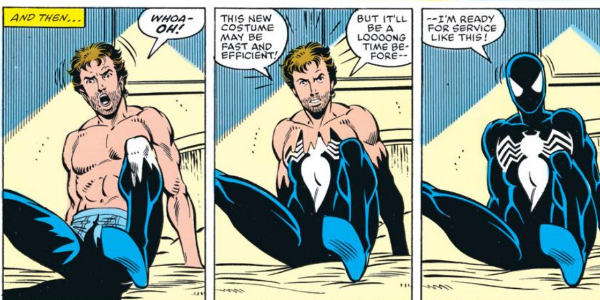
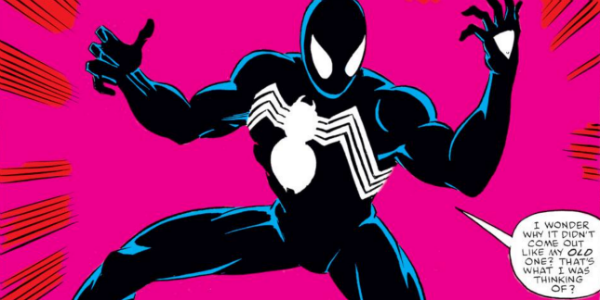
When Secret Wars was first being developed, Marvel editor-in-chief and series writer Jim Shooter said the publisher settled on the title because Mattel, the company that produced the comic€™s action figure line, believed kids responded well to the words €œsecret€ and €œwar.€ Still, proving the series was more than just another €œtoy book,€ Shooter and Marvel came up with some other unique ways to play up the €œsecret€ elements in a way that would also be consequential to all of their flagship comic book titles. For example, in early 1984, Spider-Man just appeared in Amazing Spider-Man #252 wearing a new black costume. There was no explanation other than this was something he acquired while participating in Secret Wars. The mystery and intrigue of the new costume forced readers to check out the series for the full explanation (which wouldn€™t come until eight issues into the series). The same thing happened with Thing and the Fantastic Four. At the end of Secret Wars, Thing decides he wants to stay on Battleworld while She-Hulk joins Marvel€™s first family. But in Fantastic Four comics, this new status quo is introduced in issue #265, which was published nearly a year before the Thing made his decision in Secret Wars. Rather than spoil Secret Wars, readers of Fantastic Four were urged by Marvel€™s editors to pick up a copy of this new miniseries to find out why their lineup was so dramatically different.

9. The Ambiguous Way It Cast The X-Men

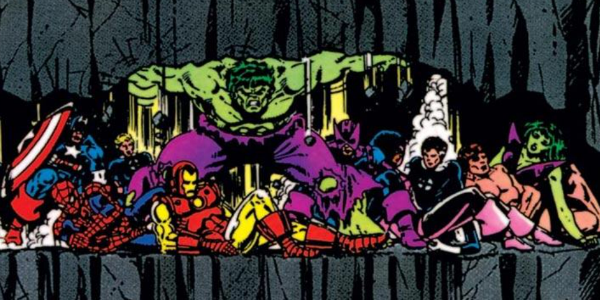
At its core, Secret Wars is a comic series about good versus evil. And it draws those lines pretty clearly. Within the first few pages of Secret Wars #1, the creative team gives the reader two, double-spread splash pages; one depicting all of the €œgood€ guys huddled together, and another with all of the villains. The mutant X-Men are originally grouped with the heroes, but in a unique twist, the team€™s arch nemesis Magneto is there alongside them. Magneto€™s presence causes immediate alarm among the good guys, and even the X-Men can€™t explain why the Beyonder made them a package deal. Regardless, all of the mutants on Battleworld are eventually sent away from the rest of the heroes, creating a third sub-group that mostly operates on the side of good, but also has its fair share of confrontations with the likes of Spider-Man and the Wasp. While X-Men fans were likely annoyed by the team€™s shoddy treatment, this subplot is actually a nice little nod to the group€™s origins. The €œuncanny€ X-Men were originally presented as benign force that was misunderstood and mistrusted by the general public for being different. Silver Age stories also depicted other Marvel heroes as being leery of the group. So while the Beyonder€™s instincts were right in grouping the X-Men with the good guys, having the team cast as €œoutsiders,€ even by Marvel€™s most virtuous heroes, is historically accurate.

8. Mike Zeck€™s Covers

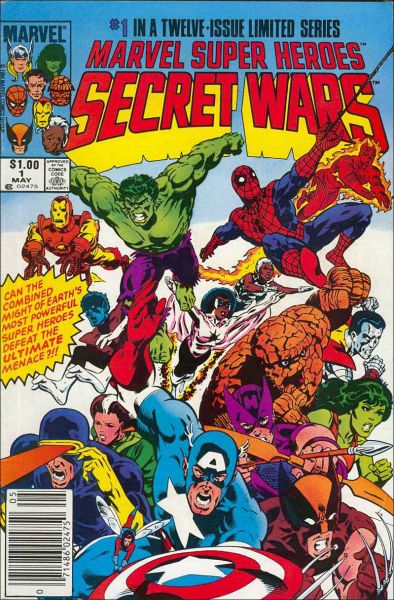
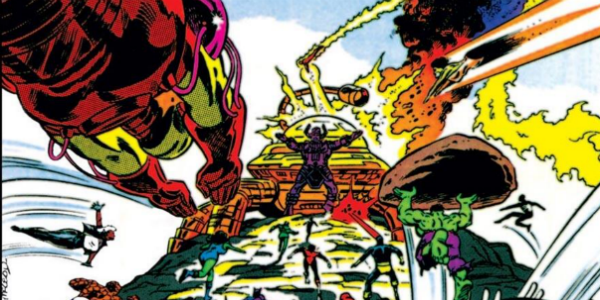
Prior to Secret Wars, artist Mike Zeck had already established himself as a critical darling with his work on series such as Captain America and Master of Kung Fu. But his work on Secret Wars officially launched him into the stratosphere to the point where he emerged from the 1980s as one of the greatest comic book artists of his generation. Zeck€™s best artwork was saved for the front covers. Over the course of 12 issues, Zeck illustrated three covers in Secret Wars #1, #8 and #10 that are considered by many comic book fans as some of the greatest Marvel covers of all time. The image of Secret Wars #1, which shows all of the heroes running, swinging and flying into the foreground, has inspired countless homages including covers for Deadpool Kills Deadpool and Deathwatch.
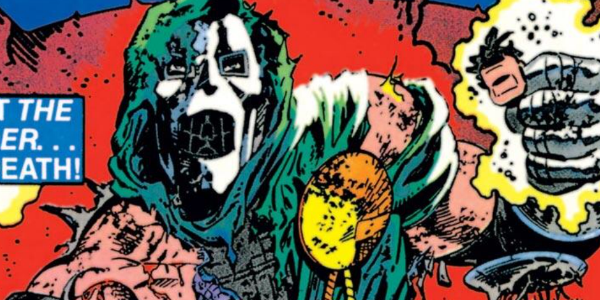
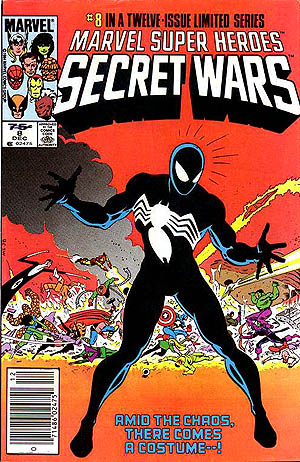
Zeck€™s cover for Secret Wars #8, which shows Spider-Man in his black costume for the first time, is considered one of the most iconic Spidey images of all time. The cover to Secret Wars #10 €“ which shows a battered but defiant Doctor Doom €“ has also been referenced by other comic book series.
And that€™s not taking anything away from the other nine covers in the series, which may not be as memorable, but are a true marvel to look at.

7. Everyone Who Mattered Was Involved
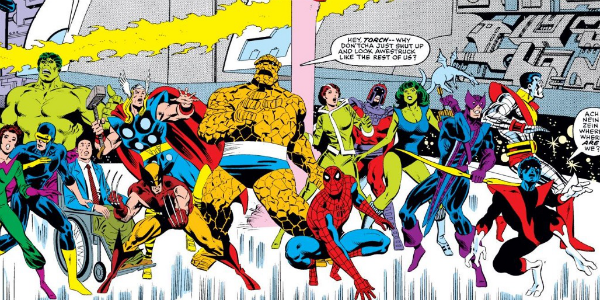
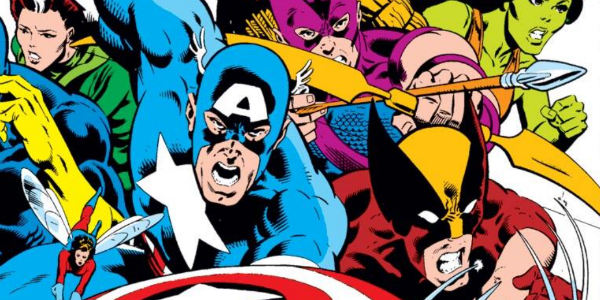
When it came to packing Secret Wars with A-list talent, Marvel didn€™t take any shortcuts. Pretty much every major hero and villain that was active in the Marvel Universe in early/mid-1980s was teleported to the planet €œBattleworld€ by the mysterious Beyonder. Sure, hardcore fans of the House of Idea€™s second tier stars like Luke Cage, Iron Fist and Black Widow, might have been disappointed by their absence, but more casual fans probably didn€™t notice since they were too busy being distracted by the likes of Captain America, Doctor Doom, the entire Fantastic Four, Ultron, Spider-Man, Kang, Wolverine, Cyclops, etc. Of course, Marvel likely included all of its best heroes and villains as a reason to develop and sell action figures (more on that in a moment), but from a comic book storytelling perspective, the A-list cast gave Secret Wars an enormous amount of credibility. It sent a message to readers that this was a series that was going to have stakes. Considering some of the status quo changes that took place as a result of the series (Hulk leaving the Fantastic Four and being replaced by She-Hulk), packing Secret Wars with so many iconic characters wasn€™t strictly a marketing gimmick.

6. The Silly But Fun Character Moments
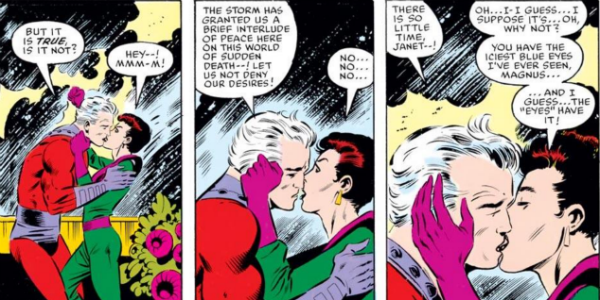
Despite the size and scope of Secret Wars, writer Jim Shooter manages to pack in many moments of levity demonstrating that even the most landmark of comic book events don€™t always have to take themselves too seriously. Such moments include the Wasp seducing Magneto in order to discover where his allegiances lie (and then pinching his cheek and calling him €œcute but pompous€ when he asks her to join him in fighting off the X-Men); or when the femme fatale Volcana falls head over heels for the meek Molecule Man. There are also a bunch of one-liners, like Rhodey Rhodes (filling in for Tony Stark as Iron Man) commenting on the super long legs of the new Spider-Woman who just randomly shows up in the series about halfway through. Secret Wars is very self-aware that comic books are designed to be fun. The series is filled with high-tension, end of the universe-type scenarios, but that doesn€™t mean it doesn€™t provide the right mix of jokes and humor.

5. Awesome Superhero Moments

In addition to the silly, light-hearted moments littered throughout the series, writer Jim Shooter also delivers some dramatic superhero sequences that emblemize why so many people love the comic book medium so much. Secret Wars #3 gives us one of the greatest moments in Spider-Man history when he single-handedly makes a mockery of the X-Men€™s A-team, dancing around the likes of Wolverine, Colossus and Cyclops whiile throwing punches and kicks. And in case anybody needs to be reminded of what the Hulk is capable of doing, in Secret Wars #4 the green monster holds up an entire mountain in order to save his teammates from being crushed underneath. The creative team is careful to give almost every character his or her due in Secret Wars. And no character ends up looking that much better than anyone else in this series. By showing such attention to detail, no fan could claim that his favorite hero or villain was €œneglected€ by the creators.

4. The Action Figures

Secretwarstoys Critics of Secret Wars have derided the series as nothing more than a €œtoy book€ €“ a cynical ploy by Marvel to keep pace with the €œDistinguished Competition,€ and its Super Powers line of action figures (produced by Kenner). There€™s probably a lot of truth to this criticism, but the Secret Wars line, produced by Mattel, will likely bring back a lot of fond memories for children who grew up in the 80s. For some of these young consumers, the Secret Wars line was probably their introduction to the Marvel Universe. And by tying the figures into the comic book series, Marvel certainly gained a few readers in the process. Meanwhile, the battle for action figure supremacy between Super Powers and Secret Wars was just another instance of the ongoing competition between DC and Marvel. The Super Powers line featured €œaction€ whenever someone squeezed the arms or legs of the figure, while the Secret Wars toys all came with shields with moving lenticular graphics. Both series proved to be influential and one€™s opinion of which one was €œbetter€ likely reflects that person€™s opinion of €œMarvel or DC.€

3. Doctor Doom Was Awesome

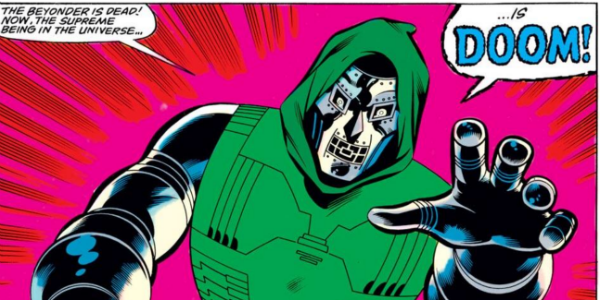
If there was any doubt about who was the greatest, most diabolical villain in the Marvel Universe, Secret Wars settled that debate with its portrayal of Doctor Doom. When Secret Wars first began, it appears that writer Jim Shooter is pitting all of Marvel€™s heroes against the cosmic force of the Beyonder. But as the storyline evolves, it becomes unquestionably clear that Battleworld€™s primary antagonist is the metal-faced Doom. Towards the end of the miniseries, Doom actually succeeds in stealing the Beyonder€™s cosmic power, and in a move fit for a galactic conqueror, erects a 200-mile tall golden tower as his home base. Doom ultimately loses his grasp on the Beyonder€™s power, but that doesn€™t diminish the fact that for a few issues of comic book time, he was the most omnipotent force in the Marvel Universe. Secret Wars gives readers Doctor Doom at his absolute peak. If you€™re even casually interested in the character, you€™re guaranteed to love how he comes across in this series.

2. It Gave Us Venom

Perhaps Secret Wars€™ most significant contribution to the Marvel Universe was that it introduced the comic book world to the alien symbiote. The symbiote initially bonds to Spider-Man in Secret Wars #8, giving us the black suit (the first major costume change in the character€™s career). After being rejected by Spidey, the alien joins up with the sociopathic Eddie Brock, leading to the birth of the supervilain Venom. While some believe that Venom and the symbiote would eventually be overused and overexposed by Marvel, when the character first burst onto the scene, there was no bigger phenomenon in comics. The muscle-bound killer who also possessed a warped moral code that made him somewhat sympathetic, was arguably the most popular new Spider-Man villain created since the Silver Age of comics when Stan Lee, Steve Ditko and John Romita Sr. were churning out iconic villain after iconic villain. The events from Secret Wars #8 were referenced in Spider-Man comics multiple times in the months and years after the series was published, including in Venom€™s origin story in Amazing Spider-Man #300. And in terms of collectability, Secret Wars #8 is the only issue from the series that is legitimately sought after because it is the first appearance of the symbitoe.

1. It Was the Industry€™s First €œBig€ Event

Many comic book fans would argue today that the industry is suffering from €œevent fatigue€ €“ the overabundance of company-wide miniseries and crossovers that are marketed under the guise as being game-changers but are ultimately just sales-driven gimmicks. But without the success of Secret Wars, we would likely would have never gotten such popular and significant €œevents€ like The Infinity Gauntlet, Civil War and Crisis on the Infinite Earths. Technically, Marvel released Contest of the Champions two years before Secret Wars, but that miniseries, which was only three issues and lacked the size and scope of Secret Wars. Because of that, 30 years later, Secret Wars is still considered the industry pioneer €“ the template from which all other event comics were created. Sure, it€™s exhausting when Marvel and DC pump out these huge, long-winded crossovers that promise major status quo upheavals only to undo these changes with a few months. But there€™s nothing better than a well-done comic book €œevent.€ Secret Wars made that all possible.

Watch Next


Posted On: 
Contributor
Contributor

Mark is a professional writer living in Brooklyn and is the founder of the Chasing Amazing Blog, which documents his quest to collect every issue of Amazing Spider-Man, and the Superior Spider-Talk podcast. He also pens the "Gimmick or Good?" column at Comics Should Be Good blog.