10 Reasons Why The New 52 Was Doomed To Fail
Taking away Green Arrow's beard was a bad move...

It's hard to think that it's been six years since DC began their lofty attempt to reinvent their universe, and, while we all know it didn't pan out in the end, the New 52 remains the most ambitious reboot to have ever been attempted in the medium. Its impact, for better or for worse, is still being felt to this day.
The long-raging topic of how publishers and creators alike can make the comics medium more accessible has made for some... interesting, shall we say, decisions from the big two. In that regard, the New 52 can be seen as a fairly dramatic attempt to reignite a falling reader base, to further synergise cinematic success with comics themselves, and to break long-held stereotypes regarding just what, exactly, a comic can and cannot do.
It was a shift, however, that failed to pay off. Sure, sales boomed during the series' burgeoning months, but things later fell in line with wider, more worrying trends regarding the industry's ostensible decline. Older readers fled towards Marvel and, in a positive move, independent outlets too, and newer readers were left perplexed at the wishy-washy state of the universe's continuity.
In their attempts to please everyone, DC very much unsettled their established base. They founded a project typified by controversy - billing a relaunch that was heralded as being revolutionary when in actual fact nothing had really changed; certainly not the company's shaky and controversial editorial policy, which saw the collapse of at least one-star creative team, and a further reboot five years down the line.
Indeed, there's little to praise about the 2011 reboot - certainly so, considering it was doomed from the get-go.
10. It Came Out Of Nowhere

Granted, fans knew that 2011's Flashpoint was building to something big, but a complete reset of the DCU seemed like an outlandish prospect to entertain back then.
Indeed, the event was billed as nothing more than an interesting look into an alternate earth when it released, with a story featuring the Flash roaming through a mad (and very entertaining) distortion of the mainstream DCU that harkened back to classic Elseworlds tales like Superman: Red Son and Batman: Gotham by Gaslight. By the time the big reveal came, however - and all of the old DCU lied in tatters - fans were left totally confused by how left-field the whole affair felt.
Now, that's not to say that comics shouldn't surprise their audience from time to time, but a relaunch as big as the New 52 needed to be built towards in a way that didn't leave old readers surprised and, it must be said, frankly horrified in regards to what was going to happen.
9. Disrupted Ongoing Storylines

One of the reasons behind that anxiety laid in the fact that the company-wide relaunch would interfere with long-running arcs in the established canon. One such run that fell victim to this was, unfortunately, Grant Morrison's Batman, which was then engrossed in the final act of its five-year series.
Batman: Incorporated was designed to close Morrison's critically acclaimed stint on Batman, with a story that analysed the character's symbolism and what it actually meant to be the Dark Knight. It took the character out of the shadows in a move that saw Bruce Wayne publicly back the vigilante in his efforts to franchise the persona across the globe - a move that was typified by a return to the yellow and black crescent symbol on the character's newest Batsuit.
The whole mantra with that series was about Batman's ability to weaponise a public face as much as he is able to utilise the shadows, and yet the New 52 forced subsequent issues to eschew that design, despite the series existing in this weird, quasi-continuity between the old and new universe.
A slight redesign ended up erasing one of the series' coolest visual cues, and while Morrison managed to end his run on his own terms, it further added to the confusion regarding the new universe. While Morrison was writing Inc. - a story that only really made sense in the old continuity - Scott Snyder and Greg Capullo were doing their own thing with the Dark Knight, on a series that made no reference to Inc. or anything of the sort.
The reset just seemed to negate the importance of Morrison's run, and further exacerbated the wiggildy-piggildy state of the DCU as it then existed.
8. Classic Characters M.I.A.

One of the biggest issues fans had with the reboot was that it seemingly erased classic characters from the picture. Undoubtedly the most high profile absence was Wally West, who had taken on the role of the Flash for over a decade, and was arguably the version of the character audiences were most familiar with, owing to his presence on the long-loved Justice League animated series.
And yet, the character went completely missing during the reboot, along with other heroes, like the Question (no, the version we got most definitely isn't Vic Sage), Cassandra Cain, and a whole host of other classic characters - all wiped in the name of keeping things simple. Which is awful, if we're being honest.
Look, it's understandable that DC wanted to make sure audiences didn't get confused, but at what point do you admit that you think your audience is just completely clueless? The concept of there being more than one Flash isn't an inherently difficult one to grasp, nor are some of the other, finer points of the DC mythos. Getting rid of them completely was just a bad move, but one that the company has, however, taken steps to rectify.
7. Weird Redesigns

Okay, okay, we literally must know who shaved Oliver Queen, because that sh*t's just not cool.
In their attempts to fundamentally de-age their cast of characters, DC embarked on some rather... odd, redesigns. Green Arrow lost his iconic 'tache and goatee, a fake Lobo ran rampant with a younger, less gruff look, and Harley... well, the less that's said of 2011's Suicide Squad, the better.
And then there was this weird obsession during the relaunch to add lines and rough edges to every character's suit, because that's what makes suits cool, lines. Lots and lots of lines.
Superman was undoubtedly the worst culprit in this instance, sporting a costume that had a random red belt, lines aplenty, and an uncomfortable looking collar that Edna Mode would undoubtedly take offence to. And god, that's without even mentioning Tim Drake's updated Red Robin costume, which, while admittedly a slight improvement on the old one, made for just about the edgiest looking edge-suit in the entire reboot.
The entire thing was just an unmitigated fashion disaster, really. But hey, at least Rebirth's wardrobe is on point.
6. It Made Continuity More Confusing

Despite being founded on the promise of rectifying all those niggling little continuity errors that somehow, for some reason, repelled new readers from the medium, the New 52 actually managed to make things even more convoluted than they were originally. Which is quite impressive, if we're being honest.
The entire universe was founded on the premise that heroes had only really been around for about five or so years. Now, the main problem with that, of course, is that it's pretty contrived and, well, nonsensical to have all the world's heroes pop up at the same time. That, and it doesn't really afford much space for writers to manoeuvre, especially if they're trying to establish at least a semblance of a history in order to craft their stories.
What followed was a hodgepodge of unenforced rules that resulted in a disparate continuity where, in actual fact, the reboot's changes were left at the discretion of the company's writers.
Take Batman for instance: Scott Snyder and Greg Capullo's series made frequent reference to Dick Grayson's time under the cowl after the events of Final Crisis, except Final Crisis never happened in this universe, and with there being only five or so years of superhero-dom to account for, the fact that Batman burned through about three Robins in that time is frankly worrying. Confusing, definitely, but also worrying.
It just didn't make any sense, and this picking and choosing of the pre-Flashpoint continuity only made things all the more frustrating for readers old and new.
5. Editorial Interference

DC editorial was utterly dreadful during this period. Terrible, even.
In fact, we can directly attribute various writing and artistic departures to shoddy editorial practice, including George Perez, Gail Simone, Andy Diggle and, most notoriously, J. H. Williams III and Haden Blackman, who had been working on Batwoman for the better half of a year when they resigned.
The reason for the resignation lay in the fact that DC wouldn't let the writer/artist duo proceed with a storyline that would see title character Kate Kane marry long-term love interest, Maggie Sawyer. Numerous other instances of editorial interference ensured that Blackman and Williams would depart the project, but this particular offence certainly hurt the most.
In a particularly brilliant 'f*ck you' to the move, Rocksteady included an easter egg in Arkham Knight that showed that the pair had most definitely married in their universe, which is as brilliant a reply as any, really.
4. Scandals, Right Off The Bat

On top of the aforementioned editorial issues that quite literally plagued the relaunch, the new DCU itself was home to many a scandal during its publishing run, especially in respect to its treatment of women.
To begin with, barely any women were involved in the reboot at a creative level, with only Gail Simone and Amy Reeder having lent their talents to the relaunch during its formative months. The company's initial response to concerns that women were being excluded from the editorial process was completely crass and even combative, and while they later rectified their original defence, one couldn't help but feel that DC were taking their non-male readers for granted, and indeed, ignoring the urgent need to diversify their payroll.
Then there were the scandals that occurred on the page, which only seemed to further highlight the need for more women-led books to be published. The eye-wateringly terrible Red Hood and the Outlaws sported a depiction of Starfire that wasn't just anatomically wrong, but plain old creepy too, and DC kicked off Catwoman with a comically bad first issue that involved basically nothing but non-stop Bat-boning for its entire duration.
Certainly, DC's approach to women-led works (and women in general, it must be said) during this period can be summed up as being both diabolical and shambolic. No wonder readers were put-off by the whole thing.
3. It Alienated Older Readers

Not content with alienating female fans the world over, DC also made an effort to amputate their traditional reader base too, by erasing decades worth of history from the equation.
Of course, this isn’t the only reason why older readers abandoned the reboot (any reader who values continuity over story-telling is doing their self no favour), but it was certainly a contributing factor. Being told the universe they grew up with - the one that introduced them to the medium itself - was basically gone, would make it difficult to embrace any replacement, particularly one as lacklustre as the New 52.
The thing is, for the ten years before the relaunch happened DC was genuinely going places, offering a style different from Marvel and affording their titles with a certain uniqueness that engendered a specific kind of feel on the page. That was all lost with the reboot, and for the old-guard among the DC faithful, the tonal reset proved too much to bear.
Compounding this reset further were, of course, the various editorial and creative issues that afflicted the reboot in its opening year. For fans accustomed to the quality of years past, the sudden drop in creative freedom didn’t go unnoticed and provided little incentive for them to stick things out.
2. So. Much. Batman.
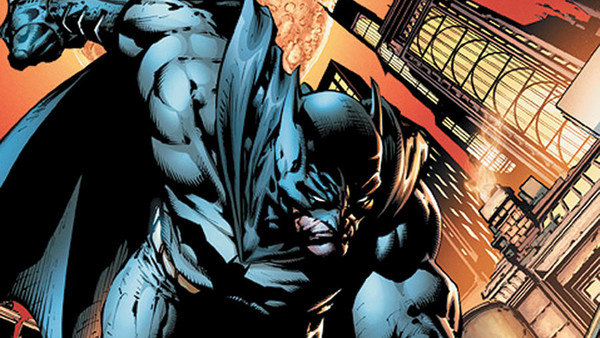
Look, we get it, Batman rocks. He's Batman. But surely there's a point where, you know, enough is enough?
When it debuted in September 2011, the New 52 shipped over eight Bat-related books. Eight, with three of those all focusing on the Dark Knight himself, and a further two featuring the character with an ensemble cast. Then there was Batgirl, Nightwing, and the aforementioned perennially terrible Red Hood book to note. And, while they all varied in quality, it was all a little much; Batman doesn't need to be in three separate solo series, no matter how you spin it.
Certainly, a book like Detective Comics - while originally Batman's own - can survive without the character. Literal years have passed where the book has been led by other heroes, like the Question, Zatanna and others, and they all did a fine job of representing the book's mystery elements. Said characters were nowhere to be seen in the reboot however, with Bat-law very much being the rule of the day.
We all love a bit of Bat-themed action (especially if it's in the Scott Snyder mould), but come on, give us a break DC. No character needs this many books.
1. A Loss Of Legacy

Legacy is an integral part of the DC universe, and has been for, well, decades now. Mantles are passed down, characters come and go and, for the most part, when they depart the scene, it means something.
There have been genuine years spent building up heroes and villains to take the reigns in certain stories, with a certain Stephanie Brown coming to mind as being one of the more famous examples. Introduced in 1992, the character would, eventually, take the reigns as the new Batgirl in 2009, taking over from Cassandra Cain who herself would go onto become Blackbat. Fast forward two years later, and the character would disappear from mainstream DC continuity. That's twenty years of development, undone in an instant.
Renee Montoya - the new Question - would suffer a similar fate, as would Cass, but by far the reboot's biggest and most heartbreaking failure was its treatment of Barbara Gordon, who was 'cured' of her paralysis at the behest of DC editorial. Jessica Sirkin wrote a particularly salient piece in The Mary Sue a while back discussing the erasure of Gordon's disability, and by extension, the character's history post 1988's The Killing Joke, and came to the conclusion that - while some positives could be gleaned from the move - "it also took away a powerful, independent woman and the only superhero with a physical disability in the DCU."
Everything about the move just seemed to represent all that was wrong with the relaunch, and in particular, its treatment of the universe's women.
It's been a long six years, and with Rebirth now reaffirming DC's stance as the leaders in the medium - replete with a wide and varied cast of characters, creators and books - it would appear that they're just as keen to forget about the New 52 as we are. Which, when you consider how dreadful the reboot actually was, can only be a good thing.
-
What did you think of the New 52? Are you equally as amazed that it lasted as long as it did? Let us know in the comments below!