10 Terrible Mistakes That Almost Ruined Spider-Man For Everyone‏

Peter Parker is the endlessly put-upon superhero, and there are times when the pressure seemed like it just got too much.

"Spider-Man, Spider-Man," the saying goes. "Does whatever a spider can". Which isn't strictly true, because spiders don't make a habit of catching thieves just like flies. They just catch flies. We thank our lucky stars that the webhead wasn't designed to be closer to his namesake, mind, because instead of being one of the best superheroes in history he would have been a gross monstrosity with eight legs, six eyes and hairy legs. He wouldn't be a masked vigilante soaring through the New York cityscape, a hero to kids young and old across the world. He'd be a nuisance we'd try to flush down the drain. Seriously, though, can you imagine how much closely hemming to the radioactive creepy crawly that gave Peter Parker his powers would have ruined the character? Thankfully that was never really considered, since the spider was just a gimmick to give the character a cool, creepy costume. Still, there's been plenty of other times where Marvel came perilously close to totally screwing up their golden goose, and nearly as many when they actually did screw him up, necessitating slate-cleaning retcons and the like. During his fifty or so years on Earth-616, Spider-Man has fallen victim to poor editorial decisions, forgotten subplots and lapses in translation. He has fought against insurmountable odds and come out swinging, even when he got replaced in his own book for what felt like a decade. Peter Parker is the endlessly put-upon superhero, and there are times when the pressure seemed like it just got too much. Here are 10 terrible mistakes in Marvel history that almost ruined Spider-Man for everyone. If there's any we missed, tell us in the comments, and you could bag yourself a No-Prize, true believers!

10. Replaced By Ben Reilly

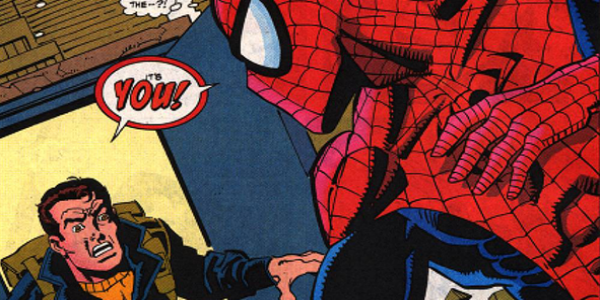
Ben Reilly first appeared in a Spider-Man comics all the way back in 1975, but it took until 1995 for him to finally usurp the Spider-Throne he'd long had his bright blue eyes on. Introduced as part of a storyline which saw minor Spidey villain Miles Warren, aka The Jackal, producing multiple clones of Peter Parker for...reasons...Ben Reilly, one of said genetic identicals, decided to keep his head low for twenty years, until he got coaxed back to the Big Apple for personal reasons/the Spider-Man editorial team had run out of ideas and were really scraping the bottom of the barrel. Through a series of entirely too complicated events that we'll get to in due course, it transpired that the Peter Parker whose stories we'd all been enjoying since 1975 was actually the clone, and Ben Reilly the original. Warren had implanted false memories in all the clones, so nobody could tell who the actual real Peter Parker was any more. Regardless, Ben figured the clone Peter had made enough of a life for himself that he'd carry on under the Reilly name, but took up the mantle of Spider-Man. For a entire year the Spider-Man titles all starred a totally different character. We're used to these sorts of shenanigans nowadays, what with the Superior Spider-Man and all, but in the mid-nineties it was all a little too much to take. People who had grown up with the character, or come to him with the success of the animated series, were totally thrown off. Ben was a distinct character, and an okay one, but he wasn't the real Peter Parker, was he? Just imagine how many readers dropped the books whilst all this was going on. Now imagine if they'd never turned things back to normal. Ruined forever for everyone.

9. The Clone Saga, In General

Thankfully things did go back to normal. Eventually. For a period of about three years, though, comic books fans had to suffer through the interminable Clone Saga, an epic that spread across all the Spider-Man titles and was totally inescapable, whilst also being bloody awful. The story was actually supposed to be done within 12 months, but we all bought so many copies they decided to carry it on for three times as long. That one's on us, we guess. But you can't blame us for anything else that happened in the Clone Saga; that responsibility - and the responsibility for nearly ruining Spider-Man as a character - lies with editors Tom DeFalco, Bob Budiansky, and Bob Harras. They were the ones who introduced not just Ben Reilly but also Kaine, an unsuccessful Spidey clone driven insane by his imperfections, and Spidercide, another clone who was evil for some reason. Eventually all of this didn't matter, because all the clones died and it turned out the Peter Parker who had starred in the Spider-Man comics for the previous twenty years had actually been the real one all along, and Ben Reilly another copy. Thus, Marvel washed their hands of the whole sorry mess. Their hands could have been permanently stained, however, if things had persisted. Messing up Spidey history so much was nearly irrevocable, and the whole thing took Peter Parker from a relatable character to somebody who had clones, a shift in tone and characterisation that is still in flux to this day.

8. The Case Of The Missing Spider Baby

One of the long-forgotten plot threads from the Clone Saga was Peter Parker and Mary Jane's baby daughter. Ben Reilly's adoption of the Spider-Man role left the couple free to worry about MJ's pregnancy, with the due date steadily approaching along with the end of the storyline, which was more than a little portentous. As these things tend to go, the baby was not to be, because Spider-Man and his loved ones can never be happy. It's, like, an unwritten rule, or something. So, Mary Jane was poisoned by an agent of the Green Goblin, and the baby was stillborn. Or was it...? Because after that tragic scene Norman Osborn's woman on the inside, Alison Mongrain, has apparently stolen the "dead" child for her employer, and gone on the run with it. Also the baby is alive. And then it isn't. It's very confusing, and it's hard to discern whether it'd be worse for MJ and Peter to have a daughter to dote over when he's busy saving the world, or that we got this run around for a good couple of years. Having a daughter wouldn't necessarily have ruined Spider-Man - the alternate-universe Spider-Girl, where young May grows up to have her father's superpowers and takes up his role as wall crawling guardian of New York City, was pretty good while it lasted - but, considering the brain trust behind the Clone Saga was still in charge, you can't help but think they would have made such a hash of things that the kid would either have been a hapless plot device or, worse, the star of Three Spider-Men And A Baby.

7. Brain Swap With Doc Ock

Dan Slott has not earned himself many friends during his time writing the main Spider-Man title but, then, changing things about a character in the way he has rarely does. Did you not see how vitriolic we got about the guys behind the Clone Saga back there? The most controversial part of Slott's tenure was the Superior Spider-Man arc, where long-time Spidey villain Doctor Octopus found himself dying of a degenerative disease. As one last hurrah, and a last ditch attempt at survival, Ock managed to swap his brain with that of the blasted wall crawler. It was only when he discovered the reasons Peter Parker did what he did that he realised Spidey was actually a hero, and committed himself to not only carry on his good work, but do it better. There were plenty more shocks (and sleaziness) to come after that in the pages of Superior Spider-Man. Spock, as fans dubbed him, initially revelled in his relationship with fiery redhead Mary Jane, although thankfully that got dropped before it got too creepy and non-consent-y. Instead, the new Peter Parker entered into a relationship with "little person" Anna Maria, went from being a maverick scientist to starting his own company, and - as Spider-Man - took on a new, violent streak, and built himself an island base full of henchmen. Whether or not you think the Superior arc was any good or not is beside the point, and we knew that the brain-switch wasn't going to be permanent - we'd learned from Ben Reilly - but all of this has sort of messed things up for Spidey. Nobody trusts him, his relationship with Mary Jane is even more dead in the water than after...well, we'll get to that. J Jonah Jameson is back at the Daily Bugle where he belongs, and the Green Goblin has gone back underground for a while, but there's still the whole Anna Maria situation, and the new responsibility of running a company on Petey's plate. Whether Slott manages to balance all these new challenges - or just resets it all - is yet to be seen. This is a potential ruining of the character in progress; we're optimistic, but we might be the only ones.

6. The Time Peter Parker Was Molested

In his role as the Average Joe, Spider-Man has frequently gotten the call to star in PSA comics. You know the sort: funded by companies, charities, or regulatory councils, they're public service pamphlets designed to get important messages to kids through the medium of superheroes they already know, love and trust implicitly. Usually these comics are next-level bonkers, but every so often there's one that treats its subject with the right amount of seriousness. And they also totally ruin a child-favourite superhero. That's what happened with the one-shot Spider-Man and Power Pack issue, produced in cooperation with the National Committee For Prevention Of Child Abuse. A worthy cause, without argument, but that should be a red flag right there. A crossover between Spidey and a team of kid superheroes, centered around child abuse? This isn't going to end well for anyone. It's arguable whether the events of the comic are canon, but the story was read so widely upon its publication in 1986 - it was distributed for free to comic shops and newsstands, and was reprinted in the comics section of major newspapers - that you can't help but think many people's conception of Spider-Man were coloured by the story where it was revealed that Peter Parker was molested as a child. The majority of the Spider-Man/Power Pack comic is about the heroes rescuing children from and then comforting them about abuse. It's really an important, smart and sensitive comic book that covers some serious issues. It also has Spider-Man relating to a kid because, when he was younger, he was molested by an old dude named Skip. As if Peter Parker hasn't gone through enough in his life, between being orphaned and having all his later loved ones killed by supervillains, he also suffered through child abuse. Which can't help but colour every single over Spider-Man comic you read after learning that fact.

5. The Japanese Spider-Man Is A Murderous Creep

We're not talking about the nutty seventies Japanese TV Spidey; he was an emissary from hell, perhaps, but otherwise he was okay. Neither are we talking about Spider-Man J, the recent manga adaptation featuring a decidedly bishounen Peter Parker. No, we're talking about Ryoichi Ikegami's Japanese Spider-Man comics which took some...liberties with the character. Obviously the change in setting meant some different names, and art, from the Western Spidey comics. It also featured a whole lot else. Ikegami is somewhat infamous for his work for Kazuo Koike, the writer of Lone Wolf and Cub who, when not working on that classic crossover hit, busies himself with playing golf and writing comics that are the trashiest, most exploitative and offensive to come out of Japan ever (which is saying a lot). Spider-Man: The Manga is tame in comparison to some of Ikegami's collaborations with Koike, but it's still pretty far off from the depiction of Peter Parker we're used to. Apparently, what Japanese audiences wanted from the webhead was extreme violence, social revolution, kids getting run over by cars, multiple rapes, and an infamous scene where Yu - the man behind the manga Spider-Man's mask - discovers masturbation. In the US there's a generation of people who know Spidey as the survivor of child abuse; in Japan, there's a generation of people who know Spidey as the borderline insane sexual deviant star of a terrifyingly brutal gekiga manga. And if Marvel hadn't seen the good sense to censor all that stuff from their American translations of the book, we could've got the same in the West too.

4. All That Mystical Ezekiel Business

The real money in comics publishing these days doesn't come from the sales of comics themselves, but from the movies based off of them. Marvel and DC don't make anywhere near the amount they used to from sales of single issues, instead relying on the lucrative licensing deals and box office receipts that come from the likes of Avengers and the Dark Knight films. It stands to reason, then, that the publishers would make sure their comics are more closely aligned with the movies, hoping to catch some of the overspill of audience rushing to the multiplex for the latest offering from the Marvel Cinematic Universe or Zack Snyder's dystopian DC movies. In the early noughties, for Marvel, this meant giving Spider-Man organic webshooters. The first of the Sam Raimi Spidey movies had come out, renewing interest in the character, and they wanted as many of these new readers to get an experience as close to the film as possible. In the comics Peter Parker's webbing came from a couple of neat gadgets he wore under his webbed gloves, but in the films he produced them naturally. How to introduce that into the comics? How indeed. As it happens, Marvel ended up going with the most bat-poop crazy way of introducing organic webshooters - and a whole mess of other new spider-powers - with J Michael Straczynski's storyline The Other. Since the beginning of his run on Amazing Spider-Man, the former Babylon 5 writer had been trying to introduce a mystical element to Peter Parker's powers. He created the character of Ezekiel, an old dude with similar wall crawling abilities who kept insisting that The Spider was some magical totemic symbol which chose a champion in every generation. A bit like being a vampire slayer. Except more stupid. Ezekiel's hippy ditherings reached their naturally insane conclusion in The Other, a crossover event that saw the death of Spider-Man. Well, apparent death. Because then it turns out Peter Parker has just shed his skin (which spiders don't do) and in the process gained a load of new abilities, including night vision, stingers, being able to talk to other arthropods, and organic webshooters. Apart from the webbing, none of these wacky new powers were ever used, and the whole sorry mess was blinked out of existence by...well...

3. One More Day

The Other was totally his mess, but Straczynski can't take the blame for the One More Day/Brand New Day debacle. Despite the fact that we've proven ourselves so resistant to change time and again in this feature, the natural evolution of his character is another one of the great things about Spider-Man. We identify with him because he's a regular person and, like a regular person, he grows up and his life changes. A baby may have messed things up, but Peter's marriage to MJ added an interesting new dynamic to Spider-Man's stories, and was a necessary piece of character development (not to mention a merciful cap on the sort of will they, won't they storylines that drag down long-running sitcoms). Marvel editor-in-chief Joe Quesada couldn't disagree more. In fact he'd long held the opinion that Spidey's marriage had "broken" the character, and he made it his personal mission to fix him. Having worked his way into the most powerful position in the bullpen, he issued a decree: Peter Parker and Mary Jane's marriage was over. No matter what it took. Except they couldn't get divorced, or split up, or anything like that. Straczynski, the writer put in charge of a story he has been on the record about not wanting to write, did the best he could under those conditions. Still, the best he could do was a story where creaky old Aunt May gets shot by an assassin and so Peter and MJ sell their marriage to the devil in order to save her life, instead of finally putting her out of her misery. For some reason Mephisto accepts, and it's as if the pair never tied the knot. One More Day didn't quite ruin Spider-Man, but it certainly tried, undoing one of the strongest and most beloved relationships in comics at the whim of a misguided editor, telling a ridiculous story in the process and reverting Spidey back to the web-swinging bachelor days that hadn't been seen in the comics for thirty years. Now Spidey is no different from any other superhero, trapped in a permanent narrative stasis, never allowed to grow or change with any permanence. Still, could be worse, we suppose.

2. When Gwen Stacy Did The Nasty With Norman Osborn

The last part of Straczynski's Spidey trilogy of terror is undoubtedly the worst. It was bad enough tearing apart the classic romance of Mary Jane and Peter Parker, one of the most beloved relationships in comics. MJ wasn't the first love of Spidey's or his readers' lives, though; that honour falls to Gwen Stacy, tragically killed during a confrontation with the Green Goblin, producing one of the most powerful storylines in comics and cementing Norman Osborn as Peter Parker's arch nemesis. Pretty sad, right? And all the more so because Gwen was such a sweet, innocent girl (even more so in the films, played by Emma Stone). Straczynski decided that he was gonna screw that all up, though, with the Sins Past storyline which revealed that not only did Ms Stacy have a couple of kids before she was shuffled off of her mortal coil, but that the father was the very man who later killed her: Norman Osborn. And if that wasn't stomach turning enough, you also got the above love scene before the wrinkly old villain and the young Gwen, which was SUPER GROSS. Honestly, the idea of Spidey's main villain bumping uglies with his girlfriend is not only icky but really, really stupid. Like something that happens in a teen movie, not a dark and dramatic superhero story. Like a lot of the other mistakes on this list, it messed with history, too, rewriting it so that one of the landmark Spider-Man stories - The Death of Gwen Stacy - had a whole different, nasty dimension. This came so close to ruining every character involved, in fact, that One More Day was partly inspired by it. In that they sought to completely erase it from history. So maybe that wasn't all bad? Sins Past definitely was though.

1. Jack Kirby's Spider-Man

There's no denying that Jack Kirby was an enormous talent. During his lifetime he had a hand in creating some of the most popular and enduring characters and concepts in comic books including, but by no means limited to, The Fantastic Four, Captain America, the Hulk, and Darkseid. Kirby's style is one of the most easily definable in comics, with his blocky style, shimmering inks and signature "Kirby Krackle". He was one of the best the industry ever knew. But Christ we're glad he didn't have a hand in creating Spider-Man. The creation of Peter Parker and his wall crawling alter ego have passed into pop culture legend at this point, but it could have been very different. Stan Lee had his initial inspiration either from pulp hero the Spider or from actually seeing an eight-legged insect crawling up his apartment wall, depending on when you ask him, but that was just the kernel of an idea. When it came to developing this new superhero further, he called upon his trusted collaborator Kirby for ideas. Part of the appeal of Spidey, above all other Marvel heroes, is that he's a common shmuck. He's like us. He's a street-level hero who has as much trouble dealing with supervillains as he does paying the rent on his pokey apartment. He's a regular guy. He fails as much as he triumphs, which makes those triumphs all the sweeter. Jack Kirby's Spider-Man would have been very, very different. Instead of the tragic origin story, with the death of Uncle Ben and all, to teach him the lesson of "with great power comes great responsibility", Kirby's concept saw the Silver Spider (the name he'd developed the character under with Joe Simon in the fifties) as an orphaned child who discovered a magic ring that gave him superhuman abilities. His costume looked, according to Simon, like "Captain America with cobwebs". Lee hated it. He looked too much like a generic superhero, the sort he wanted to get away from with the character. Steve Ditko came onboard instead, and helped create one of the most iconic characters in comics history. If Kirby had stayed on, he would've been just another footnote. This article would probably never exist, you'd never been reading it, and we wouldn't have written in whilst wearing Spider-Man pyjama bottoms.

In this post: 
Spider-Man
 
Posted On: 
Contributor
Contributor

Tom Baker is the Comics Editor at WhatCulture! He's heard all the Doctor Who jokes, but not many about Randall and Hopkirk. He also blogs at http://communibearsilostate.wordpress.com/