12 Problems Superhero Comics Never Address
Who pays for the damages? Why always America? SO MANY QUESTIONS
 Marvel/DCReading superhero comics is all about a suspension of disbelief. You can't pick up an issue of, say, Green Lantern with any level of incredulity, or you won't make it past the first page. A guy with a magic ring? Who uses it to police space? And he's kind of a douche? And he's friends with aliens? And he's got a beautiful girlfriend? Boy, is this unrealistic! Let me put this childish fantasy down and have a jolly old time watching The Wire, or reading depressing non-fiction, or whatever it is people like that do. All the more for those of us who do have an, admittedly, immature sense of wonder. Superhero comics do ask a lot of us as readers, but we're more than willing to oblige. Sure, there's a multiverse. Of course it can be fractured by somebody punching it. Totally makes sense that the Hulk always manages to keep his trousers on when the rest of clothes explode! Just as it makes sense that Emma Frost would dress like that. There's enough that we accept when reading a funnybook that we should probably be getting paid by the Big Two for doing half their jobs for them, explaining away inconsistencies and errors with our vast knowledge of flexible timelines, alternate realities and good guys being mind controlled by bad guys. Still, there's a lot of stuff in our comic books that is never dealt with, but really should be. Things that don't have an in-universe explanation, aspects of their internal logic that don't quite add up (shaky though it is in the first place), or just parts of the superhero ideal that don't make a lick of sense if you stand back and think about if for five seconds. Here are twelve such things that superhero comics never address.
12. Why Does Everyone Hate Mutants?
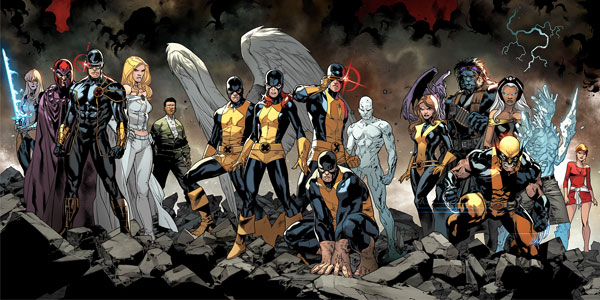 Marvel ComicsHere's a specific one to start with, because we were trying to explain it to an observant non-comics fan the other day and really couldn't come with anything suitable. And writing about comics is our job, so you know if we can't come up with an explanation, something is seriously wrong. Or it's about an Avatar book because, really, who reads those? Looking at the Marvel Universe, we have any number of superheroes, who have gotten their powers from any number of sources: there's the science experiments (Captain America, the Fantastic Four, Spider-Man, Hulk), the almighty endowed (Thor, Doctor Strange), and the rich guys with tech (Iron Man and affiliated armour-wearing people). Aside from the swaying public opinion of Spidey, thanks to that dastardly J Jonah Jameson, for he most part the world's non-superpowered civilians treat these lot as heroes. The X-Men and their mutant brethren, meanwhile, are hated and feared and have a large percentage of the population angling for their eradication. Eh? How are they any different from all these other costumed freaks? Well, they cause a lot of damage, sure, but it's not like the FF have never levelled a few square blocks of New York. Their powers are weird? Have you not seen The Thing? There's literally no reason the American people can accept the Avengers as a bunch of do-gooding heroes and then reject the X-Men as horrible genetic anomalies when they do the same things, wear similar costumes, and actually get their powers in similar ways, all told. It makes zero sense, and it's never been adequately explained, so far as we can recall. And we can recall pretty well. Not to a mutant degree, promise, don't burn down our houses.
11. Why Always White Dudes?
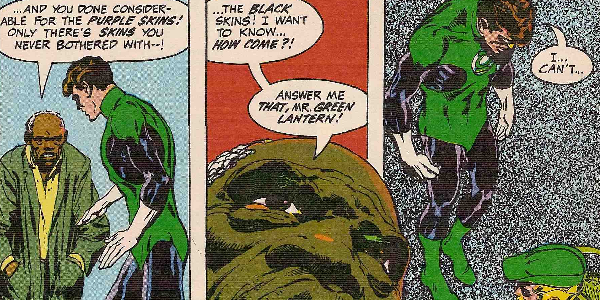 DC ComicsNow, as far as why the overwhelming majority of superheroes created tend to be white dudes, we know it's because historically comic books are created by white dudes, for white dudes, so they're aiming things at their audience and writing about what they know. As for the internal logic of why so many of the masked vigilantes who fight evil across the pages of Marvel and DC Comics are so thoroughly whitebread...yeah, that begins to fall down a little. Especially when, when you look at the numbers, it means that a ridiculous amount of the world's white population is superpowered compared to everyone else. Take a look at the current demographics in the United States, which is where most superheroes crop up. If we assume that the make up of the fictional Americas in superhero comics are pretty much the same as in real life - since they sure do look a lot like the IRL USA - then we see that white people are still in the majority but, according to the most recent census, there's still a good thirty percent of the population that isn't. And as far as we see it, we don't get the same split in comic books at all. Even worse, there's a frightening amount of black superheroes who have "Black" in their name. What's up with that? It's stuff like this that means people make a big deal when Cyborg is announced for the Batman v Superman film, or when the new Ms Marvel is Muslim. Because it's a problem of representation for the diverse comic readers in the real world, and because it's insane that in a fictional world that's meant to be better than ours, somehow it's still the white man that comes out on top!
10. Why The Code Names And Secret Identities?
 DC ComicsRight, so bear with us here, because we do understand these...to a degree. The usual explanation given for superheroes living amongst people and keeping their alter egos a secret is so that they can live a normal life when they're not saving lives, and so that their loved ones won't become the targets of devious supervillains who want nothing more than to tie them up and leave them on a train track, except maybe the train is powered by a nuclear engine or something. We're about to call shenanigans on both of those explanations because, once you stop to think about them, they totally don't hold up. Okay, so the keeping loved ones safe thing? Very noble, and of course as somebody who's given their life to protecting innocent people, those closest to you are gonna be included in that. Except it demonstrably doesn't work. You can look at literally any superhero from the last 75 years and come up with scores of examples of their friends, lovers and relatives getting kidnapped, beaten or straight up murdered by bad guys. Spider-Man's got, like, a dozen girlfriends and associates who've been killed off by the Green Goblin alone. So it's a nice idea that you want to keep them safe, but that's one of those good intentions the road to Hell is paved with. Along with the bones of Gwen Stacy. Then there's the "living a normal life". Yeah, you're not living a normal life at all. Superman originally chose to live as Clark Kent because the dude's an alien, and his parents insisted that he wouldn't care about saving puny humans if he didn't live amongst them for a while and sympathise with them. That's his excuse. What's Bruce Wayne gaining by pretending he isn't Batman, though, other than wasting time he could be spending eradicating crime, and kidding himself he's not a total nutjob?
9. Where Do The Costumes Come From?
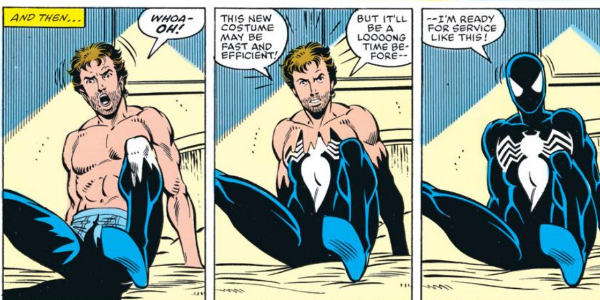 Marvel ComicsIn most cases we know the place that superheroes source their costumes for - there are even minor characters that have been introduced in both Marvel and DC, tailors who do quick-fix jobs and know their way around a skin-tight lycra suit - but why do they even wear them in the first place? Once you've discounted the secret identity conceit, as we rather expertly did just then, they make even less sense. Plus those domino masks totally wouldn't conceal your true self from anybody, and taking off his glasses doesn't make as much difference as Superman thinks it does. In Joss Whedon and John Cassaday's Astonishing X-Men, the unreasonably hated and feared mutant team reject the uniforms they were wearing before - which all looked the same, and were supposed to make them seem more like a team - in favour of costumes that make them look more like the superheroes people know and love. But we don't actually have any reasoning as to why people recognise some buff dude in a body-fitting one piece and mask as a superhero and not, say, a pervert? The underwear-over-tights thing adopted by Superman and Batman came from muscle men and wrestlers of the time they were created, which makes them horribly dated by now. There are some heroes that where armoured suits, but they're in the minority. So really there's no good reason Catwoman can't dress like a normal person, basically.
8. Who Pays For Everything?
 Marco DAlfonsoSure, it's simple if you're Tony Stark or Bruce Wayne or one of the other totally entitled capitalist superheroes who manage to fund their "altruistic" fights against crime with money that they inherited from their rich mummies and daddies, but what's everyone else meant to to? We've had Spider-Man stories where Peter Parker's hard up on cash from making webbing and repairing his outfit (WHICH COULD BE BINNED ENTIRELY), but for the most part superheroes manage to get by just fine despite frequently missing days off work, having their homes and equipment totally destroyed, and trips across the universe happening on a regular basis. Even less explicable is who pays for all the other stuff that gets broken, besides our valiant heroes' private property. If you've ever seen one of Cinema Sins' great "What's The Damage Videos?", you'll know that the average cost to repair all the damage caused in an action movie tends to be up there in the millions if not billions of dollars. Now let us remind you that these sorts of city-levelling, knock down drag out fights happen between superheroes and villains in almost every issue of a comic book, and in some cases happen in the same city over and over again. It's rare, however, that we ever see a superhero's city in a state of disrepair (the constantly mangled Gotham aside). Which means that they're constantly being repaired, and quickly. But who's paying for that? How would the local government or taxpayer manage to tidy up after regular Hulk rampages without getting into loads of debt, or even bankruptcy? We don't know. Comic books innit.
7. Who Tidies Up?
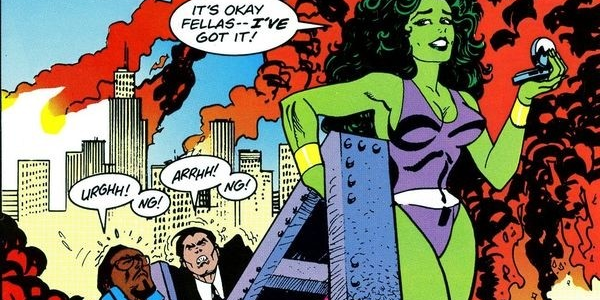 Marvel ComicsAnd it's all well and good asking who pays to get all this carnage straightened out, but who are the poor souls who actually do it? In the mid nineties Marvel had a short, humorous series called Damage Control, about a fictional construction company who dealt exclusively in buildings that had been destroyed in fights between superheroes and villains. It was pretty fun, but they're still just one company, and they're limited as to what they can do. Considering the amount of superhero comics published in a month - and the amount of destruction caused within - you'd need a lot more than one plucky group of entrepreneurs to get everything in the sort of ship shape we usually find it by the next issue. Those are a specialised bunch, too. In all likelihood most of the rebuilding work done after one of these huge, catastrophic battles would be handled by regular builders and contractors, who are probably more used to building suburban homes or putting up prefab retail outlets. We're sure they'd jump at the chance of something more substantial, but it's asking a lot for some run-of-the-mill construction workers to be constantly resurrecting a city that's been pretty well destroyed. And anyway, sometimes it's not just a city that gets messed up. Sometimes an entire state gets teleported to the Negative Zone and back again, or the planet gets taken over by Darkseid and afterwards everyone has to try and return things to normalcy. That's a rebuilding project that encompasses entire principalities or the whole planet. Who the heck deals with that? Because we have never seen Black Canary in one of those yellow hard hats or Hawkeye pushing a wheelbarrow full of rubble. So what's the deal?
6. Why Always America?
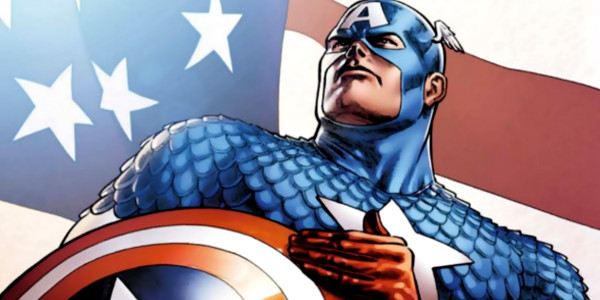 MarvelWe just sort of took it as a given that the majority of superheroes were not only white dudes, but also American. Which we shouldn't, because it makes about as much sense as the relative dearth of other races amongst mainstream comic books, even though it's probably for the exact same reason (because most superhero comics are made by Americans, for Americans). But where the lack of diversity in, say, Hollywood movies can be put down to - admittedly crummy - arguments like audiences not wanting to read subtitles or whatever, you can't use the same excuse in comics. Since you read those. And there's no limits on budget, as there might be in a TV show upping sticks to shoot in an exotic locale for a little while. So why all the American superheroes? Every so often we get a caped crusader from a foreign land - in fact that was the premise of the Batman Incorporated series, where Bruce Wayne went around the world recruiting apprentices who could become the international equivalents of the Dark Knight. From that we got Japanese, Native American, Argentinian, and South African Batmen, but they were mostly novelties that have been all but forgotten in the comics published today. That's the real problem that these characters face. Black Panther is the only superhero from the African nation of Wakanda in Marvel Comics, and in DC you were lucky to get the Global Guardians, which again included just one hero each from a bunch of non-American countries. There's no actual reason that so many superheroes should end up in the US, however. Even if you make the argument that, say, all those who got their powers from radiation during the Cold War...well, there should surely be an equal number of Russian superheroes, especially with the countries' comparable sizes to boot?
5. Why Do Supervillains Keep Trying?
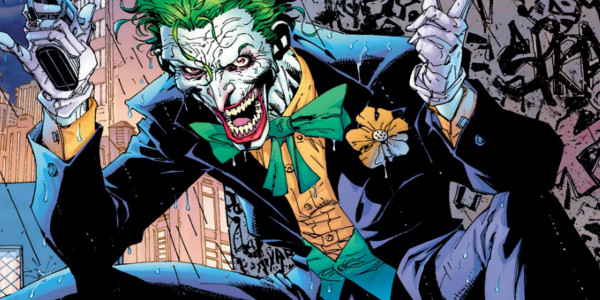 DC ComicsAn old saying goes "if at once you don't succeed, try and try again." But also, Harvey Danger told us that "you can bash your head against the wall for years, the wall will never change", which pretty much dismisses that first guy's proverb and gives us some neat harmonies to be getting on with. It's clear that the super-criminals who turn up to ruin our costumed heroes' fun are suffering under the delusion that the first of these truisms is actually, well, true, since no matter how many times they get their illegal exploits foiled by some dude in spandex, they inevitably try it again. And you know what the definition of insanity is? Doing the same thing over and over again, but expecting different results. True, some of these villains - and a worrying proportion of them Batman's - actually are criminally insane, and so you can't really blame them for thinking that the next time they tangle with their foe of choice, they'll finally get the upper hand, despite the dozens of times where that hasn't happened. For the rest of them, why do they bother? Any time they break the law, it's a foregone conclusion they're gonna be beaten up by their usual enemy, and see themselves slung back in jail. Even real life criminals aren't that stupid. And most of them are actually pretty stupid, whilst there's scores of supervillains who count genius-level intellects amongst their abilities. They should probably be finding another line of work, going straight, or else actually trying something different for a change. Maybe then things would change. As Harvey Danger add to the head/wall thing "But if you start to like the bloody bruises, the wall cannot be blamed."
4. What About The Law?
 IconIt's a plot point whenever writers introduce a new character or have run out of other stories to tell, but it's not one that's ever really been dealt with in a satisfying manner. Again, Batman's the most frequent character who gets embroiled in conflicts between over his TOTALLY ILLEGAL vigilante maneuvers with the people whose actual job it is to protect and serve, but even when cops do go after him they're usually some by-the-book rookies who don't understand how the real world works, and that they should totally leave this nutter in a rodent costume to sort out these crimes. Even though he has no jurisdiction, isn't properly trained or supervised and - most importantly - has no legal powers at all. See there's a little thing called the due process of the law, which is the legal requirement that the state must respect all of the legal rights that are owed to a person (thanks Wikipedia). Those legal rights usually involve things like people's right to appeal against convictions, which is handy because there are a lot of examples of people being framed or just plain mistaken identity out there. These are the standards that all law officials are expected to follow, along with stuff like adhering to rules about police brutality and not setting people on fire. You know who doesn't follow any of these laws? Superheroes. Batman's like Tommy Lee Jones in The Fugitive. He doesn't care whether you did the bad thing or not, he's gonna break your ribs regardless and let the police deal with the paperwork. Which, by the way, must be totally screwed by these vigilantes bringing criminals in, since they're lacking in arrest reports and, in a lot of cases, evidence that would secure a conviction. Still, these bad guys end up in prisons, so how the heck to the police departments and attorneys for the prosecution in comic books jump through all these hoops?
3. How Come They Don't Just Kill People?
 DC/WildstormSo here's two things we're all agreed on at this point: that supervillains will always, always break out of wherever they're incarcerated to commit crimes again, and superheroes don't exactly follow the letter of the law. Put those two problems together, and there's an easy way to cancel them out. Why don't the vigilantes just up and murder these "bad guys"? We're not saying they should, just that we don't understand what's stopping them. They're already messing up the court system and ignoring due process, so they may as well go the whole hog and just enact justice as they see fit. Works for Judge Dredd. Again, we wouldn't condone Superman and co going down this route - what with Dredd being a fascistic dystopian satire and all - we just don't see any good reason why they haven't. We guess there's the whole moralistic "KILLING IS BAD" thing, but when you're ignoring actual laws so you can go beat the crap out of people before they've had a fair trial, you've kinda already compromised any such social contract. Plus if you really want to have a philosophical debate about things, just look at how many people have been murdered or otherwise died as the result of a supervillain's actions, usually after the criminal in question has been beaten up and taken to jail by a superhero a few hundred times. If they'd been killed, it would have spared so many innocent lives. Maybe The Authority had it right all along?
2. Aren't There Therapists?
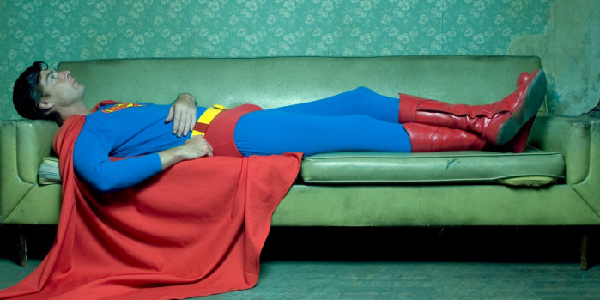 BlogspotPretty much every superhero's modus operandi is rooted in some mental health issue or another. Superman's dealing with some serious parental and abandonment issues, the emptiness he feels about his destroyed home planet and family leading him to make sure the same never happens to his adopted home of Earth. Batman retains the psychic scars of seeing his parents murdered by a mugger before his very eyes, which he channels into trying to wipe crime off the face of the Earth, to make sure nobody has to suffer as he did. Spider-Man feels the crippling responsibility to use his powers to help others above all else, thanks to being sort of responsible for his Uncle Ben dying. These are all disorders that people in the real world deal with...sort of. There are even some heroes who have suffered from actual psychological maladies, with Moon Knight's multiple personalities and the countless superpeople who have struggled to deal with what's clearly post traumatic stress disorder following particularly testing story arcs. The way these lot carry on, you'd think that there weren't any therapists in the world of comic books that could help them deal with their problems! Actually, aren't there any? There must be, because they crop up every so often. So how come Clark Kent has never opened up to a trusted confidante about the reasons he pushes himself to such limits, Bruce Wayne's never admitted to feeling responsible for his parents' deaths and been told to forgive himself, and Peter Parker's not gotten help for being an orphan (effectively) several times over? No reason. We refer you to the earlier "comics, innit".
1. What Happens To Religion?
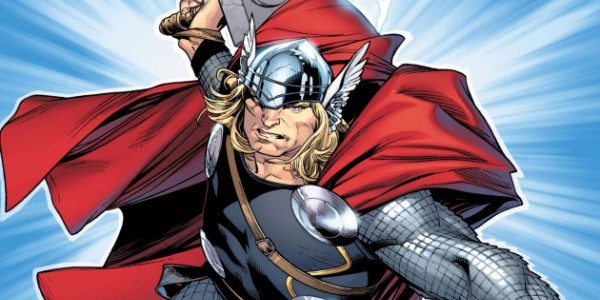 Marvel ComicsThere's a whole lot of unexplainable guff in superhero comics. We hope we've made that clear by now. There's one particular point that we feel exists above all others, however, and that's the fact that religion still exists in both the Marvel and DC Universes. We're not getting all Reddit fedora on you or anything, we're just saying that in these fictional universes, there are characters who still ascribe to real life faiths like Catholicism, Judaism, Islam, and the like. Which makes absolutely zero sense in the face of overwhelming evidence that suggests those believes are a load of hogwash - that evidence being all the literal gods flying around. Yes, this is a world where all of the miracles Jesus supposedly performed pale in comparison to the things Superman does on his off days, and where we actually know that the universe was created not by a giant dude with a beard who lives in the clouds but a couple of guys who are the same colours as their respective publishers (as seen in DC vs Marvel). Or, maybe it's The Spectre? No, wait, Scarlet Witch technically remade reality...although it was the Celestials who were responsible for all life. But Wonder Woman is a direct descendant of the Greek gods, so they must be real? We're really confused. What we're most confused by is not why people believe in religion, still, but why they choose the old fuddy duddy faiths when they've got so many better ones to choose from! We know Zeus and pals actually existed, so if you pray to them you're more likely to get an answer. The fact that it's some goofy space giants who put us here wipes away any Catholic guilt you may feel, so who knows what Daredevil's got to mope about any more. We at least deserve a Church Of The Latter Day Batman in a DC Comic at some point! And yet, it's never been addressed.