13 Freaky Facts You May Not Know About Comics And Their Creators

Some people just don't recognise a good thing.

Comic books have captivated readers for more than three quarters of a century. The fantastic characters and earthshaking storylines continue to fascinate and amaze fans; and in recent years this wealth of mythic material has helped revitalize the movie industry. But sometimes the most intriguing stories take place behind the scenes - in the lives of the creators, and in the strange circumstances and fateful events which have shaped the history of the comic book. Did you know that when Jerry Siegel and Joe Shuster created the first Superman story in 1933, the character was absolutely nothing like the superhero we know today? At the time, Joe and Jerry's work was still rather primitive - even by the standards of early comic books. Superman's incredible backstory had yet to be written, and the character sported no colorful costume, no flowing cape, no red S-insignia. In fact, Supes wore trousers and a wife-beater shirt! Rivalries and strange alliances! Threats, lawsuits and broken promises! Crazy connections and weird quirks of fate! All these factors have contributed to the growth of comics and the success of superheroes. Here are the often weird truths, exposing several long-held misconceptions and revealing some all-but-forgotten firsts - 13 of the craziest, coolest and, often, most ironic connections in comic book publishing.

13. Marvel & DC's Very First Comics Were Produced By The Same Man!

Eighty years ago, National Comics (later to become DC) published the first issue of its first comic, New Fun. New Fun Comics was cover-dated February 1935, and enjoyed the distinction of being the first comic book to feature all new material, unlike the handful of other magazines which mostly reprinted newspaper comic strips. There were no costumed superheroes in New Fun - until issue #52, when the Spectre debuted. (By then, the name of the magazine had been changed to More Fun. Aquaman and the Green Arrow both debuted in issue #72). But of more interest, the contents of New Fun Comics were put together and edited by Lloyd Jacquet, who worked for National's first publisher, Major Malcolm Wheeler-Nicholson. After editing four issues of New Fun, Jacquet left National to start his own company, Funnies, Inc., which employed several soon-to-be famous comics writers and illustrators. Funnies, Inc. was a freelance comic book shop that "packaged" complete issues of comics for other publishers who wished to test the market in this new and still primitive medium - without having to hire a staff of creators. Martin Goodman was one such publisher. Goodman owned Magazine Management, and wanted to launch Timely Comics - which would morph into Atlas Comics during the 1950s, and Marvel Comics in 1960. Timely's first comic book was Marvel Comics #1, which introduced the first 3 "Marvel" superheroes: the original Human Torch, the Submariner, and a caped crime-fighter called the Angel. These three characters, along with the entire contents of Marvel Comics #1, were created by the free-lance writers and artists at Funnies, Inc., under the supervision and editorship of its owner, Lloyd Jacquet. The fact that the same editor was present at the births of both DC and Marvel Comics - and that he delivered the first comic book "babies" of these rival publishers - is indeed ironic. But still stranger things await us....

12. Superheroes Might Never Have Existed If The 1st Comic Hadn't Bombed!

The Superman character was repeatedly rejected as both a comic book feature and a newspaper comic strip. During their years of rejection, writer Jerry Siegel and artist Joe Shuster honed their skills, and continued to modify and refine the character until he became pretty much the superhero we know today. National Comics (now DC) finally accepted the character and ran Superman as the lead story in Action Comics #1. He even made the cover. National owned its own distribution company, guaranteeing that readers everywhere got a chance to see Action #1 with its highly original concept of the costumed "superhero." The comic sold extremely well, and inspired a plethora of super-powered people. Other publishers flooded the market with brightly clad capes, cowls and corsets. Superman was the match that lit the fuse that ignited the explosive popularity of comic books. Although "funny books" had been around for years, publishers had never before seen the medium's full potential and marketability. The Golden Age of Comics began with Superman's 1938 appearance, ensuring that 8 decades later, we'd still be reading comics, and especially featuring superheroes. But things could have turned out drastically different. Superman was actually accepted for publication in 1933, by Humor Publishing Company. Joe and Jerry had arrived - or so they thought! Humor also agreed to publish another Siegel and Shuster character, Detective Dan, in what was to be the first comic featuring both new and reprint material. But Humor suffered from poor distribution and, in 1933, comics hadn't yet found an audience, so the publisher's new comic lost money. Humor decided to give up on comics, and backed out of publishing "The Superman"! Joe and Jerry were back to square one, trying to find a home for the character. After a few more rejections they also went back to the drawing board. But imagine if Superman had appeared five years earlier, in his more primitive form; before Joe and Jerry had polished their work; in a medium still without an audience; released by a company with poor distribution (and which cancelled their first comic after the poor performance of a single issue). Would Superman have succeeded - or been quickly cancelled? Started a trend ... or faded into oblivion? If Humor's first comic hadn't bombed, it's possible there'd be no superheroes as we now know them; probably no Golden Age, either. All speculation, of course, unless we can locate a time machine.

11. Superman Was Not The First Costumed Superhero!

Superman may have inspired legions of masked crime-fighters, and jumpstarted an entire industry, but he was NOT the first costumed "superhero"! Sorry, but that distinction goes to Lee Falk's masked jungle hero the Phantom: "The Ghost Who Walks"; "The Man Who Cannot Die"! The Phantom first appeared on February 7, 1936, in a daily newspaper comic strip (illustrated by Ray Moore) - a full two years before the quintessential costumed hero, Superman. Although the Phantom had no fantastic powers beyond his supremely developed physical prowess, his jungle-bred instincts, and a fantastic fear-invoking legend, he was the first "superhero" to wear a skintight costume and a mask that hid his pupils - two distinctive characteristics of the classic comic book hero. The Phantom also has a secret identity, Kit Walker, who swore an oath to avenge his father's murder by battling evil forces.... Hey, if any of this sounds familiar, wait, there's more: the Phantom hangs out in the Skull Cave. We can imagine there's also a few bats hanging out there with him, but alas, no Batmobile. Instead, the Phantom gallops about on a white stallion named Hero, with a trained wolf named Devil for a sidekick. Batman didn't get Ace the Bat-Hound until 1955... The Phantom eventually made the jump to comics, paperback novels and movies. At the peak of the character's popularity, over 100 million readers thrilled to his adventures.

10. Captain America Started Slinging A Round Shield To Avoid A Lawsuit

Captain America was not the first superhero to wear the Stars and Stripes! In January 1940, MLJ Publishing (later known as Archie Comics) debuted a character named the Shield, in Pep Comics #1. The Shield was an FBI agent who gained enhanced strength from a super-soldier formula. (Sound familiar?) Oh yeah, and he wore a red, white and blue uniform - sporting a large star-studded shield as a chest-plate. About a year later, Timely Comics (which ultimately evolved into Marvel) published the first issue of Captain America, featuring another super-soldier - who CARRIED a star-studded shield! By then, MLJ's The Shield was enjoying a modest degree of popularity (and profitability) so the character's publisher, John Goldwater, wasn't happy to see another superhero so similar in appearance and abilities. According to Captain America co-creator Joe Simon, Goldwater marched into the offices of Timely and threatened to sue the publisher, Martin Goodman. Goldwater's biggest beef was that Cap carried a shield that was almost the exact shape and pattern as the chest emblem on the Shield's costume, because Goldwater felt his readers were bound to get confused. Goodman and Goldwater had long been friendly rivals, so to avoid things getting ugly, the two publishers quickly reached an agreement: beginning with the second issue of Captain America - and at the suggestion of Joe Simon - Cap's shield would be round. Captain America's other co-creator, artist Jack Kirby, had already finished drawing the next issue, so he actually had to go back and modify several panels of his artwork. But that's why Cap's shield changed shape after only a single issue; but of course, the whole business turned out to be serendipitous. Captain America soon started throwing the new, round model like a colossal frisbee, making it both a defensive and offensive weapon.

9. DC Comics Is Strangely Connected To The New York Public Library

Around 1910, an 18-year-old Jewish graphic designer and engraver named Israel Schnapt emigrated from Austria to the United States. After arriving in New York, he simplified his name to Ira Schnapp and started looking for work. Schnapp held a variety of jobs, including designing and engraving U.S. postage stamps, and lettering the filmed title cards for silent movies. Schnapp was also a highly skilled stonecutter, and in 1911 the City of New York hired him to design and hand-carve the lettering above the main branch of its library: MDCCCXCV € THE NEW YORK PUBLIC LIBRARY € MDCCCCII Three years later, Schnapp designed and carved the famous phrase "Neither snow nor rain nor heat nor gloom of night stays these couriers from the swift completion of their appointed rounds" above the entrance to New York's James Farley General Post Office. Due to the historic significance of these facades, Schnapp's contributions to Americana are impressive, but his greatest contributions to pop culture were yet to come. In 1938, Ira Schnapp was hired by National Publishing (now DC) to design logos for its line of comic books. Schnapp created the stunning title logo for Action Comics, and later refined and perfected Siegel and Shusters' Superman logo, making it the most recognizable branding in the world. Schnapp stayed on at DC Comics for 30 years, lettering covers and creating dozens of inspired logos for comics, including the Silver Age greats The Flash, Green Lantern, Hawkman and Justice League of America. He also designed all the house ads that proliferated DC's comic books throughout the 1960s. Ira Schnapp, the man later known as "Mr. DC," helped define the company's distinctive look. He left indelible marks on both the New York Public Library and comic book history.

8. During The 1950s Superheroes Were Out - But Not Really
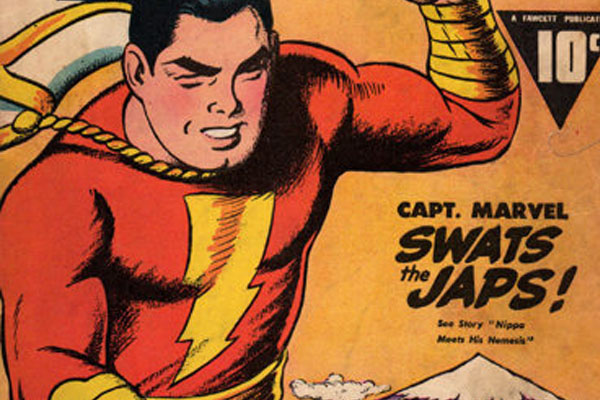
After WWII, the once skyrocketing popularity of comic book superheroes went into steep decline. As the 1940s drew to a close, most publishers mothballed their costumed characters with only a few exceptions. Such long running titles as DC's The Flash and Timely's Captain America ended abruptly, and for the next several years romance and horror dominated the newsstands. Most readers assume that as the decade of the 1950s dawned, the last (and only) superheroes standing were DC's big three: Superman, Batman and Wonder Woman. Even DC "simplified" the truth by stating as much in articles throughout the sixties. But it's just not so. Fawcett Comics continued to publish the original Captain Marvel well into the fifties. Captain Marvel had been the best-selling superhero of the 1940s, selling 14,000,000 copies at its peak in 1944. (Shazam!) The character was still popular, and frequently outsold DC's Superman, but Fawcett was finally forced to cease publishing their superhero in 1953 - and not because of declining sales. DC had sued Fawcett way back in 1941, claiming Captain Marvel too closely copied Superman. Fawcett initially won the case, but DC then won an appeal; and the case had dragged on for years. Fawcett was tired of all the litigation, and its profits from the Marvel Family comics were being swallowed up in legal fees. So Fawcett threw in the towel, and pulled the last of its superhero comics. The only superheroes who still had their own titles were now at DC: Superman and Batman, who each appeared in multiple titles, and Wonder Woman. But the adventures of other costumed crime-fighters continued to be told, without missing a single bit, throughout the 1950s and well into the superhero renaissance known as the Silver Age. Aquaman and Green Arrow (along with GA's sidekick, Speedy) continued as backup features in titles such as Adventure Comics, well into the Silver Age. So when DC started rebooting its superheroes, beginning with the Flash in 1956, the eventual "makeovers" of Aquaman and Green Arrow were more subtle: no redesigned costumes, and only a few tweaks to their backstories. All of which proves the history of comic books is far too complex to to be told in generalities and superlatives.

7. The Flash Was NOT The First Superhero Rebooted In The 1950s!

In 1956, when DC decided to give superheroes another shot, The Flash was the first of their retired characters to be redesigned and reintroduced - as the modern version of the scarlet speedster fans recognize today, both in comics and on the CW's popular TV series. The reboot of The Flash is universally acknowledged as the single event that ushered in the renaissance of the superhero known as the Silver Age of Comics. Relaunches of other characters soon followed, and fantastic costumed heroes have ruled comics ever since. But The Flash was NOT the first superhero to get a 1950s reboot! Two years earlier, in 1954, Martin Goodman thought the time might be right to return to publishing superheroes. His company, then known as Atlas Comics (formerly called Timely), decided to relaunch its 3 most popular Golden Age heroes. "Captain America...Commie Smasher!" (Subtle, right?) hit the racks in May 1954. Neither Steve Rogers nor Bucky Barnes had aged a day, and they were still garbed in the familiar red, white and blue - only now they were tackling the Red Menace. Cap's new mission lasted only 3 bimonthly issues, so many readers in the 1950s who blinked probably missed the half-year run. (And in the early sixties, when editor Stan Lee was ready to add Cap to his burgeoning roster of Marvel Age characters, it was as though those 3 ill-timed issues had never happened. In fact, Marvel mythology now explains those 1954 appearances as being the adventures of two imposters surgically altered to resemble Steve and Bucky! Uh, whatever. The Human Torch (the flaming android, not the Fantastic Four character) and his partner Toro were relaunched two months earlier, in March 1954, and like Cap, fizzled out after 3 bimonthly issues. Timely's aquatic hero, Submariner, was relaunched in April 1954. His run was slightly more successful; it lasted for 10 bimonthly issues before sinking into obscurity. Obviously, most readers still weren't ready for comics' Silver Age renaissance, so The Flash remains the forerunner in the mass return of superheroes.

6. Spider-Man Was A Throw-Away Property

Marvel publisher Martin Goodman hated the idea of a hero with the powers of a bug. When Stan Lee and artist Steve Ditko came up with the character concept for Spider-man, Goodman didn't think it would work - and he didn't want his company wasting time with it. But Goodman had a comic book called Amazing Adult Fantasy, which wasn't selling well and was about to be cancelled. Goodman gave Lee the go ahead to use the Spider-man idea for the magazine's final issue, simply because he needed material to fill the pages. And if readers didn't like the new character, it wouldn't matter, because once the comic was cancelled, Spider-Man would never be seen again. Or so Goodman imagined. For the comic's farewell issue, the publisher dropped the word "adult" from the title; Amazing Fantasy #15, boasting a cover featuring the now iconic web-slinger, hit the newsstands in August 1962, with absolutely no expectations of it performing well. The comic then ceased publication as planned, and no one at Marvel gave Spidey a second thought. Three months later, once the sales figures were reported, Goodman realized Marvel had a potential hit in the kooky kid with bug abilities. So, in March 1963, the Amazing Spider-man got his own magazine! The rest is comic book history.

5. DC Planned To Cancel Batman And Detective Comics
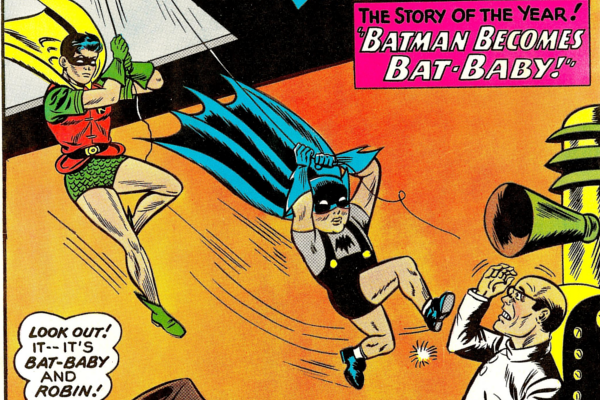
In 1964 the Silver Age was in full swing, superheroes were back with a vengeance. DC had successfully rebooted its Golden-Age heroes and featured each of them in their own comic. But in the midst of this nearly universal comeback of superheroes, one costumed crimefighter appeared to be kaput. The sales of Batman and Detective Comics were so poor the books were barely breaking even. It looked like the time had come for one of DC's three greatest superheroes to hang up his cape! Batman's plummeting popularity was attributed to editor Jack Schiff's mishandling of the character. Schiff oversaw all the comics featuring Batman, and it was clear that both the editor and the character had lost their way. Schiff started handling Batman as a sci-fi comic, introducing monsters and aliens, as well as ridiculous plots involving robots and time travel. The once popular dark detective was now nothing more than a humorous caricature. DC's publisher, Harry Donenfeld, decided the character either needed overhauling or cancelling. So he called editor Julius Schwartz and artist Carmine Infantino into his office and gave them a clear mandate: either fix Batman and get him back at the top ... or else! Oh yeah, and he gave them only 6 months to accomplish this feat. Donenfeld's dreaded "else" meant that he'd cancel the long-running character. But Schwartz and Infantino couldn't help but feel that "else" implied consequences of an occupational nature. Schwartz had overseen the reboots of the Flash and DC's other Golden-Age heroes, but these were essentially science fiction characters - which is what Schwartz was most comfortable with. He nervously assigned John Broome to write a new story that eschewed all sci-fi trappings, and then he gave Infantino carte blanche concerning the art. Infantino, who had redesigned the Flash and refined space-hero Adam Strange's uniform, dropped the cartoonish style developed over the years by the numerous ghost artists employed by Batman's creator, Bob Kane, and instead depicted Batman in the same modern, realistic style as DC's other superheroes. Infantino also updated the Batmobile and started penciling evocative covers for all the books featuring the caped crusader - one of which won an Alley Award for Best Cover (Detective Comics #329). The "New Look" Batman debuted in Detective Comics #327 - and it worked, as fans loved the fresh art and new direction.

4. DC Comics Kept Its #1 Competitor (Marvel) Alive And ... Competing!
Sometimes, what seems like a sound business idea is anything but. Many comic book publishers during the 1950s operated their own distribution companies. DC, Charlton and Atlas all distributed their own comics and magazines - and Martin Goodman (of Atlas) had always used this arrangement to great advantage. The publisher was known to flood the newsstands with his books, often crowding out other, and worthier publications. Goodman's game plan had always been quantity not quality, and his numerous pulps and slick magazines, frequently filled with reprints, proved this point. (However, regarding Atlas Comics, Goodman's chief editor, Stan Lee, managed to maintain a level of quality despite the large number of titles being published each month.) But in the mid-fifties, Goodman got a bad idea: he decided to close his distribution company, in favor of letting someone else worry about getting his wares to market. Goodman signed a contract with American News Distributors, and for about a year everything went just swell ... until American News abruptly got out of the magazine business! Goodman suddenly found himself - in 1956, the dawn of the Silver Age of Comics - with no way to get his dozens of pulps, magazines and comics to the newsstands. He quickly dropped his remaining pulps, and drastically reduced the number of magazines and comics he published. And then he made "a deal with the devil"! DC's sister company, Independent News, magnanimously agreed to distribute its biggest competitor. After all, what could it hurt? IND saw a way to make money on Goodman's wide assortment of magazines; and at the same time the distributor could also force him to limit the number of comics Atlas published. Besides, Goodman's company would NEVER really pose a threat to the DC giant. IND limited the distribution of Atlas comics to only 8 titles per month. But editor-in-chief, Stan Lee, wisely found a way around this limitation, by producing 16 different titles published bimonthly - staggering the distribution, with eight titles one month, the other eight titles the next month. This working agreement between Goodman and Independent News lasted until 1968, at which time the publisher, now known as Marvel, cut a deal with Cadence Distribution. Once again the floodgates were open - wide open - and Stan Lee let loose with dozens of new titles. It was time for payback, and DC would have to struggle to keep up!

3. Stan Lee Got DC's Publisher Fired!

Marvel Comics were enjoying huge sales with little more than 16 bimonthly titles, but owner Martin Goodman wanted MORE. He signed a contract to have his comics distributed by Cadence, and almost overnight, Stan Lee went from producing 8 comics per month to 12 titles. Eventually, other changes took place at Marvel: late in 1968, Goodman sold his Magazine Management Company to Perfect Film & Chemical Corp. The new owner wanted still more titles published, and Stan Lee rose to the task. And finally, in 1972, Cadence Industries purchased Magazine Management from Perfect Film, "officially" renamed the company Marvel Comics Group, and promoted Stan Lee to publisher. A year earlier, Silver Age Flash artist and comics innovator Carmine Infantino had been promoted to publisher of DC. As the editorial director, Infantino had been a major force at DC, allowing more creative freedom and introducing several new conventions which enhanced working conditions, such as compensating writers and artists for reprints. (Previously, the industry standard was that comics creators were paid only once, no matter how many times their work was reused. Infantino and Lee had both risen through the ranks from the earliest days of comics. They felt a kinship, and periodically met for lunch and exchanged phones calls. They also had a friendly rivalry going, which Stan Lee may have taken too seriously. Lee took a tip from former boss Martin Goodman's business strategy, and began flooding the market with dozens of new titles. Many of these comics were derivative and poorly crafted, and most didn't last but a few issues. But over at DC, Infantino was forced to keep up or see DC's books crowded off the racks. Infantino green-lighted comics with dubious titles like Plop! and Prez. Ever hear of Prez? Well, there ya go. This competition went on for years, but peaked in 1975. That year, DC posted losses of approximately $2,000,000. Marvel lost even more money, but the suits who owned MCG must have been far more forgiving than those at DC. Infantino was asked by the board of DC's parent company, Kinney, to explain the losses - which he did. A day later, Infantino was asked to clean out his desk and vacate his office. Stan Lee never intended this to happen. He's not malicious or vindictive. But nevertheless, his actions at Marvel had indirectly led to rival publisher Infantino's dismissal from DC.

2. After Being Fired, DC's Former Publisher Went To Work For Marvel

After Carmine Infantino was fired as the publisher of DC Comics in 1975, the artist who'd helped jumpstart the mass revival of superheroes, the man most responsible for redefining DC's look during the Silver Age, needed a job! Stan Lee reached out to his former rival. Lee had always admired Infantino's skills as a cover designer and storyteller; in fact, nearly a decade earlier, in 1966, when Lee first heard that DC had tasked Infantino with either penciling or designing the covers for its entire line of comics, Lee had phoned the artist and offered him $35,000 to leave DC and come to Marvel. Infantino had declined, remaining loyal to his company. But now? Infantino wasn't one to hold a grudge. Besides, all's fair in love and war - and comics. So Infantino, the "Face" of DC, immediately went to work for Marvel, designing numerous covers for such titles as Nova; penciling Star Wars (George Lucas actually requested him); doing an 18-issue run on Spider-Woman (during which he redefined the character's look); as well as filling in on issues of Iron Man and the Avengers. Comic books are often filled with strange tales with twist endings, but the fascinating history behind their creation is just as strange - and often just as ironic.

1. Marvel And DC Own The Word SUPERHERO

At some point both DC and Marvel Comics realized the word "superhero" was a key identifier of what they created, and that the word was worth big bucks when it came to marketing. Hence, both publishers wanted to trademark the word. After all, a trademark protects a company from the competition. But the word "superhero" is a common term which has been in use for decades. And both Marvel and DC had constantly used the term. How could either company lay claim to it? The chances of any single company being allowed to trademark the word were zilch. In fact, a legal battle between the two comic book giants would pretty much guarantee that nobody would win. So Marvel and DC decided it was time for a superhero team up. In 1979 Marvel and DC jointly filed for a trademark on the word "superhero." Working together, the two companies demonstrated that when readers thought of the word "superhero," they thought of characters created by either DC or Marvel. And together the two industry giants won! Today no other company can legally use the term "superhero" as part of the title of a comic book or magazine; or in the advertising of collectibles, costumes ... well, the list goes on. It's okay for another publisher's character to be called a superhero INSIDE their comic, but that's about it. No other company can use the word to market a comic book or related product. And Marvel and DC vigorously protect their trademark by pursuing entities who misuse it. They have to! Or they risk having the word become generic - and losing their trademark! By the way, Marvel and DC recently renewed their trademark, so be careful how you use the word SUPERHERO (® DC and Marvel Comics).

In this post: 
Batman
 
Posted On: 
Contributor
Contributor

Tom English is an environmental chemist who loves reading comics, watching movies, and writing stories both weird and wonderful. His fiction has appeared in several print anthologies, including CHALLENGER UNBOUND (KnightWatch Press, 2015), GASLIGHT ARCANUM: Uncanny Tales of Sherlock Holmes (Edge SF and Fantasy) and DEAD SOULS (Morrigan Books). Tom also edited the mammoth BOUND FOR EVIL: Curious Tales of Books Gone Bad, which was a 2008 Shirley Jackson Award finalist for best anthology. Among his non-fiction books is DIET FOR DREAMERS, a collection of inspirational stories featuring everything from Stan Lee to Sherlock Holmes to Slinky Toys. Tom resides with his wife, Wilma, surrounded by books and beasts, deep in the woods of New Kent, Virginia.