15 Most Notoriously Controversial Storylines In Comic Book History

Prepare for some head shaking and surprises...

Comic books are certainly no strangers to controversy, with a long string of writers taking over storylines and sometimes going off the deep end with them. Sometimes these drastic departures in the story work out great for the character and the comic, but often the storyline can take a dark turn that leaves readers and other comic creators shaking their heads and wondering WTF is going on. Obviously we have seen controversial storylines that outrage fans, like Spider-Man's Clone Saga fiasco or Spider-Man's One More Day or Spider-Man's - well, Spidey clearly has a few issues over the years with his creators. But while those moments may leave a bad taste in the mouths of some fans, they don't shock and offend like some of these following plots that have left stains on the history of comics. Prepare for some head shaking and surprises as we take a look at some of the most notoriously controversial storylines in comic history.

15. Cyclops Abandons His Wife And Newborn Son
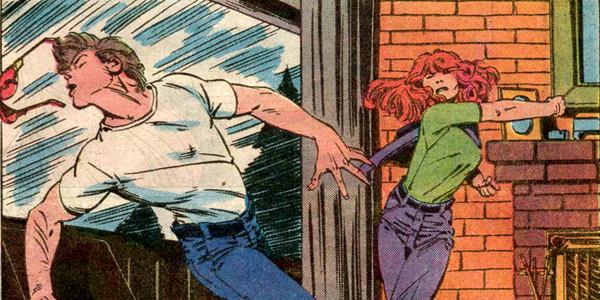
Following the Dark Phoenix storyline and the loss of Jean Grey, Chris Claremont wrote in the character of Madelyne Pryor, an airline pilot working for Scott Summers' grandparents. Pryor and Scott fell in love, got married, and had a baby, Nathan, who would grow up to be the mutant known as Cable. Cyclops would decide to leave the X-Men after losing a battle against a powerless Storm for leadership of the team, retiring to Alaska with his wife and newborn son. There he was supposed to have a happy ending and usher in the idea that it was okay for the X-Men to grow and move on, which would then allow new characters to come onto the team with the old guard settling down, according to X-writer Chris Claremont. Then Jean Grey reappeared in the pages of Fantastic Four, which led to the debut of X-Factor #1, starring the original team of X-Men, including Cyclops. But wait, didn't he just retire to spend his life with his loving family? Turns out that in a monumental shift of character that completely invalidated his role as a hero/decent human being, Scott Summers abandoned his new family to return to the side of Jean Grey. This blatant disregard of not only the character's own values, but the happy ending set up by Claremont resulted in Madelyne Pryor turning evil and attempting to sacrifice her son to open the gates of hell during the Inferno storyline, where she was then killed off, with the majority of the blame resting on Scott's uncharacteristic actions. This storyline caused a huge outrage among fans and creators alike, who were disgusted at the ease with which Cyclops abandoned all of his personal morals and family simply to help sell a new X-book. While Cyclops has definitely stayed at the forefront of the x-line of comics, this change in his character has been tackled a number of times in other storylines, but none as controversial as the desertion of his family.

14. Starfox Put On Trial For Sexual Assault

Eros of Titan AKA Starfox is a fairly lame member of the Avengers and brother to the mad god Thanos. Starfox was made an Avengers after a period of time working with the team, during which he revealed his 'pleasure-stimulation' powers, which have also been described as psychic control over the emotions of others. Long after he had left the Avengers but during an extended stay on Earth, Starfox was brought in for charges of sexual assault, with a number of women there to testify that he used his powers to seduce them. The trial was written by Dan Slott in the pages of She-Hulk, who acted as Starfox's lawyer in her civilian identity, Jennifer Walters. She herself had been with Starfox during their time on the Avengers, and thinking he had used his powers on her, Jen beats the crap out of him. It is eventually revealed that he did not use his powers on her for sex, but instead to manipulate her relationship with John Jameson (son of J. Jonah). The trial eventually ends on Titan with Starfox's powers being removed, due to his manipulation of Thanos when they were children that resulted in thousands of lives lost. So while Starfox is punished for the improper use of his abilities in space, it isn't because of his highly questionable behavior on Earth. It is never really clarified whether or not he used his powers on the women who alleged he did, making Starfox a potential serial rapist still wanted for those crimes on Earth.

13. Shado Rapes A Feverish Green Arrow

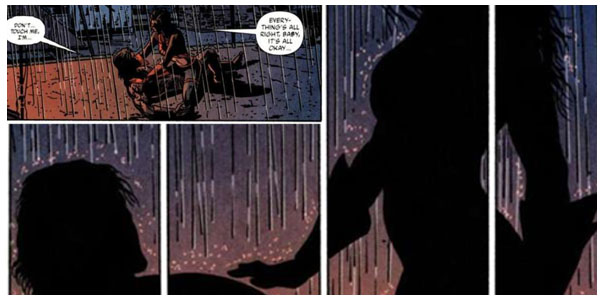
Rape has played a part in many controversial storylines over the years, and we will see a number of entries (far too many, unfortunately) on this list that used rape as a key plot point. Prior to the New 52, Oliver Queen AKA Green Arrow was a very different character, older, wiser, and a defender of civil rights. Ollie hads a long and sordid past with the ninja assassin known as Shado, who was raised by the Yakuza and played a prominent role in the Mike Grell-era of the Green Arrow series. In one of their earliest encounters, Green Arrow was injured, and left feverish and suffering from hallucinations and delusions while Shado took care of him. During this time, Shado instigated a sexual encounter with Ollie, who in his haze believed he was sleeping with Dinah Lance AKA Black Canary. Ollie would only find out about this violation years later when Shado would show up with his son Robert, and then forbid him from being involved in the boy's life. This act of rape was controversial for many reasons, but mainly due to the lack of consequences for the character of Shado, with really the only character showing any form of outrage being Black Canary, who was as upset with ollie as she was Shado. Fans and other writers condemned the act, but also were quick to forgive, which is unfortunately the case with many comic book stories that involve the rape of a male character. Batman was in a similar situation with Talia al Ghul, which resulted in the birth of Damian Wayne, though the original storyline Damian's origin is based on featured consensual sex.

12. Ultimate Quicksilver And Scarlet Witch's Incestuous Relationship
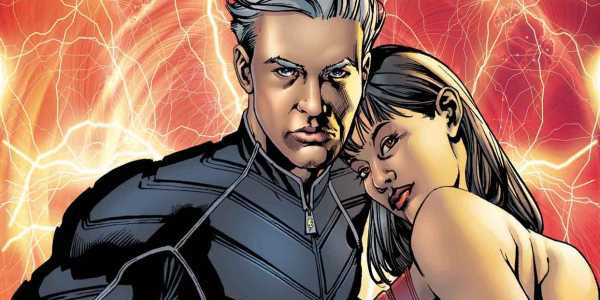
Marvel's Ultimate universe became known as a line where anything could happen, deaths mattered, and creators were free to explore the characters however they wanted. This unfortunately led to Jeph Loeb's run on The Ultimates 3, which took the brother-sister relationship of Quicksilver and Scarlet Witch, who had always been close in the 616 mainstream universe, and took it to an extreme level that turned off a bunch of fans. During Ultimates 3, we learn that Pietro and Wanda were not just siblings who loved each other, but were actually in love with each other. This incestuous relationship caught many of the members of the Avengers off-guard, especially Captain America. While the characters had been used frequently in the Ultimate universe up until this point, Loeb added parts to their backstory to not only sell the incest but also help set up his Ultimatum storyline by killing off Wanda, leaving a vengeful Magneto to wreak havoc on the Ultimate's universe. Long time fans of the characters were immediately put off by the uncharacteristic relationship between Pietro and Wanda, but attention was soon taken off of the controversial storyline once Ultimatum kicked into full gear and saw such other controversial moments like the cannibalism of both Wasp and Blob, and the deaths of the majority of the Ultimate universe.

11. Kitty Pryde's Stand Against Racism
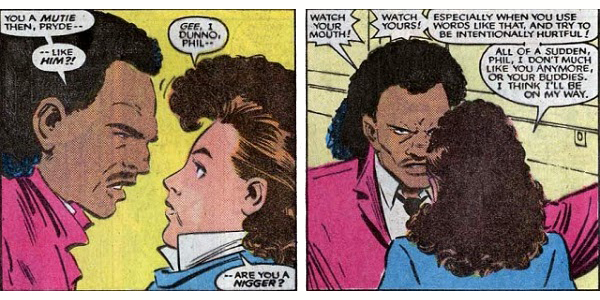
Discrimination has always been a running theme with the X-Men, with many problems facing mutants in the Marvel universe echoing real-world issues such as racism. Chris Claremont, who wrote the X-Men for 16 years, tackled the issue of racism directly by comparing the plight of mutants with other minorities, most notably African-Americans, and the various words that are used in anger. Acting as Claremont's mouthpiece to this issue was young mutant Kitty Pryde, who was no stranger to hate-mongers and bigots, having faced down Sentinels and other bigoted groups trying to wipe out her "kind". Upset with terms like "muties" and "mutie-lover", Kitty responds to an African-American man's mutant slur by throwing another slur back in his face, which was shocking to see back then, but even more shocking to see today. Kitty would speak out a number of times on the usage of words like these, equating the word "mutie" to be as big of a slur as some of the others she mentions in a few speeches that came out around this time. The controversy arose with not only Claremont's unfiltered use of the word, but his implication that the word "mutie" is just as bad as other slurs. This has sparked discussion among fans for years, with some arguing that Kitty's stance against bigotry was invalidated by her own use of the words, while other fans commended Claremont for his attempt to bring attention to the racism that exists around us.

10. Norman Osborn Fathers Twins With Gwen Stacy
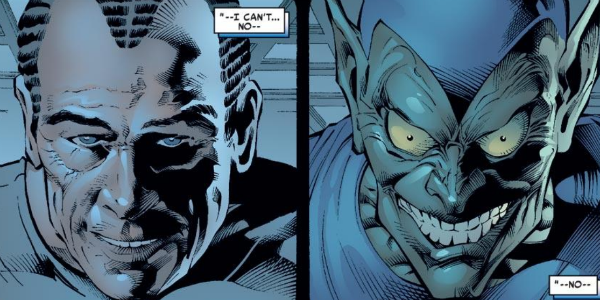
Spider-Man has experienced a number of controversial storylines over the years, as we joked about earlier. However, one storyline sticks out distinctly for shocking and repelling fans. The "Sins Past" storyline was written by J. Michael Stracynski, and featured the adult twin son and daughter of Peter's great love Gwen Stacy, who had been killed years earlier by Green Goblin in one of the most iconic deaths of Spider-Man's history since Uncle Ben. Throughout the storyline we learn that shortly after her father's death but before her own (obviously), Gwen had traveled to France, where Norman Osborn AKA the Green Goblin seduced and impregnated her. The twins were born, and due to the Goblin serum inherited from their father, began aging at an extremely enhanced rate. Gwen vowed to raise the children with Peter, but was killed by Norman before she could tell him. The twins appeared years later to fight Peter Parker, who Norman had convinced them was their real father and responsible for the death of Gwen Stacy. The 'Goblin Twins' appeared a few more times before thankfully disappearing from comics. Even JMS wanted to retcon the characters out of Spider-Man's history during the One More Day event, but he was not permitted to do so. Fans were appalled at the revelations of 'Sins Past,' feeling it unforgivably tainted the character of Gwen Stacy, who has held a lasting place in comic book history since her death.

9. Mockingbird Raped By Phantom Rider, Who She Lets Fall To His Death
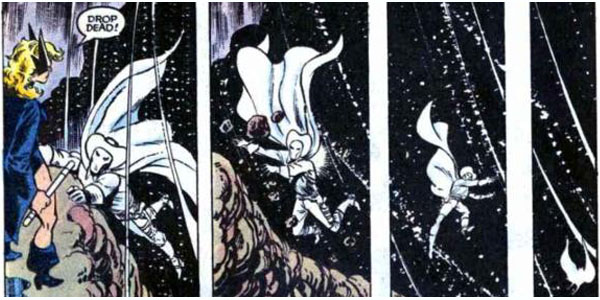
The "Lost in Space-Time" storyline by Steve Englehart was controversial for a number of reasons, as it also included a suicide attempt by Henry Pym AKA Ant-Man, a founding member of the Avengers. Meanwhile, the rest of the West Coast Avengers had been sent back in time to the old west, where they encountered the Phantom Rider and a number of other characters from Marvel's western stories. The Rider, or Lincoln Slade as he was known under the mask, became obsessed with Bobbi Morse AKA Mockingbird. Slade kidnapped, drugged, and raped Bobbi, brainwashing her to fall in love with him while the rest of the Avengers were trapped further back in the past. Eventually breaking free of Slade's control, she headed out to seek revenge on the Rider. During the battle the Rider falls off a cliff, but manages to hang on. Mockingbird could have helped him up, but she chose to let him fall to his death. When Bobbi's husband Hawkeye discovers this, he proceeds to accuse her for her actions, despite everything the Rider had done to Bobbi while he was away. This moment eventually leads to the two getting divorced. This storyline irked fans for a number of reasons, primarily the reaction of Hawkeye. The blame was placed on Bobbi for her decision to not help the man who drugged and raped her, and the focus was put on the Avengers code of no killing. Bobbi felt she was justified in her actions and made no apologies, which is arguably one of the characters defining moments.

8. Nightwing Raped by Tarantula

For a period of time, Dick Grayson AKA Nightwing was a protector of his very own city, Blüdhaven. There he became friends with John Law, who fought crime as the Silver Age hero Tarantula. Eventually former FBI agent Catalina Flores took over his identity as Tarantula, but her actions were condemned by Nightwing and she fell on the wrong side of the law. Tarantula was caught up in one of Nightwing's villain's revenge schemes, which resulted in the death of Flores' idol: the original Tarantula, John Law. Flores then took the fight to the villain Blockbuster alongside Nightwing, who she was developing feelings for, even going as far as manipulating Dick's break-up with his on-again off-again girlfriend Barbara Gordon AKA Batgirl. During the final confrontation with Blockbuster, Nightwing stepped aside and allowed Tarantula to kill the villain, which sent Nightwing into a state of shock, and he collapsed on a roof due to his injuries and exhaustion. On the rooftop Tarantula forced herself on Nightwing, who was unable to fight her off in in his weakened condition. While the scene itself was controversial, discussions about the scene afterwards with the writer Devin Grayson unintentionally stirred the pot. She stated that she never wrote the scene as rape, but as a non-consensual love scene, which was a brush-off and not what the many offended fans of Dick Grayson were hoping to hear. Unfortunately, this wasn't even the first time Nightwing had been sexually assaulted, as way back in Teen Titans, the character of Mirage posed as his girlfriend Starfire in order to have sex with him.

7. The Death And Retcon Of Magneto

Grant Morrison took over the X-Men with the title New X-Men, which saw sweeping changes to the the team that included new costumes, new relationships, and a load of new mutants. One of these mutants was the mysterious Xorn, a Chinese mutant with a star for a brain, which resulted in him having to wear a specially designed metal mask. Xorn worked his way into the X-Men, and even began teaching his own class of mutants. Eventually it was revealed that Xorn was in fact Magneto, who is under the influence of the mutant drug known as Kick. with his mental psyche suffering from his Xorn identity and the pressures of the drug, Magneto Attacks New York, and fatally injures Jean Grey, resulting in her death. Wolverine, driven to a berserker rage, decapitates the long-time foe of the X-Men. This came as a surprise to many fans, and is generally considered one of the most shocking moments in the X-Men's history. The controversy lies in the fact that Marvel got cold feet over the loss of Magneto, and immediately retconned the situation. Magneto appeared alive in the pages of Chris Claremont's new Excalibur series, and a new Xorn appeared in Chuck Austen's Uncanny X-Men, with a fairly ridiculous explanation. Apparently it was Xorn's brother who had been impersonating Magneto the whole time for undislcosed reasons, and it was never actually Magneto. Readers were confused by this backpedalling, and Grant Morrison wasn't too impressed wither, seeing as his storyline was basically made irrelevant by the retcon.

6. Alexandra DeWitt Gets Fridged

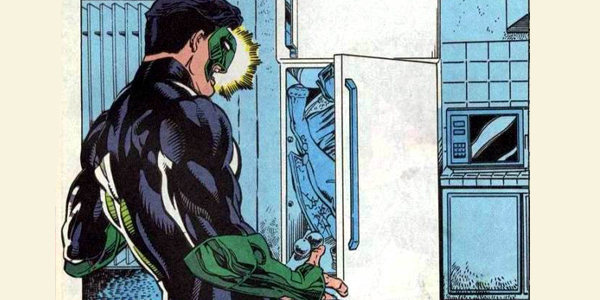
Following the Green Lantern story Emerald Twilight, which in itself is fairly controversial, Hal Jordan was no longer the ring-bearer of sector 2814. Instead, Kyle Rayner was introduced as the new Green Lantern for a new generation of comic book readers. Introduced alongside Kyle was his love interest, Alexandra DeWitt, a photojournalist who was instrumental in helping Kyle adapt to his new role as Green Lantern. The couple had just spent the first few issues reconciling, when Rayner was called into action as Green Lantern. This turned out to be a ruse created to draw Kyle away from Alexandra's house, where the super-powered hitman known as Major Force showed up for answers about Green Lantern. Alexandra was strangled by Major Force, and her body was then stuffed into the refrigerator. Rayner arrived home to see a note telling him to look in the fridge, where he discovered his dead girlfriend. Cue the inevitable battle between GL and Major Force, with heaps of character development and motivations for Rayner at the expense of Alexandra DeWitt. This moment sparked a huge debate between both fans and creators over the use of DeWitt's death as a plot device. Gail Simone and a number of other creators even created a website, and inspired by this specific storyline, titled it Women in Refrigerators, to highlight the number of female characters that are abused, raped, and killed off in order to advance the plot. The term "fridging" became widely used for other events that followed this scenario.

5. Joker Paralyzes Then Abuses Barbara Gordon

Alan Moore and Brian Bolland's The Killing Joke is a graphic novel, in all forms of the word graphic. Originally conceived as an Elseworlds tale that was out of mainstream continuity, the story followed yet another battle in the endless feud between Batman and the Joker. While also serving as something of an origin tale for the Joker - featuring his time as the Red Hood that later became canon - it also was responsible for changing the life of Barbara Gordon AKA Batgirl forever. Answering a knock at the door, Barbara Gordon is stunned to find the Joker standing outside. The Joker shoots Barbara, paralyzing her, and then knocks out her father, Commissioner Gordon. When Gordon wakes up as a captive, the Joker torments him with pictures of his naked daughter, bleeding, paralyzed and further abused by the Joker and his henchmen. While the abuse occurs off-panel, Commissioner Gordon's reaction speaks volumes. Parts of this story eventually became canon, as Barbara Gordon rose to popularity as the disabled superhero known as Oracle, but it isn't ever made clear how much of the Killing Joke made it into the official history. The senseless violence and abuse shocked readers and made an impact on the overall maturity of comics.

4. "The Rape Of Ms. Marvel"

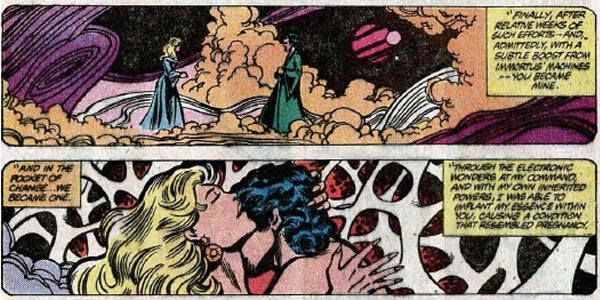
Avengers #200 stands out on top of a list full of controversial moments, and with good reason. The story, titled "The Child is Father To...?", features Carol Danvers AKA Ms. Marvel as she wakes one morning and finds herself pregnant, unaware of how or by who. The baby comes to term over a couple of days, and a boy is soon born. This boy, Marcus, begins to grow incredibly fast and starts to construct a machine that causes a number of time-related incidents across the city. The Avengers destroy the machine, and Marcus finally begins to explain things. Marcus, son of the Avengers villain Immortus, sought to create a human form that he could assume to escape the dimension known as Limbo. To do this he kidnapped Ms. Marvel, and using Immortus' machines brainwashed her so he could then impregnate her... with himself. With his machine destroyed, Marcus was forced to return to Limbo, and still suffering from the effects of the brainwashing, Carol willingly returns with him, while the Avengers stand around and fail to react at all to anything they just witnessed. Most of the Avengers are supportive of what Marcus did, and Thor even created the portal that sent Marcus and Carol to Limbo. Ms. Marvel, as one of the premier female superheroes of the Marvel universe, was written off as a rape victim who was manipulated into loving her abuser while her closest friends basically stood to the side and cheered, leaving her in the arms of Marcus, her father-son-baby-daddy-baby? At the time few people reacted to the ridiculous story and events, with the exception of Carol A. Strickland - who penned "The Rape of Ms. Marvel" in response to the issue - and Chris Claremont, who had written Carol previously and was appalled at her treatment. Claremont later wrote an Avengers Annual that tackled the events of the 200th issue and the betrayal of Carol (and her fans) by the Avengers (and the writers).

3. Speedy Addicted To Heroin

Green Arrow and Green Lantern, who were both slightly disillusioned with their roles as heroes, decided to head out on an American road trip that explored a number of social and political issues that were relevant at the time. Written by Denny O'Niel, we saw the Emerald Archer and the Galactic Guardian in a new light over the course of the series, which culminated in one of the most iconic storylines in DC history. Returning from their extended road trip, Ollie and Hal are shocked to find out that Roy Harper AKA Speedy, who was Green Arrow's sidekick as well as a founding member of the Teen Titans, was a junkie. Roy had fallen into a bad place while Ollie was off touring the US, and he became addicted to heroin in a storyline that brought the growing drug problem to the forefront of the comic industry. Roy eventually recovers with the help of Black Canary, but his character would deal with this storyline and his time as a junkie for the rest of his career as a hero. The comic sparked instant controversy despite the issues clear warning against drug use, but not all controversy is necessarily a bad thing. The award-winning issue raised a number of important questions regarding the rising drug problem among youth during that period of time, and focused not only on Roy's drug problems, but how it affected his supporting cast as well. This iconic and controversial storyline is remembered quite fondly today by fans and creators.

2. The Death Of Jason Todd

The dynamic duo of Batman and Robin were an integral part of the history of DC comics, but after so many years together writers decided it was time for the original boy wonder, Dick Grayson, to grow up and move past the role of Robin. Dick became Nightwing, and the role of Robin was soon filled by Jason Todd (known as Jay in his earliest appearances). Jason had some huge pixie boots to fill, and a lot of Robin fans to win over. In an effort to move away from Dick Grayson's time as Robin, Jason was given a "street" backstory and attitude that rubbed some fans the wrong way. After trying to make the new Robin work, the time came for a final decision on the character of Jason Todd, which the editors at DC determined in a very unique way. DC gave fans two phone numbers to call and vote on the final fate of Jason Todd, which was to take place in the "Death in the Family" storyline by Jim Starlin and Jim Aparo. The fans responded hugely and the voting was very close: 5,271 phoned in to save Jason's life, but 5,343 callers chose to kill off the character. This event received a lot of coverage and controversy, considering children's votes were determining whether or not a character was to live or die. Further adding to the controversy was the extreme brutality of the scene in question, where we watched as the Joker beat Jason Todd viciously with a crowbar before blowing him up. This moment went down in comic book history for a number of reasons besides the death of Todd, including pioneering new methods of fan involvement in the story making process and helping to usher in a new and darker period for Batman.

1. Sue Dibny Raped By Dr. Light

Sue Dibny Brad Meltzer and Rags Morales' Identity Crisis touched upon a number of themes and ruffled a few feathers with its depiction of some of DC's premier heroes. To understand the controversy we first have to get acquainted with a couple of characters. Most importantly, Ralph Dibny AKA Elongated Man and his wife, Sue. Sue Dibny had accompanied her husband in his superhero career and become a part of the Justice League family in her own right. Identity Crisis opens with the murder of Sue, and the mystery behind who killed her. As the Justice League tries to find the murderer, 7 members of the team track their own suspect, Dr. Light. It is revealed in the story that years ago, while the Justice League was on a mission and Sue Dibny was alone on the JL's satellite Watchtower, Light teleported on to the satellite, where he found Dibny alone. He attacked and raped her, before being stopped by the returning members of the Justice League. Not content with simply sending him to jail, the League and Zatanna neuter his mind as punishment for his actions. The decisions made by this specific team of the Justice League casts a dark light on that era of heroes, with the violation of the sweet and defenseless Sue Dibny offending a number of fans and writers who considered the story to be another poor example of strong female characters getting "fridged" or killed off as a plot device. What are your thoughts on some of these controversial moments? Let us know in the comments section below!

 
First Posted On: 
Contributor
Contributor

Sent to Earth from a dying planet, young Scott Fraser grew to adulthood in Alberta, Canada with a love for comics, film, games, and all things deep fried. He has dedicated his life to pedantic ramblings about continuity, superhero superiority, and Han shooting first. He also writes for Geek Magazine.