6 Wildest Batman Stories Never Published
From the Coulda Been Bat-astic to the Bat-$#!# Crazy.
6. J
The Joker once again breaks out of Arkham Asylum, and Batman - along with the Justice League - tears apart Gotham to find him. And who feels the heat the worst when the League is cracking down hard? Gotham's criminals. And because Batman works his way up from minor street thug, higher and higher on the chain, it's the "C" list criminals who suffer first. Barely escaping a beatdown and capture, The Cluemaster (who I'm going to make a much younger, inexperienced criminal) gathers a literal "C"-list of other, frightened criminals - Crazyquilt, Crime Doctor, Calendar Man and Copperhead - to hunt the "J". What follows is a desperate night search through Gotham's underworld, during which our protagonist - The Cluemaster - sees firsthand the effects of crime (Calendar Man's failed, broken life; The Crime Doctor's past victims and wasted potential; Crazyquilt's petty "goals" and Copperhead's pointless savagery). It all comes to a head when they confront The Joker - who personifies every awful quality of his teammates. He stops them from killing "J" - they each have their reasons for wanting The Joker dead - and then leaves the "team". The last page shows him leaving one last clue for The Batman - the location of the loot he stole earlier that night. Like I said, maybe a little too esoteric. But I wanted to put Batman and the other big, colorful superheroes into the world of one of those low-stakes, early 70's noirs, like The Nickel Ride or Hustle.Odds Of Being Good: 95%. Oswalt's existing comics work includes JLA: Welcome to the Working Week, which is packed to bursting with fun ideas. Odds Of Being Published Someday: 5%. Oswalt at least has some history with DC, but this project never got past the pitch stage.
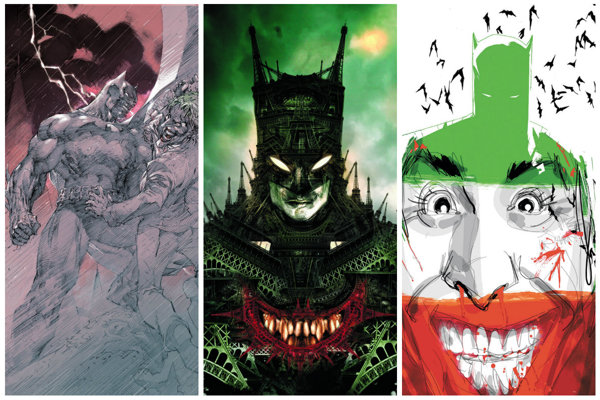
5. Batman: Europa
4, Kingdom Of The Mad
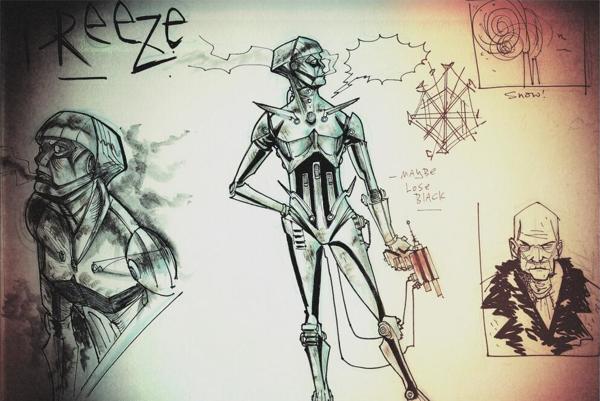
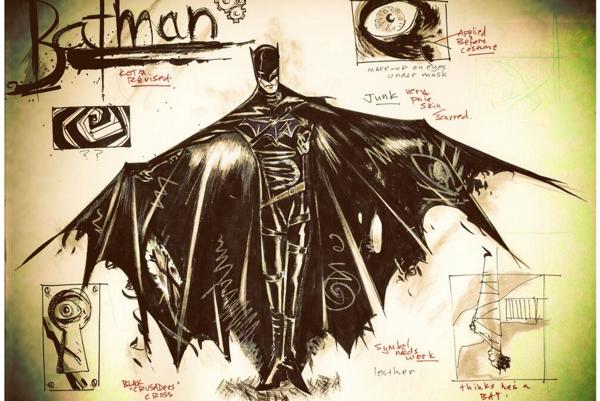
only eats rats... Thinks he's a bat... The inside of the cape has a massive drawing of a magical kingdom that he made up, like his version of Heaven. He has ESP, can turn into a bat, and can see into the future, but only he knows about these powers.
Odds Of Being Good:70%. Some of the ideas here seem almost too oddball, but if there's one mythos that can take a little gothic experimentation, it's Batman's. Odds Of Being Published:20%. DC has shown interest, and if Way's career ever slows down, he might have the freedom or even the need to flesh this project out. DC is definitely about as friendly to alternate worlds as it's ever been.Im Mr. Freeze! I like to dress up as my dead wife in armor I sculpted out of scrap-metal from her car accident! pic.twitter.com/xNnluYpeXU
goth claudia (@gerardway) June 2, 2013
3. Batman, Prince Of Denmark
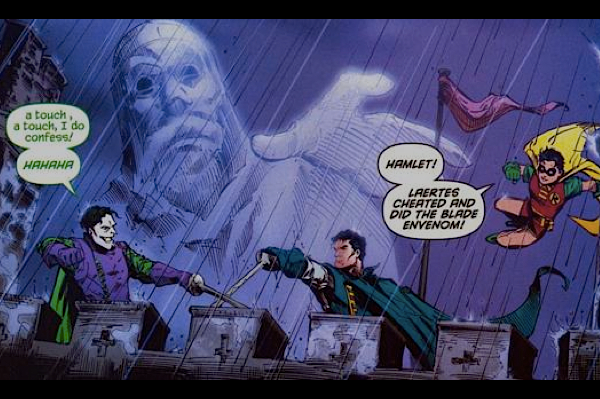
Alone in a deserted turret of the castle, Hamlet calls himself a coward and berates himself. The Jester comes and talks with him, advising him to take his adoption of a false persona a step farther. If he, Hamlet, can't make himself act, why not "become" a man dedicated to action? "They'll still know who I am," complains Hamlet. Then why not wear a mask? Something designed to show those who encounter you that you're no one to be trifled with? Something to strike fear in their hearts! At that moment, a bat flies through the turret window. And so is bornthe idea for the Bat-man.
But Hamlet still doesn't do anything. "To be the Bat, or not to be"
Problem is, that destiny is nothing if not predictable: Hamlet's tale sticks pretty close to the play before veering away just in time to avoid any killing that could be said to be by Hamlet's own hand. (Rosencrantz and Guildenstern are fine!) At which point he becomes Batman and swears to bring his uncle and anyone who supports him to justice! And, um, that's the end.
Odds Of Being Good:35%. Nothing about actually bringing his uncle to justice, or how the most effective way for a prince to fight crime might be to, you know, become king? Englehart is a fine writer and it's possible he could rework this a bit. Plus, working from Shakespeare isn't a bad place to start. It's just that pitch itself is really puzzling. Odds Of Being Published:30%. Some mashup of Batman and Hamlet does seem like the sort of thing DC will publish eventually, though whether it'll be based on this pitch or even involve Englehart is uncertain.2. Samaritan X
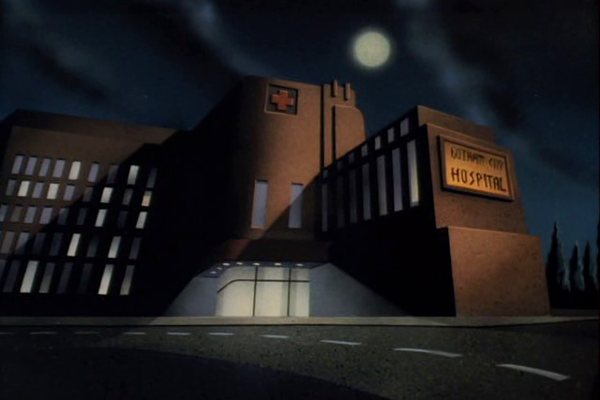
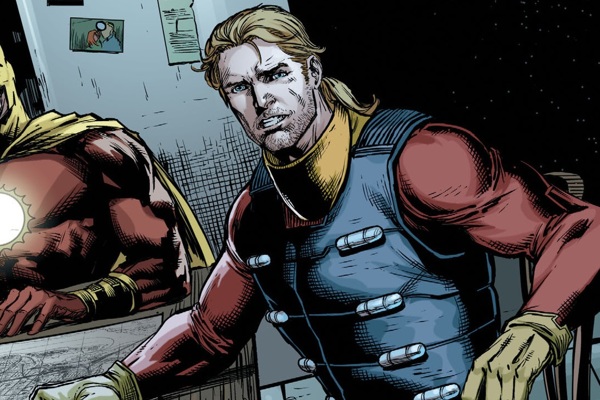
Samaritan X is as impressive outside as it is inside: a twenty-story gleaming glass and steel tower with two landing platforms on the roof, bullet-proof glass three inches thick, a staff of the best and the brightest in a variety of disciplines, and every high-tech, cutting-edge medical, scientific and diagnostic tool ever created, all in service to an area of specialization, and a clientele, that is utterly unique. In a world where super-powered individuals fight a never-ending battle against evil, Samaritan X is where those wounded on either side of that struggle come to be treated and saved. Within its walls the essential human drama of life and death is made even more intense by its application to those whom the world calls heroes or villains, the celebrated and the vilified, the nearly immortal and the previously invulnerable. When an eternally young character suddenly begins agingwhen Metamorpho discovers that he can no longer control his chemical reactions and is a danger to himself and otherswhen Supergirl needs a life-saving operation but her skin cannot be pierced by any known sciencewhen a female hero is about to have her first child, and fears that the strength of her contractions in birth could kill her normal sonwhen Cyborg discovers that his life-sustaining cybernetic implants are failingwhen a hero with fiery powers discovers he can no longer turn it off and may have to live the rest of his life never touching another human being, even his own childrenwhen a hero is wounded in battle and brought to the hospital for treatment only to be pursued there by his enemy, who is determined to finish what he started regardless of who gets caught in the middlewhen a hero on the edge of collapse suffers a psychotic breakwhen young men and women from all over the world discover for the first time that they have powers and dont know how to handle them..when those or a million other things go wrong with people strong enough to tear apart whole cities with their bare hands...their best hope for survival is Samaritan X.Odds Of Being Good: 35%. The pitch sounds amazing, really. A superhero medical drama is a natural and under-explored idea. The only problem is Stracynski-- his work on Superman and Wonder Woman was distinctly underwhelming, a far cry from his glory days on Babylon 5. Even his earlier Spider-Man work was largely mixed. Odds Of Being Published:8%. We haven't heard any reason this couldn't be revived in some way-- but that's just it: we haven't heard anything about it at all, and JMS is a busy guy. He's been headlining his own studio since 2012, and aside from Before Watchmen, his DC Comics work has sharply tapered off.
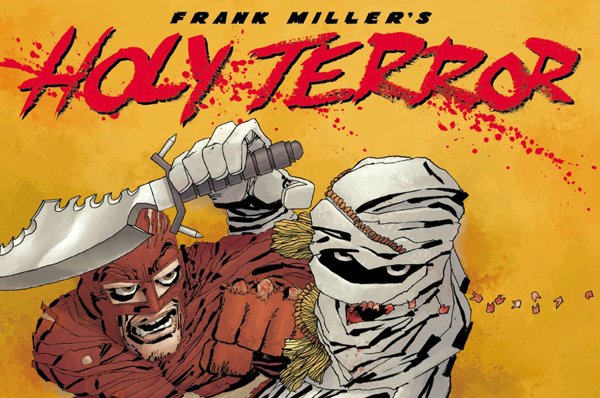
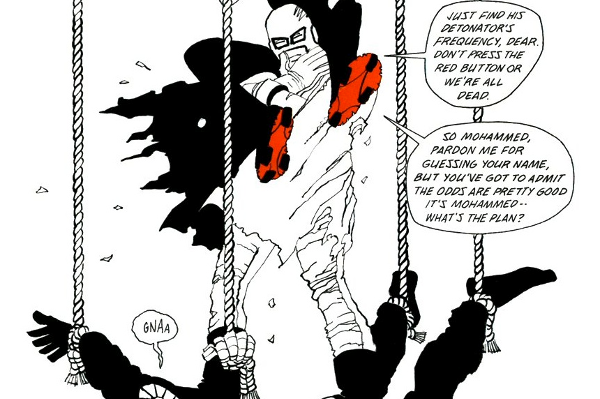
1. Holy Terror, Batman!