The Best DC Comic You've Never Heard Of
And why it's one you can't afford to miss.
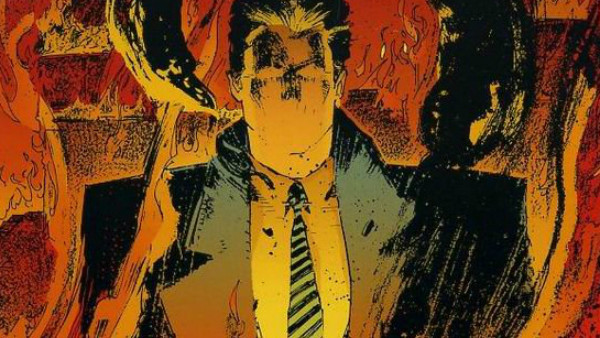
Considering the fact that DC Comics has been publishing superhero stories for over 80 years, it's actually quite surprising that a considerable chunk of the publisher's library hasn't been lost to the archives. Today, most of the company's classic comic book runs are all easily retrievable in collected editions, whether they be Batman, Superman, or someone much more obscure.
Unfortunately for Dennis O'Neil, Denys Cowan and Rick Magyar's Question, it's a comic that most DC fans are unlikely to have heard of - despite the character's cult status in the lauded Justice League Unlimited cartoon spearheaded by Dwayne McDuffie.
But while this might be the case, O'Neil and Cowan's reappraisal of the classic Steve Ditko creation ranks among the finest DC works of all time, and one more than deserving of the kind of status more commonly associated with the likes of Frank Miller's Daredevil, O'Neil and Neal Adams' Batman, or even their run on Green Arrow too.
O'Neil's influence - and indeed preeminence - goes without saying, but his and Cowan's philosophy-driven, nuanced examination of the superhero genre (and the eighties zeitgeist on top of that) is still overlooked. Here's why, if you can manage to track it down, you won't be left disappointed.
3. The Premise

The story behind the creation of the 1987 Question reboot is long and winding, and it involves another seminal text from that decade: Watchmen.
When Alan Moore originally conceived of the Watchmen story, he wanted to use characters from Charlton Comics, who DC had acquired a few years earlier. The likes of Blue Beetle, Captain Atom and of course Question too were all originally meant to feature, but when the publisher decided that those characters should be saved for the main DC Universe instead, Moore was forced to create heroes of his own; Doctor Manhattan replaced Captain Atom, Nite Owl appeared in place of Blue Beetle, and Rorschach became the analogue for Ditko's Question - an angry, faceless vigilante who followed a strict crimefighting mantra.
Watchmen #1 debuted a few months before the new Question series, but the contrast between O'Neil's version of Vic Sage and the analogue seen in Moore and Dave Gibbons' novel was evident. Whereas Watchmen pooled all its inspiration for Rorschach directly from the original Ditko comic, which was heavily inspired by the philosophies of Rand, O'Neil opted to write the hero anew from the ground up. The first issue of the run, titled 'The Bad News', begins by literally killing this version of the character off, before embarking on a journey that would see Vic transform from a steely, arrogant vigilante, into a genuinely intelligent - sometimes imperfect - hero fighting against corruption.
From that point forward, The Question became an outlet from which O'Neil could approach various philosophies and themes, and have a genuine conversation with the reader. There isn't a comic like it, and with Cowan's immaculate pencils to boot, the creative duo birthed a series that gained a following remarkably quickly.
2. The Philosophy

The driving force behind O'Neil's Question is the idea of the imperfect hero. To begin with, Sage is journalist who thinks himself invincible; he tells fiery stories on the network, and slinks out at night to fight crime. Being a hero without powers, O'Neil takes this to its only natural conclusion - by having Sage die in a fight with the DCU's most fearsome fighter, Lady Shiva.
From that point on, Vic Sage spends the next 40 or so issues learning. O'Neil introduced many of the philosophical texts he himself was reading at the time, and recommended them to readers of the book in the series' letters pages. For Zen and Violence, that book was Zen and the Art of Motorcycle Maintenance, and the writer would weave other novels into his later arcs too.
This wasn't just another 'flavour of the week' comic (not that there's anything wrong with those of course), or an over-stuffed angst-filled series either - it had a genuine message. Sage rebranded as a peaceful, spiritual avenger; as one of the DC mythos' foremost minds and martial artists, and as one determined to take a stand against the worst excesses of eighties America - political extremism and corruption being the two most notable examples. (As a side, Hub City became the worst place to be in the DCU at this point, surpassing even Gotham in terms of seediness - so Vic had his work cut out.)
By its conclusion, you truly get the sense that Vic has grown, and it's a transformation unlike any other in the superhero genre.
1. Why You Should Read It
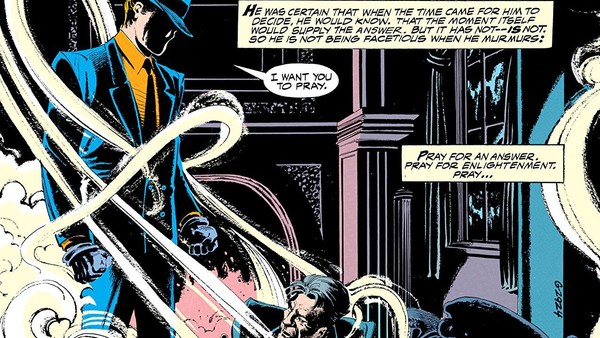
The series' high point, arguably, came in its third volume.
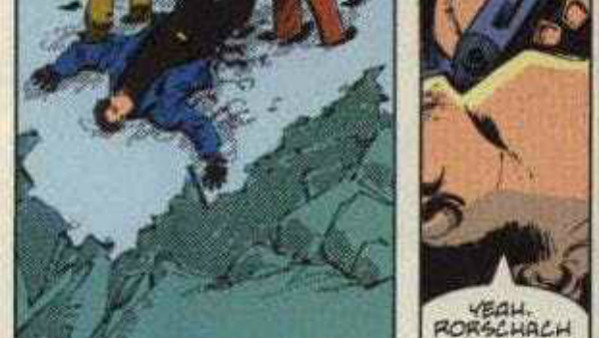
Collected in 'Epitaph for a Hero', this period of O'Neil and Cowan's comic is chockfull with iconic moments, including the fabled sequence where Sage reads Watchmen, briefly admires Rorschach, and then gets his ass kicked while trying to imitate him. The set-piece is immortalised while Vic is held at gunpoint, as the faceless vigilante defiantly proclaims three eternal words: "Yeah, Rorschach sucks."
Truly words to live by, no matter the context. Either way, Epitaph's key achievement lies in its integration of Vic into the DC Universe proper. He'd already had visions of Batman by this stage, and indeed, he 'collaborates' with the Dark Knight in the lauded Fables annual too, but here he teams-up with Green Arrow. What makes this so interesting is the fact that Oliver Queen had recently undergone a journey of his own, as writer/artist Mike Grell looked to paint a more violent picture of Oliver Queen - something O'Neil had to bear in mind, having also transformed the character in a significant way during the seventies.
The dialogue shared between the two heroes is brilliant, and it's where O'Neil's talent truly shines through. Along with Batman, and the aforementioned Arrow and Question, the writer boasts influential stints on Daredevil, Iron Man and Spider-Man - his impact on the superhero genre cannot be overstated.
But, despite all these stints on all of these characters - each undoubtedly more famous than the last - it's the Question where I feel O'Neil did his best work. The creative triumvirate of himself, Cowan and colourist Rick Magyar was stupendously effective, and with six volumes' worth of comics to collect, there's plenty to digest.
Only, you'd be hard-pressed to find them now. The series was collected via six trade-paperbacks in 2007, but it's now out of print, making it genuinely difficult to collect.
Sadly, in this case, it seems as though O'Neil, Cowan and Magyar's run is destined to fall short of the renown it deserves - and has deserved, for years now. Here's hoping that changes sooner, rather than later.