What Happened To Everyone Who Became Captain America?
Steve Rogers was the first, but he hasn't been the only one to wield the shield.

To many Marvel fans, Steve Rogers simply is Captain America. The man and the mantle are generally considered inseparable and that's largely because Rogers - although not perfect - embodied all the ideals that would go on to define Captain America as an entity.
He was brave, selfless, altruistic and compassionate, traits that not every character in Marvel's roster can always live up to. He illustrated time and again how he couldn't be corrupted, and his sheer presence alone inspired everyone around him to do better.
But of course, Rogers isn't the only person to have wielded the shield as a part of The Avengers or on their own. Either because he left the mantle behind or was indisposed for some other reason (death and being drained of the super soldier serum are pretty big inconveniences, FYI), characters both good and bad have stepped in to adopt the mantle of Captain America, and the fallout is usually pretty spectacular, as is currently being relayed in the latest MCU series on Disney+, The Falcon and the Winter Soldier.
In mainstream comics continuity nine separate characters have become Captain America both officially and unofficially. There are the more obvious names, but also the stories of some obscure characters who tried to step up and be the best star spangled man they could be - to varying degrees of success.
Not everyone can be Steve Rogers, and while some managed to live up to the OG Cap, others failed dramatically.
Here are the stories of EVERYONE who became Captain America.
9. Steve Rogers

Desperate to fight the Nazis but unable to enlist due to his numerous health conditions, Steve Rogers willingly volunteered for Project Rebirth, the super soldier program headed up by Professor Abraham Erskine in 1941. Erskine was able to transform Rogers using an experimental mix of the serum treated with vital rays, and from there, he began his training to become a true soldier.
Rogers fought throughout the Second World War, engaging in both the European and Pacific theatres alongside partner Bucky Barnes. Barnes and Rogers would go on to form The Invaders, a team of superheroes comprised of themselves, Namor, and the original android Human Torch, who fought the Nazi menace alongside the Allies and Sgt Nicholas J. Fury's Howling Commandos.
Sadly, towards the end of the conflict, Rogers and Bucky were assumed to have perished disarming a powerful rocket launched by Heinrich Zemo that was heading towards the British Isles. Rogers entered suspended animation, and was later thawed out by the Avengers following a battle with Namor years later.

As a man out of time, Rogers once again assumed the mantle of Captain America and became one of the first heroes of the Marvel Age, leading the Avengers and fighting villains old and new.
But it wasn't smooth sailing. Rogers abandoned the Cap identity after the events of the original Secret Empire, adopting the name Nomad after growing disillusioned with the US government, and repeated the same process years later, only this time naming himself The Captain.
In more recent years, Cap fought in the superhero Civil War, was assassinated by the Red Skull, returned after being displaced through time, allowed his best friend to retain the Captain America mantle, assumed it once again once said friend almost died, was rapidly aged after having the super soldier serum drained from him, regained his youth, became a secret agent of Hydra thanks to some cosmic nonsense (which... yikes doesn't cut it), and is now busy reclaiming his identity as Captain America in a stellar run from Ta-Nehisi Coates.
8. Isaiah Bradley

Currently making waves on television thanks to a barnstorming performance by the ever wonderful Carl Lumbly, Isaiah Bradley was history's forgotten Captain America.
Introduced in 2003's Truth: Red, White & Black by writer Robert Morales, artist Kyle Baker and editor Axel Alonso, Isaiah Bradley was inducted into a twisted version of Project Rebirth during the Second World War. The story drew inspiration primarily from the US government's racist Tuskegee Syphilis Study, which deliberately infected thousands of unknowing Black Americans with the virus, and serves as a commentary on how Black soldiers in particular suffered both during and after their service in the conflict.
In an attempt to recreate Erskine's super soldier formula, another scientist, Dr. Josef Reinstein, experimented on numerous Black soldiers, with only a few surviving - one of them being Bradley.
Bradley and his comrades are sent into dangerous missions during WW2, which eventually leaves him the sole survivor. He's responsible for shutting down the Nazis' own super soldier program, but such a feat doesn't alleviate his situation one bit. He's imprisoned shortly after the war, until he receives a pardon from US President Eisenhower just before the end of his term.
Bradley's story was wiped from the history books, but he remained a legend among Marvel's Black heroes, and eventually met Steve Rogers years later. Bradley also saved the life of grandson Elijah, the Young Avenger known as Patriot, during a blood transfusion, which gifted him too with the powers of the super soldier serum.
7. William Naslund

Steve Rogers' demise in 1945 hasn't always been a part of the Marvel mythos. In fact, to begin with, Steve and Bucky never perished in that fateful rocket explosion in 1945, and continued to appear in strips of... varying quality, up until Stan Lee and Jack Kirby reintroduced the character in 1964's The Avengers #4, which included the aforementioned retcon.
To account for the fact there was an active Captain America and Bucky from 1945 onwards though, Marvel would introduce a number of different retcons, revealing that various other men stepped in to assume the Captain America identity during this period. William Naslund was the first.
Naslund was another patriotic superhero who went by the name of Spirit of '76, modelling his look on a late 18th century American revolutionary. He was part of a team called the Crusaders, another WW2-era supergroup that was active alongside Captain America's own Invaders.
After Steve and Bucky's presumed deaths, the US government turned to Naslund as their first choice to inherit the mantle of Captain America. (Because there's no sense in letting a good costume go to waste, right?)
Naslund, having obviously taken inspiration from Rogers in adopting his former mantle, willingly accepted the responsibility. However, his tenure as Cap was brief, meeting his end tragically only a year after he took up the shield in 1946 when he was killed by an Android attempting to assassinate a young John F. Kennedy.
6. Jeffrey Mace

Following Naslund's death, the government turned to Jeffrey Mace. Unlike Naslund, Mace was a character who was actually created during the Second World War by Ray Gill and George Mandel. His superhero title was the Patriot, and though he didn't have much - if any - interaction with Captain America during the conflict, the characters' destinies became intertwined through a retcon introduced in the 1970s.
Mace assumed the mantle of Captain America shortly after Naslund's death, and actually outlasted Rogers' original tenure as Cap, retiring from the role in the early fifties.
Mace was fully aware of the responsibility he was taking on, and like Naslund deeply revered Steve Rogers, with the character even later receiving an in-depth retelling of his time as Cap in Karl Kesel and Mitch Breitweiser's Captain America: Patriot, which was published in 2010.
Following a well earned retirement, Mace sadly passed away from cancer in Captain America #285, with Rogers staying by his side to the end.
5. William Burnside

And this is where the Captain America replacements start to go wrong.
Horribly, horribly wrong.
So, as was mentioned previously, before Cap made his big return in The Avengers in 1964, courtesy of Stan Lee and Jack Kirby, he and Bucky originally survived the events of the war and proceeded to embark on what I'd like to call "the crazy years".
As the US shifted its attention from opposing the threat of fascism to getting really anxious about the USSR and the spread of communism, so too did Captain America. The character was reintroduced in the early fifties as "Captain America: Commie Smasher!", the quintessential Red Scare-era Marvel comic that was about as bad as it sounds.
The issue of "Commie Smasher" Cap was addressed initially during Steve Englehart and Sal Buscema's seminal Captain America run from the 1970s. The comic reveals how a man called William Burnside idolised Cap during the Second World War, and eventually discovered his true fate. From there, he approached the government to become the new incarnation of the hero, even legally changing his name to Steve Rogers and undergoing facial surgery to match his appearance.
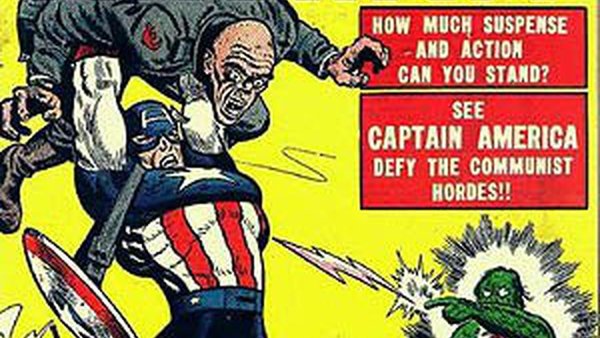
The government chickens out midway through, but Burnside is able to recruit James Monroe to be his Bucky. They take the super soldier serum without the important vital rays, and proceed to go a bit loopy, taking only surface level lessons from Rogers' example and embodying all the jingoism and nationalistic dogma the original Cap opposed.
Burnside and Monroe are placed in suspended animation, but are set free years later to attack Rogers and Sam Wilson. Burnside is then brainwashed into assuming the supervillain alter-ego of the Grand Director, openly adopting white supremacist ideology, before eventually almost losing his life in a battle with Rogers, where he is then given a new identity by the government after his death is faked.
4. Roscoe Simons

You've probably gathered by now that the seventies was a fairly pivotal decade for Steve Rogers. In many ways it was just as formative in the character's development as the forties, with the creative team of Steve Englehart and Sal Buscema providing the blueprint for modern Cap that all subsequent creators would work from, especially when it came to the trope of Rogers questioning his role and title as Captain America.
Englehart and Buscema's run was notable for multiple reasons, but arguably the most important is Secret Empire, a Watergate-era comic that saw Cap unearth a conspiracy that went all the way to the White House. Rogers abandons the mantle shortly afterwards, becoming Nomad (a name meant to signify his disillusionment with the US), and adopting a snazzy new look in the process.
Others attempted to fill the void Rogers left behind, but the two immediate replacements - Bob Russo and "Scar" Turpin - both failed, which is where Roscoe Simons came in.
Simons idolised Captain America and put the work in to become Rogers' official replacement. Falcon was skeptical, but Steve gave Roscoe his blessing in the form of the actual Cap shield.
Simons had fulfilled his dream, but that dream was cut tragically short when the Red Skull tortured and murdered him for being a "fake" Captain America. This would ultimately be what forced Rogers to reassume his title as Cap, although it wouldn't be the last time he walked away from the stars and stripes.
3. John Walker
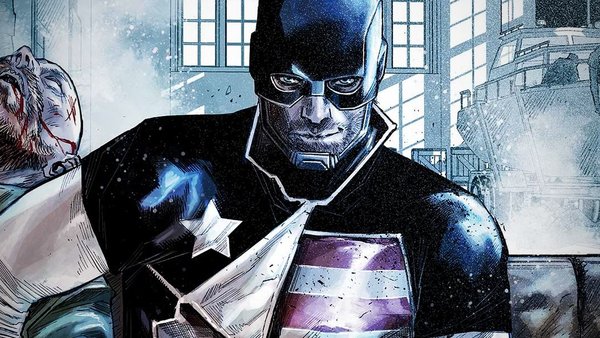
Recently making a splash courtesy of Wyatt Russell's tremendous performance in The Falcon and the Winter Soldier, John Walker is arguably the most famous of all the Cap replacements to have emerged outside of Steve Rogers' immediate circle. His onscreen depiction isn't quite what is seen in the comics though, where Walker emerges first as someone who believes Rogers is past his prime and needs replacing, as opposed to someone who dutifully assumes the mantle when pressed by the government.
John Walker, like his onscreen depiction, was a combat veteran. However, in the comics, Walker gains his powers from the Power Broker directly and then becomes the privately sponsored hero known as the Super Patriot. After the the Commission on Superhuman Activities steps in to argue that Steve Rogers should answer directly to the government, he abandons the mantle of Captain America and the Commission replaces him with Walker.
Walker quickly proves himself a capable Cap, but he's twice as ruthless as Rogers and is just the right amount of ignorant to be manipulated by the institutions he serves. He eventually realises what's going on though, and assumes the new identity of U.S. Agent thereafter.
As U.S. Agent, Walker would become a member of the West Coast Avengers and slowly but surely turn into a hero in his own right. Not one anywhere near as commendable as Rogers, but you know, it's the thought that counts.
2. Bucky Barnes

Bucky Barnes is the best, and he's largely the best because of Ed Brubaker and Steve Epting's seminal Captain America run from 2005 onwards.
Brubaker and Epting created the Winter Soldier story-arc together and laid the groundwork for what was essentially the emotional core and tone of the MCU Captain America films. Despite this, Brubaker and Epting continue to be treated like complete and total ass by Marvel, with the former having recently revealed on the Fatman Beyond podcast with Kevin Smith and Marc Bernardin that he makes more from SAG residuals for his cameo in The Winter Soldier than for, you know, actually creating the character that others have made millions from.
So yeah, before getting into the how and why of Bucky Barnes becoming Captain America, this is essentially me saying, "go support these guys!", which you can do by buying Velvet, a creator owned espionage thriller the two co-authored in 2014. It's great, you'll love it if you love their Cap books, and they'll appreciate the love.
In regards to their run on Cap specifically though, Bucky Barnes was right at the centre. Brubaker and Epting resurrected the character as the Winter Soldier and plotted an epic and emotional redemption arc for him throughout their run, culminating in the "death" of Steve Rogers after Civil War (he was actually blasted back through time, okay), and Bucky honouring the legacy of his oldest friend by becoming the new Captain America.
Bucky more than proved himself as Captain America, but it was never going to be a permanent arrangement. Steve eventually returned, Bucky almost died during the events of Fear Itself, and then once again took on the identity of Winter Soldier.
1. Sam Wilson

The Falcon has long been one of Steve Rogers' closest friends and allies, but it wasn't until 2015 that he was called up to take on the star-spangled suit and shield of Captain America.
Following Rogers' unfortunate run-in with the Iron Nail which deprived him of the super soldier serum, thus ageing him rapidly and rendering him unable to continue as Captain America, Steve turned to Sam Wilson to continue the Cap legacy.
Wilson's Cap differed greatly from previous replacements in that he still looked to retain elements of his previous identity as Falcon while in the costume. His signature wings and goggles remained, two key signifiers that illustrated how he was going to make Captain America his own, rather than live up to someone else's ideal of what Cap should be.
Like all Cap replacements though, Sam eventually parted ways with the shield, honouring a tradition in that he did so out of a growing disillusionment with his own country. He was forced to take it up again when Hydra-Cap took control of the US, but reverted to his old identity as Falcon not long after.
Watch Next
Avengers Quiz: How Well Do You Know Captain America?
