10 Horror Movies That Should’ve Ended 5 Minutes Earlier
The movies that were doing just fine before they tacked on one scene too many.

For a film to work, it's crucial to know where the story begins, and more importantly, where it ends. We've all seen movies that had potential but were let down by an ending that was cliched, silly, or absurd. Another problem is some movies literally don't know when to quit. Harry Potter and the Deathly Hallows Part 2, Lord of the Rings: Return of the King, and the remake of Planet of the Apes suffer from having one ending too many.
This practice happens quite often in horror movies, usually to tack on a big twist, set up a pointless sequel, or to perform one last jump scare. Although these sort of climaxes are intended to be shocking, they usually leave viewers feeling frustrated. If the film doesn't need a big twist, the director shouldn't force one in. If the movie looks like it won't get a follow-up, the climax shouldn't set up a spin-off. If the story is wrapping up, the movie should end then and there.
Here are ten movies that would've been better if the last scene was removed entirely.
10. Halloween H20: 20 Years Later

Two decades after Michael Myers tried to murder his sister, Laurie Strode, the masked serial killer returns to his home of Haddonfield to launch a new killing spree. After Laurie stabs him and knocks him off a balcony, the authorities arrive and transport Michael to a coroner's van.
Because Laurie knows that getting stabbed half a dozen times isn't enough to take down her brother, she decapitates him, ending Michael's life once and for all.
But because Hollywood made four more movies in the franchise (and two more are on the way), we know Michael's reign of terror was far from over. In the sequel, Halloween: Resurrection, we learn that Michael placed his mask on a paramedic after he fell off the balcony. Michael then fled the premises while Laurie killed the paramedic, under the false impression it was her sibling.
Not only is this explanation ridiculously convoluted, it contradicts the killer's MO. Michael has never relied on strategy or misdirection on this level. The Shape's evil plans boil down to "walk up to person, kill him or her".
If Halloween H20 ended after Michael was carted out in the coroner's van, the sequel wouldn't have to backpedal his death.
9. A Nightmare On Elm Street

Ending a movie on a jump scare isn't always a bad thing. As a concept, the final scene in A Nightmare on Elm Street is a great idea. After Nancy realises the dream-controlling demon, Freddy Kruger, is powered by fear, she turns her back on him to prove she's not afraid of him. After he vanishes into thin air, we cut to a scene of Nancy's mother waving her daughter out of the house as she enters Glen's convertible. Since we saw Freddy slaughter Glen and Nancy's mum, we know something is amiss.
As the car locks Nancy in and drives off by itself, she realises that she is trapped in one of Freddy's dreams. The last shot has Freddy dragging Nancy's mother through the door's window before cutting to black.
On paper, that ending works fantastically. In execution, it's unintentionally hilarious. When Freddy drag's Nancy's mum through the window, the actress is replaced with a blatantly obvious dummy. (You can even see her rubber arm crinkle.) Even though this is a solid climax, it wasn't needed. If the production couldn't make the dummy look realistic enough, they should've just left the scene on the cutting room floor.
8. Gerald's Game

In a sex game gone wrong, protagonist Jessie finds herself handcuffed to a bed in a remote house after her husband suffers a heart attack. Unable to escape, she becomes dehydrated and starts hallucinating. She sees a deathly creature called The Moonlight Man and has flashbacks of when her father molested her as a child. This story structure creates a great parallel as we see Jessie feeling emotionally helpless as a child and physically helpless as an adult.
When she finally breaks free from her restraints, she feels powerful for the first time in decades, giving her closure from her father's evil actions. Months after she escapes, she sets up a charity for sexually abused women, using the money her husband left her.
Just when you think the film is about to end, Jessie hears a news report of a deformed giant on trial for eating human faces. Believing this person and The Moonlight Man are one and the same, she heads to the trial to confront him. The story ends with her marching out of the court room triumphantly. This entire confrontation with The Moonlight Man doesn't work since it undercuts Jessie's story and jars with the movie's tone.
7. Maximum Overdrive

In Maximum Overdrive, an adaptation of Stephen King's short story, all of the world's technology gains sentience and goes on a killing spree. This leads to all sorts of crazy scenes including killer vending machines, murderous lawnmowers, and swearing ATM machines.
As admittedly silly as the premise is, the ending is so nonsensical it's mind-boggling. After Emilio Estevez's character blasts the Green Goblin truck (which serves as the final boss of the machines), a title card appears, stating the machines' self-awareness was due to being exposed to a UFO's laser cannon.
If you think that's a dumb explanation...it gets worse.
In the prologue, a text explains that the machines became sentient after the Earth was bathed in the radiation of a comet. So... we have two explanations how technology came to life that contradict each other!
What makes this blatant inconsistency all the more puzzling is that this film was directed by the original writer, Stephen King! Despite the fact King wrote the novel, wrote the screenplay, and made the movie, the legendary horror author totally botched the conclusion. If he cut out that epilogue, the movie would've been sliiiiiiightly less stupid.
6. Event Horizon

Paul WS Anderson's film begins with the Lewis & Clark spaceship being sent towards Neptune to retrieve a spacecraft called the Event Horizon. The Event Horizon utilises wormhole technology to teleport across the cosmos, theoretically changing space travel forever.
But when the original crew activated the wormhole, they were transported to Hell, causing the Event Horizon to become self-aware. After the Lewis & Clark crew enter the ship, the haunted vessel attempts to reactivate the portal, sending them to Hell.
Thankfully the captain, Miller, splits the Event Horizon in two, allowing his crew to escape in the ship's front, before the wormhole activates. Although Miller is sent to Hell, his crew survives.
Or so you would think. In the final scene, we see that the Event Horizon that the survivors are on is ALSO alive, implying they will suffer a grisly death, similar to their companions.
Considering the horrific things the characters experienced (and one of them survived being partially turned inside out), this ending feels frustratingly downbeat. It also cheapens Miller's sacrifice since he willingly went to Hell to save his crew. After what Miller's crew endured, they deserved a happier ending.
5. Alone In The Dark

Alone in the Dark is an infamous video game adaptation with Christian Slater playing paranormal investigator Edward Carnby. While pursuing a case, Carnby learns that a race of demons are entering our realm through an interdimensional gateway and are preparing to take over the world.
In a final showdown, Carnby kills the demons and blows up the portal, cutting off their ability to enter our reality. Believing he saved the day, Carnby heads back to his home city. Unfortunately, the supernatural detective learns that the entire city has been abandoned.
Wait, what happened? Where did everyone go?
Well, while Carnby was duking it out with these demonic creatures, another bunch of monsters that were never seen or mentioned attacked the city, causing everyone to evacuate. What are these creatures? It's never explained. Where did they come from? No idea. What does this have to do with the story? Absolutely nothing.
Imagine if Avengers: Endgame concluded with the heroes of Earth defeating Thanos, only to learn humanity had been attacked by a completely different enemy that was never referenced once! That's how pointlessly random this climax is!
4. Unfriended

In Unfriended, a group of friends are chatting on Skype until they notice an anonymous caller among them. This entity turns out to be the ghost of Laura; a girl who was maliciously bullied by every person in the Skype call. After a humiliating video of her was uploaded online, Laura took her own life. Throughout the film, the enraged spectre uses her supernatural powers to kill each person in this call.
Now, Unfriended isn't great and became dated very quickly. (Does anyone even use Skype anymore?) But the ending feels especially weak. In the final scene, Laura has killed everyone in the conversation save for her former friend, Blaire. The haunting spirit then uploads a video on Facebook, proving that Blaire filmed the clip that encouraged Laura to kill herself.
Suddenly, Laura slams Blaire's laptop shut and murders her. This ending feels cheap, since Blaire would have received a much crueler fate if she was allowed to live, now that everyone knew she was directly responsible for Laura's demise. Because she was killed moments after the video was uploaded, she only had to live with her shame for a few seconds.
3. The Blob (1988)

In 1988, Chuck Russell released a remake of the classic B-movie, The Blob. The horror flick had some spectacular practical effects, mainly of the civilians being consumed and melted by the gelatinous sentient mass. Sadly, the movie was a box office bomb, ending its chances of a sequel.
This is a shame since The Blob unsubtly set ups a follow-up that never came to fruition. Halfway through the movie, a priest named Meeker stumbles upon a frozen chunk of the Blob and places it in a jar. After the murderous goo is defeated in the climax, we cut to a scene of Meeker performing a doomsday sermon, encouraging his subjects to believe that The Rapture is upon them. He then heads to a private room, where he gazes at the jar that contains a chunk of the Blob, implying he is preparing to release it on the world.
Because the sequel was scrapped, this ending feels pointless and tacked on. Endings like this never work, even if the film receives a sequel. It makes the filmmakers look like they have so little faith in the film, they have to tease a follow-up.
2. I Still Know What You Did Last Summer
In I Know What You Did Last Summer, Julie and her friends are on the road when they suddenly crash into a fisherman named Ben Willis. To avoid getting arrested, they dump the body and vow never to speak of it again. The following year, Julie discovers Ben is hunting them down, preparing to pick them off one-by-one.
In the final confrontation, Julie's boyfriend has Ben flung into the sea, seemingly to a watery grave. But in the last scene, we see Ben break into Julie's room and lunge at her.
So, she's dead, right? Nope. In the sequel, I Still Know What You Did Last Summer, it's explained that the conclusion of the previous film was a dream.
But guess what? This movie has the SAME conclusion. During an epic showdown, Julie shoots Ben eight times and drops his body in an open grave. But in the final scene, we see Ben once again break into Julie's room and seemingly kill her.
First off, how is he alive?! Secondly, did the filmmakers really do that ending again?? Since these events aren't mentioned in the next sequel, I Still Know What You Did Last Summer should've ended immediately after Ben was shot.
1. 10 Cloverfield Lane
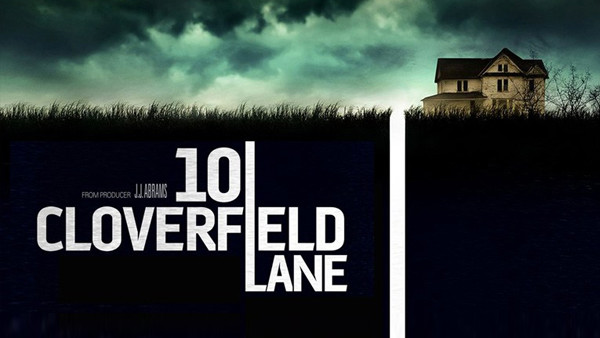
There is no question that 10 Cloverfield Lane is a well-made movie. It's brilliantly shot, intensely atmospheric, and John Goodman gives the scariest performance of his career.
Nevertheless, viewers were confused since it bared little resemblance to its predecessor. Cloverfield centred around a colossal monster terrorising a city. This movie revolves around a woman named Michelle being locked in a bunker by a deranged man. Although he claims the surface has been infected by lethal chemicals, his erratic behaviour encourages Michelle to try and escape.
When she leaves the bunker in the final scene, she is attacked... by an alien. After defeating the extra-terrestrial, she escapes in her car, only to see a monstrously sized UFO in the sky before the credits roll.
This ending feels so out of left field since the story relied on slow, well-paced psychological horror until this moment. Considering there is zero mention of extra-terrestrials up until this point, you can understand why viewers were completely thrown off by this climax. Not only should the film have ended with Michelle escaping from her captor, the script should have scrubbed all associations with Cloverfield since it has no real association with the events in that film.