10 Huge Changes In The Live-Action Dumbo Remake
From its lack of singing crows, to its weirdly anti-Disney implications.

Tim Burton's live-action Dumbo remake succeeds on a number of levels. Aside from the sheer aesthetic joy of any adventure complemented by Burton's signature visual style, the film offers some great moments with competent actors such as Michael Keaton, Danny DeVito, Colin Farrell and Eva Green. More than anything, it tells a largely new story that incorporates moments from the original without leaning too heavily on the familiar.
This was the right choice for a film like Dumbo. Deviating from the source material can allow a remake to stand on its own merit, as seen in films such as Maleficent and Pete's Dragon. Rather than rehashing a fairly simple storyline, the live-action Dumbo remake takes the story in new directions.
Not all changes, however, will be received kindly. Tim Burton's Dumbo departs from the original in a few ways that hurt both the story and its underlying themes. Occasionally, attempts to avoid controversy associated with the 1941 classic create the impression of a film trying too hard to stay woke.
While thankfully few of the following 10 deviations fall into this category, some are certain to leave viewers wondering what Burton and Disney were thinking.
Warning: Beware of some jumbo-sized spoilers in the following entries.
10. Dumbo's Mother Is Kind Of A Murderer

The first act of the remake is weirdly reminiscent of Rise Of The Planet Of The Apes. Much like Tom Felton's character in Rise, the man responsible for looking after Dumbo's mother is an animal-hating psychopath who just happens to work with animals for a living. Elephant tender Rufus both physically and verbally abuses Dumbo's mother, often without the slightest provocation.
One of these moments leads to Mrs. Jumbo's eventual separation from her son. As the circus audience mocks Dumbo for his giant ears, Rufus goes back to Mrs. Jumbo's holding area to rub it in. She charges out to protect her baby, but Holt Farrier gently steps in and calms her down. Since this is the type of film that rightfully associates hating animals with cartoonish levels of villainy, Rufus barges in with a whip and incites Mrs. Jumbo's anger all over again for pretty much no reason.
Mrs. Jumbo's rage throws the circus into chaos, bringing down the big top and crushing Rufus under the debris. Circus owner Max Medici is forced to sell her, since killer elephants tend to be bad for business.
Those familiar with the 1941 version may recall that Mrs. Jumbo was originally put in solitary confinement for spanking a bully. The remake still justifies her actions on the basis that she was protecting her child, but it might not be as easy for some viewers to sympathize this time around.
If anything, they might sympathize with the man who paid good money for an animal that commits voluntary manslaughter every time someone makes fun of her son's ears.
9. The Name "Dumbo" Is Actually Sympathetic

At first, Dumbo's name is an act of mockery. He receives it during the same scene that ultimately leads to the loss of his mother, when a sign reading "DEAR BABY JUMBO" becomes altered to read "EAR BABY DUMBO." The spectators - who for some reason take big ears to mean that Dumbo's not a real elephant - laugh so hard they nearly die.
In the original, it's never quite explained why one mean joke by the other elephants causes everyone else to begin calling Jumbo Jr. by his hurtful nickname. The remake addresses this issue by having the sympathetic Farrier children make the tough decision to keep calling him Dumbo for his own good.
This occurs shortly after Medici's decision to sell Dumbo's mother. In a scene mirroring Timothy Mouse's introduction in the original, Milly and Joe Farrier attempt to comfort Baby Jumbo by feeding him peanuts. Not only do they hope to comfort him, they also believe at this point in the film that peanuts are what cause him to become airborne.
When Milly asks him to fly, she casually drops the name "Dumbo" in the process. Joe responds with immediate disgust: "We're calling him Dumbo now?" As Milly explains, Baby Jumbo shares a name with his mother. Having just been separated from her, the name would evoke painful memories. Paradoxically, the same name used to mock him becomes a way of sparing him from further emotional turmoil.
8. Feathers Are Actually Magic (Until They Aren't)

In the 1941 original, Timothy Mouse is well aware that the feather he gives Dumbo isn't really magical. He knows that Dumbo simply needs to believe in himself, and Jim Crow offers the feather as an easy psychological trick to help him do it. Since this all happens within the last ten minutes of the film, the deception is short-lived. Dumbo's very next flight teaches him that he can fly without the feather, and he soars off to greatness.
Tim Burton's Dumbo changes this up significantly. When the Farrier children discover that feathers seem to help Dumbo fly, they believe in the magic every bit as much as Dumbo does. They believe in the magic feathers so strongly that Milly even risks her life to ensure that Dumbo has a feather when the clown act goes awry and puts him in danger.
Near the end, Dumbo's feather is eaten by flame during a vital moment. When the Farrier children react in fear, their father bluntly informs them that magic feathers aren't a thing. This realization helps them grasp the film's message of self-confidence at the same time as its titular elephant.
Having the children believe in the magical feathers adds a significant layer of subtext to the film's message. Even Dumbo's biggest supporters have underestimated him without realizing it. They believed him capable of great things, but they didn't believe that he could achieve them on his own. Positive judgments are still judgments, and changing this seemingly small detail helps to drive that message home.
7. The Pink Elephants Are Real

For most of the film, the closest thing to magic is Dumbo's ability to fly. This changes on the night of Dumbo's first performance at Dreamland, when the remake offers its own version of the classic "Pink Elephants On Parade."
It begins with a group of circus entertainers waving giant bubble wands to create large, pink bubbles. They connect these bubbles to form the shape of an elephant, similar to the elephant created by Dumbo's champagne bubbles in the original.
After creating several of these pink elephants, the circus performers step back as the bubble monsters begin to take on a life of their own. The pink elephants dance and stomp their way through the air as Dumbo - very much sober in this version - watches in amazement, bobbing his head to the music.
It's a visually enchanting scene practically destined for a Tim Burton film, made all the more wonderful by the fact that it comes out of nowhere. The film never explains if the pink elephants are supposed to be a technical illusion or if the bubbles are simply alive.
Dreamland is supposed to make the impossible possible, and this could simply be a well-choreographed feat of Imagineering. The mystery of these potentially sentient bubbles adds to the wonder of the scene, much more than if they had been mere hallucinations by a drunken child.
6. The Central Conflict Is Weirdly Anti-Disney
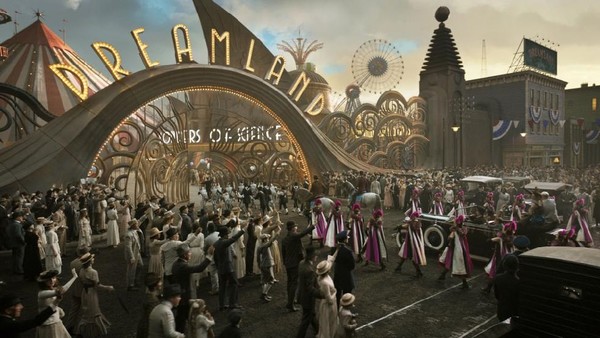
V.A. Vandemere's Dreamland mimics Disneyland in several ways. On top of the opening parade and larger-than-life attractions, Dreamland even contains an exhibit of scientific wonders not unlike the Innoventions hall once found in Tomorrowland.
Initially, this all feels like a nice tribute. However, the Disney connection becomes increasingly problematic as Vandemere's corporate villainy begins to surface.
First, if Dreamland is Disneyland, then who is Vandemere? His talk of innovation and magical possibilities certainly evokes the image of Walt Disney. He also seems to care about the joy of others, including children. When Vandemere presents the Farriers with their palatial new living quarters (including a library for Milly), Holt is blown away by the grand show of generosity. "Your family's mine," Vandemere politely responds.
This line takes on a darker tone once the true depth of Vandemere's greed is revealed. Perhaps unintentionally, the film presents a Disneyesque villain whose concern for others' happiness is merely a façade to justify his money-grubbing schemes. And it works, as evidenced by the adoration he receives. As he rides into Dreamland, numerous members of the 1919-era crowd raise their arms to wave at a diagonal, mimicking a salute that wouldn't become popular for a little over a decade after their time.
Dreamland itself presents further problems. The park's Nightmare Island is essentially an animal humiliation exhibit, and Vandemere treats Medici's human troupe with no more respect than the animals. If it's not problematic enough to have disrespected workers in a park resembling Disneyland - which had to increase pay last year in response to protests - there's also the matter of Vandemere's motivation. He primarily needs Dreamland to succeed so that he can work off a bad investment, not unlike Disney's use of Disneyland to offset losses from ESPN.
By contrasting the seediness of Dreamland with the wholesome camaraderie of Medici's circus troupe, the film sends the message that bigger and flashier don't always mean better. It's a strange message for Disney to send at all, but especially in the context of Dumbo - one of many in a slew of big and flashy live-action Disney remakes.
5. Dumbo Doesn't Fly Alone
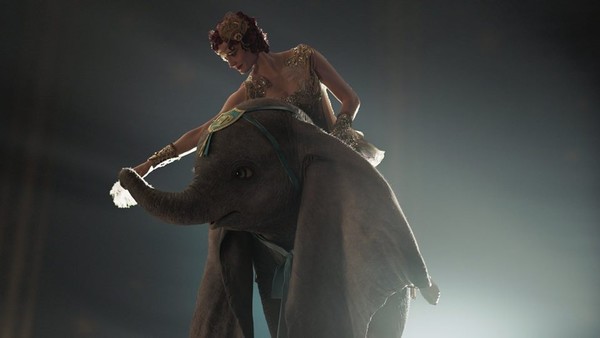
Dumbo flies alongside the crows in the 1941 original, and he also flies while carrying Timothy Mouse. Not once, however, does the film's ending suggest that Dumbo has so much as entertained the idea of a human rider.
In Tim Burton's update, this is actually Vandemere's primary interest. Not only does he believe the spectacle of a flying elephant mount would rake in cash, he also believes it will boost the fame of French trapeze artist Colette Marchant.
Colette is already one of Dreamland's featured acts, and she exhibits strong confidence in her abilities. She refers to her talents as her own ability to fly, and this fuels the symbolism in her relationship with Dumbo. While she possesses the confidence to fly on her own, she must now learn to fly with a partner. By the time Colette is fully allied with Holt and his children, she is able to fly the young elephant like a pro. Learning to work with others has allowed her to reach new heights.
By contrast, Dumbo relies on others yet must learn to fly on his own. When he finally learns to do this, Joe and Milly - the children who learned their own strength by helping him find his - ride atop his back.
Each message - relying on others and learning to fly alone - warrants individual merit. Teaching both at once is ambitious, with the potential for the ostensibly opposing lessons to conflict with one another. The film manages to avoid this by making human riders an important element of the story, and allowing Dumbo to share unique relationships with each of the humans that he carries.
4. Racial Controversy Is Replaced By Feminism
Divisive as they are, the controversial crows of the 1941 original were vital to the film's overall message. While they initially question his abilities, critical analysis suggests that they actually understand Dumbo better than anyone else. Without their influence, and the magic feather provided by the regrettably-named Jim, little Dumbo might never have learned to believe in himself.
Because of this, the film teaches more than self-confidence. In spite of (or perhaps because of) their characterization, the crows teach viewers that first impressions sometimes lie. Those we judge harshly can possess great value, just like Dumbo.
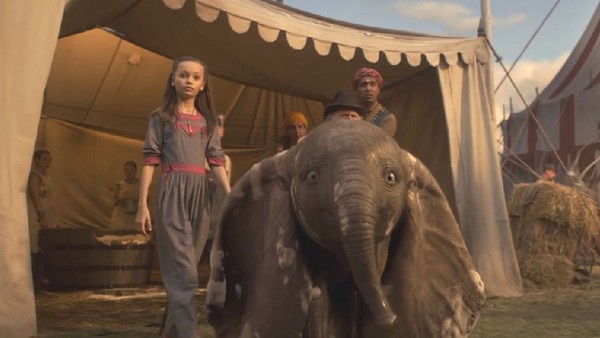
In the remake, Dumbo learns this lesson from young Milly. Her desire to be a scientist fuels her experimentation with Dumbo's abilities, yet also holds her back. She's afraid that others won't take her seriously, and this fear is sometimes justified. Like the 1941 film's roustabouts who labored alongside the elephants, Milly's society has not facilitated her success.
By replacing the original's allegedly racist black characters with Milly, Tim Burton's Dumbo forgoes racial commentary in favor of gender politics. In a late scene of the film, she expresses her frustration by vandalizing a science exhibit to portray a female mannequin in a suit while the male mannequin is dressed like a housewife.
Milly could be a fine way of delivering the film's moral if not for the culmination of her character arc. Rather than using her wits to help Dumbo in the end, Milly instills confidence in Dumbo by destroying a key she received from her dead mother. This key, which her mother said could open any door, is meant to parallel Dumbo's magic feathers. She doesn't need it to succeed, so she tosses it into a fire.
To reiterate, Milly declares her intrinsic worth by destroying an heirloom from her dead mother. Milly's utter lack of sentiment overshadows her message, and the film's muddled attempt at feminism winds up feeling like a desperate attempt to stay woke.
3. Dumbo's Not The Only One With A Handicap

Milly is presented with something of a metaphorical handicap in the sense of wanting a future that her society doesn't encourage, but Holt mirrors Dumbo in a much more direct fashion. Both share physical handicaps, albeit of very different sorts. While Dumbo trips over excess earlobe, Holt finds himself with a dearth of arms.
Not only do both characters have physical handicaps, they both struggle with a perceived lack of value. Others find it difficult to accept their physical impediments. Medici's attempt to hide Dumbo's ears under a bonnet feels much like his attempt to hide Holt's missing arm with a poorly made prosthetic.
As with Dumbo and the other characters, this leads to a lesson in self-confidence. Holt may not learn to fly, but it's near the end of the film - right after getting rid of his prosthetic arm - that he pulls off an arguably more impressive gravity-defying achievement. To facilitate Dumbo's escape from Dreamland, Holt must cut through the top of the big top with a knife. This first requires him to scale the side of the tent, using nothing but his one remaining arm.
The remake's focus on human characters works on a few levels, but Holt's inclusion is one of the strongest. He's a type of hero that handicapped children don't always get to see in A-list films. Children whose handicaps didn't grant them the power of flight can look up to Holt as the true inspiration of the movie. As a handicapped veteran, Holt may reach a few adults in the audience as well.
2. PETA Got Their Ending... Sort Of
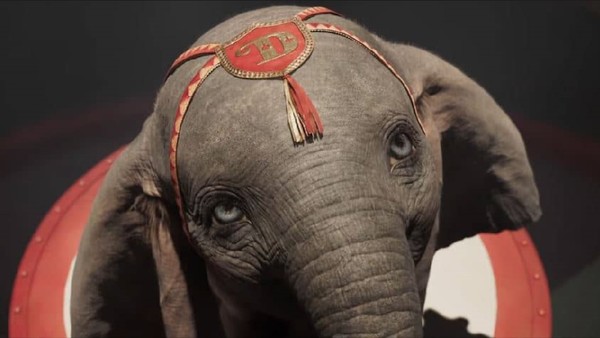
In a 2015 letter to Tim Burton, PETA requested that the live-action Dumbo remake end with Dumbo and Mrs. Jumbo leaving the circus to live at a sanctuary. This does not happen, although the two do manage to escape the abusive nature of circus life. In fact, Medici overhauls his entire circus so that absolutely none of the animals are kept in captivity.
Medici's new animal rights policy echoes the 2015 decision to free elephants from The Greatest Show On Earth, although the circumstances in Dumbo are unclear. The monkey, the mice and Holt's new horse all appear to continue performing. Their new living arrangements are never shown, and the audience is left to simply assume that things are better than they were before.
As for Dumbo and Mrs. Jumbo, there will be no more circus. After escaping Dreamland, the two are transported away and released back into the wild.
This looks great on film, but it raises questions about their chances of survival. Dumbo has spent literally his entire young life with humans, and it can be hard for baby elephants to adjust when leaving captivity. Some animals find reintroduction a bit easier as part of a community, and Dumbo does wind up living with a herd of other elephants. Even so, the transition may be difficult for an elephant so reliant on human friendship.
How does PETA feel about this? They actually seem pretty happy about it. As long as Dumbo dies out in the wild where we don't have to see it happen, all is well.
1. And Just In Time For Easter, Too!
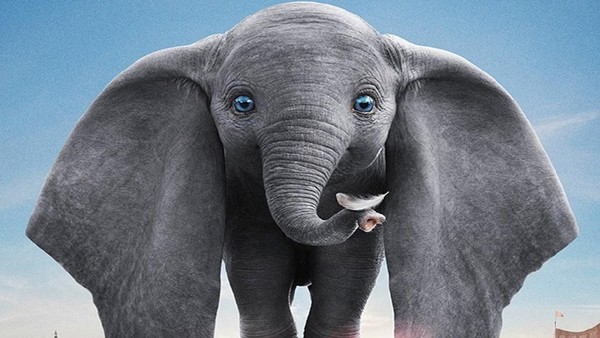
Setting aside the previous entries, two of the largest deviations in the 2019 Dumbo remake are obvious. No more talking animals, which in turn means none of their songs. Nonetheless, the film contains plenty of Easter Eggs that allude to both.
The first occurs near the very start of the film, when Casey Junior makes its way down the track with as wide a smile as a non-sentient train can manage. Accompanying the scene is an orchestral arrangement of Casey's song, and Danny DeVito even sings a line or two later on.
Instrumental versions of other songs, such as "Pink Elephants On Parade," are included as well. Despite the removal of the crows, "When I See An Elephant Fly" is given its own instrumental nod during the end credits. Meanwhile, "Baby Mine" is sung in full. It's first sung by Sharon Rooney's mermaid character, Miss Atlantis, during a heartbreaking scene taken almost directly from the original film. Another version plays as the end credits start to roll.
Dumbo's familiar talking critters get their own shout-outs. The night before Mrs. Jumbo's pregnancy is revealed, a stork lands on the roof of her train car. Timothy Mouse, while not explicitly named, appears multiple times throughout the film. Lastly, the crows' famous "I seen a dragonfly" dialogue is referenced by Dreamland's ringleader as he introduces Dumbo for the first time.
Nostalgic viewers who wanted something a little more familiar might feel a bit saddened by these reminders of the original. Others will appreciate the chance to watch something largely new that doesn't forget where it came from. Viewers from both camps will want to have their tissues ready for "Baby Mine."