10 Most Racially Charged Films Ever Made
 Film is the most expressive art form there is because it can encompass all the elements of what makes great art. It can be a combination of writing, acting, music, film craft and narrative, all these together work to send a message to its audience. Sometimes it is for pure entertainment but sometimes there is an underlying message that cannot be passed over. Films dealing with racism and social prejudice are about the hottest topics that a film-maker can attempt. This hot button issue seems to never diminish in its ability to polarize opinions and ultimately film audiences. Racially charged films are mostly intended to convey that message to its audience, their goal is to speak about the issue, look it in the face and try to create a narrative that speaks from all sides of the spectrum. No other medium in modern day art has been so compelling in creating some of the most controversial and infamous studies on this issue than what films have achieved. This list looks at 10 of the most racially charged films ever made and what made them so prominent.
10. Song Of The South (1946)
 This 1946 melding of Disney animation and controversial live action is one of the very few films that Disney has never re-released from its vaults. The film deals heavily in racial stereotypes, with it being entirely set on a Georgia plantation and its main characters being former slaves and house servants. The film tells the story of a young boy (Bobby Driscoll) who encounters a black cook, Uncle Remus (James Baskett) on the plantation. Uncle Remus weaves stories to the boy and his friends about his past travels, which blend live action and animation and has Uncle Remus interacting with an animated rabbit, fox and bear in his stories. The depiction in this film of the African-American characters were not unlike that of any other Hollywood film of the time. Even Hattie McDaniel, famous for her Oscar winning portrayal of Mammy in Gone With The Wind plays another house servant in this film. The controversy surrounding Song of the South that still looms over its head today was the stereotypes that the animated characters (known as Br'er Rabbit, Br'er Fox, Br'er Bear) generated. These animated characters in a children's film are downright disgraceful interpretations of black stereotypes, with one segment having the Br'er Rabbit interacting with a black face character named Tar Baby. Song of the South has been kept away from younger Disney audiences for decades now as impressionable children may get mixed messages from the obliquely harmless intentions of the narrow minded film-makers. The film should be screened if given the opportunity to more mature audiences, however, to ensure that something like this does not pass for children's entertainment in the future.
9. Soul Man (1986)
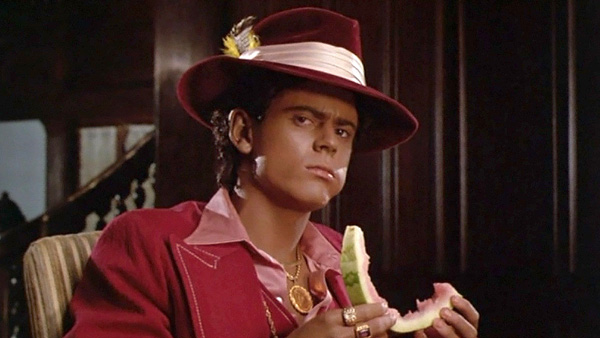 Soul Man, released over 25 years ago, is still considered one of the most racially charged comedies ever made. The film tells the story of a young white man named Mark (C Thomas Howell) who takes copious amounts of tanning pills so that he can attend Harvard Law School on an African-American scholarship as a young black student. From there the film attempts to make Mark's journey masquerading as a black man in modern day society a plight and a social commentary on how certain classes of people treat minorities. However it often fails in doing so, coming off as heavy handed and unfunny with its depiction of stereotypes for cheap laughs. One of the most cringe-worthy plot points in the film is the fact that Mark falls in love with an African-American student named Sarah (Rae Dawn Chong) while in school. As he slowly begins to regret making his decision of faking the system and ultimately confesses that he is actually white, he is ostracized by Sarah initially upon discovering he is white. The film misses the point of trying to say that nobody should be judged on their skin color alone, yet she rejects him for being white. This film is one of the original race swap comedies (True Identity, The Associate, White Girls among others) and it is certainly one of the worst.
8. Django Unchained (2012)

7. Bulworth (1998)
 Warren Beatty has always been a very outspoken and risk taking film-maker as a director/star. He tackled the communist movement in the epic drama Reds and in his 1998 pet project Bulworth, he moves full tilt on another controversial subject-racism and class systems in the political comedy drama. Beatty plays burnt out California Senator Jay Billington Bulworth who observes that his life and career have no meaning, so after a chance encounter with a few African-American campaign volunteers and a night of hard partying and drugs, he decides to take another approach to his campaign. Bulworth begins telling the truth. Not only does he speak the truth but he starts gangster rapping the truth to his constituents and financial supporters, shaking the foundations in his state to the core. What both Beatty the star and director achieved with Bulworth was poking fun at the political machine and also what the white collar class perceives as acceptable behavior in the blue collar black community. The message is strong and potent, yet a film that takes these risks was not without its controversy. Some found Beatty's message to be too over saturated in stereotypes, relying on the ridiculousness of the concept of an old white man rapping to send the message home, while others found negative portrayals of African-Americans throughout the film. Either way, Warren Beatty's Bulworth is a masterful thesis on the truth that politics is afraid of facing and the liberation of allowing it to take over.
6. Bamboozled (2000)
5. White Dog (1982)

4. The Passion Of The Christ (2004)

3. Schindler's List (1993)

2. The Birth Of A Nation (1915)
 The Birth Of A Nation is a very controversial chapter in both the history books of cinema and America. As a film, director DW Griffith broke new ground with his storytelling techniques, utilizing new camera movements, night shooting, orchestral scores and narrative styles that had never been seen in cinemas before. The film itself however is a dark manifesto of a country still largely divided and segregated by racial injustice even 40 years after abolition. Birth of a Nation tells the epic story of 2 families, one North one South, and their existence before, during and after the historical Civil War and slave trade in 19th Century America. The film is notable for its depiction of black slaves, in particular the men, as vicious and dim-witted savages, an evil plague on white society. All the more insulting in this depiction was that director Griffith hired white actors, painted in "Blackface" to portray the slaves on screen, which in its own right was a statement of how inaccurate this historical device was used. The film also historically recreates the founding of the notorious Ku Klux Klan, who are shown throughout the film in a heroic and symbolic vein for American freedom and justice. No other film before or since has glorified such a dark blemish on American history, yet thankfully today- through proper education and tolerance-this film is a document of how far we have come in racial understanding from the past.
1. Do The Right Thing (1989)
 Set on the hottest day of the summer in a small Brooklyn neighborhood, Spike Lee's Do The Right Thing has a melting pot of racial tension boiling at its core. The film tells the story, primarily through the eyes of the neighborhood pizza delivery boy Mookie (Lee) who is looked at as a sort of medium between all the different groups on the street, both social and racial. As the day heats up so do the tensions between the residents, who come from a varying range of ethnic backgrounds, in particular the African-American, Italian and Korean inhabitants. The majority of the tension comes from the local Italian pizzeria (where Mookie is employed) run by Sal (Danny Aiello) and his racist sons (John Turturro and Richard Edson). The film climaxes with one of the neighborhood's young African-American men being murdered at the hands of the corrupt NYPD in the pizzeria. A riot seems about to break out, with no one person taking the blame for what has just happened. Mookie throws a trash can through the window of the pizzeria, ushering in a full scale attack on Sal's Pizzeria, the source for the resident's grief confusion and anger. This grief, confusion and anger has been rising not only all day in the heat, but throughout each person's life, the ones who are witnessing a racially motivated murder occur in front of their eyes once again. What Lee accomplishes by having Mookie throw the trashcan through the window is openly pinpoint the source of where the racial tension is stemming from. He doesn't allow himself or his fellow black neighbors to be victims of a world where they suffer from racial inadequacies and instead fights through that resentment to allow for a cathartic and inevitable release. This film and Lee's ultimate message holds no punches in showing us first hand what happens if you allow yourself to be stepped over, in particular when it is racially motivated, and ultimately what you can do to stop it. Are there any other racially charged films we may have missed? Have your say in the comment section below.