10 Movie Sequels That Pointlessly Took Away Things Fans Loved
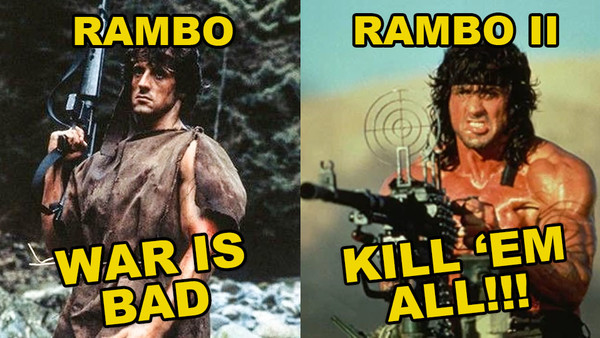
Did Rambo just forget about his PTSD...
As obvious and inevitable as sequels are in Hollywood, they're also incredibly difficult to get right: just do the same thing again and people will call you lazy, but try something radical and you risk alienating the core fanbase.
Though there are countless examples of sequels benefiting from terrific new cast members or bold changes in direction, as well as filmmakers ditching elements that people actually hated, there are also many movies which, for reasons either baffling or idiotic, removed one of the things audiences cherished the most.
These 10 films all stripped away or severely altered a key element of the prior movie's success, be it killing off an actor or two (or even worse, recasting them), misguidedly switching up the established tone, shedding the permissive R rating, or just simply explaining far more to viewers than they ever needed to know.
Though not all of these films are terrible or even bad - though some of them certainly are - each undoubtedly suffered by deleting that which fans truly loved about their predecessor. For shame...
10. Newt & Hicks - Alien 3

It's depressingly common for movie sequels to kill off beloved characters, either due to the actor demanding too much money to return or simply refusing to come back as a result of "creative differences."
But in the case of David Fincher's Alien 3, the decision to kill off Aliens' much-loved heroes Newt (Carrie Henn) and Hicks (Michael Biehn) was not in any way motivated by financial or practical concerns.
Ripley's (Sigourney Weaver) surrogate daughter and best pal respectively, Newt and Hicks are given off-screen deaths at the very beginning of the movie, dying when their escape pod crash-lands on the prison planet Fiorina 161.
Though undeniably ballsy, it was a creative call which infuriated not only fans, but also Aliens writer-director James Cameron, who called it a "slap in the face."
Once actor Michael Biehn learned that he wasn't being asked back for Alien 3, he demanded almost as much money as he was paid for his entire role in Aliens for his likeness to be used in the sequel - and he got it.
Beyond the obvious shock factor, eliminating two fan favourite characters who Ripley fought so hard to save in Aliens felt like an insult to invested fans.
This resulted in franchise novelist Alan Dean Foster planning to have Newt survive the crash in his novelisation of the movie, only for writer-producer Walter Hill to insist that he not alter the established narrative.
Though William Gibson's earlier Alien 3 script, where both Newt and Hicks survive, has been adapted into both comics and audiobooks over the years, there's no undoing the cinematic stain that the movie left upon the franchise.
Yet things got arguably even worse in Alien: Resurrection, which went entirely the opposite direction by negating Ripley's sacrificial demise - easily the best part of Alien 3 - and centering the movie on her clone. Oof.
9. The Meaning Behind Uncle Ben's Death - Spider-Man III
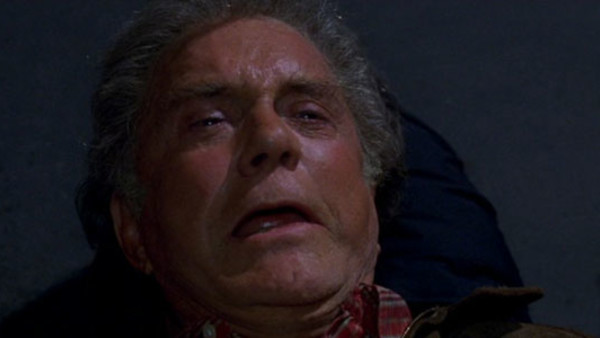
One of the most iconic scenes in comic book movie history is the death of Uncle Ben (Cliff Robertson) in Sam Raimi's original 2002 Spider-Man movie.
The brutally tragic scene sees Ben fatally shot by a thief after Peter Parker (Tobey Maguire) fails to stop said thief earlier in the movie.
The sequence brilliantly underlined the responsibility that comes with being a superhero, and the consequences of one's actions - or, in this case, inaction. It was a perfect primer to ensure that Peter left no injustice unpunished in the future.
And while this through-line stayed totally in tact for Spider-Man 2, 2007's third film ill-advisedly ret-conned Uncle Ben's death to instead be at the hands of the villainous Flint Marko aka Sandman (Thomas Hayden Church).
Beyond being a lazy ass-pull to make Spidey's feud with Sandman feel more personal, it completely undid the moral that Peter learned in the first movie.
If Ben was killed by some random mook, then his failure to stop the thief ultimately meant nothing, and worse still, it made his hand in said thief's death that much more uncomfortable.
Of all the many things Spider-Man 3 got wrong, from a character and storytelling perspective, this was easily the worst.
8. The Classy Spy Thriller Tone - Mission: Impossible II

Giving the sequel to a hit movie a starkly different tone is an incredibly risky move that's exceptionally difficult to get right. For every Aliens, Terminator 2, or more recently, Captain America: The Winter Soldier, there are countless examples of failed tone-shifting follow-ups.
Perhaps the most interesting and, frankly, ridiculous example to date is Mission: Impossible II.
Arriving some four years after Brian De Palma's more measured 1996 spy thriller, the sequel stripped away most of the original's espionage and tradecraft elements for a shamelessly stupid, wildly over-budgeted blockbuster effort from action film maestro John Woo.
With heaps of slow-motion, an impossibly convoluted plot, and a title theme performed by Limp Bizkit, it felt totally counter to the throwback spy yarn style of the original. It just couldn't look any more like an early 2000s action flick if it tried, basically.
And though Mission: Impossible II can certainly be enjoyed as a braindead exercise in style-over-substance, the sequels thankfully returned to the classier spy film inclinations of the original film, while taking a slightly more plausible approach to the action sequences than Woo did.
7. The Potent Anti-War Message - Rambo: First Blood Part II
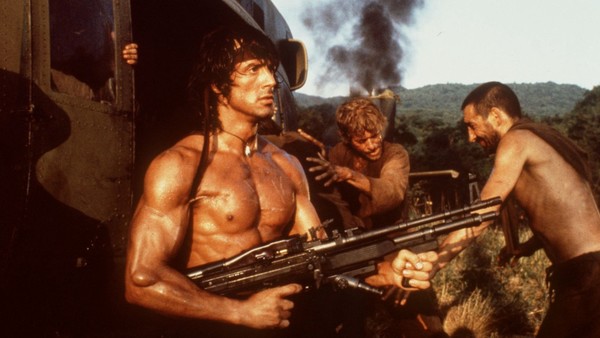
The first film in the Rambo series, simply titled First Blood, was more a character drama with fringe action elements than an action flick in its own right.
Focused on the failed efforts of a Vietnam veteran (Sylvester Stallone) attempting to reintegrate into a society that would rather spit on him, First Blood was an incredibly rousing examination of how society treats war veterans, and could so clearly have been a standalone, one-off movie.
But its astronomical box office success ensured a sequel would be made, and despite Stallone co-writing the screenplay for First Blood Part II with James Cameron, they collectively failed to come up with a tonally appropriate story.
Sadly, First Blood Part II largely betrays the entire point of the original by focusing on racking up a ludicrous body count. Rambo kills just a single person in the first film - by accident, no less - yet in First Blood Part II, Rambo slaughters 58 people.
Due to the film changing tack so abruptly and effectively transforming Rambo from an emblem of war's cost into a sleek, savage killing machine, the general public came to associate the word "Rambo" with wanton bloodshed, as bolstered by the next two sequels, which each upped the body count even higher.
Though the surprisingly decent fourth film made a solid attempt to circle back to the more serious tone of the original, the damage had really been done to the character and the spirit of the franchise by then.
Any modesty or subtlety the first film had was lost amid all the thunderous gunfire and bloodshed in the sequels.
6. T2's Hopeful, Optimistic Ending - Terminator 3: Rise Of The Machines
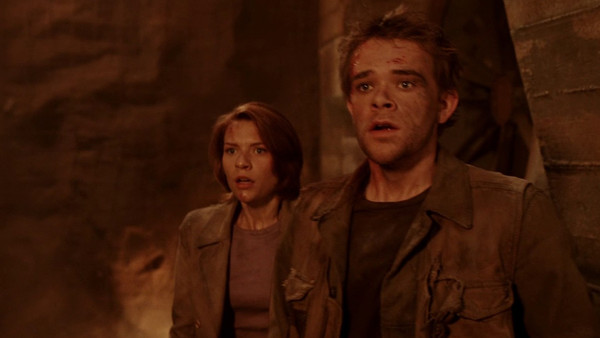
Terminator 2: Judgment Day is a rare sequel which successfully changes-up the series' tone and absolutely succeeds, vaulting from horror to outright action.
The visually stunning tentpole concludes with Sarah Connor (Linda Hamilton) and her son John (Edward Furlong) quite definitively defeating Skynet and erasing any possibility that Judgment Day could actually come to pass.
In the film's fantastic final scene, the battle-hardened Sarah declares that she's actually hopeful for the future, neatly tying off her terrific character arc between both movies and effectively bringing the franchise to a close.
But no hit movie series ever stays dead for long, and some 12 years after T2 hit screens, a third film was finally released, albeit without the involvement of James Cameron, who quite understandably felt that he'd told precisely the story he set out to.
And while Terminator 3: Rise of the Machines was a relatively solid sequel for the most part - especially compared to what followed it - it also inherently betrayed the entire "the future isn't set" thematic of T2, with its brutally grim ending suggesting that, in fact, Judgment Day is inevitable.
Though there is certainly an affecting bleakness to the film's shocking climax, it also flies in the face of everything Cameron wanted to say with T2's ending, and was ultimately a cynical way to crowbar open the series' franchise prospects forever more.
Worse still, with Terminator: Dark Fate recently spinning its own dark retcon of T2's ending, it all feels doubly insulting.
5. The Mystery Of Michael Myers - Halloween 6: The Curse Of Michael Myers

One of the big mistakes made by so many movie franchises, especially in the horror genre, is that they end up over-explaining the origins of their antagonist, in turn stripping away any sense of mystery or intrigue surrounding them.
This is certainly true of Halloween, which impressively got away with making heroine Laurie Strode (Jamie Lee Curtis) Myers' sister in the first sequel, and in the second sequel, they didn't even feature The Shape at all.
Though the sequels got progressively silly ahead of 2018's reboot-sequel, it wasn't until the sixth film where the veil was pulled back far enough to actively ruin Michael Myers as an elemental, mythical entity.
1995's Halloween 6: The Curse Of Michael Myers dumped heaps of exposition upon viewers, explaining that Michael is controlled by a Druid curse called Thorn, which causes him to become a murderous monster every Halloween. Yikes.
The previously eerie, unexplained nature of Myers, often interpreted as a metaphor for the inevitability of death itself, was completely de-mystified in the most goofy way possible here, leaving most fans deeply unsatisfied.
Thankfully the sequels that followed, even the bad ones, basically ignored this entire plot line, and focused instead on Myers as the shambling spectral force he's better known as.
But canonically speaking, this origin story lingered around for over two decades before the 2018 Halloween wiped the slate of sequels truly clean.
4. Palpatine's Epic Death - Star Wars: The Rise Of Skywalker

The original Star Wars trilogy of course concluded with Darth Vader (David Prowse) committing the ultimate face turn and saving his son Luke Skywalker (Mark Hamill) by throwing Emperor Palpatine (Ian McDiarmid) down a reactor shaft to his doom.
George Lucas' prequels were able to bring the character back without undermining his demise, and in fact, McDiarmid's deliciously scenery-chewing performance in the prequel trilogy is arguably their strongest asset.
When Palpatine was confirmed to make a return in the recent saga-capping The Rise of Skywalker, fans were a mixture of intrigued and nervous. Could J.J. Abrams find a way to justify the Emperor's resurrection, or would this be yet another pandering dose of lazy nostalgia bait?
Sadly it turned out to be the latter, with Palpatine's return ultimately undermining what his demise actually meant in Return of the Jedi.
Resurrected in the film's opening titles with little further explanation - beyond him apparently being a crude zombie-puppet-thing hooked up to a mechanical arm - it didn't feel nearly worthwhile enough to justify effectively undoing one of the most iconic and straight-up awesome moments in the entire saga.
And if that wasn't bad enough, Palpatine's new, definitely final death at the hands of Rey (Daisy Ridley) was intensely underwhelming, amounting to her simply deflecting his Force lightning and letting him fry himself into nothing. Terrible.
3. The Found Footage Style - Book of Shadows: Blair Witch 2

1999's The Blair Witch Project is one of the most influential horror films of all time, popularising the found footage format and making ingenious use of its low budget to imply that what the audience is seeing is, in fact, totally real.
It might seem baffling to audiences today, but 20 years ago it was much easier to take The Blair Witch Project seriously as a piece of literally found footage, without every household in the developed world having access to the Internet.
This only helped the film become a viral, word-of-mouth phenomenon which just had to be seen, and in the tradition of any hit horror movie, studio Artisan Entertainment quickly put together plans for a sequel.
But rather than just repeat the same style again, the studio bizarrely opted to ditch the found footage gimmick and make Book of Shadows: Blair Witch 2, released barely a year later, a more cinematically conventional sequel.
The result was a film that really only felt like a Blair Witch movie in name, and though it was still financially successful, it clearly could've been a much bigger hit both critically and commercially if it kept the first film's unique, widely praised stylistic conceit.
Instead this was a bog standard horror flick, and a pretty bad one at that, receiving five Razzie nominations including an apt win for "Worst Remake or Sequel."
2. The R Rating - Live Free Or Die Hard

The Die Hard franchise is defined by several things: Bruce Willis's wise-cracking everyman cop John McClane, smug douchebag villains getting their deliciously satisfying comeuppance, and an R rating.
With their potty-mouthed screenplays and grisly action sequences, the first three Die Hard films certainly earned their adult-skewing content ratings, and so much of the excitement surrounding 2007's belated fourth film was muted when Fox quietly confirmed that it was being rated PG-13 in the pursuit of fatter profits.
The thing is, Live Free or Die Hard is a good movie, but due to its neutered, sanitised approach to violence and especially swearing, it just doesn't quite feel like Die Hard.
The PG-13 rating means that even McClane's iconic catchphrase, "Yippee-ki-yay, motherf**ker!" could only be spoken aloud with a gunshot disguising the offending word, while the overwhelming majority of the action was near-bloodless.
Though there is an Unrated home video release of the movie with liberal use of the "F-word," a lot of the swearing has clearly been dubbed in post-production, while all of the blood was also added digitally after-the-fact.
The version that the majority of the fans have seen is the clean, "family-friendly" version released in cinemas, and that's just not what Die Hard has ever been about.
Ironically, the R rating was restored for the fifth film in the series, A Good Day to Die Hard, but it didn't help much, given that the film was, well, terrible.
1. Rachel Weisz As Evelyn - The Mummy: Tomb Of The Dragon Emperor

The failure of the Tom Cruise-starring The Mummy reboot merely reminded everyone how much breezy fun the first two Brendan Fraser-starring Mummy movies were.
They weren't high-art by any means, and The Mummy Returns foisted that unforgettable CGI abomination of The Scorpion King (Dwayne Johnson) upon audiences, but they knew exactly what they were and delivered accordingly.
The films were also defined by their supporting cast, especially Arnold Vosloo as Imhotep and Rachel Weisz as Rick O'Connell's (Fraser) love interest Evelyn Carnahan.
Weisz brought some much-needed feminine charm to the first two films through her remarkable chemistry with Fraser in particular, so fans were hugely disappointed when it was revealed that she wouldn't be returning for 2008's threequel, The Mummy: Tomb of the Dragon Emperor.
Given that Weisz won a Best Supporting Actress Oscar in 2006, this could've simply been down to the actress wanting to distance herself from a hokey blockbuster role, except it later emerged that the production made it rather unappealing for Weisz to return.
Weisz was ultimately replaced by Maria Bello - a great actress, but a bad fit for Evelyn - and it was eventually confirmed by director Rob Cohen that the 37-year-old (at the time) Weisz wasn't thrilled about the idea of playing mother to a 21-year-old.
Rick and Evelyn's son Alex did of course appear previously in The Mummy Returns, though the character was significantly aged-up for the threequel, seeming to imply that Evelyn had given birth to him when she was incredibly young.
Considering that Alex's age had virtually no bearing on the film's plot, would it have killed the production to just...age Alex down a bit and keep their star happy? Instead, they pressed forward, and the world was deprived of another Fraser-Weisz re-pairing. Boo.