10 Movies That Ruined Their Studios
Some of these studios managed to bounce back, and some are gone for good.

It should go without saying that the film industry is built on hard cash. Pretty much every film that hits cinemas is a product and an investment, designed to produce returns for financiers. But sometimes the studios making these films put too many of their eggs in one basket and come a cropper.
There is no surefire way of predicting what audiences, critics, or distributors will go for, after all, and every movie is to some extent a gamble. Even with an ironclad script, big-name stars, and an auteur director, major movies can fail spectacularly. And doubly so when they don't have any of these.
Over the years, studios have ploughed cash into films on a bad bet and suffered the dire consequences. Just look at where the supposedly revolutionary animations of Final Fantasy: The Spirits Within or Titan AE ended up, at the hundreds of crappy features Nicolas Cage had to make to stay solvent after Bangkok Dangerous, or at how many production companies Francis Ford Coppola has sunk.
Massive budgets, iffy subject matter, and vanity projects gone wild: these are 10 movies that ruined their studios.
10. Final Fantasy: The Spirits Within (2001)
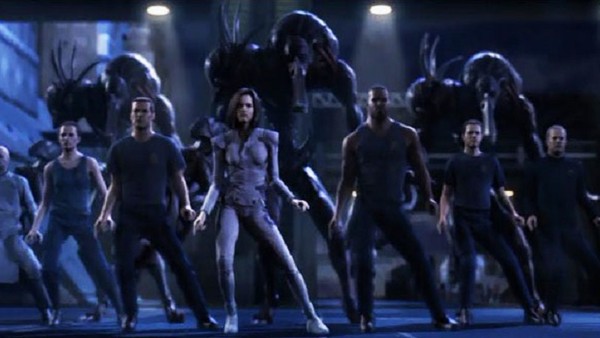
Boasting the honours of being the first photorealistic CG feature film and also the most expensive video game adaptation (at the time), Final Fantasy: The Spirits Within follows Aki Ross and Doctor Sid (Ming Na-Wen and Donald Sutherland) in their attempt to free a post-apocalyptic Earth from deadly alien creatures, the Phantoms, while battling warmonger General Hein (James Woods). And though this ought to have been big news, not nearly enough people went to see it to justify the $137 million price tag.
The Spirits Within took only $85 million at the box office, making it a catastrophe for its financiers and studios. But of the two studios that backed the project – Columbia and Square - one of them was a major player in the market, not easily sunk by a single movie, and the other, uhh, wasn’t. No prizes for guessing which.
Unfortunately, Square Pictures was not merely a film studio but the filmmaking arm of the video game developer for the Final Fantasy series. It reported unsustainable losses and closed its doors the year of The Spirits Within’s release. Square went on to be partially revived in 2003, when a merger created Square Enix, but the original studio, and the man behind it – Hironobu Sakaguchi – were gone.
9. Raise the Titanic (1980)
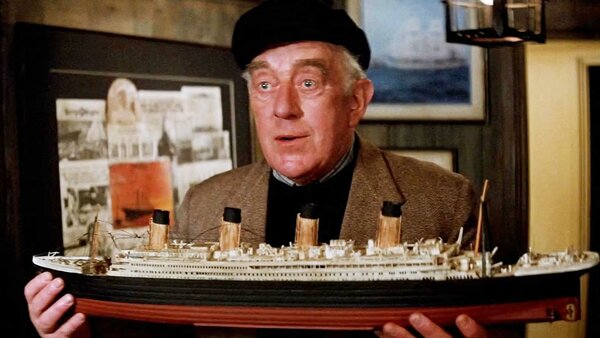
Based on Clive Cussler’s 1976 book of the same name, Raise the Titanic is the film James Cameron arguably spent a good decade of his career trying to make happen for real. But long before Cameron set his sights on the submerged ship, director Jerry Jameson made this ambitious adventure movie about it, in which the US government sends operative Dirk Pitt (Richard Jordan) to bring the Titanic back to the surface and recover the byzanium ore (a fantasy fuel invented by Cussler) on board.
With a $40 million budget, it was a major gamble for producer Baron Lew Grade’s production company ITC Entertainment (given this was 1980), and forced the studio into a bit of a jam: either this film made bank, or it all went under. Now, we would love to say audiences came out in their droves, the movie was the highest earner of all time, and it became a household name almost instantly, but we all know that’s Cameron’s Titanic, not Jameson’s.
No, Raise the Titanic secured just $7 million in ticket sales, ruining ITC’s film division in the process. And, after the release of the other pictures ITC already had in the can, Baron Grade quit the movie business for good, famously claiming that “it would have been cheaper to lower the Atlantic.”
8. Sinbad: Legend of the Seven Seas (2003)
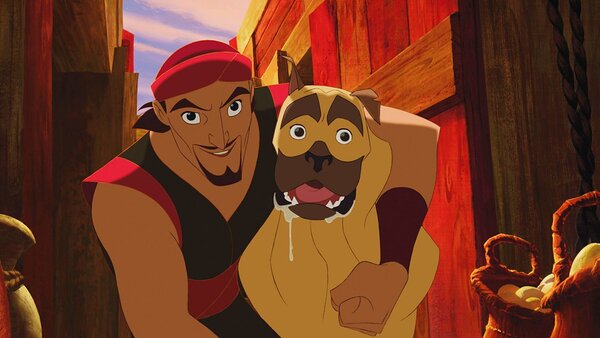
Anyone born in the '90s will have fond memories of the 2D animations produced by Disney and DreamWorks through that decade and into the early noughties. This medium got us invested in the unlikeliest of topics, including Greek myth (Hercules), early 1900s adventure novels (Tarzan), the Bible (The Prince of Egypt and Joseph: King of Dreams), and, of course, Middle-Eastern folk pirates, with Sinbad: Legend of the Seven Seas.
Now, there is no doubt that most of us have powerful memories of watching Sinbad on VHS, at home, but how many went to see it at the cinema? Not nearly enough, is the answer.
DreamWorks was not exactly a small studio in 2003, riding on the successes of Chicken Run and Shrek, but it also hadn’t been in the business long enough to have the iron-clad finances of its main competitor, Disney. Thus, when it spent $60 million on Sinbad, roping in a massive celebrity voice cast including Brad Pitt, that was bad enough. But when it spent a further ~$150 million on marketing and tie-ins, it was beyond the pale.
The film scored £80 million at the box office; not bad for a slightly niche animation, but not nearly enough to cover the costs. Co-founder David Geffen admitted that DreamWorks had come close to bankruptcy twice, thanks to Sinbad, and it was only by some clever financial and business manoeuvres, and dumb luck, that the studio wasn’t forced to close for good.
7. Side Out (1990)
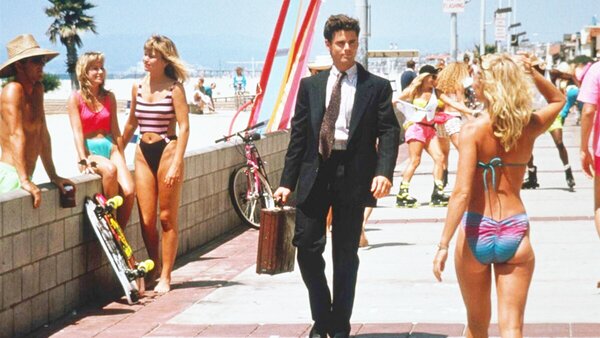
Directed by Peter Israelson, comedy sports drama Side Out came along in 1990, when the excesses of the '80s were slowing down and sports movies were broadly dividing into two categories: family fun-capades (The Mighty Ducks, Cool Runnings) and hard-hitting dramas (Any Given Sunday). Side Out, a film about a beach volleyball competition – which feels like writer David Thoreau saw the volleyball scene in Top Gun and thought “there’s a movie!” – had all but missed its niche.
Producing the thing was former Walt Disney executives James L. Stewart and Rich Irvine’s Aurora Productions, which had enjoyed one initial success with 1982's The Secret of NIMH, before struggling to make ends meet on subsequent productions. It seems obvious now, but a $6 million budget for a beach volleyball film was probably not the way to go, especially as the production shelled out for professional players like Randy Stoklos and Sinjin Smith, without the foresight to see that very few moviegoers would know who these people were.
Side Out took only $450k and was the last film Aurora Productions ever made. Although a monumental loss, this wasn’t the be-all and end-all flop, but it was the flop that broke the camel’s back – or, the Aurora’s back. Do production companies have backs?
6. Megalopolis (2024)

One of the all-time greats and a pioneer of New Hollywood, Francis Ford Coppola made his name in the 1970s, churning out masterpiece after masterpiece, before moving into a slower lane for the '80s and '90s that saw him put out several good movies, albeit not quite the calibre of his previous work.
Unfortunately, Coppola’s early successes gave him a self-certainty as a director that has not served his career well. Several times over the years, his production companies have gone bust due to his anticipation of what a film might be worth to audiences not meeting expectations. And many times it has been his own money on the line.
Such is the case with last year’s Megalopolis, a ropey epic sci-fi about architect Cesar Catilina (Adam Driver) who clashes with corrupt Mayor Franklyn Cicero (Giancarlo Esposito), as Catilina seeks to revitalise an alternate NYC by turning it into the titular Megalopolis. Coppola funded the ~$135 million film through his company American Zoetrope, using his own cash, and it returned just $14 million at theatres – theatres who were reluctant to show it at all.
Coppola and American Zoetrope are now facing financial ruin, and the director is hocking his watches to try and remain solvent. But don’t think for a second that this will stop him from trying again!
5. Bangkok Dangerous (2008)
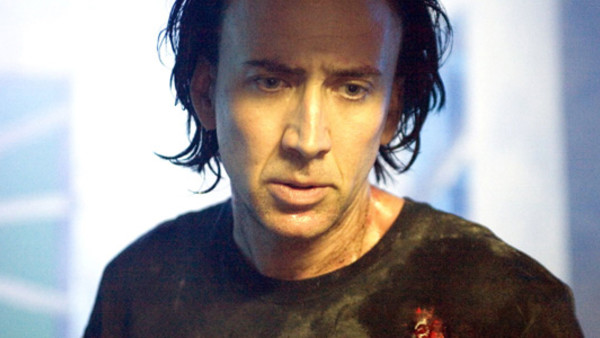
Having already written and directed the successful Thai actioner Bangkok Dangerous (1999), the Pang brothers joined Nicolas Cage for a second run at it in 2008, when Cage’s production company Saturn Films procured the rights to shoot an English remake for the US market.
The film stars Cage in the central role of freelance contract killer Joe, whose history of crime and sentimentality both conspire to get the better of him on a job in Thailand. Critics hated it, and while the movie almost broke even on paper, accruing $42 million against a $45 million budget, the actual financial reality of making and marketing a film beyond its production budget was a tougher pill to swallow.
In the wake of Bangkok Dangerous, Saturn Films president Norman Golightly bailed, and Cage faced bankruptcy, in which not just his misguided film projects, but his many mansion investments and purchases of dinosaur bones and the like came back to bite him on the rear. Despite being brought to ruin, Cage’s financial recovery – by taking anything and anything offered to him for the better part of a decade – meant Saturn was revived, and the production company is once again slapping its name on Nicolas Cage’s films, including last year’s Longlegs.
4. Cutthroat Island (1994)

Founded by Mario Kassar and Andrew G. Vajna, Carolco Pictures was once something of a powerhouse in the movie industry, whacking out hits like Terminator 2 and Basic Instinct, and yet it is proof that even major players can succumb to the ruin of just one bad picture.
After those aforementioned successes, Carolco believed it could do no wrong, and so in 1994 it put the sizeable revenue it had amassed into Renny Harlin’s Cutthroat Island, a pirate movie. Though they have seen the occasional resurgence, pirate movies haven’t been truly in vogue since the 1960s, and so a $60 million genre picture was a big gamble.
This was silly money for the time, given, for example, Spielberg’s epic, technological wonder Jurassic Park had been made for around $60 million the year before. The production was a nightmare from the get-go, with Harlin taking a dictatorial role in production, and various minor disasters occurring on set, taking the budget up to around $100 million. But even if things had gone right, there was no way this one was recovering its budget.
As it was, only around $18 million of tickets were sold worldwide, creating one of the most epic failures in moviemaking. The loss doomed Carolco and forced Kassar and Vajna to file for bankruptcy.
3. Gods and Generals (2003)
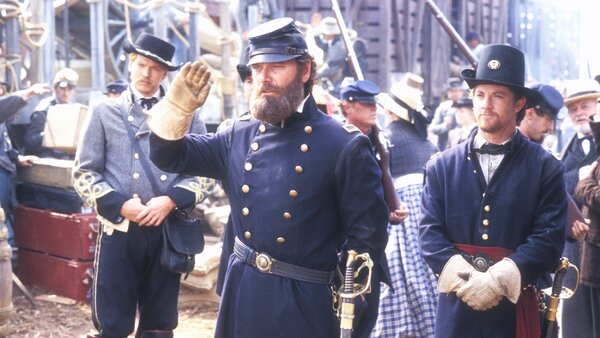
Adapted from the 1996 novel by Jeffrey Shaara, epic war drama Gods and Generals was a passion project for writer-director Ronald F. Maxwell and his producer, media mogul Ted Turner. who financed it to the tune of $56 million via his Ted Turner Pictures company.
The film takes us back to the American Civil War and follows Stonewall Jackson (Stephen Lang) right up to his death at the Battle of Chancellorsville. Now, the USA’s cult of patriotism usually knows no bounds, and so anything with a Civil War vibe can usually fill screens on vague ideas alone. But US audiences are also the reason 90 minutes is considered the ideal movie runtime; as Hollywood tells it, they don’t like to sit and pay attention to one thing for too long.
Unfortunate, then, that Gods and Generals is three hours and 40 minutes long (four hours 40 if you catch the director’s cut).
The film made around $13 million at the box office, which was bad enough considering the initial $56 million budget, but that was made all the worse by the reported $30 million Ted Turner Pictures sunk into marketing. Needless to say, this was the final movie Ted Turner or Ted Turner Pictures produced.
2. Titan A.E. (2000)
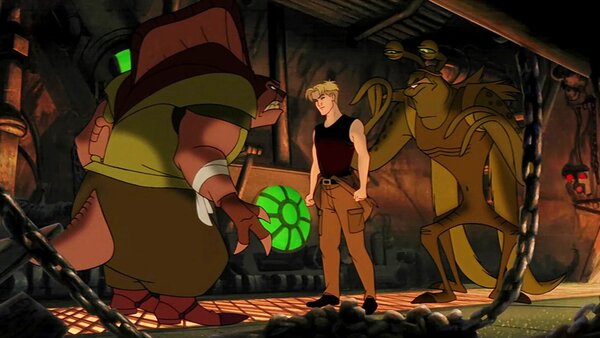
20th Century Fox founded Fox Animation Studios in 1994, seeking to ape Disney’s success, embrace evolving technology, and cement its place in the animation sphere. Like many things that Fox does, however, its efforts were a bit disjointed and lacked Disney’s drive, ethos, or vision. Nonetheless, with Don Bluth and Gary Goldman helming its projects, it scored an early success with Anastasia, the almost offensively fictional story of Anastasia Romanov escaping the violence of the Russian Revolution.
Its second film, though, the Joss Whedon-penned Titan A.E., was not so lucky. Yes, Whedon knows his genre pictures and can pen a great script with his eyes closed, but he was used to delivering for the adult and older teen markets, not children’s animation. The resulting movie took us to a universe without Earth, where it is one man’s mission to save humanity from extinction, on a budget somewhere in the $85 million region. A lot of money for such a green studio.
Titan A.E. didn’t really work for any age bracket, and wound up taking around $37 million at the box office, plunging the studio into the red. Fox could absorb the losses, but it opted to do so without its animation division, closing down Fox Animation Studios just weeks after the film’s release.
1. Cleopatra (1963)

In 1963, $44 million was a lot of money. A hell of a lot of money. So, when 20th Century Fox put this kind of cash behind historical epic Cleopatra, it had to be good, didn’t it? The cast and crew list seemed to suggest so, with Citizen Kane’s Joseph L. Mankiewicz behind the camera (taking over from Rouben Mamoulian), Elizabeth Taylor in the lead role, and Richard Burton as Marc Antony. And yet...
Don’t get it wrong, Cleopatra is no stinker, with lavish sets, brilliant performances, and a clear sense of story from Mankiewicz. But it’s baggy as all hell, running at a wholly unearned 243 minutes. US critics loved it because it imbued Cleopatra and her time with the kind of brash hedonism the States was thriving on; European critics hated it for much the same reasons.
The movie took around $57 million at the box office, which was a sizeable sum, and yet because of the marketing costs and the endless disruptions during filming that had caused the budget to balloon (including replacing the director, switching locations, and fighting between Taylor and Burton), it nearly bankrupt the studio. Fox shut down production of its other movies, sold off space to other studios, and the careers of producer Walter Wagner and head exec Spyros Skouras went down the pan, with the studio only surviving by the skin of its teeth.