10 Unsung Film Directors Who Never Get Their Due

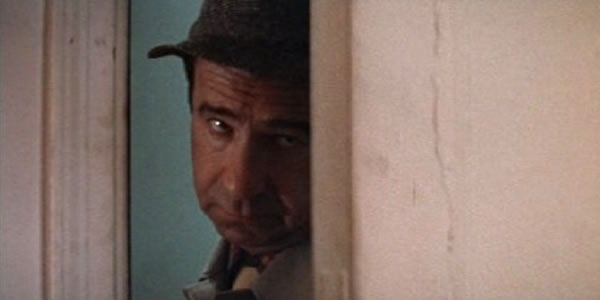
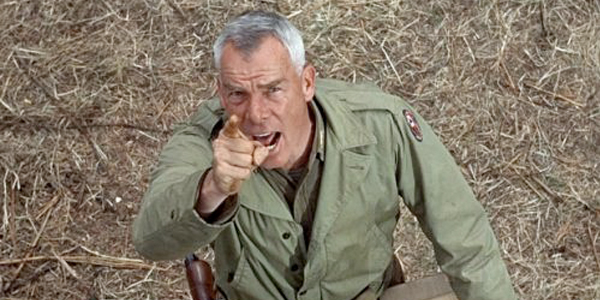
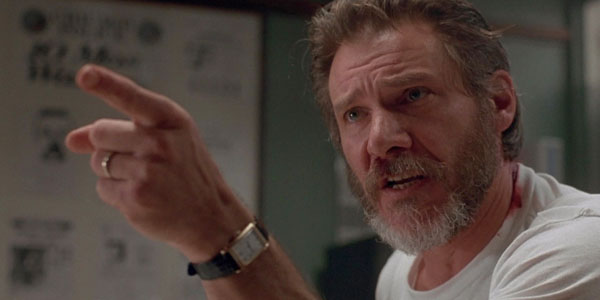
Can you even name the director of The Fugitive? Didn't think so...
We all know the legends, but what about those who are just another name in the opening credits? Everyone is familiar with Hitchcock, Kubrick, Spielberg, Scorsese, Tarantino, Kurosawa, Coppola, et al. - directors so-often name-dropped in conversations, books and online that singing their praises is almost a cliché. Just try to find a single €œGreatest (insert topic here) Of All Time€ list without seeing their names popping up over and over. But not every great film was made by a €œgreat€ director, nor has every equally-talented director been behind the camera of an acknowledged classic. Sometimes the stars align and a €œhired gun€ is fortunate enough to briefly be part of movie history and allowed to shine (Hollywood€™s equivalent of a One Hit Wonder). Other times a director has proven to be a reliable talent time and time again, responsible for numerous solid films, but remains fairly anonymous because he or she doesn€™t demonstrate a particularly identifiable style which critics and cinephiles embrace. Then there are some who put their own indelible stamp on a film that€™s unappreciated by critics and movie snobs, either because he or she chooses to direct concept-driven entertainment for the masses, or said-style offends their sensibilities. This is a list of ten unsung directors, some whose names you may know, most you likely don€™t. Never mentioned among the greats, all of them have had a mostly-anonymous impact on Hollywood in some way. It would be a shame if we never acknowledged them€

10. Joseph Sargent

Sargent got his start in television, first as an actor before deciding he€™d rather be behind the camera, helming episodes of Star Trek and The Man From U.N.C.L.E. His first theatrical film, Colossus: The Forbin Project, is a smart and scary sci-fi thriller which may be even more relevant today than it was in 1969 (perhaps why Hollywood€™s been trying to get a remake off the ground for several years). Sargent moved back and forth from television to the big screen for most of his career, a reliable director-for-hire with a long list of credits. Most of his filmography is solid, if somewhat unremarkable. However, 1974€™s The Taking Of Pelham One Two Three is a high tension masterpiece and one of the best action films of the decade. Distilling John Godey€™s meandering novel into a taught two hours (mainly by eschewing its long-winded backstories), Sargent€™s film of four heavily-armed men who hijack a New York subway train in the middle of the day garnered universal praise. It has since been remade twice (badly) and inspired a young Quentin Tarantino, whose characters in Reservoir Dogs are similarly assigned colours rather than actual names (Mr. Blue, Mr. Brown, etc.). All that being said, it would be sad if we ended up remembering Joseph Sargent for his most dubious achievement, Jaws: The Revenge, his final theatrical film.

9. Peter Hyams

No one but the geekiest of movie geeks are likely to know who he is. He€™s not a superstar whose name can sell a movie. He has helmed many successful films, but never a runaway blockbuster. None of them are classics or ever won an Oscar in any category. None will ever be lovingly restored by Criterion for a multi-disc Special Edition. There€™s never been a Peter Hyams film festival or college course focusing on his body of work. But if you€™ve been around a while, there€™s a 90% chance are you have seen and thoroughly-enjoyed at least one of his movies (probably more than one) on cable or DVD (you can find a lot €™em in Wal-Mart budget bins). None are high-art, but most are really fun, fast and clever (some written by Hyams himself, making him a bit more than a director-for-hire). Here€™s worked with a lot of Hollywood icons: Elliot Gould, Michael Douglas, Sean Connery, Arnold Schwarzenegger, Gene Hackman, Harrison Ford, Billy Crystal, to name a few. No one will ever confuse Hyams with Hitchcock or Spielberg, and yeah, the guy has made some cr*ppy movies, but even Spielberg screwed the pooch on several occasions. When you look back at Peter Hyams€™ entire filmography, he directed a surprising number of really good films, such paranoid thrillers as Capricorn One, Outland, Narrow Margin and The Star Chamber. This is also the guy who had the balls to write and direct the sequel no one was asking for (2010), yet somehow avoided sh*tting all over 2001€™s legacy. Not only that, he coaxed decent performances from Jean Claude Van Damme (Timecop, Sudden Death) and directed the best Alien rip-off ever made (The Relic).

8. Robert Aldrich

If there€™s one director responsible for more classic movies without ever getting due credit for their success, it€™s Robert Aldrich. He€™s the man behind Whatever Happened to Baby Jane?, Hush€Hush Sweet Charlotte, Flight of the Phoenix, The Dirty Dozen and The Longest Yard. Sure, many of them were star vehicles, but Aldrich managed to put his indelible stamp all over them. There was an identifiable (even rebellious) quirkiness present in all of his films, which ultimately lifted most of them above their perspective genres. Aldrich also proved to be a master of utilizing split-screen in his narrative, most notably in The Longest Yard and Twilight€™s Last Gleaming (the latter being one of the most woefully-underappreciated films of the 70s). Aldrich died in 1981, leaving behind some true classics, as well as a few obscure gems waiting to be rediscovered. RIP.

7. Fred M. Wilcox

Wilcox directed a handful of films in various genres for MGM during the 40s and 50s, the most successful being Lassie Come Home. But the one with the greatest lasting impact on cinema is Forbidden Planet, a sci-fi classic loosely based on Shakespeare€™s The Tempest. Back then, despite such box office successes as War of the Worlds and The Day The Earth Stood Still, science fiction wasn€™t a particularly well-respected genre, and major studios were reluctant to green-light any such film which couldn€™t be made cheaply. With hindsight, not only is it remarkable that MGM invested a then-staggering $2 million into the project, but entrusted a director whose track record was spotty at-best (most of Wilcox€™s previous films lost money). Not only that, this wasn€™t an alien invasion or big bug epic (both very popular in the 50s), but a deliberately-paced, thought-provoking and (for the time) cerebral sci-fi film, the kind of stuff usually only found in novels. Forbidden Planet was not a hit when first released in 1956, though its impact on the genre grew as time passed. Gene Roddenberry would later claim the film was a major influence while he was developing the original Star Trek TV series. Two of the film€™s more pricy props, the C57-D saucer and the eternally-endearing Robby the Robot, would be reused so often in subsequent movies and TV shows that they became iconic images to sci-fi fans worldwide. Its ground-breaking visual effects - a combination of miniatures, matte paintings and animation - still look great today. Forbidden Planet is also the first film to feature an entirely-electronic music score (and synthesizers hadn€™t even been invented yet). Obviously, Wilcox isn€™t solely responsible for all this, but not bad for a guy who likely approached this film as just another MGM gig. After just one more film, he died before he was able to enjoy Forbidden Planet's legacy as one of the greatest sci-fi films of all time. RIP.

6. Andrew Davis

Had he quit directing after Code of Silence, at the very least, Andrew Davis would have gone down in action movie history as the one guy who managed to make a good Chuck Norris movie. But, damned if he didn€™t accomplish the same Herculean task a few years later with Under Siege, the only good (even great?) Steven Seagal movie. This was akin to Michelangelo creating the statue of David using nothing but Play-Doh. With 1993€™s The Fugitive, Davis turned a decades-old TV show into one of the best action movies of the 90s. He had help, of course, but The Fugitive showed what the man was capable of with a terrific script and A-list actors; this is arguably Harrison Ford€™s best role outside the Indiana Jones and Star Wars franchises, even though Tommy Lee Jones still steals the movie (just like he did in Under Siege). Davis€™ reputation as the go-to guy for kinetic-yet-smart action fare was assured, able to write his own ticket. Unfortunately, that ticket was Steal Big Steal Little, a self-indulgent mess of a comedy which demonstrated one thing Davis couldn€™t do was write a screenplay. It was a tremendous flop, and he was soon back at his old job of resuscitating careers of ageing actors like Michael Douglas and Arnold Schwarzenegger. So far, his lone hit of the 21st Century is Holes, a charming-enough piece of young adult fluff, but hardly worthy of Davis€™ eye for action. Even though he€™s apparently now content to be a director-for-hire, it€™s not too late to hand him a project more-suited to his talents (Expendables 4, perhaps?).

5. Mary Lambert

For one to appreciate Ms. Lambert, it helps to be a Stephen King fan of a certain age. Back in the 80s, every book or story he cranked out was adapted into a movie before the ink on the original manuscript was dry. More often than not, those adaptations were largely disappointing, or strayed so far from the source material that they were Stephen King films in-name-only (including The Shining). Pet Sematary gained some advance publicity for being the one novel King claimed he was reluctant to publish because he personally found it so disturbing. At first, his good friend George A. Romero was slated to direct the inevitable movie, but the task was eventually handed to the relatively unknown Mary Lambert (whose only real credits were the murky thriller, Siesta, and a few music videos). To further appreciate Ms. Lambert, think about what she was facing back them - an unknown director, taking-on what is arguably one of King€™s most brutal stories, not-to-mention being a woman working in a genre that had always been (and still is, to some extent) a boys-only club. While Pet Sematary is not a great horror film, it was easily the most-faithful adaptation of King€™s work at the time, pulling absolutely no punches in its depiction of tragedy, violence and the loss of a child. Unlike The Shining, Christine, Cujo or Firestarter, Pet Sematary was truly disturbing. The film was a worldwide hit, and Lambert parlayed that success by frequently revisiting the horror genre throughout her career, one of the few female directors to do so (even though her work has sucked, including the god-awful sequel, Pet Sematary Two).

4. Tony Scott

This might be kind-of a cheat, since Tony Scott directed several blockbusters, and a few others which have developed rabid cult followings. Still, he never received the accolades of his older brother, Ridley. Nearly all of his movies are hyper-kinetic and insanely-edited, applying visual gimmicks even where they aren€™t necessarily warranted. He had a knack for turning a conversation between two characters into a full-blown action sequence, much to the consternation of film critics and movie snobs. But like him or not, Scott had a style all his own, and he obviously paved the way for the likes of Michael Bay. In fact, long-before everyone condemned Bay as the poster boy for the dumbing-down of American cinema, they were dishing the same dung about Tony Scott, beginning with Top Gun in 1986. Sure, most were testosterone-driven, amped-up epics, but he also managed to direct some great stuff, such as Crimson Tide, Domino, True Romance, Déjà Vu, Man on Fire and Unstoppable. Those movies are still loaded with Scott€™s usual cinematic fireworks, but they€™re also fiercely character-driven (something Michael Bay forgot when copying all Scott€™s moves). Ridley Scott may get all the praise, but Tony left his own indelible mark on modern cinema as well. It's time more people acknowledge it. RIP.

3. Nicholas Meyer

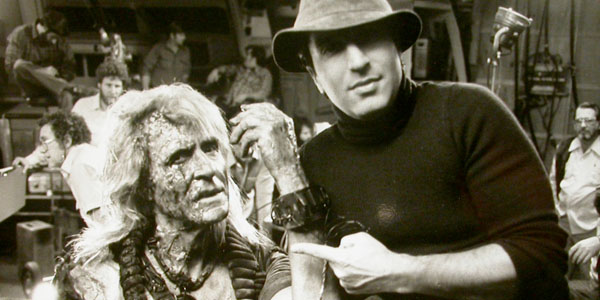
What can you say about a guy who managed to save the Star Trek film franchise from itself€twice? Star Trek: The Motion Picture, while not necessarily a bad film, was a major disappointment, especially for Trekkies who€™d waited years for the beloved Enterprise crew to make a comeback. What they got for their patience was a long, bloated special effects showcase with a few familiar faces along for the ride. Nicolas Meyer, fresh off his first directorial effort (1979€™s Time After Time, one of the greatest time travel movies no one ever talks about), was hired to inject some much-needed humanity into the sequel, Star Trek II: The Wrath of Khan (he also did an uncredited rewrite of the screenplay). Though made for a fraction of the budget of the first film, Star Trek II is justifiably considered one of the best entries in the entire franchise for two reasons. First, it milks our built-in familiarity with these iconic characters for all it€™s worth, rendering the climax as emotionally-powerful as sci-fi gets. Second, the film revisits the past to give us the nastiest sci-fi villain since Darth Vader, Khan (Ricardo Montalban, returning to the character he played in a single TV episode, only with more psychotic gusto). Meyer would go on to direct the harrowing television film, The Day After, a realistic depiction of the aftermath of nuclear war, before being called to rescue the Star Trek franchise yet-again, this time after William Shatner€™s disastrous, cheaply-made slapstick debacle, Star Trek V. Though there was some question whether or not the series should continue at all, especially with the cast getting-on in years, Meyer was the perfect choice to make sure the franchise ended on a high note. Once-again having a hand in the story, Meyer acknowledged these characters were getting old and made their advanced age a poignant element to the film. As director and co-writer, he€™s arguably the primary reason Star Trek VI: The Undiscovered Country concluded the original franchise with a bang instead of a whimper. While still an active screenwriter, Meyer hasn€™t directed a film in years. Too bad€he€™d have been the perfect choice for the third film in the Star Trek reboot franchise.

2. Irvin Kershner

Empire George Lucas may have created the Star Wars universe, but as a director with a keen sense of characterization, Irvin Kershner gave it a heart when he was hired to shoot The Empire Strikes Back. Working with a script by Lucas, Leigh Brackett and Lawrence Kasdan, all of the characters established in the first film were more fleshed-out and well-rounded, no longer comic book caricatures. Amidst the continuing spectacle, Kershner coaxed outstanding performances from Mark Hamill, Harrison Ford and Carrie Fisher (all of whom were adequate at-best in the first film). That attention to character and performance easily makes The Empire Strikes Back the best film in the entire franchise, and the first indication that Lucas himself was always a better visualist than an actual director (later-proven by the soulless prequels). While Kershner would go on to direct successful (and underrated) entries in other franchises (Never Say Never Again, Robocop 2), The Empire Strike Back remains his crowning achievement, but never really got the credit he deserved. RIP.

1. F. Gary Gray

Like many modern directors, F. Gary Gray cut his teeth on music videos (mostly rap artists) before breaking-out as a feature filmmaker. His sleeper hit, Friday, has spawned two sequels with a third reportedly on the way. That first film was a likable-enough stoner comedy, but Gray proved to be far more suited for the action genre. Set it Off, while flawed, was an unexpectedly moving heist drama. The Negotiator, however, was a taught, tension-filled film which displayed Gray€™s knack for amping-up the action while still keeping the primary focus on its characters. He would accomplish the same feat with films like The Italian Job and the underrated Law Abiding Citizen. Gray€™s strength lies in effectively establishing the personalities and flaws of every important character (even in such a supposed misfire as Be Cool, the unjustly-maligned sequel to Get Shorty). In Gray€™s films, we are always able to sympathize, or at least empathize, with both the protagonists and antagonists. Most of Gray€™s films have been successful, but he€™s seldom given due credit for them. He may not ever make a classic, but any producer ponying up tens of millions for an action film should feel confident with Gray in the director€™s chair. Perhaps this makes him the Peter Hyams of the new millennium. Of course, this is just the tip of the iceberg. What directors can you think of who€™ve never been given due-credit they deserve for their body of work or classic one-shots?

Contributor
Contributor

D.M. Anderson works and lives in Portland Oregon. He is the author of two young adult novels (Killer Cows & Shaken) and a collection of dark tales (With the Wicked). He has also published several short stories which have appeared (or will appear) in various anthologies and magazines such as 69 Flavors of Paranoia, Night Terrors, Trembles, Encounters, Implosion, Strange Fucking Stories, Perpetual Motion Machine. He documents his adventures in the dark on on his movie site, Free Kittens Movie Guide