20 Anxiety-Inducing Moments That'll Terrify You Senseless
Hold on to your seat.

In real life, anxiety is a pretty horrible emotion... but in the movies? That's a different story.
Moviegoers love suspense and stress; they love the anticipation, the terror, the uncertainty of what's going to happen next. They love to watch fictional characters go through hell while they get to learn, grow, and be entertained from the safety of their viewing chair without suffering through anything themselves. In short, the audience enjoys an anxious movie.
Lest we forget, Alfred Hitchcock was one of the earliest film directors to become a genuine celebrity in his own right, and a big part of his fame was his ability to create features that left everyone on edge, with him being dubbed the 'Master of Suspense'.
Anxiety-inducing movie scenes are often some of the best moments in their films, and the following 20 scenes are great examples of this. They range from unbearably tense action scenes to villains sadistically intimidating their victims, from brutal animal attacks to nerve-shredding personal dramas. What they all have in common is that they'll have even the most composed viewers biting their nails.
Kicking off with something from Stanley Kubrick...
20. A Clockwork Orange - Alex's Former Droogs Attack Him
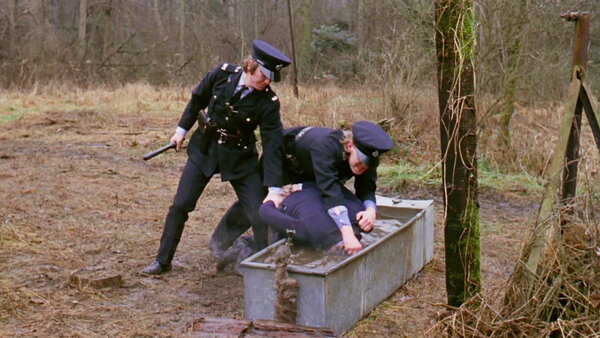
There's a particular moment lurking within A Clockwork Orange, Stanley Kubrick's harrowing classic, that'll have everyone positively sweating with horrified anxiety, and it's a scene that doesn't get enough attention.
When Alex DeLarge (Malcolm McDowell) is released from prison, he's been subjected to experimental mind control that leaves him unable to commit any sort of violence, and this includes fighting back when attacked. This is shown when he's beaten up by several homeless people, one of whom he'd assaulted during his criminal days, and he's completely defenceless against the angry mob.
Two policemen (Warren Clarke and James Marcus) then approach, and at first, it looks like Alex is saved. But then, the camera zooms on Alex's terrified face and the movie's haunting theme music kicks in; the next shot reveals why. The two policemen are actually Alex's former gang-mates, who'd previously turned on him and left him to the police. After cruelly taunting the defenceless Alex, they take him into the countryside, visciously beat him, and drown him almost to death, before abandoning him. Horrible stuff.
Kubrick's razor-sharp directing, that chilling music, and the fantastic performances from Malcolm McDowell, Warren Clarke, and James Marcus make this a viscous, intensely discomforting depiction of human cruelty, and one of many scenes that reaffirm A Clockwork Orange as an extraordinary piece of work, however much it'll inevitably break you.
19. Children Of Men - Car Chase

There have been many great car chases throughout film history. Few, if any, compare to this one from Alfonso Cuaron's exceptional dystopian classic Children of Men.
This bravura sequence from early in the film was uniquely captured. A rig was built atop the stunt vehicle, and a camera was lowered into the car and operated from above. Thus, viewers are completely immersed within this ingeniously choreographed set-piece, which included many close calls, a multitude of other vehicles, and even featured the death of the movie's biggest star - that being Julianne Moore, playing revolutionary Julian Taylor - less than halfway through the film.
Much like most of the big moments through Children of Men, this sequence was captured largely in one continuous take, and although this technique can be gimmicky in the wrong hands, here it was perfectly utilized to give this wonderful action scene a sense of real-time immediacy. It also heightens the impact of Julian's death, as she slowly bleeds to death over several minutes while the other characters are powerless to save her.
18. Barbarian - Into The Tunnels

Barbarian, a fabulous horror film that every horror fan needs to see, starts innocuously enough with two strangers - Tess (Georgina Campbell) and Keith (Bill Skarsgard) - arriving at an Airbnb. It's mistakenly been double-booked, and they now face an awkward situation. Things do not stay at that level of normality for long, as Tess discovers a network of underground tunnels beneath the house, setting the stage for an absolute nightmare.
And so, Tess and Keith slowly venture into the tunnels, going deeper and deeper into a labyrinth of uncertainty, and all this time, the suspense is genuinely unbearable. Everyone will guess that something will eventually attack them, but what? And when? Director Zach Cregger cleverly dragged this scene out for as long as possible, meaning that everyone will be watching through their fingers until, at long last, the big reveal.
A giant, deformed, naked woman charges out of the shadows, gruesomely murders Keith, and then attacks Tess before a sudden cut to black. Well, it's unlikely many people were expecting that. Several years before Weapons, it was this masterful sequence that truly established Zach Cregger as one of the most promising horror directors working today, and it's thrilling to think of what lies ahead for him.
17. Goldfinger - Laser

Goldfinger's laser scene is so iconic and so often-parodied - most notably by The Simpsons - that it's easy to forget just what a Hitchcockian masterclass in suspense this scene actually is. As such, every rewatch is a joyous refresh.
In this legendary sequence, Goldfinger (Gert Frobe) interrogates Bond (Sean Connery), who's strapped to a table while a deadly laser beam slowly moves along the surface, with Bond's manhood being the first thing in its path. Once he's finished, however, Goldfinger has no further use for Bond, and he's fully planning to kill the secret agent. "Do you expect me to talk?" Bond asks. "No, Mr Bond, I expect you to die!" he replies. In a franchise filled with amazing quotes, that might still be its best line.
Normally, James Bond is this idealistic superman, but here? He's a far more relatable figure, with Sean Connery's sweaty, frightened performance matching exactly how viewers will be feeling. In the nick of time, Bond does manage to talk Goldfinger out of killing him, and when the laser is switched off, Bond almost faints with relief - again, that's just how the audience will be feeling.
The fraught editing, John Barry's anxious score, and some of the best acting Sean Connery ever did as Bond combine to make this arguably the most nerve-wracking sequence from any of the James Bond movies.
16. The Revenant - Bear Attack

The Revenant, a very good (if overlong) survival thriller, has gone down in history as the movie that finally won Leonardo DiCaprio an Oscar, but the other thing it's most commonly remembered for is this bear attack sequence, which became something of an internet joke around the time of this movie's release. There were many witticisms about the bear trying to force itself on DiCaprio.
Well, regardless of that rather stupid online discourse, as anyone who's actually seen The Revenant will know, there's nothing remotely amusing about the film's bear attack. It is deadly serious, ferociously intense stuff that'll have viewers wincing in discomfort.
A visceral and brutal animal attack from a remarkably convincing CGI bear, this is shot largely in one take, giving viewers no respite from Hugh Glass' (DiCaprio) terror and agony, which is vividly conveyed through DiCaprio's committed performance and the gnarly gore effects.
This is over five straight minutes of pure horror, and quite frankly, you'll never look at a bear the same way again. This scene has done for bears what Jaws did for sharks.
15. Civil War - "What Kind Of American Are You?"
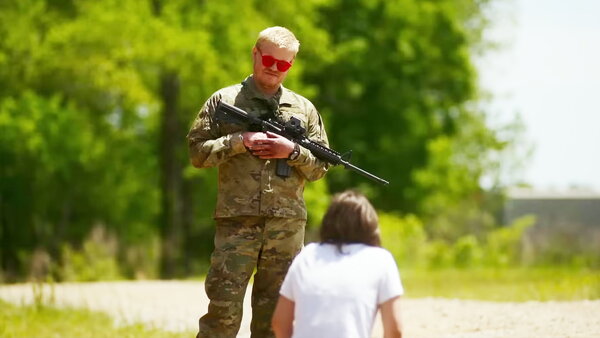
Well, this was terrifying.
In the second half of Alex Garland's fantastic war film, which depicts a second American Civil War, a group of journalists come across several soldiers preparing a mass grave. They're led by a racist, psychopathic Militiaman (Jesse Plemons), who calmly executes one of the group when he realizes he's a foreigner.
This abrupt outbreak of violence sets the tone for the agonizing scene that follows, as the Militiaman interrogates the others about their country of origin, before eventually killing one of the others when he confesses that he's from Hong Kong. One of the other journalists (Stephen McKinley Henderson) saves the group by running the Militiaman and his allies over, but it's a close call. He might've killed them all otherwise.
Thanks to Garland's typically strong writing, this would always have been a good scene, but the person who turns it all up to 11 is Jesse Plemons, who's completely brilliant and makes this a panic-inducing watch. The way in which he intimidates the group, the casualness of his killings, those pink sunglasses - everything about this character is heart-in-mouth frightening.
Quite frankly, it's a serious injustice that Jesse Plemons wasn't nominated for Best Supporting Actor for this. Sure, he wasn't credited, and he's only in Civil War for one scene, but he absolutely owned an already terrific movie, and if Isabella Rossellini could get nominated for a fairly forgettable one-scene turn in Conclave that same year, then there should've been room for Plemons.
14. No Country For Old Men - "Call It"
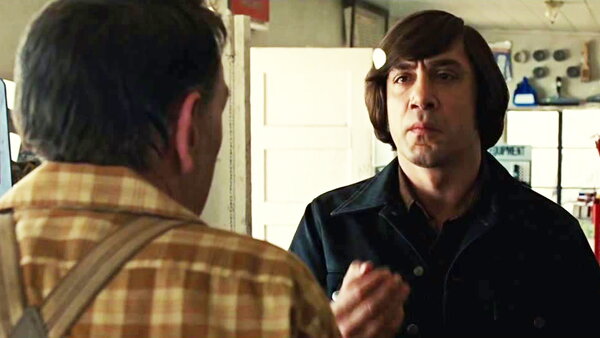
This is another scene that'll have everyone holding their breath, and again, it's largely thanks to the performance at its centre. As the sociopathic hitman Anton Chigurh, Javier Bardem was one of the scariest movie villains of all time, and thankfully, unlike with Jesse Plemons in Civil War, Bardem was nominated for a Best Supporting Actor Oscar. In fact, he won, and it couldn't have been more deserved.
At this point in the movie, he's already killed two innocent people, and soon after those deaths, a gas station attendant (Gene Jones) is unfortunate enough to come across Chigurh next. Chigurh demands that he call a coin toss, and it quickly becomes clear that if the man gets it wrong, he'll be murdered too.
Thanks to Bardem's hauntingly detached, almost-alien performance, this tripwire-tense scene is the stuff that nightmares are made of. It's made even more gut-wrenching by the fact that the attendant never realizes the mortal danger that he's put himself in.
Thankfully, he does call the coin toss correctly and, unlike the majority of the people who encounter Chigurh throughout No Country for Old Men, he's allowed to live. Still, even when you know how it ends, this scene doesn't get any less scary, which is always the sign of a great movie moment.
13. The Silence Of The Lambs - Buffalo Bill's Lair
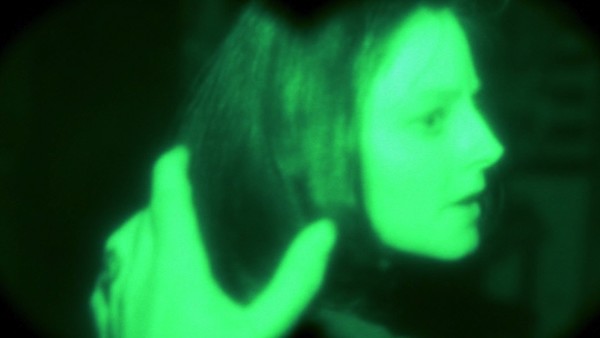
Most scenes in Jonathan Demme's Oscar-winning classic are frightening in one way or another, but it's arguable that The Silence of the Lambs saves its scariest moments for the end, as FBI trainee Clarice Starling (Jodie Foster) finally tracks down the elusive serial killer Buffalo Bill (Ted Levine).
Once Clarice realizes who he is, Bill escapes into his labyrinthine basement, and the inexperienced, terrified agent pursues him... but he's gone. She searches room after room, but Bill's nowhere to be found, and the tension builds up to heart-pounding effect. Everyone knows he's going to jump out, but when?
In such a sweltering sequence, the eventual appearance of the villain would often come as a relief; not here. When Buffalo Bill does re-emerge, he's switched all the lights off and plunged Clarice into darkness, while he approaches her wearing night-vision goggles.
It's a killer climax that reaffirms The Silence of the Lambs as a thriller for the ages, and it also shows that director Jonathan Demme was a master of the thriller. It's a shame he rarely returned to this genre for the remainder of his career.
12. Argo - Escaping Iran

In real life, when various intelligence agencies rescued six American diplomats from Iran by posing as a fake film crew, the escape went smoothly. They got through the airport and boarded a plane, with airport staff hardly even giving them a glance. But then again, that wouldn't make for good cinema, would it?
In Argo, an excellent adaptation of this real event (even if it maybe didn't deserve to win Best Picture), director Ben Affleck and Co. invented a harrowingly suspenseful climax in which the team barely get away. We've all had horrendously stressful experiences at the airport, but for this group that is multiplied by 100. Getting on this plane is a matter of life and death.
Here, everything keeps going wrong, everything keeps getting solved at the last possible second, and the razor-sharp editing constantly cross-cuts between the airport, those Stateside trying to run the operation, and the Iranian forces elsewhere who are piecing together the ruse and are moments away from working it all out and alerting airport security.
All palms will be sweating away as the film cuts back and forth before the group is finally allowed to board a plane. Almost immediately after the gates close, security work out that they've been tricked, but the plane takes off in the nick of time, and the diplomats are safe.
And... we can all breathe again.
11. Rear Window - Thorwald Catches Lisa
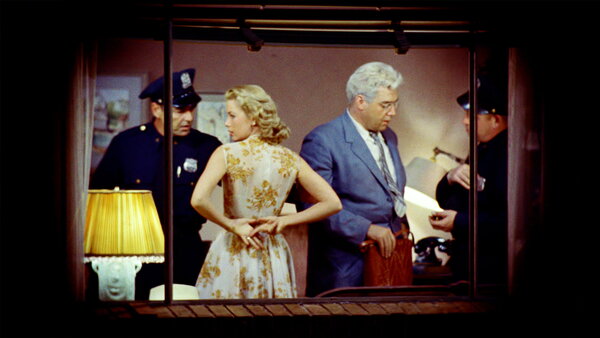
To do a list like this and not feature anything from Alfred Hitchcock would be criminal. He wasn't called the Master of Suspense for nothing, after all! Still, he outdid himself here.
Rear Window is one of Hitchcock's very best movies. Shot entirely on one set, it revolves around injured photographer LB 'Jeff' Jeffries (the legend Jimmy Stewart himself) who is passing his time by spying on his neighbours. Soon, he becomes convinced that his neighbour Lars Thorwald (Raymond Burr) has murdered his wife... and he's absolutely correct.
Late in the movie, Jeffries sends his girlfriend Lisa (a wonderful Grace Kelly) to break into Thorwald's apartment while he watches from his room. But while she's snooping... Thorwald returns, catches her, and attacks her. Through Jeffries' camera, the audience, alongside Jeff himself, watch with terrified powerlessness as Lisa is in mortal danger and she barely escapes.
As soon as he saw Thorwald approaching, Jeffries called the police, and this saves Lisa's life as they arrive just in time. Lisa allows herself to be arrested for breaking and entering, and she signals to Jeffries that she has found the wedding ring of the missing woman in Thorwald's apartment.
Unfortunately, Thorwald notices her hand movements and looks across, right into the camera, right at Jeffries. And so, the watched finally sees the watcher, and we know it's only a matter of time before Thorwald comes after our defenceless, wheelchair bound hero. Thus concludes a masterclass in suspense from the master himself.
10. Sorcerer - The Bridge
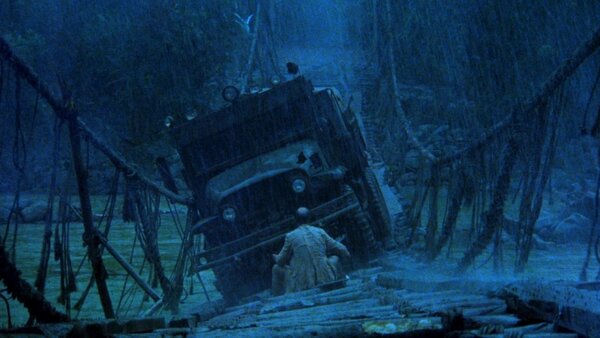
William Friedkin's Sorcerer, a surprisingly great and frequently underrated remake of the French classic The Wages of Fear, had a famously hellish production, with the bridge scene being the most difficult part to film. This sequence - in which two trucks, loaded with unstable cargo, drive across an unstable bridge in the middle of a rainstorm while one man walks on ahead to guide them - took several months to do and cost $3 million on its own.
Honestly, watching it back now, it still feels remarkable that they pulled this off at all, but thank the lord that they did. This sequence is a miniature masterpiece, wonderfully directed and nerve-wracking in the extreme. In fact, it could just be the single best sequence of Friedkin's career. The fact that it's all being done with minimal special effects adds a potent layer of realism and believability to the whole enterprise, making it all even more nerve-shredding.
If Sorcerer was made today (in fact, an unsuccessful second remake of The Wages of Fear was recently released on Netflix), it almost certainly would be done largely with lots of special effects, and it inevitably wouldn't hit as hard. The limited technology of yesteryear forced filmmakers to be more creative, and often, this really was for the best.
9. Contagion - Bat & Pig
Some works of fiction get even more powerful with time.
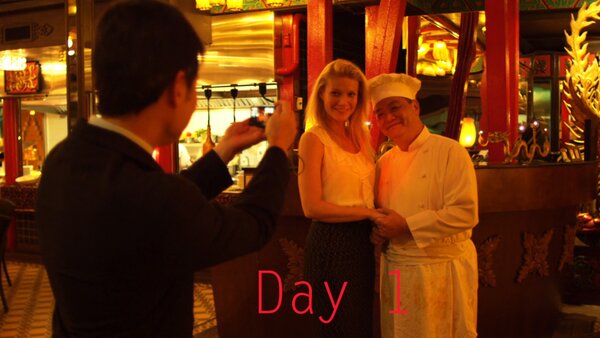
Contagion was always terrifying. Its vivid, well-researched, and chillingly believable depiction of a global pandemic allowed it to be one of the scariest non-horror movies out there. Still, it saves its most haunting moment for last, as it flashes back to the very beginning of the outbreak to show how patient zero, Beth Emhoff (Gwyneth Paltrow), got infected.
So, how did it all begin? A random, at-first-glance inconsequential series of events - a bat drops a bit of banana which a pig then eats... and when the pig is slaughtered by a chef, he pops outside to shake hands with Beth, all while Cliff Martinez's chilling electronic score pulses away in the background.
The wrong bat met the wrong pig, and then one handshake set off a pandemic that, by the end of the movie, has killed at least 32 million worldwide. The natural world really is a frightening place.
And of course, this all hits even harder now, because, less than a decade ago, something very similar actually happened.
8. Marathon Man - "Is It Safe?"

No-one who has watched Marathon Man will ever look at a visit to the dentist the same way again.
In this 1970s conspiracy thriller, Babe Levy (Dustin Hoffman) is an everyman who gets involved in a frightening conspiracy involving a Nazi war criminal, Dr. Christian Szell (Laurence Olivier), trying to retrieve some diamonds. As Babe's brother Doc (Roy Scheider), a government agent, was investigating Szell, the vile doctor decides to kidnap and torture Babe for information. He does this using his training as a dentist.
Szell subjecting Babe to sadistic dental torture while mechanically repeating the phrase "Is it safe?" is unforgettably horrible, mainly because of the masterful way in which it plays on the very universal fear of going to the dentist. Dustin Hoffman's fantastic acting makes it even more harrowing.
Marathon Man was already a good flick, one which was as paranoid and tense as you'd expect from a '70s thriller, yet it's this sequence that single-handedly ensured that it's lived on in cinematic legend. Screenwriter William Goldman really struck gold here.
7. Captain Phillips - Rescue

Paul Greengrass is one of the few directors who can turn the oft-misused technique of shaky-cam cinematography into great cinema, and he's created a multitude of unforgettable, pulse-pounding sequences throughout his movies. The crash of United Airlines 93 in United 93 (2006), the Utoya Island Massacre in July 22 (2018), all of those insane action sequences throughout the Jason Bourne films... still, nothing quite beats this.
Captain Phillips tells the true story of the Hijacking of the Maersk Alabama by Somali pirates, which ended with the pirates taking the ship's captain, Richard Phillips (Tom Hanks), hostage in a lifeboat. It eventually culminates in one of the most terrifyingly intense sequences of the 2010s, in which the US Navy rescues Phillips.
Here, Paul Greengrass and an amazing cast and crew crafted a climax more terrifying than most horror films. The razor-sharp editing, the claustrophobic camerawork, and the amazing acting from Tom Hanks and the unknowns playing his captors make this one of those moments where viewers really will forget to breathe. They will almost collapse with relief when the Navy personnel take out the pirates and save Phillips seconds before they were about to shoot him.
6. Halloween - Michael Chases Laurie
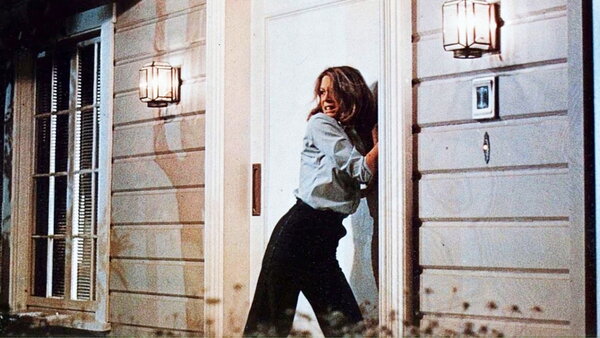
Regardless of all those unfortunate sequels and the many terrible rip-offs, the original 1978 Halloween is still a masterpiece of cinematic terror that's directed to absolute perfection by the great John Carpenter. Unlike the subsequent films, Halloween forgoes gore and jump scares for atmosphere and tension, resulting in one of the most anxiety-inducing movies ever made.
Put it this way: any aspiring horror filmmaker owes it to themself to watch Halloween. This whole film is a masterclass in cinematic tension, and any creative will learn plenty from it.
In particular, the chase sequence near the end of the picture - where Laurie Strode (Jamie Lee Curtis) discovers the bodies of her three murdered friends and is then pursued by Michael Myers (Nick Castle) - is just remarkable. It's a perfectly-paced, ingeniously directed tour-de-force sent soaring even higher by Carpenter's legendary musical score, which is one of the scariest pieces of music out there.
Jamie Lee Curtis also deserves a lot of credit for her terrific acting here. Few other actors in any slasher movie have provided such a vivid, convincing portrait of pure terror as she did.
5. Whiplash - Caravan

This here is one of the most full-throttle and ferocious film endings ever crafted. Throughout Andrew Neiman's (Miles Teller) climactic performance of Caravan, which is one last-ditch effort to win over his abusive and demanding music teacher Terrence Fletcher (J.K. Simmons), everyone's palms will be sweating.
The ten-minute performance scene that closes this psychological drama flick is cinematic gelignite, a perfect storm of image and sound that sees director Damian Chazelle in complete command of his craft. It also highlights the skill of editor Tom Cross, who proved himself as one of the best film editors in the business with this sequence alone. If he hadn't won the Best Film Editing Oscar that year, that would've been a travesty - thankfully, the Academy does get it right sometimes, and he netted the Oscar for his achievements.
Whiplash isn't the masterpiece die-hard fans claim it is, but this ending sequence is still one of the greatest movie scenes of the 21st century, without a doubt. It just goes to show: in the right hands, anything can be a kick-ass set-piece - here, a drum solo ended up being a white-knuckle, blisteringly tense thrill-ride.
4. A Separation - Blood Money

In our everyday lives, some of the most stressful moments we'll ever experience are personal conflicts, and Iranian director Asghar Farhadi leant into this with his masterpiece A Separation. He crafted a realistic family drama film and executed it with the frenetic energy of a Safdie Brothers joint, resulting in a ferociously intense drama that'll grab you by the throat and never let go.
The movie's climax concerns a settlement that a divorcing couple are being forced to pay. The husband, Nader (Peyman Moaadi), has been accused of causing his father's carer Razieh (Sareh Bayat) to suffer a miscarriage when he pushed her, and he's going to pay off Razieh and her volatile husband Hodjat (Shahab Hosseini) in order to avoid prison. Hodjat is determined to get money for his cash-strapped family.
The trouble is, as Razieh admits near the end, she was actually hit by a car and isn't certain that Nader did cause the miscarriage. When the stubborn Nader asks Razieh, a devoutly religious woman, to swear on the Quran that he was responsible, she cannot bring herself to do it.
It's an exploding pressure-cooker of an ending that features Oscar-worthy acting from every member of its cast, and it doesn't get any less stressful on repeat viewings either. As this movie proves, you don't always need a big set-piece to create tension. Sometimes, all you need is a great cast and beautifully written drama to realize the palpable horror of everyday disputes.
3. Requiem For A Dream - The Final Montage

With Requiem for a Dream, a drug addiction drama, Darren Aronofsky crafted it like a fully-fledged horror movie, which is appropriate. Drug addiction is a terrible thing that ruins so many lives, and to hammer this point home, Aronofsky delivered a surreal, explicit, and genuinely nightmarish descent into the abyss. It's tough going from the off, yet somehow it just keeps getting more and more difficult to watch. Like many great movies, it peaks at the end.
The story concerns four drug addicts in New York. Sara (Ellen Burstyn) is addicted to amphetamines, while her son Harry (Jared Leto), his girlfriend Marion (Jennifer Connelly), and Harry's best friend Tyrone (Marlon Wayans) are all addicted to heroin. It ends horribly for all of them.
Sara's mind is destroyed by her drug use, and she ends up being subjected to electroshock therapy in an asylum; Harry and Tyrone end up in prison (with the former having his arm amputated due to his arm sores becoming infected); and Marion subjects herself to degrading sex shows in exchange for money.
Throughout the movie, Aronofsky utilizes fast-paced editing, extremely short shots, and surreal imagery, smartly conveying the tortured realities for these unfortunate characters. This technique is taken to the greatest extremes during the final montage, which cross-cuts the characters' endings together, creating a nightmarish crescendo of hellish tragedy. It is one of the most intense sequences ever committed to film.
2. The Wages Of Fear - All Those Set-Pieces

As good as Sorcerer was, it can't quite match its predecessor.
In The Wages of Fear, four impoverished truck drivers are recruited to transport truckloads of nitroglycerin in order to extinguish an oil well fire. The trouble is, the nitroglycerin is extremely volatile, and any bump could set it off... and the drivers are required to transport it through some seriously dangerous, uneven roads, thus setting the stage for one of the most excruciatingly suspenseful things ever committed to celluloid.
The drivers face a multitude of agonizing obstacles: near collisions between the trucks, an unstable platform, an oil-filled crater, and even a boulder blocking the road, which they have to destroy with some of their volatile cargo. The exceptional direction and editing make this a swelteringly tense, heart-stopping thrill ride that'll have entire auditoriums biting their nails in terror, especially as the four drivers are well-developed characters whom viewers will really care about.
Simply put, the tension in this one is genuinely sadistic, and as far as stressful movies go, very few - if any, for that matter - can compare to The Wages of Fear.
1. Uncut Gems - The Whole Damn Movie

Fine, this is cheating, but, ah, well. With Uncut Gems, narrowing it down to just one moment would be unfair because every moment of this one is stressful in the extreme.
The story of gambling addict Howard Ratner (Adam Sandler), who keeps digging himself deeper into debt with one stupid decision after another, Uncut Gems will make even the calmest viewer feel like they've just drunk several massive cups of coffee far too quickly. It is relentless, unstoppable chaos crafted to absolute perfection.
The disorientating editing, the lived-in authenticity of the narrative and performances, characters yelling over each other, everything that can go wrong going wrong, a protagonist who just cannot stop making things worse, and, of course, the never-ending F-bombs - every single aspect of this movie feels like it was meticulously designed to be a cinematic panic attack.
And somehow, Uncut Gems keeps one-upping itself. Just when you think it can't get any worse for Howard, he makes yet another terrible decision, and it keeps escalating right up until the steely knockout of an ending that'll leave everyone picking their jaws off the floor.
That mustn't be misread as a criticism. It makes Uncut Gems a one-of-a-kind modern classic, and it beautifully recreates the fear and uncertainty that comes with dealing with the appalling affliction that is an addiction to gambling. The Safdie Brothers crafted something exceptional here - namely, what could just be the most anxiety-inducing movie of them all.