20 Best Science Fiction Movies Released Since 2000
From arthouse gems to big summer blockbusters, these are modern cinema's best sci-fi flicks.

These past two and a half decades have been a big time for science fiction cinema. From massive innovations and advancements in CG, through the wholesale adoption of digital film technology, and into a time when many of the traditional subjects of the genre have become a reality – electric cars; AI; touchscreen devices in our pockets; adverts on every surface – the landscape for this kind of filmmaking is so different to what it was back in 1999.
Of course, that hasn't stopped writers, directors and studios from moving with the times, bringing films to fruition that posit the future of future technology, that seek to entertain in new ways, that rally against societal injustices, and that embrace the full scope and scale of what's possible on the big screen today. And, with so many great sci-fi films to choose from, it's hard to whittle them down to just twenty.
But whittle we must.
Here we take in the best of the genre’s offerings this century, looking at the stories, the stars, the aesthetics, the big ideas, and what makes these films so special. With just one entry from each director (so the big daddies like Christopher Nolan and Denis Villeneuve don’t dominate the list), strap in for a top twenty that will push the boundaries of your excitement for sci-fi cinema.
20. 28 Years Later: The Bone Temple (2026)
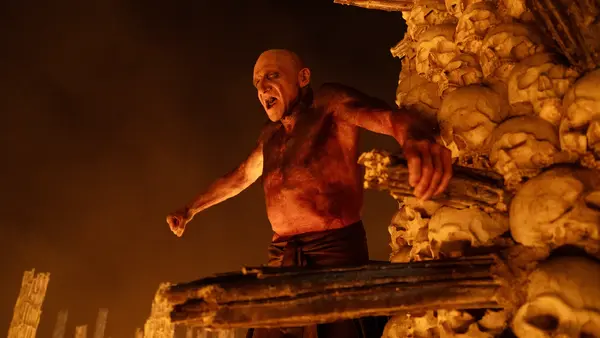
The 28 series returned in full glory last year, with Danny Boyle-directed and Alex Garland-written 28 Years Later. The film shows us life three decades on in a Britain quarantined to contain the Rage Virus that has infected and killed the majority of the population – but it also tees up a trilogy of new films, ending on a hefty cliffhanger.
While not as aesthetically accomplished as Danny Boyle's first entry, Nia DaCosta's Bone Temple nonetheless beats 28 Years Later to this spot by going farther with its characters and the actual science of the thing than any film in this series has gone to date. Bone Temple follows Spike (Alfie Williams) as he joins up with Sir Jimmy Crystal (Jack O’Connell) and his gang of Fingers, a sadistic crew of Jimmy Saville-styled sadists who kill and torture anyone – infected or otherwise. Meanwhile, Dr Kelson (Ralph Fiennes), experiments on infected alpha Samson (Chi Lewis-Parry), doping him up and attempting to connect with the humanity he’s convinced is still inside.
While the first film opened up this world and gave us a potent Brexit metaphor in the process, Bone Temple affords us insights into the infected’s mindset. It’s a horrifying piece of cinema, with the absolute worst of humanity on show, and yet it’s one of the first “zombie” movies to show us their perspective, and show that there might be a way back from the brink…
19. Memoria (2021)

Apichatpong Weerasethakul’s only feature film in the last decade, Memoria, manages to submerge itself in science fiction (aliens, no less!) with barely a frame of anything even remotely futuristic or extraordinary. Instead, this film about a UK expat having a surreal time in Colombia, roots the bulk of its strange occurrences in sound.
Tilda Swinton stars as said expat, Jessica, who finds herself stalked by an ominous boom. Jessica seems to be the only person that can hear the jarring sound, and she goes on a journey to discover its source, finding in the process a deeper journey into herself and the unspoken strangeness of the world around. Along the way she meets two mystery men named Hernán (Elkin Díaz and Juan Pablo Urrego), who seem to be connected with worlds beyond our own.
The slowest and most ambient science fiction film this century, Memoria is not about laser gun fights and grand conspiracies. Weerasethakul’s use of long, fixed, wide and full shots – often set up on the diagonal to emphasise depth, giving the frame a boxy, Roy Andersson look – compels us to sit within each scene, focusing on the performances and small details, and of course allowing the space for the film’s sounds to take precedence. The result is a film that carefully examines alienation, anxiety and paranoia on the surface, with deeper themes of intergenerational trauma and political violence, while moving like a lazy Sunday afternoon.
18. Timecrimes (2007)

Given Hollywood’s propensity for snapping up killer international films, passing them down the assembly line, and regurgitating something far inferior (but without those pesky subtitles), it’s some surprise that Nacho Vigalondo’s Timecrimes has escaped the process.
Set in the Spanish countryside, the film follows middle-aged, average man Héctor (Karra Elejalde) in the process of renovating his home. After spotting a naked woman in the forest near with his binoculars, Héctor heads out to investigate, and is attacked by a man wrapped in bloody bandages. But this is only the first in a string of strange and confounding happenings tied to a mysterious time machine, happenings which become more and more inevitable as the film hurtles towards its conclusion.
Vigalondo uses brief time travel (minutes and hours, rather than years and centuries) as the pivotal device for Timecrimes, giving us a story whose strands’ simultaneity keeps us glued to the screen, but which – unlike some comparable time loop films (looking at you, Primer) – offers us everything needed to understand it when viewed from the end. And, like many of the other big Spanish directors (especially Pedro Almodóvar), Vigalondo imbues his film with some of the tone and sensibilities his country’s melodrama is known for, which keeps even the heavy parts feeling fun and not too dismal.
17. Logan (2017)

James Mangold’s Logan is one of the quintessential superhero movies of the superhero age, which really flexes its sci-fi credentials and sets up a future of smaller, more considered and risk-taking films down this end of the genre.
Hugh Jackman returns for what was supposed to be the final time as James Howlett (otherwise known as Logan to his friends). His days of saving the day as Wolverine are long behind him, and he’s now driving a limo in the desert and doing his best to keep a dementia-stricken Professor X (Patrick Stewart) under wraps from the authorities. Despite being cut off from society and seemingly beyond any acts of charity, the needs of young mutant Laura (Dafne Keen) bring the Wolverine back into the fray for one last act of defiance.
Superheroes, by and large, are rooted in science fiction, but Logan takes this to new places, shaping a bleak dystopia that serves as a swan song to the original X-Men universe, with Jackman's finally-aging Wolverine as the lynchpin of the piece. Gone are the leather costumes, stealth jets and quips, replaced by Jackman and Stewart’s melancholic performances, which cut to the bone and lend a true and rarely seen gravitas to this take on the X-Men we grew up watching.
16. Antiviral (2012)

Despite having just three feature films in the bank, after eighteen years in the business, Brandon Cronenberg is an important talent in science fiction filmmaking. Each of his features to date takes a sci-fi concept and twists it around a horror core, sending beleaguered and tortured protagonists into the darkest recesses of their own selves, challenging everything they’ve assumed about their own lives in the process.
Antiviral, his first work, features a cast including Caleb Landry Jones, Malcolm McDowell and Sheila McCarthy, and packs some pretty grim and surreal body horror visuals, despite being made on a budget of just CA$3.3 million (around £2,046,000). We follow Syd March (Jones), employee of the Lucas Clinic, in a future where his company and others purchase and copy viruses from celebrities and market, sell and infect willing fans with them.
Not content with his company salary and lifestyle, Syd has a little something extra going on the side, and injects himself with viruses so he can take them home, extract them and sell them on the black market. But after shooting up with Lucas Clinic's exclusive celebrity Hannah Geist’s (Sarah Gadon) blood, he runs into a spot of bother, unable to remove the virus’ copy protection, and now against the clock to rid himself of the very strain that is killing Hannah.
Antiviral is the distillation of everything that makes Cronenberg great, and Jones gives Syd an authentic desperation that elevates this film that bit above the director’s subsequent, better publicised efforts.
15. Children of Men (2006)

There is a rich history of screenwriters and directors taking science fiction novels, scraping away everything they don’t like and starting again from a hollow shell – just compare Francis Lawrence’s I Am Legend to Richard Matheson’s novel, or Jonathan Glazer’s Under the Skin to Michel Faber’s. And Alfonso Cuarón’s Children of Men is no different. Adapted very loosely from P D James' novel, Cuarón’s film jettisons all the (for lack of a better term) high-dystopian distractions from the book, and cuts it down to the bare bones, before rebuilding it into something considerably more significant.
Clive Owen, as former activist everyman Theo Faron, is our way into a 2027 Britain beset by poverty, chaos, marshal law and violent anti-immigrant policies. The cause? Fertility has dropped to zero, with no new babies born in eighteen years. Sucked into a resistance plot by his estranged wife, Theo is turned from cynic to believer as he becomes the sole person in charged of securing the safe passage of Black “fugee” Kee (Clare-Hope Ashitey), who has somehow fallen pregnant.
Cuarón’s magic here lies not just in his dynamic directing style and realist approach to filmmaking (there are many points at which Children feels like a Mike Leigh film), but his ability to successfully ground and re-frame this OTT sci-fi story into a potent comment on society that is so very relevant here in the UK, twenty years on.
14. Mr Nobody (2009)

Nowadays Jared Leto’s name is a byphrase for disaster, associated as he is with such grand disasters as Morbius and Suicide Squad. But this wasn’t always the case. Once upon a time, before we knew him as Paolo Gucci or Ares, Leto was quietly making his name in a string of smaller gems, including Requiem for a Dream; American Psycho; Girl, Interrupted; and, of course, Mr Nobody.
Mr Nobody finds Leto perfectly cast as protagonist Nemo Nobody, the last mortal man living in 2092, now approaching his death. We journey through Nemo’s life in vivid detail, from when he was a child living with his mother, through his time as a teenager with his father, and as an adult, seizing his own destiny – or, destinies. Because Nemo’s life is a divergence of multitudes, and we see many possible pasts, blurring the lines between what actually happened (if there even is just one truth) and the choices he didn’t make.
No doubt Mr Nobody is a head-scratcher, but its Sliding Doors use of alternate possibilities and tangent timelines make it a rich tapestry that defies conventional storytelling. This all builds to a mesmerising final sequence that lets us have our cake and eat it, in which many pasts are confirmed while they simultaneously come undone. It’s a love story, a tragedy, and a science fiction epic, all rolled into one.
13. Arrival (2016)

Denis Villeneuve has made a name for himself in science fiction across the past decade plus change, and any one of his genre films, from Kafkan thriller Enemy to international blockbuster Dune, would sit comfortably on this list. But our pick is Arrival, a film that bridges Villeneuve's smaller and larger films, occupying a space where big stars meet big ideas, with a mid-size budget and a story that leaves all the right questions.
Amy Adams and Jeremy Renner are linguist Louise Banks and theoretical physicist Ian Donnelly, brought in by the US Army to communicate with extraterrestrial craft whose presence threatens the tense balance and stability between global superpowers. Through careful study and a gradual forming of connections with the aliens inside the large, pod-like ships, the pair come to understand the creatures’ purpose: to help humanity achieve peace and advance their technology now, in return for help they will need from us in the future.
Arrival relishes the opportunity to take its time and establish a new kind of alien. Throughout the film the real threat is humanity, with our impatience and warlike tendencies coming to the fore in the face of a species who seek communication and dialogue across virtually unbridgeable boundaries. And it is the idiosyncratic construction of these complex beings and the attention to detail in using linguistics, science and multiple forms of representation and communication to decode their intentions that set the film above its generic contemporaries.
12. Everything Everywhere All at Once (2022)

Daniels Kwan and Scheinert confounded us all four years ago by following up their niche, farting dead man flick Swiss Army Man with absurdist multiverse actioner Everything Everywhere All at Once.
Michelle Yeoh is Evelyn Quan Wang, a Chinese-American laundrette owner-operator who is failing to embrace the things which make her life great, including her loving husband Waymond (Ke Huy Quan) and gay daughter Joy (Stephanie Hsu). While being audited by the IRS, Evelyn is transported into various parallel universe versions of herself, discovering that her actions in the Alphaverse have turned Joy into the universe-consuming super being Jobu Tupaki. Now she must right the wrongs of her life to save the multiverse.
At the same time as the MCU was sluggishly dragging itself through a loose assemblage of interconnected universes, Everything Everywhere borrowed the hype to show how it should be done. The Daniels wrote and rendered a unique collage of worlds – including the Raccacoonie reality, in which a raccoon controls a chef from under his hat; and the hotdog fingers reality, in which Evelyn is in love with her female, hotdog-fingered IRS auditor Deirdre Beaubeirdre (Jamie Lee Curtis) – and mined the actors’ comic sensibilities to create an iconic piece of sci-fi cinema that goes across the universe and beyond with nary a CGI suit of armour in sight.
11. After Yang (2021)

A24 is responsible for some of the best genre films of the past decade, and yet ironically their genre offerings usually play in territory that traditionally belonged to prestige drama and arthouse pictures. And these usually get the press they deserve. Yet, despite starring the internationally marketable Colin Farrell, alongside highly visible stars Jodie Turner-Smith and Justin H Min, the studio’s science fiction drama After Yang has never really found the spotlight.
Kogonada’s film finds partners Jake and Kyra (Farrell and Turner-Smith) and their adopted daughter Mika (Malea Emma Tjandrawidjaja) devastated by the sudden breakdown of Yang (Min), a second-hand android brought into the family to help Mika connect with her Chinese heritage. Struggling to repair Yang out of warranty, the family go to various backroom and black market technicians, and, through his memory bank, quietly and tenderly come to understand his experience from his perspective.
In a time of M3GAN, Companion and Ex Machina, After Yang takes a different approach to the android, pairing sci-fi with the small-scale, dreamy, emotional approach to filmmaking we expect in an A24 drama. Yang is positioned as an individual, allowing us to view his memories as he saw them, to see which simple moments he thought important, and to understand how his previous lives shaped his complex understanding of the world. It’s a meditation on what constitutes a mind and a person, and what human experience is as a whole.
10. Frankenstein (2025)
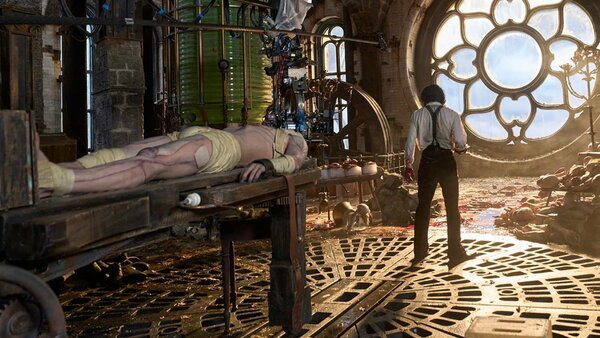
Of all the science fiction and horror properties that have been done to death, Frankenstein is up there, second only to Dracula. But somehow, last year, Guillermo del Toro gave us an adaptation of the Mary Shelley novel for the ages, with all the bells, whistles, gothic imagery and flair the director has made his career on.
Oscar Isaac is Baron Victor Frankenstein, a surgeon and scientist operating outside of society’s norms and on the verge of a major breakthrough – reanimation. Funded by the uncle of his brother’s fiancée, Henrich Harlander (Christoph Waltz), Frankenstein absconds to a Wallace Monument style tower to conduct his experiments on the recently deceased, and creates himself a hideous, lumbering, stitched-together monster in the process (Jacob Elordi).
So far, so familiar. But the film turns on its latter third – the creature’s story. While Isaac’s Frankenstein is a scenery-chewing deranged genius, Elordi’s monster is intelligent, sensitive, and capable of so much more than his creator ever assumed, despite being reviled and rebuked by society at every turn. The sets are lush, the cinematography rich, the characters are suitably ugly, and this, above all other Frankenstein films, best portrays Shelley’s central theme, by asking which of us are the real monsters?
9. Rose of Nevada (2025)
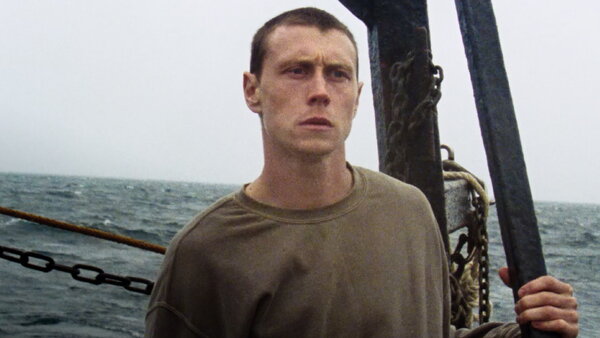
With Rose of Nevada, director Mark Jenkin once again returns us to his beloved Cornwall, with his signature hand-cranked Bolex and 16mm film. For this, his third feature, we follow the crew of the Rose of Nevada, a small fishing vessel that washes up in the docks of the coastal fishing village from whence it went missing thirty years prior.
Down-on-his-luck family man Nick (George MacKay) and drifter/waster Liam (Callum Turner) are the two unlucky sods who find themselves crewing the boat, under the watch of salty skipper Murgey (Francis Magee). But their maiden voyage gets them into deeper water than expected when they return to shore and find themselves transported back to the early nineties.
Cherry picking the social drama of Bait and the artsy surrealism of Enys Men, Jenkin brings the best of both worlds to Rose of Nevada, crafting a pensive and eerie piece of fiction that says a lot without needing to shout. Its themes about the loss of coastal industry, and the symbiotic relationship between fishing boat and village are masterfully explored, all while giving us a heady hit of sci-fi cut from the same cloth as iconic BBC series Life on Mars.
8. Scott Pilgrim vs. the World (2010)

For many of us, the moment the beat from Prodigy’s “Invaders Must Die” kicked in during the trailer was the moment Edgar Wright’s Scott Pilgrim vs the World became a modern classic. Wright’s first American-made, Canadian-filmed feature chucks out the chaotic British comedy stylings of the director’s early work, and makes use of a sizeable CG budget and some serious star power.
Scott Pilgrim (Michael Cera), a wayward twenty-something with a failing garage band and a teenage girlfriend he doesn’t care for, finds his life flipped one-eighty when he meets the girl of his dreams, Ramona Flowers (Mary Elizabeth Winstead). But scoring a date with her isn’t as easy as it seems, and Scott must defeat her seven evil exes before him and Ramona can catch a movie and dinner.
Scott Pilgrim is a close cousin of the cutesy, awkward, rom-com teen movies Cera made his name in (Juno, Nick and Norah, etc.), but Wright takes this genre and reforms its parts into the shape of a sci-fi actioner, with a heavy video game influence. Scott’s world, after all, is not just snarky comments and swooning over girls, but one of fighting superpowered vegans, collecting extra lives, destroying mind control devices and travelling through subspace. And it’s this precarious position it holds between known genres and tropes that made it so difficult to sell to mainstream audiences at the time, but which has made it a stone-cold classic since.
7. Donnie Darko (2001)

Once upon a time, Richard Kelly was the next big thing: the young writer-director was poised to become a major player in the US film industry, before his career faltered, hiccupped and flatlined. But while Kelly’s descent into obscurity remains puzzling to most of us, the reason he found the spotlight in the first place is not.
Sci-fi psychological thriller Donnie Darko announced Kelly’s career in a big way, setting a new standard for this kind of filmmaking on a budget, capturing the zeitgeist, and scoring awards and nominations left, right and centre. It stars Jake Gyllenhaal in his breakthrough role as the titular Donnie, a sleepwalking teenager who fatefully avoids getting crushed by a stray jet engine, and whose life begins to unfold in the aftermath as he is haunted by man-size bunny Frank (James Duval) who prophesises the coming end of the world – in 28 days, 6 hours, 42 minutes and 12 seconds.
What sets Donnie Darko apart is that it manages to meaningfully engage with time travel, dimensional vortices, alternate realities, premonition, fate and apocalypse, within what is essentially an indie, emo, mumblecore film. The film made Jake a star, Donnie an anti-hero icon, and while the mechanics of what actually happens take many watches to really unpack, even if you don’t understand the film in its entirety, it’s a hell of a ride.
6. Tenet (2020)

From Christopher Nolan's filmography, Interstellar and Inception are worthy contenders for this spot, but neither dedicate themselves so completely to the genre as Tenet. Interstellar is a space movie that roots itself in reality as we know it (even if only conceptually, re. black holes), up until the final act; and Inception is an action heist movie for whom the sci-fi is fun but somewhat incidental, existing to move the plot forwards but far from the rigorous exploration of its own concepts in the way Tenet is.
The film puts John David Washington into action as a CIA officer recruited by Tenet, a mysterious, extra-legal organisation that operates not only across the boundaries of law and state, but time itself. Because there exist objects with inverted entropy that possess the ability to move backwards through time, and there are ways of imbuing people with this entropy, enabling them to affect the causal course of things from the wrong direction. And, naturally, there is a megalomaniac – Andrei Sator (Kenneth Branagh) – seeking to use this to erase the world as we know it.
Tenet embraces the tropes of the action thriller while creating not only a novel approach to time travel, but one that represents a far more plausible approach to it than ever seen before. While the film has never enjoyed the fanfare and acclaim of its predecessors, it is an unflinching testament to the possibilities of the genre that demands your full attention.
5. A.I. Artificial Intelligence (2001)

Steven Spielberg’s work has spanned genres across his six-decades-and-counting career, and while his name has been linked with the summer blockbuster, the action-adventurer and the family film across this period, it’s his science fiction features that set him apart. During this past quarter century, Spielberg has done some iconic work in the genre, including pre-crime thriller Minority Report and video game actioner Ready Player One, but the film that sits head and shoulders above the rest is A.I.: Artificial Intelligence.
Before the technology was anything like a reality, A.I. presented us with a vision of Earth that feels eerily accurate – and should have served as a warning of things to come. Haley Joel Osment is David, an android child living in a future where climate change has devastated the planet, human populations are waning, and humanoid mechas are used to fill the gaps in a society that has lost itself. Created for wealthy parents who ultimately don’t want him, David is cast out into the big, bad world, and embarks on a journey to find the Blue Fairy from Pinocchio, whom he hopes can turn him human.
Built from the ashes of a Stanley Kubrick project, Spielberg balances hope and despair in an affecting and ultimately heartbreaking narrative, while presenting a rich, sinister future world that, unlike other near(ish)-future sci-fi films feels authentic. It’s one of the most beautiful films in the genre, and still to this day doesn’t get the love it deserves.
4. Enter the Void (2009)

Gaspar Noe’s surreal art film Enter the Void does its best to defy generic definition, and yet its out-of-this-world drug trip premise and extreme luminescent visuals couldn’t place it anywhere better than the science fiction canon.
Young American Oscar (Nathaniel Brown) deals drugs in a hazy, neon Tokyo – but not for long. After taking a hefty toke of DMT and discussing the Tibetan Book of the Dead, Oscar is fatally shot by the police in the opening act, and finds his soul separated from his body. The disembodied Oscar spirit experiences the rest of the film floating not just above the action and city streets, but detached from time itself, dipping in and out of the events of his life that led him to this point.
Noe takes the idea that we see our lives flash before our eyes when we die and supercharges it, in typical fashion, using psychedelic drugs. The non-linear story, first-person viewpoints, long takes and visual palette of stomach-churning pastels and neons, soft focus and aggressive lighting, all make Enter the Void unlike any other film in or outside of the genre. The story is full of shocks and sharp turns, leading us to a final, see-it-to-believe-it sequence featuring an Oscar’s soul-view of his friend inseminating his sister, followed by a scene potentially suggesting his own rebirth…
It’s bold, experimental, and would make even the titans of the genre glad they didn’t have to film it.
3. Poor Things (2023)

There’s a good reason the bulk of Alasdair Gray’s novels have never made it to the big screen: Scotland’s foremost postmodernist writer, Gray specialised in creating spanning worlds and times, with narratives that fold in on and climb over themselves, often passing comment on the story he was writing, in-text, while writing it. And yet.
Yorgos Lanthimos took on the monumental project of bringing Gray’s 1992 novel Poor Things to life on the big screen just three short years ago. Lanthimos regular Emma Stone stars as Bella Baxter, a naïve young woman Frankensteined from a dead body and a baby’s brain, who outgrows the confines of her creator Godwin Baxter’s (Willem Dafoe) home, and journeys into a weird and colourful retro-futurist world to discover everything life has to offer – much of which centres around “furious jumping”.
Few directors could have taken on any of Gray’s work and lived to tell the tale, and yet Lanthimos’ idiosyncratic style matches perfectly with the writer’s. Despite being set in the 1800s, Poor Things’ cities and landscapes have a luscious steampunk aesthetic that captures this branch of sci-fi better than any self-consciously steampunk effort has managed to date (Sky Captain; Hellboy; Sucker Punch). The story feel fresh yet classic, the visuals like Pride & Prejudice meets Wizard of Oz, and suffice to say there is no other film – sci-fi or otherwise – quite like this.
2. Eternal Sunshine of the Spotless Mind (2004)

Eternal Sunshine of the Spotless Mind is one of these unique and serendipitous occurrences in cinema, where all the right people cross paths at the right moment. While writer-director Michel Gondry, writer Charlie Kaufman, and stars Jim Carrey and Kate Winslet are all excellent in their respective areas, Eternal Sunshine is the perfect distillation of all their talents in one neat, digestible and rewatchable package.
The film finds Joel Barish (Carrey) heartbroken and devastated upon discovering his ex, Clementine Kruczynski (Winslet), has undergone a procedure to erase all her memories of him. Hurt, sore and wanting to retaliate, Joel approaches Lacuna, the company who performed the procedure, to do the same for him. But, during the process of forgetting Clementine, Joel changes his mind.
And how it all comes together. Kaufman’s writing offers a love story told from the other side and in reverse, reflecting the nuances of how we mourn, grieve and try to hold onto our relationships; while Gondry’s penchant for a very physical surrealism (i.e. mostly non-CG) gives form to the crumbling dream world in which Joel tries to protect the memories and little pieces of Clementine he treasures most. And, of course, Carrey and Winslet anchor the whole thing, making best use of what they’re good at, while confounding expectations: Joel is more Kafkan hero than funnyman, and Clementine is complex and rough-edged, eschewing every touchpoint of the traditional love interest.
1. Ad Astra (2019)

Brad Pitt vehicles are one of the most reliable things in cinema today: you always know you’re in for spectacle, a bit of fun and a handsome lead. But that doesn’t mean Pitt doesn’t still star in great, capital-C Cinema films. And James Gray’s early 22nd century-set Ad Astra is just the kind of serious film we’re talking about.
Pitt is US Space Command Major Roy McBride, sent on a mission to the other end of the solar system to face his father Clifford (Tommy Lee Jones) who hijacked the Lima Project space station in orbit around Neptune twenty-nine years earlier. Roy must head to the moon, to Mars and then beyond in order to find out what happened aboard Lima and destroy what’s left of the project.
On the one hand, it’s Apocalypse Now in space; on the other, it is one of the most wondrous journeys through our solar system ever put to film, trouncing any Brian Cox special. Yes, Ad Astra is science fiction (we haven’t mastered cross-solar system space travel, after all; nor are there separatist pirates on our moon), but it is the film’s rigorous dedication to science fact that really makes it. These are images of space, and this is an experience of space travel, that is about as close to actually walking amongst the stars as the majority of us will ever experience.