8 Most Iconic Slasher Movie Death Scenes

Brutality was their paintbrush, unsupervised teenagers their canvas.
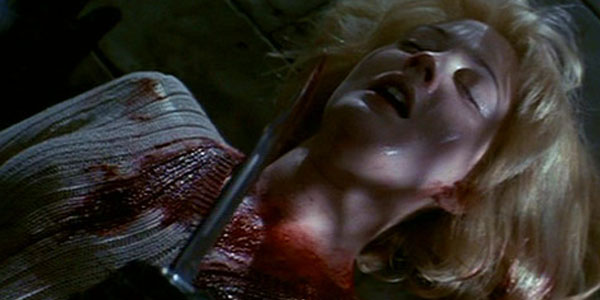
Horror films have always been reactionary to our current fears. When America was at its most xenophobic; ghosts and ghouls reflected our national prejudices of our foreign enemies. While we couldn't punch Hitler in the face, we could see the European Dracula get staked repeatedly. These narratives lost much of their allure in a nation that gradually ceased viewing 'foreign' and 'evil' as one in the same. In exchange, a growing population of urbanites now feared the villain you couldn't identify with holy water or silver. The urban landscape led to urban crime: rapes, robbery, and of course, murder. These threats could be your own neighbors. Overseas, the Italian genre of Giallo Horror had already began to portray these fears by drawing from Noir films, which had threats that lurked in the shadows of humanity. This eventually caught on to American audiences in the 70's with the "slasher" subgenre. What captivated audiences of these films was a notable escalation in violence from classic horror. Grisly deaths were cathartic releases for audiences. With that in mind, lets' look at a few death scenes that linger in audiences' memories. Feel free to add any other particularly iconic death scenes in the comments!

8. Suspiria - Stabbed Through The Heart, And You're To Blame

As mentioned, the Giallo subgenre in Italy emerged from film noir with its hidden antagonists, unclear morality and scandalous sex. What distinguished Giallo from Noir was its lush saturation. Color palettes were often overwhelmingly bright, especially its depiction of viscera. Dario Argento's Suspiria, set in a prestigious German dance academy with a dark secret, encapsulates this tone well with its initial scene. A female student is running hysterically through the school from an unseen attacker. She's eventually pinned down by the pursuer and repeatedly stabbed against a stained glass ceiling. Each stab penetrates her chest and further pushes out her heart. The emphasis on penetration connotates the act with a sexual encounter-which is a real psychological compulsion called "picquerism". Likewise, the scene objectifies its female victim, who's dressed in a loose nightgown and has a frozen face of terror. Her dayglow blood combined with the stained glass makes for a vibrant display, which reaches its climax when she's dropped through the glass in a makeshift noose, turning her corpse into a portrait itself.

7. The Texas Chainsaw Massacre-Stop: Hammer Time

As if slasher movies weren't already enough of a subgenre, yet another subgenre that emerged in the 70's was 'Hillbilly Horror'. Whereas slasher films were mostly set in cities, these films put the slasher motifs into a rural setting with violent hicks. The film that popularized the subgenre was The Texas Chainsaw Massacre, which focused on a group of visiting teens being attacked by a backwater cannibal clan. When one of the teens spots a farmhouse, he naively traipses in looking for residents. As he enters, we hear the noises of various livestock, giving the scene an air of absurdity. What kind of hick keeps livestock in his house? He gets his answer when a large masked man appears and bludgeons him with a hammer immediately. We're then treated to him convulsing until he is finished off and dragged into what looks like a meat locker. What makes this such a disturbing scene is how jarring it is. Hearing the livestock noises is strange because there are no visible livestock, making it more atmospheric. Rather than having a slow build to an attack, the teen briskly walks in and just runs into the killer. It's ambiguous if the killer even planned it. The scene shows how the film and the 'hillbilly horror' subgenre are inversions of the Noir aspects of slasher films. Rather than entering into an urban landscape that's incomprehensible, the urban teens are entering into an rural landscape that that's incomprehensible, where country farmers aren't as kindly as they thought.

6. Nightmare On Elm Street - Dancing On The Ceiling

Most slasher films tend to be fairly realist. I.E. the killer is at least hypothetically human; Zombie Jason Voorhess and Voodoo Michael Myers notwithstanding. Nightmare On Elm Street is different in that the killer already begins as a mystical entity; a serial killer brought back from the dead to seek revenge on his murderers' children. This is great for a franchise because it means his methods and defeats can vary based on writers's whims. On the downside, it can also rob death scenes of human weight: people aren't usually eaten by giant human-faced worms, after all. The first film struck a perfect balance between fantasy and reality, portraying Freddy's murders with enough practical effects to make them disturbingly uncanny. The best example of this is the infamous ceiling murder. While his girlfriend's dreams are invaded by Freddy, the boyfriend wakes up to her screaming while being eviscerated by an unseen force. As if that wasn't bad enough, she then lifts off the bed and rolls around on the walls and ceiling while being attacked as he cowers helplessly. Keep in mind that this all done in a continuous shot. Rather than showcasing an outlandish in-dream death- as later films do- her death happens incomprehensibly in real life. Seeing the inhuman nature of Freddy from her boyfriend's perspective puts us in awe of this fantastic yet horrifying moment.

5. Friday The 13th - Let Me Clear My Throat

I'm not going to lie, I think Friday The 13th isn't a good film. It's an obvious ripoff of the Halloween formula and doesn't even bother to copy what made Halloween so atmospheric. Rather than building tension and dread, Friday The 13th is just slow and unintentionally parodic due to relying on jump scares. With that being said, there was one scene many would agree was effective-and that's not just because it includes Kevin Bacon. During some post-coital relaxation, Bacon's head is grabbed by someone under his bed-which is admittedly poorly conceived given the hand placement-and has an arrow gradually pushed through the back and out the front of his trachea. Ouch. Despite its crudeness, this scene encapsulates why such a bad series continued for so long. The practical effects makes this scene so visceral that it manages to be cringe inducing upon every viewing for me. Rather than cutting away, the shot holds on his throat as it's being punctured. It's hard to remember that Bacon ISN'T being stabbed through his trachea. While slashers like Halloween danced around the viscera of Michael's actions, Friday The 13th was straightforward in the damage caused by its antagonist.

4. Scream - Mr. Telephone Man, There's Something Wrong With My Line

Part of what made Psycho so shocking for audiences was that the initial protagonist- Hollywood icon Janet Leigh- was also the killer's initial victim. At the time, Hollywood films wouldn't dare kill their lead actors and actresses, especially not midway through the feature. As an affectionate parody of the genre, Scream one upped Hitchcock by having it's biggest star, Hollywood royalty Drew Barrymore, die in the first 10 minutes. What makes the scene so brilliant is that it transitions well between parody and sincerity. While home alone, Barrymore is called by a gravelly-voiced stranger. At first claiming to have miscalled her, he then shifts into having a conversation with her that includes flirting and discussion of horror films. Rather than, y'know, hanging up on him, she coyly continues with the conversation as any dumb Horror movie teen would do. When she realizes the threat of the caller, she hurries off the phone only to be called back again. When she threatens to sic her boyfriend on him, his corpse is magically displayed within view of a window. The scene begins as cheesy, but then the mind games become even more sinister as he suggest ways he could kill her too and how she should defend herself. When he eventually gets the jump on her, she runs from the house and sees her parents approaching, giving her and the audience a twinge of hope. But alas, he catches her and stabs her repeatedly. Once her parents realize she's gone, they frantically search only to find her bloody body hung on a tree. The scene is excellently-paced: not only is Barrymore's dread built, postponed and carried out, we get the human weight of her death as her parents worst fears are displayed in front of them.

3. American Psycho - It's Hip To Be Square

Like Scream, American Psycho's uses slasher tropes more for the sake of parody than actual terror. Patrick Bateman's excessive violence is meant to underscore the excess of his 80's yuppie lifestyle. The decade is appropriate considering it spawned most of the vapid schlock associated with the subgenre. As such, Batman's murders aren't particularly subtle. A scene that encapsulates the film's tone is when Bateman invites a rival colleague over to his house after getting him drunk. While Bateman prepares his murder implements, he loudly plays Huey Lewis and The News' "Hip To Be Square" while dancing and rattling off facts about the song. He then puts on a raincoat and cuts him down with an immaculately clean axe. And thus a meme was born. Aside from being hilarious, the scene also is a great commentary on Bateman and his culture. Bateman is obsessed with success, but only in the vein of uniformity. He loves the song "Hip To Be Square" because it champions that's it's good to be like everyone else. He kills Paul because he out-uniformed him with his "superior" business card. Such a mundane object would be meaningless to normal people but Bateman views it as a challenge to his status as the quintessential 80's businessman. Bateman manages to combine the insane motivations of slashers and the vapid motivations of one-percenters.

2. Psycho - Splish Splash I Was Taking A Bath
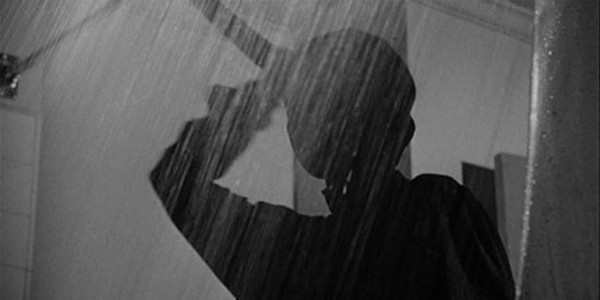
Despite predating the rise of slasher films, Psycho is often considered the first of the genre. Set in a backwater hotel with a vulnerable woman and a shadowy killer, it most likely set the stage for later slashers. It's most obvious contribution to public consciousness was a scene that ironically has no actual slashing. Whilst taking a shower, the protagonist is surprised when the curtain is pulled back to reveal a silhouetted woman with a knife. She is then implied to be repeatedly stabbed by the assailant and dies. This scene showcases multiple examples of Hitchcock's innovations. He uses "cutting on action", a method that edits often disjointed footage into one continuous scene. Hitchcock's use is so brilliant that audiences at the time often claimed "seeing" the knife penetrate her skin. This is enhanced by the use of "psycho strings", yet another Hitchcock-pioneered method that uses staccato string music that evokes the "feeling" of penetration itself. And finally, seeing our killer's face in unnatural shadow further makes the event uncannily disturbing. What makes this scene iconic is that it established much of the subgenre's themes succinctly. Previously, American horror films cast threats in foreign places-laboratories, castles, etc. In this film, the villain is much more intimate. And yes, in a sexual way. The shower, a place of privacy and comfort, is just as viable venue for death as a backwoods Eastern European village.

1. Sleepaway Camp - Man, I Feel Like A Woman

Now a lot of you have never heard of Sleepaway Camp. Don't feel bad; it's not that famous of a film. It's set in-you guessed it-a teen sleepaway camp frequented by an unknown killer. If Friday the 13th is a trite ripoff of Halloween, then this is an even triter ripoff of Friday the 13th. The only thing that makes this film stand out is its UNBELIEVABLE ending scene. The film begins with a child's parents being killed in a boating accident. This leads to the child being adopted by an eccentric aunt who is more than happy to have a daughter. Raised alongside the aunt's son, both children are sent to the sleepaway camp where our protagonist-Angela-fits in poorly due to a peculiar nature. Angela's only friend is love interest Paul, and there is still a reluctance to be intimate with him. Because all 80's campers are a$$holes, several kids-and counselors- attempt to harass and molest Angela, which suspiciously coincides with several murders. It's obvious that the film is building towards Angela being the killer. Paul eventually ups his game and gets Angela to go for a swim/covert boning with him. When the counselors discover the two, we see Angela holding Paul's severed head and a knife while making that gorgeous face you see above. And we see Angela's penis. You heard that right; it turns out that the child that survived that boating accident was a boy that the crazy aunt convinced was a girl for years. Obviously screwed up, this explains "Angela's" fear of sexual intimacy and the murderous reaction to unwanted advances. End of Spoilers: Despite the film's cliched nature, the final scene's revelation has made the film famous, to the point where webmaster Jeff Klays and John Klyza have made three sites dedicated to the film and its five sequels. Any mention of the film will almost alway reference the end of it, as evidenced by Robot Chicken and Weird Al. Whereas great slasher films may include great death scenes, this film managed to justify its entire premise through a great death scene.

Contributor
Contributor

I'm a nice dude, with some nice dreams See these ice cubes, see these Ice Creams? Go to http://blackcomicguy.wordpress.com/ to read some of my thoughts on comics, film and television.