Fantastic Beasts 2: 10 Biggest Changes To Harry Potter Canon (And If They Work)
Fantastic Beasts: The Crimes of Grindelwald makes some major Wizarding World retcons.
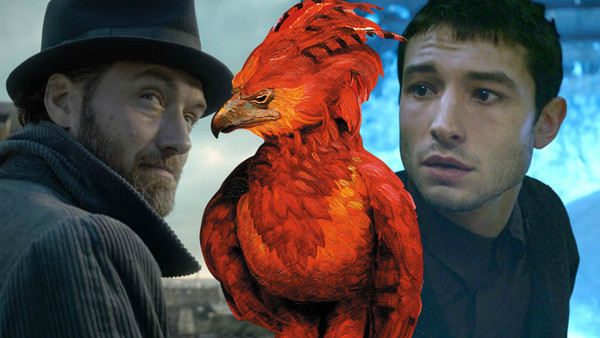
It's time to go back to the Wizarding World.
The follow-up to 2016's surprisingly good Fantastic Beasts and Where to Find Them, The Crimes of Grindelwald has now arrived in cinemas and is ready to shock, awe, and no doubt divide Harry Potter fans across the world.
Although ostensibly still Newt Scamander's story, the magizoologist receives less focus this time around as writer J.K Rowling and director David Yates expand the universe as part of their five - yes, 5! - movie plan for this franchise. While he and his friends Tina, Jacob, and Queenie are all back in action, there are also a number of newcomers, including Leta Lestrange (only seen as a photograph in the first movie) and the much-hyped arrival of Albus Dumbledore (now in the form of Jude Law).
That's alongside an added focus on Credence Barebone and Grindelwald himself, leading to a jam-packed movie that twists and turns like a Triwizard maze. Not only does it offer up some thrilling and indeed magical moments, but dives so deep into Potter lore, and makes so many changes, that it essentially casts a Confundos Charm over the entire canon.
10. Nagini Was A Maledictus

The Change:
One of the major additions to the established canon that was revealed before release - presumably because there are already enough in here to contend with - it turns out that, before being Lord Voldemort's pet snake, Nagini was actually a woman.
Portrayed by Claudia Kim, Nagini is a Maledictus, cursed to eventually make a permanent transition into the snake she can currently turn into at will, and works at Circus Arcanus alongside Credence, with whom she's developed a close bond as a pair of outsiders.
Does It Work?
Sort of. It makes the character of Nagini feel more tragic, but she's also still massively underdeveloped. She doesn't factor heavily into the plot and isn't given a great deal of agency, meaning it's still difficult to see just how she winds up in the service of Voldemort, and whether that's a willing choice or not. No doubt the future instalments will give us further clues, which will cement just how necessary a move this was, but for now it's just pointless, but fine, fan-service.
9. The Elder Wand

The Change:
The Elder Wand is shown to be unlike any other, with it shifting allegiance to the person who defeats its current master. Said master in this movie is Gellert Grindelwald himself, who we know possesses the wand until his defeat by Dumbledore in 1945. However, this would also mean he was the master of the wand in the first film too - we know he was much younger when he took possession of it, thanks to the flashback in Deathly Hallows Part 1 - even if he didn't use it (as he was impersonating Percival Graves, he had to use his wand). He lost that wand to Tina when she summoned it from him, which should, theoretically, make her the master of the wand - except, well, it clearly doesn't, seemingly making a change to the wand's behaviour, while Grindelwald just sort of gets it from nowhere here.
Does It Work?
There are a few potential answers to this, which could make it more palatable: Grindelwald was technically first defeated by the Swooping Evil, and a wand's allegiance can't change to a magical creature, so may have stuck with him instead (although there's then a case it should've gone to Newt). There's also the fact Tina uses a summoning charm, rather than a disarming one, which isn't a duelling spell so again might not be recognised (but then, Harry doesn't use a spell to take it from Draco).
There's no explanation for that, though, and also zero explanation of where the wand actually comes from in this movie - the Ministry just kept it lying around? - which means that it is still up for debate, and a source of frustration given just how important the Elder Wand is in Potter lore.
8. The Dumbledores' Connection To Phoenixes

The Change:
While we've always known that Albus Dumbledore had a strong connection to his phoenix, Fawkes, it's largely been presented as unique to them, with their bond essentially that of a master and his pet. The Crimes of Grindelwald takes this much further, and reveals a legend that the entire Dumbledore family has a special link to phoenixes, who'll always come to them in their time of need, which is used as proof of Credence's identity at the end of the movie.
Does It Work?
Yes. Even though it's just in place for the Credence twist, this is the kind of lore-building that adds to the canon in a fairly organic way, and enhances our understanding of what is to come. It explains just why Fawkes is so close to Albus, and is on the path to explaining how they came to find one another too, and nicely develops that part of his character without making wholesale changes that have a much bigger impact.
7. Unbreakable Vows Look (And Work) Differently

The Change:
We were first introduced to the Unbreakable Vow in The Half-Blood Prince, where Severus Snape and Narcissa Malfoy make one over Snape's helping of Draco in his mission to kill Dumbledore. The spell returns in this movie via Yusuf Kama, who had made such a vow with his father to say he would track down and kill Corvus Lestrange V, whom he believes Credence to be. The Unbreakable Vow doesn't kill him, despite the fact he has failed as Corvus is dead and Credence isn't him, and it also leaves some very visible scars on his hand.
Does It Work?
It's certainly not a movie-ruining alteration, but more a mildly irritating one. There's the question of why the marks appear on Yusuf's hand, but not Snape's, aside from the fact that having him marked would've been a huge giveaway, while him not dying only muddies that waters further, and it's already pretty filthy.
6. The Mirror Of Erised Basically Shows Flashbacks
The Change:
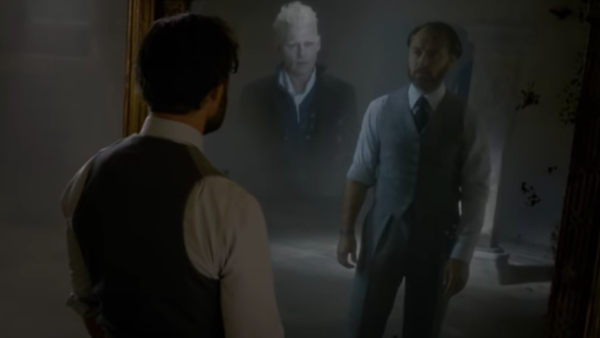
As we learned in The Philosopher's Stone, the Mirror of Erised shows us nothing but our heart's deepest desire. Which in this movie means... Dumbledore and Grindelwald making their blood oath, and then an appearance from Grindelwald as he appears now. There are ways you can argue this fits, but it makes the Mirror - which is at Hogwarts, despite supposedly being moved there to guard the stone - act more like a Pensieve.
Does It Work?
Only at a stretch. You can say that it fits with the established workings of the mirror because it shows him at the closest moment with the one person who truly understood him, which would be great, but then the scene doesn't really convey that - and that appearance of an older Grindelwald doesn't fit either. We also know that Dumbledore's Mirror vision later in life was Ariana and his family, but at this point it's still Grindelwald, even though he's actively trying to bring him down at the same time. There's something powerful in the reading of it being that first reading of their relationship, but at best the movie leaves it completely up to interpretation, and at worst makes it more like a flashback device.
5. The Lestrange Family Tree

The Change:
Alongside Leta, we're introduced to some more of the Lestrange family in Fantastic Beasts 2, with much of the movie - and its characters - speculating that Credence might actually be Corvus V. He's not, and as it turns out Corvus did indeed die after the ship went down, but crucially it's also said he's the last of the male line of his father. Going across the family tree doesn't turn up any more males, so it makes the existence of the Lestranges in Harry Potter seem, well, impossible.
Does It Work?
Although the movie does highlight the Lestrange family tree, it doesn't go into too much depth on it and you need to do some digging to discover the real implications. The movie just about gets away with it, but there'll need to be some further explanation for how Rodolphus came to be. Corvus V's great-grandfather, Corvus II, did have a brother, but he seemingly didn't have any sons, and there are some cousins further out there too, but again the line seems to have come to an end with Corvus V. There should be another Lestrange already born - the one who ends up a member of the Slug Club - but it's unclear where he actually comes from at this stage too.
4. Dumbledore Taught Defence Against The Dark Arts
The Change:
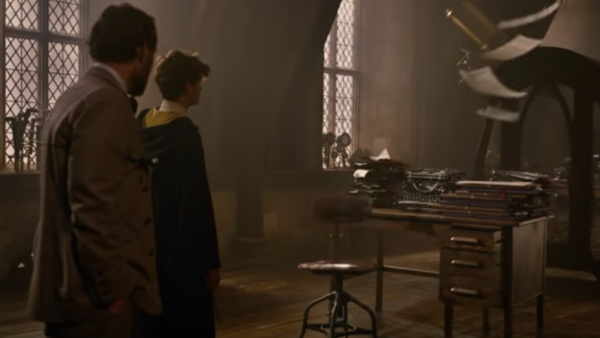
While it's always been believed that Albus Dumbledore was Transfiguration teacher prior to becoming Headmaster of Hogwarts, The Crimes of Grindelwald shows he initially had a different role: Defence Against the Dark Arts teacher. We know he has to become Transfiguration professor eventually, because that's what he teaches when Tom Riddle is at the school, but apparently he taught DADA first.
Does It Work?
Not really. It isn't the biggest or most egregious change, especially taken in isolation, but it does mean that the film needs to find a slightly convoluted way of getting him out of the position (and means the Ministry is interfering at Hogwarts long before Dolores Umbridge turns up). It's included to highlight what the Boggart turns into for Leta and develop her story further (and a little of Newt's, too), and show that the Ministry doesn't trust him, but it doesn't feel necessary and becomes much worse when wrapped up with another change.
3. Professor McGonagall Was At Hogwarts In 1927

The Change:
While established canon has Minerva McGonagall being born in 1935, this movie shows her teaching at Hogwarts in both the 'present' of 1927 and in the past when Newt and Leta were students, so roughly the early 1910s. McGonagall had previously revealed she'd been teaching at Hogwarts for 39-years as of 1995, meaning she should have started teaching at Hogwarts in 1956, but here she is as a professor some 20+ years before her birth. She is credited as Minerva McGonagall too, so it can't even be a different McGonagall.
Does It Work?
This is one of the silliest moves the film makes with regards to canon and fan-service, and not only does it open up a whole can of worms regarding character ages and who else might appear and when, but also questions of her tenure there. She is, presumably, teaching Transfiguration, which as far as we know is the only subject she's ever taught, and one she is prodigiously gifted in, hence being an Animagus. However, since she's there at the same time as Dumbledore, who now needs to vacate the Defence Against the Dark Arts position and take up Transfiguration, it means McGonagall needs to teach something else too. And, given how cursed the Dark Arts job would become, it's a bit odd that it's never mentioned Dumbledore and (presumably) McGonagall both taught it. And all that's on top of the fact she shouldn't even be alive at this point, and is shoe-horned in for name recognition alone which, when you've got Hogwarts and Dumbledore already, isn't needed.
2. Dumbledore & Grindelwald's Blood Oath
The Change:
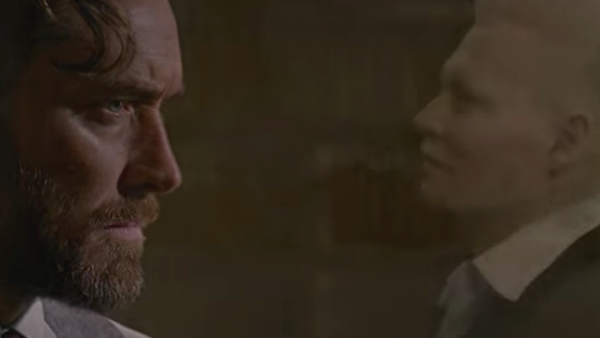
While we know that Dumbledore didn't move against Grindelwald until 1945, when the public outcry became so great and the danger so bad he had no choice, but this now explains why: the pair made a blood pact with one another, meaning that they literally cannot fight against each other. This also means that, despite Grindelwald fleeing after Ariana's death, this moment either had to come after she died (their fighting leads to it) but before he goes, further complicating their relationship, or it's the actual reason the spell deflected and killed her.
Does It Work?
Absolutely. This is the strongest change - or rather, addition - to the movie, because it underpins everything we know of what happened and actively strengthens it too. You can just about buy Dumbledore waiting until 1945 because of his love for Grindelwald, but it adds a massive layer of selfishness that doesn't fit. Having him magically unable keeps their relationship, but also fully explains why it took so long, as presumably it's not until then he figures out how to break it. If it's before Ariana's death, then it's an explanation that works better than it just being a stray spell, but making the pact after Ariana's death is fascinating too. It doubles down on the fact Albus knows in his heart that it was he responsible for killing his sister, and shows just how much love they still had for each other despite her death.
1. Dumbledore Has A Secret Brother

The Change:
Dumbledore's tragic past is revealed towards the end of the series, as we learn that, alongside his brother Aberforth (and his, er, special interest in goats), he had a sister, Ariana, who was terrorised by Muggles and her magic turned inwards, eventually killing their mother before she too died in a three way-duel between Albus, Aberforth, and Grindelwald. This movie adds a new twist into that, by revealing that Credence isn't Credence, nor is he Corvus Lestrange, but is actually Aurelius Dumbledore, a never-before-heard-of brother of Albus.
Does It Work?
If Aurelius is Dumbledore's brother, then how come he's literally never been mentioned before now? How is Dumbledore seemingly unaware of his existence? How could be he be born to either Kendra, who died in 1899 and lived at home with her actual children, or Percival, who spent much of his life in Azkaban? But then if Grindelwald is lying, a) why the phoenix?, but b) that is the cheapest move imaginable. It's an absolute clusterf**k of an ending that stupifies the audience and sees J.K Rowling take a leap into George Lucas territory. It's a twist pulled out of nowhere, that doesn't fit with anything that's come before or is to come in the already established future, and worse it risks completely upending the family backstory that makes Dumbledore such a compelling, tragic character. On the other hand, it means people will be going to see Fantastic Beasts 3 (and 4, and 5) to see exactly how this turns out, so it's done its job.
What did you think of The Crimes of Grindelwald? Let us know down in the comments.