Godzilla 2: 10 Things The Sequel Must Do

It is still impossible to keep Godzilla down but is it possible to make a perfect movie?

After an opening weekend gross that far exceeded expectations, one thing is clear: it is still impossible to keep Godzilla down. The new film has successfully reestablished Godzilla into mainstream public consciousness by providing an exhilarating and well crafted blockbuster spectacle that also managed to maintain the spirit of the Toho series. When taking that into consideration, the film in an unmitigated success, and all those involved should be extremely proud at accomplishing such a feat. Given all this, it comes as no surprise that Legendary Pictures and Warner Brothers are already in talks for a sequel. With this announcement comes the inevitable and immediate speculation, especially in light of the divisive reaction to the film. As good as a film it is, there are some substantial issues that hold it back from being truly great. While the action, atmosphere, and direction are spectacular, the development of the human characters leaves much to be desired. And while the film has many goosebump inducing sequences of tension, suspense, and awe, director Gareth Edwards teases the audience a little too much, leaving some to feel that the conclusive action scene comes too little, too late. While this Godzilla fan was mostly pleased, there are undoubtedly many areas in which the next film can improve while building on the successes of the first. The Godzilla series is a long and illustrious one, so the creative folks involved have a lot of material to draw from in order to make a worthy sequel. So in no particular order, here are 10 things the Godzilla sequel must do.

10. Keep Gareth Edwards

garethedwards600 Gareth Edwards is a fantastic visual storyteller. Monsters proved that Edwards knows how to frame and compose beautiful shots, and Godzilla only further proved this, showing that given enough money this talent is magnified a thousand fold. There are moments of sheer breathtaking visual poetry in Godzilla; a sense of scale and awe. Edwards knows how to film action so that you never lose the sense that these beasts dwarf us, and that goes a long way into making the situation feel real and immediate. Not once do you ever forget that the monsters are 300 feet tall. Not a frame is wasted. Despite the size of everything, you never lose sense of who is who or what is going on. The entire Hawaii sequence from beginning to end is a perfectly directed piece of suspense and action; something we rarely see in modern summer blockbusters. The fact is that all the successful elements of the film can be contributed to Gareth Edwards' direction. His influence is what elevates the average story and script into something special. It would be a huge mistake to drop him as director for the sequel. Yes, his tendency to lean towards teasing the audience irritates towards the end of the film, but this is a minor criticism considering what he accomplished as a whole. He needs to stay on as director for the sequel, especially considering his enthusiasm for doing so. As long as he takes the criticisms to heart, he will do a great job. With that being said...

9. No More Teasing

This has already been mentioned, but it is by far the biggest problem people have with the way Gareth Edwards structured the film. He loves teasing the audience; engaging in what he has called "cinematic foreplay." The problem with Godzilla is that he goes a little overboard with this. The first hour has a nice sense of building up to something grand, which culminates in the masterful reveal of Godzilla in all his glory as he is about to engage with the MUTO. However, instead of seeing the fight, we are teased with glimpses of it on the news as Ford Brody's son watches on tv. We cut back and Honolulu is devastated by a battle we never got to see. While this was a clever sight gag, it comes at the expense of proper release. It's like if Spielberg cut away from the T-rex after he broke out of the fence. Edwards excels at building the tension, but stumbles at releasing it in a satisfying way. And this continues on for quite some time, which frustrates the audience. This is why some praise Edwards' restraint while others condemn it. Eventually he delivers the fight we've been waiting for, but some audience members get teased to the point of apathy, which makes the climax fall flat. If you build up that much, you better deliver, and some people feel like it didn't. For the sequel, Edwards needs to stop teasing and deliver right out of the gate. Now this doesn't mean he needs to fill the film with monster action from beginning to end. But it does mean that when it happens he needs to stick with it. We know what Godzilla looks like in action, so keeping the audience from seeing what they've already seen would be a terrible move. The sequel should definitely keep the suspense, but make sure to deliver the goods and release that built up tension in a satisfying way every time. Which means...

8. Show More Godzilla

Many audience members were taken aback with how little screen time Godzilla has in his own movie. For those familiar with the franchise, this isn't exactly new territory, but it doesn't make it any less frustrating. The restraint is understandable, as is the argument for it. Show too much Godzilla, and the sense of awe he is supposed to inspire will inevitably fade through familiarity with his presence. But general movie goers' frustrations with the lack of Godzilla has some merit, and the reason for that is because of how well Godzilla is realized. Even the film's biggest detractors will admit that Godzilla is incredible in this movie. This Godzilla is an amazing digital creation with real character. Despite how little we see of him, we are still able to get a sense of his character, which is a testament to how well done his characterization is. By the end of the film, the audience is thirsting for more, which means the sequel has to quench that thirst and give us more Godzilla. Edwards clearly loves and understands the character, it is obvious in every frame he's in. Godzilla is endowed with such pathos without going overboard and making him like a puppy. Is it so bad that we want to see more of him; a character that rivals some of the best the digital age has offered us? Godzilla should be a major character in a series of movies named after him, so he needs to have a greater presence in the sequel. While he should absolutely not be treated like a human character, he does need to be given material that subtly builds and expands on his motivations and feelings, subtly being the key word here. Godzilla has always been full of character; it is why he has endured for so long. This first film did a great job in keeping with that tradition, despite his limited screen time. Now the sequel just needs to give us more. How do you do that? Well...

7. Darker Tone

Godzilla has fluctuated between destroyer and protector many times throughout his career. In this aspect the reboot nailed his character, making him a sort of hybrid of the two. The story of this first film had him as an apathetic protector of sorts; a mysterious spirit of nature here to clean up our mess. The film ends with him as our hero; the survivors cheering for his victory as he returns to the ocean. For many Godzilla fans, it was a pleasant surprise to see our favorite monster as the hero again. But now it's time to really return to his roots. It's time to see Godzilla turn against humanity and become our destroyer. It is an interesting dynamic this new series has set up because usually Godzilla starts out as the bad guy before softening up and becoming our savior. Having the reverse set up is a really intriguing premise that would be a new and compelling direction for the franchise. This first film didn't have Godzilla go out of his way to destroy anything; if anything he went out of his way to not destroy. The result is that Godzilla wasn't able to go on a rampage; an act he is known around the world for. If this new series is to become the definitive Godzilla series for international audiences, he has got to destroy some cities and fight the military. Such a dark turn for the character would be an intriguing premise for the sequel, setting up a mystery for the human characters to solve. If Godzilla is an agent of nature meant to restore balance, than what is he achieving by attacking us? Throw in some other monsters, and that sounds like a solid plot for a second film. Speaking of which...

6. Bring In The Toho Monsters

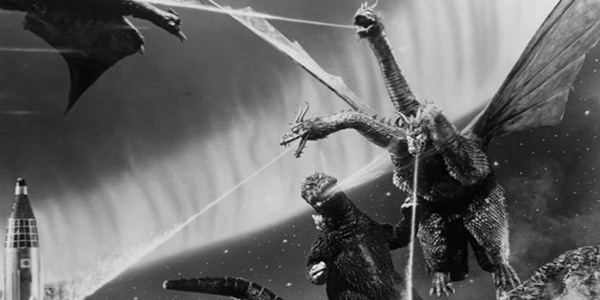
The MUTOs were awesome new enemies for Godzilla to fight. That being said, if this new Godzilla series is to accurately represent the monster and the history surrounding him, they have to start bringing in the well known classic monsters of the original Toho films. It's time to introduce general audiences to Anguirus, Rodan, Mothra, King Ghidorah, and a plethora of other great monsters. Given the ending of this first film, the story is completely open for bringing in Toho monsters. A world has already been established where radioactive prehistoric creatures are hibernating underground and a multinational agency exists to study them. Basically, the world is ripe for more monsters, and a proper Godzilla series can't exist without his classic enemies and allies. Now that doesn't mean they should forgo creating new monsters, but a nice combination of old and new would be just the thing to make this new Godzilla series stand on its own while also respecting its past. Legendary is apparently planning a trilogy, which means the second film has to start establishing a concrete roster of monsters that the world has to learn to live with. Incorporating Toho monsters into the series is especially imperative given Gareth Edwards' admission to wanting to do a Destroy All Monsters type movie, which would be a perfect trilogy ender. More than anything though, Godzilla fans want to see the monsters we grew up with given the same treatment Godzilla was in this film, and the opportunity is right in front of the filmmakers to do exactly that. Which brings us to the next point...

5. Embrace The Mythology

When you are dealing with a reboot of a series as old as Godzilla, there is a lot of fictional baggage that comes with it. This means that there are expectations as to what aspects of the original films Legendary will incorporate into this new series. Alien invasions, man-made anti-monster weapons, and ancient civilizations are some of the most common elements of the Godzilla mythos. Just as with any comic book franchise being turned into a movie series, this new series has to utilize the universe that has been built around it to accurately represent its transition into the mainstream. Now, some of these elements are admittedly far-fetched and, in concept, run the risk of alienating the wider audience. But this is no different than what Marvel has done with its superhero universe. If the Avengers can go up against an alien invasion, why can't Godzilla? The trailers for this first film painted a much grittier picture of what the final film actually is, which ended up being an updated old school style Godzilla film. This is actually great, because a completely serious and gritty Godzilla series limits itself. If this new series doesn't want to repeat itself, it needs to embrace the stories and characters the franchise has been known for. That means more monsters, trips to outer space, super weapons, mysterious islands, all that good stuff. However. with all that being said, they must remember to...

4. Keep It Grounded

You're probably thinking that my call to embrace the mythology of the Godzilla series means that they should just go crazy and have all kinds of insane plots, but that couldn't be further from the truth. This new series must also remember to keep it grounded. One of the most amazing aspects of this new Godzilla is how it combines various elements of all incarnations of Godzilla while keeping it feeling real. The premise is ridiculous, but the way Gareth Edwards presents it makes it feel believable. What this proves is that presentation is key. Some may think alien invasions and giant robots are too weird or unbelievable for the tone Edwards established, but that thinking is rubbish. Even the most outlandish concept can feel believable, it just depends on the presentation. All an audience needs is a half-decent explanation for something and they will buy into it. So while the sequel, and any following it, should incorporate the elements of classic Godzilla lore, they must be portrayed in a realistic and believable way. Yes, Mechagodzilla can be realistically done, we just need a good reason for it. Remember those old Godzilla bones in the Philippines? They've practically set themselves up for that one. Basically, Legendary needs to stay true to the essentials of Godzilla while updating it and making it more believable for a modern day audience. Studios have been doing this to superheroes for a decade; now it's Godzilla's turn. They also must not forget to...

3. Expand The Scope

By definition, sequels need to be bigger than their predecessors, and Godzilla was a pretty big movie. Instead of staying in one location like the Roland Emmerich version did, the script writers wisely structured the story as a globetrotting epic. Sure, it stayed in the Pacific, but that makes sense given Godzilla's roots in that area of the world. But if the sequel is to top its predecessor, it has to expand beyond even that epic scale of destruction. This means not limiting the story to just one area of the globe. When the sequel starts incorporating more monsters, it should be a catastrophe that involves the entire world. Show us the carnage as monsters rise from their primordial slumber across the planet. Show us the various different cultures and how they are affected by their presence. How does the emergence of the monsters affect global politics and economies? How does it affect science and religion? How does Monarch and the military deal with the situation? The events of the first film alone should have drastic effects on the culture of the world going into the sequel, so it should establish this and expand on it. Make it feel real. World building is as incredibly important part of keeping this fantastical premise rooted in reality. Doing this makes it more believable and interesting. A society living with giant beasts is almost as interesting as the beasts themselves, so we need to see that. The first film did a good job of setting this up, even if it did speed along a little too quickly. The sequel should slow down a bit and relish in this new world it has created. However, it is also important not to forget the connection to the present...

2. Monsters As Metaphors

The history of Godzilla, and Japanese monsters in general, is rooted in their use as metaphors for real world tragedies. Godzilla was specifically a metaphor for the dangers of atomic power, but as time went on he and other monsters started standing in for the power of mother nature itself. Unlike the monsters of the West, Japanese monsters cannot be stopped through man-made intervention. Try as we might, we have no power in the face of mother nature's wrath, a harsh lesson Japan is all too familiar with. Say what you will about Garth Edwards, but the man understands this. His film does what classic Godzilla movies do, and uses the monsters as stand ins for environmental disasters. Much in the same way the original Gojira tapped into Japan's fears of the atom bomb, Godzilla 2014 is a modern blockbuster that taps into our fears of natural disasters, a fear that has only increased as we've seen increased frequency of such events. It uses imagery from both the 2011 tsunami and Fukushima power plant meltdown to connect the themes to the real world. Some might call this tasteless, but this is what monster movies are supposed to do. Perhaps the greatest strength of Edwards' Godzilla is how it makes the monster more relevant than he has been in decades. Pay attention to the imagery, and you'd be surprised how much more is going on in this movie than you thought. It is imperative that the sequel not lose sight of the thematic richness underneath all the blockbuster trimmings. Whatever monsters are introduced going forward, they should continue the tradition of monsters as metaphors for the destruction our planet is capable of throwing at us. Speaking of us, the sequel must have...

1. Better Human Characters

By far the most legitimate criticism of the new Godzilla is how flat and mediocre the human characters are. While they aren't completely stupid or annoying, they are forgettable and offer nothing new or interesting. The performances from the main cast aren't bad, but the script doesn't give them anything to do. Some have argued that this is the point, which is an intriguing argument, but one that doesn't hold much water given how much the cast and story had been elevated prior to release. It is clear Gareth Edwards wants you to care about the characters, it just doesn't really work. With the sequel comes the chance to rectify this mistake and give us a human cast that the audience can truly care about. Most would agree that an entirely new cast is needed, with the exception of Dr. Serizawa, who is the most interesting character and needs to be explored more. The sequel should delve more into his past, which we only got a hint at. Clearly he has some connection to Godzilla, so the next movie should explain that. And if they insist on keeping the same core cast for the sequel, then the writers really have to step up their game and give more depth to them. The more we care about the people involved, the more impact the catastrophic events of the story will have on the audience. This doesn't mean that they necessarily have to be heroic or be of any consequence to the monsters, but that we just have to care. While the venom thrown at the characters borders on the hyperbolic, the fact is that we were promised compelling characters and the film failed to live up to that promise. It doesn't make the film terrible because everything else about it is so good, but there is no doubt that had the cast lived up to expectations, this Godzilla would be universally loved. For the sequel, whether the cast is old or new, attention needs to be paid towards developing people with the depth and charisma found in the best of blockbusters. What do you think should be in the Godzilla sequel? Let us know in the comments.

Contributor
Contributor

Film and video game obsessed philosophy major raised by Godzilla, Goku, and Doomguy.