Samuel L Jackson: 5 Awesome Performances And 5 That Sucked

The L doesn't always stand for luxury...

If he was honest with himself, even Samuel L Jackson would probably admit that there are two Samuel L Jacksons. The first is the nuanced actor, able, thanks to his near chameleonic abilities, to play characters as broad in range as supervillains, drug-addled nearly men, assassins and leaders of clandestine superhero policing forces with the same success, and the other is the caricature who shouts about snake infestations, inter-racial couples and being a washed-up soul man. And despite Jackson's almost perennial flirtation with the same school of acting as Al Pacino where spit, volume and bluster rank higher than all artistry and technique, the actor is still capable - unlike Pacino - of committing some seriously impressive performances. That he continues to rub shoulders with the very upper echelons of the industry elite on projects like the upcoming The Hateful Eight, despite some seriously mediocre releases says a lot. But then, those missteps and bewilderingly low-quality decisions still reflect badly on Jackson's overall portfolio of work, and unfortunately he carries something of a caveat that still reflects poorly on even his best performances. That means that somewhat under-publicised fare like this week's release, Big Game, are inevitably met with some trepidation. Would someone as comparatively unexperienced as the actioner's helmer Jalmari Helander be able to coax only the best out of him? Early reviews - thankfully - have been positive, and while it seems unlikely to trouble the very best of his performances, it's far from among the worst. And in honour of that release, now is the perfect time to look at the best and worst of what Jackson has done...


5 Awesome Performances

5. Stephen - Django Unchained (2012)

Though malevolent man-servant Stephen is easily one of the more gimmicky characters in Quentin Tarantino's bloated Western, and the writing behind him negates actual explanation in favour of grotesque caricaturising, the actual performance is easily one of Jackson's most eye-catching. Stephen is a gnarled root of a man, twisted by wayward morality and the toxic logic of Candyland, who is unthinkably devoted to his master's cause rather than the plight of his fellow slaves, thanks to a broken internal mechanism that clearly puts him on the wrong side of the divide. While the white supremacist grotesques are presented as the pantomime villains of the piece, it is Stephen who is the real malignance: he is a blood traitor, institutionalised and poisoned, and twisted so far away from recognisable humanity that his death in the Candyland explosion at the end of the film can't come soon enough. And again, though Jackson pushes the gimmick as far as he can, in the wider context of Tarantino's filmic universe, his is by far the best performance of the entire film (aside from Leonardo DiCaprio's uproarious take on Calvin Candie) - he invites spiteful hatred from the moment he appears, and there is something almost supernaturally unappealing about him, like a wild west Baba Yaga, perversely maternal, and utterly despicable. It is also testament to Jackson's performance that even his particularly grisly death, with an introductory double knee-capping, is too good for him.

4. Carl Lee Hailey - A Time To Kill (1996)
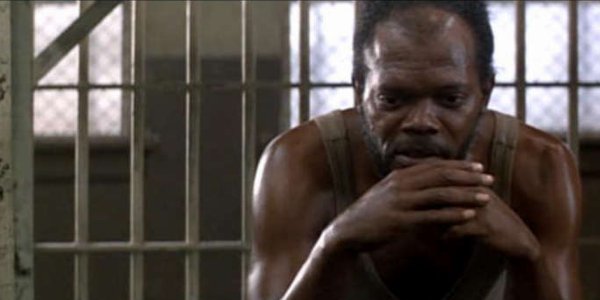
One thing that Jackson's performances never lack (for the most part) is emotion - which has at times pushed him over the boundary into playing pantomime caricatures and building a presumably unwanted reputation for shouting in even the most unnecessary of situations. His take on Carl Lee Hailey, the Clanton, Mississippi resident whose daughter is brutally raped and almost murdered by a pair of young white racists, who unsuccessfully attempt to hang her is a mesmerising portrait of enraged grief and the explosive, inevitable reaction of an impotent, tragic figure pushed to the most extreme of actions. There was inevitably major opportunity for Jackson to grand-stand, and to take the chance of incredibly loaded material to overload his characterisation of Carl Lee, but the performance is far from a caricature of grief and socially propelled outrage. Before everything else, Jackson made Carl Lee a man, broken and bruised not only by the physical scars born by his daughter, but also by the anguish of realisation that the system would inevitably fail him, and that the assailants would inevitably walk free, without so much as a cursory intervention by real justice. The single most memorable moment of the entire film comes not when Matthew McConaughey's attourney offers the irresistible refrain of "now imagine she's white" that breaks the case; it happens immediately before that, when Jake visits Carl Lee in jail, and the latter devastatingly reveals the lawyer's own discrimination.

3. Jules Whitfield - Pulp Fiction (1994)
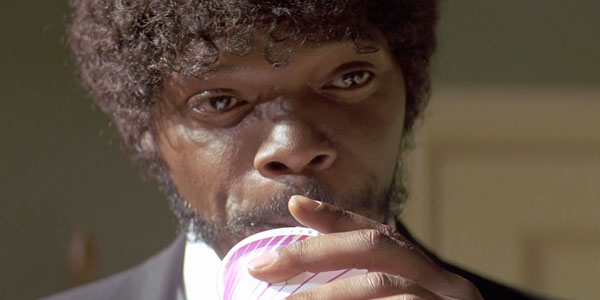
If you were looking for a flashpoint in Jackson's career that negatively influenced a significant portion of his later work, his iconic and fan favourite performance as devout hitman Jules, opposite John Travolta probably insists of its blame quite noisily. Though Jackson is brilliant as the soundbite spewing, gun-toting apostle, his fearsome persona, which had only been one facet of his repertoire up until 1994 leapt to the front of his profile, thanks mostly to the irresistibly brilliant scene in which Jules quotes (as it happens wrong) scripture to his mark and made himself one of the entertaining pillars that the film is founded on. Because of Tarantino's fascination with interlaced vignettes, it isn't story arcs, but moments that are the most memorable, and Pulp Fiction boils down to a few: the diner, Jules' scripture, the diner dance, the Wolf, and "Zed's Dead," and it is arguably Jackson's finest moment of the film that is the film's most enduring legend. But it isn't that remarkable scene that is Jackson's best work on the film: instead it is the dynamic he builds with Travolta - generously given the second chance of a career thanks mostly to Jackson's willingness to play off, and not overbear - the easy exchanges about burgers, and pork, and foot massages, and it is thanks to the rapport between the two hitmen, which relies entirely on Jackson's almost outraged straight man to Travolta's laid-back surf graduate, that those moments have become a hallmark of Tarantino film-making.

2. Ordell Robbie - Jackie Brown (1997)
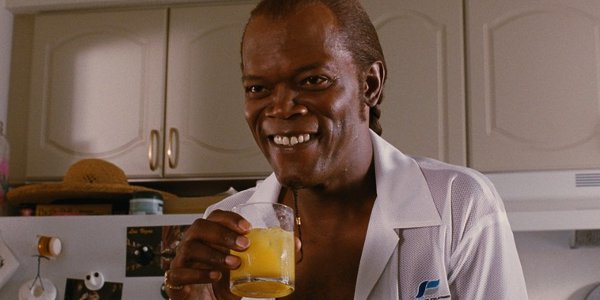
Another from Jackson's prolific, and most successful mid to late 1990s period, Jackie Brown is probably Jackson's most menacing role, though his charisma is such that he doesn't so much feel like a villain - which he undoubtedly is - and more like a swaggering anti-hero at the very extreme end of the scale. Tarantino's greatest - and probably most underrated - film is also Jackson's best performance for him, without the grandeur or the grand-standing of either Jules or Stephen, but with smarter, and far tighter writing. Jackie Brown is less of a collection of grotesques than Tarantino's other films, and there's more opportunity to actually act with subtlety, thanks to the slower build that culminates in Jackson's snapping point after he kills Louis and discovers that Jackie has ripped him off. Though the moment that he snaps is brilliant, it's the slow build and the small touches in the performance that make it so stand out.

1. Elijah Price - Unbreakable (2000)

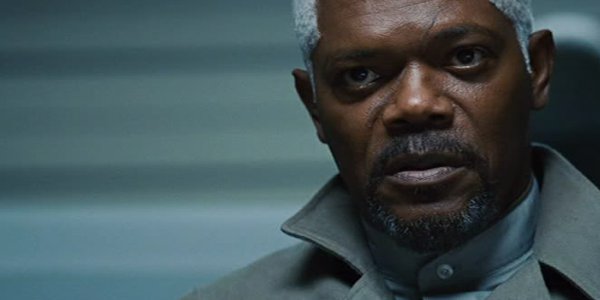
Moving away from his more muscle-bound and alpha male roles that had dominated the mid to late 90s, and cut a swathe of cool through almost every project he was associated with, Jackson signed up to the greatest non-comic book superhero movie ever made, taking advantage of the few things M Night Shyamalan does well (fantastical story-telling, character-writing and high-concepts) and papering over the cracks of detail that would later open far more noticably in the director's later films with a performance that is both brilliantly still, and pricked with raw-nerve pain at the same time. The film might be suggested to belong to Bruce Willis, but in truth, Willis merely exists in that world, and mostly lets everything happen to him: he is a sponge, until he realises the implications of his powers, and his stripped (some might say lazy) performance works, rather satisfyingly, because of the dynamic built with Jackson opposite him. Jackson is almost unrecognisable - especially in the context of the films released around the same time - and his frailties, as well as the bristling desire to find a purpose mark out the performance as Jackson's best ever. And now to the performances that weren't quite so well-received...

5 That Sucked

5. Derrick Vann - The Man
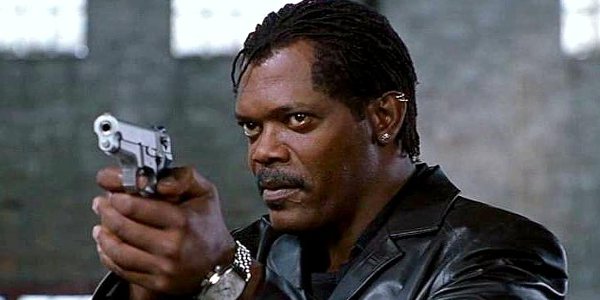
Though Jackson is now legitimately the highest grossing film actor of all time, it is curious how many times he seems to consciously take on contracts that are beneath him, particularly when his career seems to be on the high. Regardless of his astute association with star-making franchises like Star Wars and the Marvel series, he is worryingly attracted to mediocre wage-packet jobs like The Man. The mistaken identity "comedy" feels like a zany American Pie meets Last Action Hero cross-over, which escalates quickly and descends into a serious of unfortunate events that lack emotional impact or actual dramatic tension. The whole thing feels like a brainless rehash of every fish out of water crime caper, without an ounce of self-awareness, which might just have saved it a little. The film is silly without the smarts to balance it, the script is abject and lazy, and it's as washed out as comedies get, which isn't helped by the fact that Jackson might as well be wearing a T-shirt with "This is paying for my next car" on it.

4. Mace Windu - Star Wars Prequel Trilogy (1999-2005)
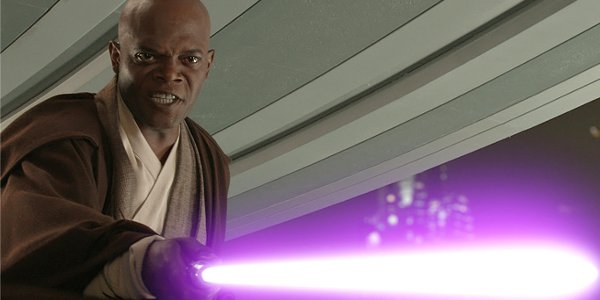
To balance the influx of relatively new actors - and perhaps to distract from a woeful lack of talent - George Lucas needed some older, established talents to populate his misguided prequel trilogy, and to compete for screen time with the collection of CGI monstrosities he thought could pass for fully realised characters. Quite what Lucas saw in Jackson remains to be seen: when cast, his profile had been boosted by Pulp Fiction and Jackie Brown, and there was very little further back in his filmography to suggest that he could fit into the Jedi council as seemlessly as was necessary. Star Wars fans had certain expectations for lofty Jedi, including (but not limited to) a classical acting background, and it seems Jackson's clipped delivery is an attempt to bring something of that to his role. Sadly, the writing is too poor, and the performance way too stunted to make his Mace Windu a success, and he became just another superfluous ornament in Lucas' bloated universe.

3. Abel Turner - Lakeview Terrace (2008)
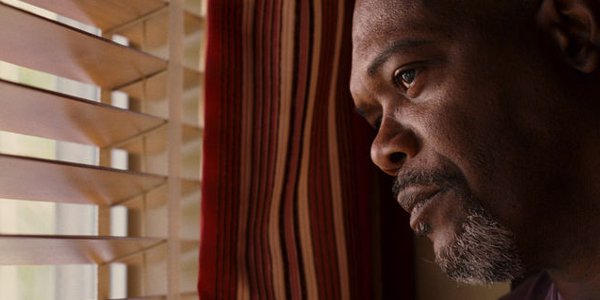
From the sublimely boring, to the profoundly overblown in one easy segue. You can recognise the intent of Neil LaBute's Lakeview Terrace, and its agenda to not only shock, but to claw under the skin of the audience and tear some primal outrage out of them, but its message is lost in hyperbole and forced drama that weren't at all necessary. The film should have been a slow-burning thriller, in the vein of British chiller Eden Lake, but instead, the director and writers took the vulgar Hollywood root and sold our their fundamental intentions and the film's central message about intolerance in favour of some gun battles and the backdrop of forest fires that feel like nothing more than dramatic manipulation. Jackson's performance as Turner starts out well, but like the film, it quickly escalates away from the more affecting tense drama in favour of something bigger, and more grotesque, robbing it of the promise and potential impact the opening act suggests might have been possible with a little more restraint.

2. Roland Cox - Jumper (2008)

A second team-up for Jackson and Hayden Christensen, and another high-concept sci-fi, this time helmed by Doug Liman, and featuring an actually not bad concept of a teenager who discovers his power for teleportation completely by accident. Then Professor Xavier turns up, invites him to the Academy, and... Wrong film. Jumper is very much a sub-X-Men sci-fi, and the concept should have done well (which perhaps explains the ridiculous open ended cliffhanger,) but the script is erratic at best, and bafflingly convoluted at worst, and the overall impact is considerably worse than even the third X-Men movie. The biggest problem comes with the central hero/villain dynamic: Hayden Christensen is painfully wooden, and Jackson seems to have over-compensated, meaning there's both a lack of charisma, and too much forced charm at the same time, and all of the human characters feel like background distractions to the special effects.

1. The Octopus - The Spirit (2008)

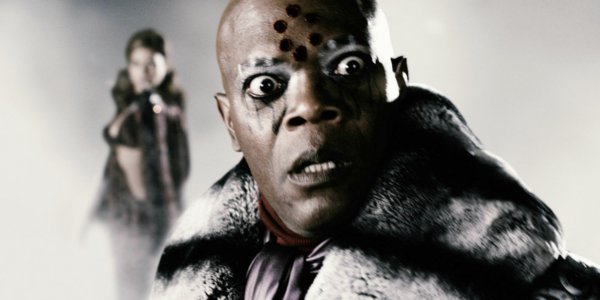
There are very few missteps in the modern history of superhero movies, but Frank Miller's noir effort is as bad as it gets, just about getting its affection for pulp right, as well as the sexy posturing, but missing everything else that makes comic book movies enduringly populist. The film is an exercise in hyperbole and aesthetic fetishism to the detriment of substance and technique: Miller might be a creative influence, but he is not a director, and clearly has no idea how to put shots together or how to get anything out of his actors. As a result the film lacks direction badly, and the performances are soulless and grotesque, bearing all of the hallmarks of an orchestra without the refined touch of a composer. Like the film in general, Jackson's performance aims for cool and posturing, but it lacks any impact whatsoever, and is about as subtle as a sledgehammer enema. Which Samuel L Jackson performances do you think deserve to be on this list? Share your picks below in the comments thread.

Contributor
Contributor

WhatCulture's former COO, veteran writer and editor.