10 Acclaimed Video Games Everybody Turned Against
The games we loved... but not anymore.

One of the worst feelings a gamer can experience is when they're excited for an upcoming game, only to realise it failed to live up to expectations.
To add salt to the wounds, this feeling doesn't always hit straight away. Some RPGs, platformers, and shooters receive so much hype, the masses may ignore blatant flaws (at least, at first).
It's kind of an Emperor's New Clothes situation, with everyone pretending a particular title is flawless, even though it's a big pile of nothing. All it takes is one person to pipe up and remind everyone the game in question isn't all it's cracked up to be before everyone else follows suit.
At one time, certain games on this list were revered as instant classics. But they're now viewed with such unbridled contempt, you'd swear they were hated from the very beginning.
Now, that's not suggesting all of these entries are terrible. In fact, some of them are absolutely worth checking out. But due to a few inconsistencies or one glaring problem, it's easy to see why these former masterpieces are no longer put on a pedestal.
10. Spore

After Will Wright changed the gaming landscape with SimCity and The Sims, buzz was through the roof for his 2008 project, Spore. The real-time strategy title allowed players to evolve a species from a single-cell organism to a creature capable of ruling a cosmic empire. You could also craft vehicles, buildings, and spaceships, meaning you weren't just in charge of a random animal but an entire galaxy.
Spore had a lot to live up to, but it managed to deliver (for a while). Due to its easy-to-pick-up gameplay, innovative design tools, and seamless integration of players' content, Maxis' daring game was touted as another certified trailblazer as soon as it hit shelves.
But there was a problem. Evolution is a fascinating concept, but it's mind-bogglingly slow. As a result, watching your creation blossom and bloom is surprisingly boring. Although this idea could work, the shallow gameplay lacked depth, since strategy and progression elements relied on simplistic and repetitive gameplay.
Spore was fascinating at first, since first-time players were curious to watch their critter mutate, develop self-awareness, and become a part of society. However, the gameplay became so grind-heavy, many lost interest long before exploring all of Spore's content.
9. Dark Souls II

Although Demon's Souls is regarded as Hidetaka Miyazaki's first true Souls game, it was Dark Souls that solidified FromSoftware's reputation. With its lore-rich worldbuilding, atmospheric world design, and brutal but fair difficulty, Dark Souls didn't just create a franchise but an entire genre.
That's why it's ironic how the divisive sequel was originally believed to be, not just a worthy successor but superior to its predecessor, due to its expansive customisation, smoother mechanics, and clearer zone branching. Based on Metacritic, no version of Dark Souls cracked 90% while the lowest port of Dark Souls II received 91%.
But Dark Souls II has found itself being heavily scrutinised in recent years. DS2 made controversial changes to the original formula, tweaking how healing worked, the amount of enemies players were asked to go up against, and the variety of the boss encounters. Miyazaki's absence on the project was noticeable since the level design and storytelling lacked cohesion.
However, the simplest reason why Dark Souls II's reputation has dwindled is because almost every FromSoftware title since is noticeably better. Though the sequel had mild improvements, it didn't push the envelope like future Soulsbornes.
And when Miyazaki's Bloodborne redefined the genre the following year, it was painfully obvious Dark Souls II could've been more ambitious.
8. Batman: Arkham Knight

After Batman: Arkham Origins received an underwhelming reception, it was refreshing to see the IP's creators, Rocksteady, return for Batman: Arkham Knight.
Even though the late Kevin Conroy was absent from Origins, he reprised the lead role this time around, which seemed fitting since it was the final chapter in the Arkhamverse (at the time). As expected, Arkham Knight was a rousing success, with critics praising its astounding visuals, emotional story, and refined combat. Tying up all the loose ends, Arkham Knight seemed like a satisfying conclusion to Rocksteady's beloved brand.
But over time, the flaws became more noticeable (and not just because of the unforgivable PC launch). Though the marketing built up the mysterious titular villain, many comic fans guessed his identity before launch. The Riddler trophies were more excessive than ever, despite being regularly criticised in previous instalments. Though it was nice to see Mark Hamill return as the Joker, his inclusion diluted the impact of the character's death in Arkham City.
Although these criticisms didn't ruin the game, the same cannot be said about the Batmobile. Despite being the most hyped aspect, driving around in Batman's armoured car grew tiresome due to the janky frame-rate and irritating tank mechanics. To be fair, it wouldn't be so bad if the Batmobile was used sparingly. However, the infernal vehicle features in over a dozen missions.
Arkham Knight is a solid title but it's safe to say it's the weakest entry in Rocksteady's Batman trilogy.
7. Super Mario Sunshine

After Super Mario 64 revolutionised 3D platforming, expectations for its successor were sky-high. However, Super Mario Sunshine was seemingly everything we could've hoped for, with many gaming critics giving it a perfect score. Players were won over by its vibrant visuals and its FLUDD system, which allowed Mario to perform tasks and solve puzzles with his water-spraying companion.
Looking at the early reviews, you'd swear Sunshine was on par with Super Mario 64. Sadly, it wasn't long before the criticisms outweighed the praise.
Although FLUDD was a nice addition, it slowed down the gameplay and took the focus away from Mario's traditional jumping skills. In fact, one of the best aspects of the game is when the Italian plumber loses his aquatic buddy, forcing him to rely on his gymnastic abilities.
Even though Super Mario is known for its accessibility, Sunshine had an inconsistent difficulty, with missions ranging from overly simple to unrealistically challenging. The difficulty of certain tasks was based on poor design and glitches rather than skill, which is pretty amateur for a Nintendo property.
And when compared to the masterful follow-ups, like Super Mario Galaxy and Super Mario Odyssey, Super Mario Sunshine pales in comparison.
6. Black & White

Helmed by Peter Molyneux, Black & White had players take control of god himself, performing deeds to gain followers while competing against rival deities.
You can embrace good or evil, blessing worshippers with good weather and food, or terrorising them so they pray to you out of fear. The world matches your moral alignment, so the skies, lands, and your avatar will change depending on your decisions.
Based on the premise, scale, and the level of strategy required to manage artificial life, Black & White didn't just sound like a game, but a quantum leap forward for the industry.
Looking at the reviews at the time, Lionhead Studios' epic project delivered everything it promised and is still considered a breakthrough in AI and simulation design. And yet, Black & White has never been re-released and can't be played anymore without the original discs. So, why did everyone forget about it?
In a nutshell, Black & White had few long-term goals, which diminished its replayability. Basic tasks, like picking up items and guiding villages became tiresome, especially since the controls often misread inputs. The AI was bare-bones so the followers constantly got stuck, didn't react the way they should, or ignored your commands.
Though Black & White was once deemed a symbol of innovation, it's now seen as a cautionary tale in over-promising and under-delivering.
5. Star Fox Adventures

Originally conceived as a new IP called Dinosaur Planet, Rare was pushed by Nintendo to rework the project into a Star Fox property. Turning an on-rails shooter into a Zelda-like action-adventure title may have been jarring, but Rare was expected to knock it out of the park.
When it was released, Star Fox Adventures was critically acclaimed, due to being more narrative-driven and offering more diverse gameplay. Most impressively, the prehistoric title was the fastest-selling GameCube title at the time. Sure, the voice-acting drew heavy criticism (no change there), but Star Fox Adventures was still perceived as a triumph.
But as time went by, fans turned on the GameCube exclusive for one main reason - it didn't feel like Star Fox. The classic games centre around Fox McCloud and his anthropomorphic buddies soaring through asteroid fields and hostile worlds while blasting at enemy ships.
But in Star Fox Adventures, you have to help mammoths out of lakes, chat to Scottish golems, and collect bafomdads for... some reason. If the game reverted to its Dinosaur Planet design, nobody would think it had anything in common with Star Fox. (There's less than 20 minutes of on-rail shooting in the whole game.)
Even though Star Fox Adventures looked like it was taking the brand in a bold new direction, it tarnished its reputation for decades.
4. Halo 5: Guardians
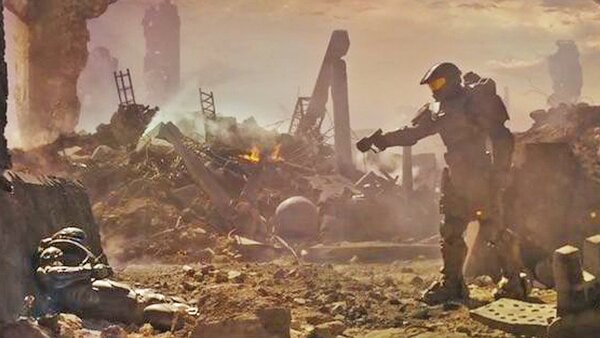
Every entry in Halo set the bar so high, it was only a matter of time before one of them didn't deliver. Although Halo 5: Guardians is labelled as the black sheep of the series, it didn't start off that way.
Guardians initially received positive reviews, especially for the Warzone multiplayer mode and drop-in/drop-out 4-player online co-op feature.
Having said that, many players found Guardians lacking in a very literal sense. Despite being the face of the franchise, Master Chief is only playable in a fifth of the missions. This decision would've been easier to accept if his replacement, Spartan Locke, was as compelling. Unfortunately, players didn't gravitate towards him or his squad the same way as MC's team. The promotions also hinted at a showdown between Chief and Locke, which never came to pass. To top it all off, Cortana was also underutilised.
But it's not just major characters that were side-lined but primary features. Even though local split-screen has been a staple in Halo since the beginning, Halo 5 had it removed.
Another aspect that was majorly lacking was the story, since it was over reliant on outside media. Unless players read books surrounding the property, they'd miss out on crucial aspects of the plot.
3. Donkey Kong 64

After the success of Banjo-Kazooie and GoldenEye 007, the next logical step for Rare was to create a 3D platformer surrounding Donkey Kong, who they'd already had success with the Donkey Kong Country trilogy.
Donkey Kong 64 was a massive success, with critics praising its vast world, cheeky humour, and enough content to keep players entertained for hours on end.
Ironically, many of the game's best features are now considered its worst. Yes, Donkey Kong 64 has a lot of collectibles... too many. In fact, there are 3,821 items to obtain which is the most collectibles in video game history. For this reason, players found themselves wandering around and grabbing stuff rather than completing tasks or solving puzzles. Basically, it was content for the sake of content. Certain items can only be collected by specific DK members, forcing players to keep swapping characters, which led to a ton of backtracking.
Until this point in gaming, collectathons had proven to be extremely popular. However, Donkey Kong 64 took this idea to such an extreme, it soured the genre.
Although the fanbase is pumped for the upcoming Donkey Kong Bananza, let's hope the titular ape doesn't have to collect a bajillion bananas this time around.
2. Final Fantasy VIII

Even though Final Fantasy VII has had the most lasting legacy in the franchise, there were signs the follow-up would be better. The promotions for Final Fantasy VIII were breathtaking, boasting graphics that look remarkable, even by today's standards.
After watching the epic three-minute opening, it was almost impossible not to be blown away by the cutting edge visuals, cinematic presentation, and magnificent soundtrack.
FFVIII was regarded as another victory for Square back in 1999 and superior to its predecessor in certain aspects. But nowadays, it's remembered as among the weakest entries. Though it's challenging to fault the realistic art style, this instalment is let down by underdeveloped characters and an absurd plot.
However, the biggest issue was the Junction system. These combat mechanics involved repeatedly drawing magic from enemies, which was tedious, grind-heavy, and counter-intuitive. Junctioning was such a chore, players could complete the main campaign without using it or understanding how it works. Considering how crucial the battle system is in every other entry, it seemed out of character for Square to drop the ball this time around.
Final Fantasy VIII is a lot of fun, but it's hard to find anyone who regards it as their favourite in the franchise.
1. Mortal Kombat 1

By the time Mortal Kombat reached the 11th official entry, it was obvious the story was becoming too messy and convoluted. As such, it was reassuring to hear the follow-up would be a soft reboot, offering a new timeline, reinvented lore, and iconic characters in brand-new roles.
Mortal Kombat 1 wasn't exactly revolutionary, but was viewed as a promising chapter in the series (except for the Switch port). But when the enthusiasm died down, the flaws became unbearably noticeable, including the outrageous micro-transactions, the deeply imbalanced roster, the broken Kameo system, and lack of content. Also, the Towers and Invasions were nowhere near as fun as the previous instalments' Krypt or additional modes.
Although these gripes were noticeable from the get-go, players assumed NetherRealm studios would patch them out early on. However, the developers were bafflingly slow at remedying issues or adding anything worthwhile.
On top of that, the new content made things worse. Not only was the DLC shallow, it cost more than the game itself. Basically, it felt like players had to pay extra to access content that should've been there in the first place.
More post-launch content was planned, but a lack of interest has caused these plans to dry up. And since Mortal Kombat 1 was meant to revitalise the blood-soaked saga, it's hard to say how it's going to recover from this.