10 Disappointing Video Games Which Lied To Get Your Money
Were you stung by any of these lies?

Thanks to the highly competitive nature of the video games industry, it's common for publishers to use any means necessary when it comes to getting sales. In the case of most modern AAA releases, this means shelling out a ton of money on marketing in order to build up high levels of pre-release hype.
Sadly, there have also been many instances in which publishers have been caught lying about the content of their releases, or at least twisting the truth beyond recognition. Promising features might be advertised, only to never see the light of day. The scope of the game might be blown horrifically out of proportion, with audiences only realising how limited it is after playing themselves.
This list takes a look at ten disappointing games that ended up lying to customers in order to generate sales. In some cases, it's up for debate whether these falsities were actually intentional - it's common for developers to overreach, only to find they're unable to include everything they wanted at the start.
From multiplayer modes that never made it into the game after years of promises, to games that were built on a pack of lies from the very beginning, the marketing for each of these games was less than honest.
10. Infestation: Survivor Stories
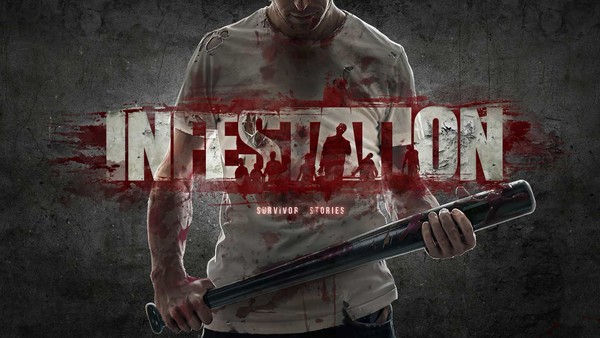
The War Z was released back in 2012, and quickly became known for being a total disaster of a game. In fact, it got so bad that developer and publisher OP Productions ended up 're-releasing' the game with the new title of Infestation: Survivor Stories.
Despite a number of positive early previews, the game was totally panned by critics. Common complaints included bad UI design, buggy gameplay, and obnoxious micro-transactions. Most notoriously, many customers accused the developers of fraud. War Z was originally advertised on Steam as having multiple large game worlds, player versus environment combat, skill-point levelling and hundred-player servers. None of these features were available on release. The game was pulled from Steam, but re-emerged with its new name soon after.
9. Spore

One of the most overhyped video games of all time, Spore represents a tragedy in the lives of any PC gamer. Judging from pre-release material, it was to be by far the most epic, ambitious video game ever made.
In reality, it was a collection of underwhelming minigames.
Despite all the promises, Spore wasn't the transcendent experience many were hoping for. The journey of a single-celled organism working all the way up to advanced, space-faring civilizations wasn't quite handled in the miraculous manner that Maxis seemed to think. Spore might have been grand in scope, but its individual components were overly simple and not connected together in the manner that pre-release material suggested.
8. Grand Theft Auto V
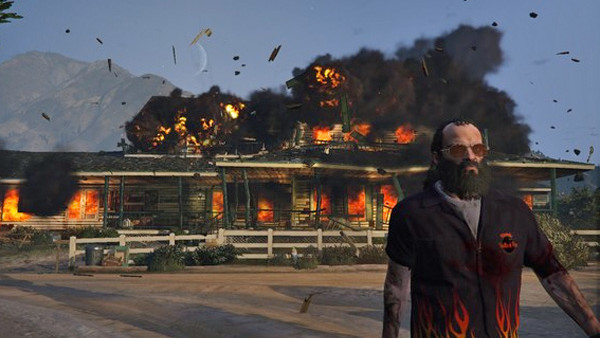
There's no doubt that Grand Theft Auto V is one of the greatest games of the last four years. The world, characters, and gameplay of the single-player campaign are all phenomenally good. Sadly, the multiplayer mode, in the form of 'Grand Theft Auto Online,' was a disappointment.
Loading screens were overlong, gaining cash using gameplay alone was a laborious trial, and micro-transactions cheapened the entire experience. What really got fans annoyed though, was that the highly anticipated online heists were noticeably absent. Rockstar promised they would be added in a later update, but it wasn't until March 2015 that they were finally implemented.
Two years was too late for many GTA V players who had long since abandoned the game. So much hype surrounded Grand Theft Auto Online, that the subsequent disappointment only served to undermine the fantastic single-player.
7. Colin McRae Rally

This doesn't refer to the original game, but rather the Steam 'remastered' version, released in 2014. Many fans of the series were excited to see the classic being re-made, but were instantly disappointed after loading the game up for the first time.
The 'new' Colin McRae Rally wasn't a proper HD remaster, not a retextured version of the original 1998 PC version, or a complete remake, either. Instead, the £4.99 title was a direct port of a mobile game. It had no customisation and no video settings, while the handling was totally different (and worse) than the original game.
It wasn't technically false advertising, but (as can be seen from the extremely negative Steam reviews) many buyers certainly felt misled. In fact, fan response was so negative that Codemasters offered a full refund for a limited period.
6. Call Of Duty 2
It might have been a cinematic tour-de-force in its day, but Call of Duty 2's advertising made it out to be something far more than reality. A trailer for the game, released in 2006, generated controversy after claims that it was misleading consumers.
The trailer showed pre-rendered footage that was above and beyond anything that could be played on the Xbox 360. It was shown entirely through a first-person perspective, and many felt that it was intended to trick viewers into thinking this was representative of the actual gameplay. Activision denied these claims, stating that, "the footage was intended purely to communicate the subject matter of the game, rather than to represent actual gameplay."
5. Halo 2
Halo 2 remains one of the best multiplayer games ever released, and the best-selling Xbox game ever. The campaign was criticised for its poorly implemented ending, but it's certainly not considered a low point in the series.
So what's the problem then?
Well, for a while it was looking like Halo 2 would be a whole lot better than what we saw on release. Thanks to extremely tight scheduling constraints, the team behind the second Halo were forced to reign in their ambitions. This is most jarringly noticeable in the 2004 E3 "Real Time Demo," which showed off an excitingly dynamic, detailed level that looked years ahead of its time. It turned out that's exactly what it was, and the entire level was axed despite many fans believing it to accurately show what was in the final game.
4. Diablo III

Despite belonging to one of Blizzard's most beloved franchises, Diablo III was a bit of a mess upon first releasing. A dull loot system, an opening week plagued with connection errors, and the real-money auction house all helped make the game feel like a bit of a flop.
Thankfully, Diablo III ended in a much better place. Blizzard removed the auction houses, endgame was vastly improved and expanded upon, and the loot system was totally revamped. Despite all these additions and changes, Blizzard failed to fully implement a key feature that was promised before and after release. Player vs. player combat was a much-loved feature of Diablo II, and many fans were disappointed to learn it would only appear in the third installment in a very limited form.
Blizzard claimed that PvP would not exist in the "hostile switch" form, but that it would instead feature in an 'arena' mode. There was no sign of it upon release, but the developers promised its inclusion in a later update. Eventually, it was cancelled, infuriating players in the process.
3. Tiger Woods PGA Tour 09 All-Play

EA got into a bit of trouble back in 2008, after they were found to be misleading customers with their ads for the Wii title Tiger Woods PGA Tour 09 All-Play. The game might have been pretty decent as Wii sports titles go, but apparently EA didn't think it good enough to sell on its own merits.
The game was advertised in the UK with television broadcasts of a gameplay footage trailer. However, after receiving a number of complaints, the Advertising Standards Authority forced EA to pull the ad. It turned out that EA had actually used footage from the Xbox 360 version of the game, in a Wii-specific advertisement. The publisher claimed that the Wii footage "was not of broadcast quality," which is about as truthful a comment as you could hope for.
2. Aliens: Colonial Marines

Until Alien: Isolation released in 2014, video games hadn't been very kind to the franchise for quite some time. The idea of a great Alien game adaptation is always exciting though, so Aliens: Colonial Marines' announcement was met with a fairly high level of excitement.
The pre-release material for Colonial Marines looked absolutely stunning. Environments dripped with atmosphere, the graphics were as good as any next-gen AAA release, and the alien AI was touted as offering uniquely clever enemies. In one of the biggest gaming controversies of 2013, Aliens: Colonial Marines' final release barely resembled what had been shown in pre-release trailers, 'gameplay footage', and industry shows. The graphics were ugly, the Alien AI was laughable, while the gameplay was a total mess of half-baked ideas and frustrating shooting mechanics.
As a result of false advertising, a lawsuit was filed on behalf of a class, and Sega agreed to settle by paying out $1,250,000 to the plaintiffs.
1. Fable
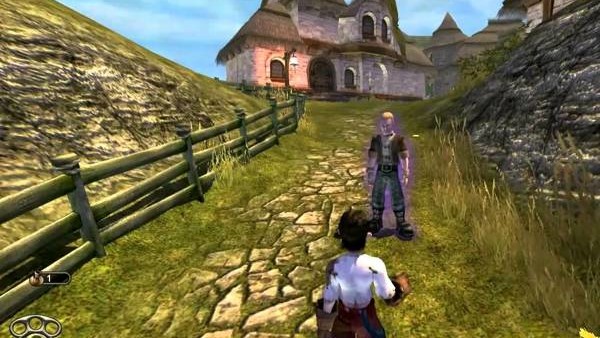
Peter Molyneux just can't help himself. If there's an upcoming game that has Molyneux involved in the development, then you've just got to take every bit of pre-release information with a pinch of salt. While his passion is commendable, gamers have repeatedly been frustrated by his games' total inability to deliver on the promises.
Fable is the most notorious example of this. Before it was released, Molyneux promised a list of features that made every RPG fan drool at the mouth. A huge, dynamic world that changed depending on your choices (over a time span of decades). NPCs that intelligently changed their opinions of you based on past deeds. A karma system unlike any other. Almost everything was either exaggerated or completely false, and the game boiled down to an average action-RPG title with a bit of smoke and mirrors in the background.
The only 'fable' here is to never believe the hype for a Molyneux game.
-
What games made you feel lied to? Are there any we missed? Let us know in the comments below!