10 Incredibly Divisive Video Games Nobody Will Ever Agree On

Hype is a double-edged sword that many developers inevitably throw themselves on.
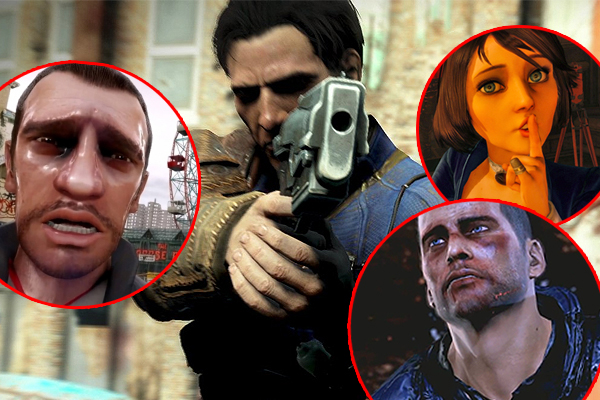
"Have you felt it?" might currently be doing the rounds as the harbinger of a certain force awakening, but the question also applies to just how increasingly vocal we're all getting about almost every new entertainment release. Perhaps it's because of social media's interconnected influence, allowing opinions to gather steam faster than ever, snowballing a few thousand viewpoints into one gigantic ball of anger, frustration - or far rarer, utter delight - that just begs to be noticed. Whether it's that or a number of other global factors, the fact remains that when you look towards the nerdier side of life and check out what gamers have to say about any highly-regarded title, there's always just as many people shouting negatives as their are championing what went well. GTA IV? The character animation and game engine was impeccable, but... the driving was awful. Bad reputation forever. All three Mass Effect games? 200+ hours of perfectly-written sci-fi euphoria, tainted by a naff final conversation and badly coloured endings. Bad reputation forever. Or are they? Are these games simply mistreated? Do the detractors and their insistence on typing away furiously to get negative opinions out there, really get to define a game in the long run? All you can do is fly your own flag, but you'll have to weigh up the pros and cons of each first...

10. Mass Effect 3

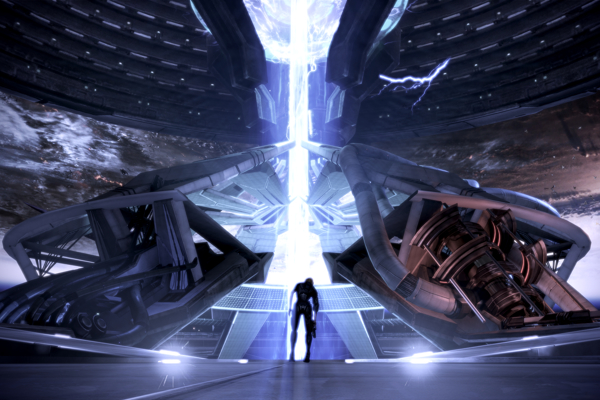
Mass Effect 3 was released too early, and with content that was supposed to be on the disc resigned to DLC thanks to EA. The sad story of Bioware's third instalment looms over the industry as an immortal reminder of what happens when publisher demands end up getting the better of development costs. The Case For: The game is so much more than the ending. Sure, you need all the DLC to get the full picture, but when taken as a whole, Mass Effect 3's ending is actually the culmination of various hints from across all three games. A larger, barely comprehensible force was always needed to wipe out the Reaper threat - one that you get to converse with face to face, before the galaxy is irreversibly changed. The Case Against: Well, this is easy. Rushed intro, forced DLC purchases for the full story, occasional bugs, worse graphics, removed characters, focus on action over plot, unbelievably disingenuous ending when compared to what the devs said beforehand, the list is endless if you're in the negative camp. Simply put, they said we'd "not get an A, B or C ending", and then proceeded to give us exactly that. My Take: At the time, this was the most disappointing thing I'd ever come across. Not only did Bioware scupper the landing, but the entirety of Mass Effect 3's framing as a race to stop the invasion of Earth (which happens at the very beginning) removed any freedom you had in exploring the galaxy to your leisure, as you simply knew thousands were dying whilst you were off returning documents to random aliens.

9. Batman: Arkham Knight

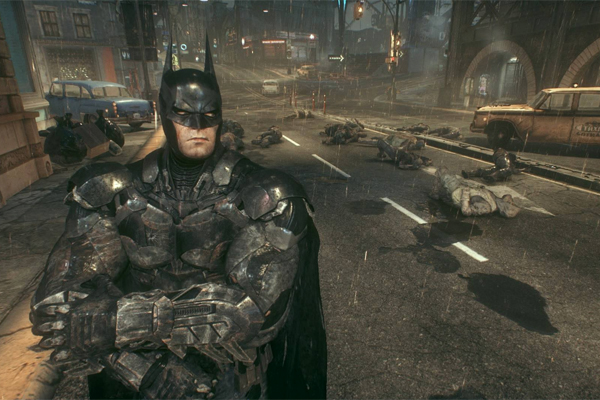
Rocksteady's final instalment landed with not as much an almighty bang as one hell of a fireworks display. One hell of a graphical showcase and continually refined combat somewhat masked a handful of really sour business practices, alongside the reveal of the mysterious Knight himself being easily telegraphed from the very first thing he says. The Case For: Rocksteady do Batman better than anyone. There's just something about taking to the skies around Gotham, swooping in on unsuspecting thugs, battering the living daylights out of them and wrangling up the entire Rogue's Gallery of legendary villains in the process. The 'Be the Batman' slogan has never felt so appropriate, and most likely never will again. The Case Against: Being lied to by a creative studio for the sake of preserving the impact of a twist isn't anything new, but for AK the actual reveal wasn't very satisfying. The Batmobile was a forced inclusion that really started to show Rocksteady were struggling for new things to do, and both the missions that were designed around it and the 'Riddler Raceway' time trials just feel completely misplaced. My Take: I absolutely love the Batmobile. Its awesome. Sure we didn't need it, but diving into that thing, hearing the boost kick in with a satisfying "PHWOOM" and tearing off down Gotham to embody the legend of The Dark Knight made me genuinely giddy. The Arkham Knight battles were terrible. Simply nobody wanted to take him on in a giant tank, let alone more than once - and even after this, when you're sure you're going to have a good ol' fashioned beatdown a la the Deathstroke fight in Origins, he disappears again. Arkham Knight is a game with some absolutely unmatchable highs - and it'll be one of the Games of the Year for sure - but those lows are just all the more apparent because of it. Oh, and the Season Pass DLC has been unbelievably dire, too.

8. Metal Gear Solid V: The Phantom Pain
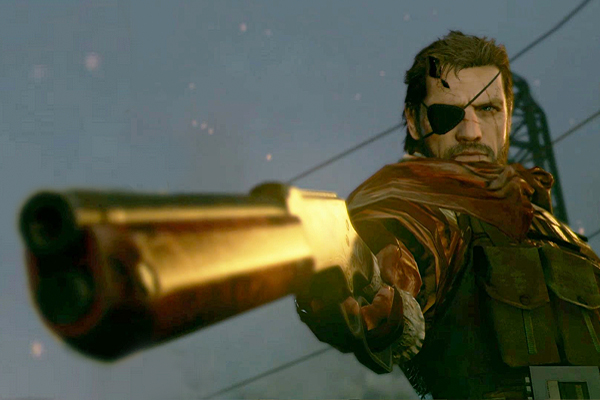
See what I mean about modern games getting it in the neck far more than anything in the past few decades? Hideo Kojima's controversial farewell to the MGS saga is one that'll be dissected and talked about for years to come, mainly because of the sheer amount of content that's been verified as cut from the final product. The Case For: It's an impeccably well-playing experience. Everything from the base animation of running and climbing to busting out all sorts of crafted items, weapons and companion animations is flawless. Absolutely flawless. MGS V is the culmination of every experimental thought and game mechanic Kojima put in the preceding titles, and is a gorgeously inviting sandbox because of it. The Case Against: The story is just flat-out not there. The whole point of MGS V was to bridge the gap between how Snake goes from being a legendary soldier at the close of Snake Eater/Peace Walker, and into the tyrannical 'mwa-ha-ha'ing villain of the original games. Many scenes from the initial trailers were cut entirely, as were various levels and even the game's own last mission. As such, the 'ending' comes out of nowhere as a plot-reveal rework of an older mission with a different cutscene tacked on the end. It may play well, but with such a haphazard approach to narrative and Snake himself being randomly mute throughout, it just doesn't hold together. My Take: I loved it. The plot itself is definitely far more interpretational than every other MGS, but that only factors into Kojima giving fans what he thought they wanted by prioritising gameplay over cutscenes. The missing final mission does leave a gaping whole in the game's logic, and you do have to make some leaps to connect the dots in its wake, but as for the final twist and the ramifications it has for breaking the fourth wall and directly inserting you into the narrative, it's spectacular.

7. The Last Of Us

Following two now-legendary platforming series' and one blockbuster action franchise, Naughty Dog turned their hand to a far more emotionally-heavy, introspective tale about two people struggling to connect amidst a zombie apocalypse. It's been called gaming's 'Citizen Kane moment', hoovered up more awards than I could list, and remains the critical highpoint for gaming as a medium. The Case For: Above all, the relationship between Joel and Ellie is just so spot on. The big reason you'll always get people recommending TLoU is for its stunningly impactful ending, alongside how it frames the questions of what we'd do for our loved ones under certain live-or-die circumstances. Far too many games used zombie apocalypses as great big gore-fests, but Naughty Dog reigned that in and knew exactly how to use it as a backdrop for one of the most thought-provoking titles of all time. The Case Against: Despite its lofty ambitions and being told you'd be taking part in a constantly engaging, heartstring-puller of an experience, the reality was spending most of your time traversing the ruined wasteland by setting up ladders, slowly moving crates, completing boring environmental puzzles and taking part in very basic third-person combat. People only ever talk about TLoU's cutscenes and the character development within, because we only played the game to get from one to the next. My Take: It's not what I've ranked as the Greatest Game of All Time (that'd be Red Dead Redemption), but The Last of Us for me, transcends gaming. The relationship you see build between both characters is built on some of the best acting performances and character portrayals seen thus far. Environments are gorgeous, you'll empathise with Joel just as much as Ellie, the story's subversion of its face-value elements is genius, and when all's said and done every inch of it is crafted by a development team at the absolute top of their game.

6. Grand Theft Auto IV

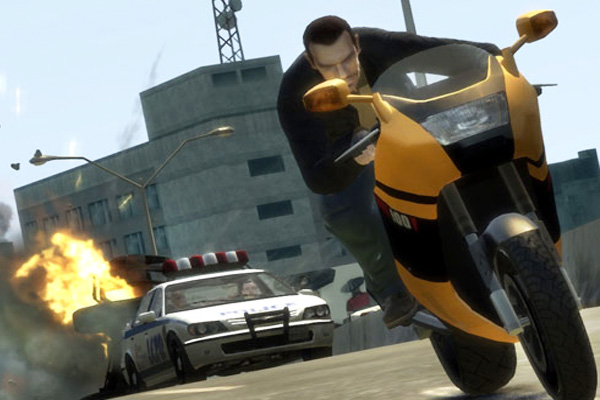
After setting such a high bar for themselves with GTA's III, Vice City and San Andreas, Rockstar started drip-feeding pictures and footage of their return to New York City; one that was set to show the pursuit of the American Dream from the eyes of one Niko Bellic, a Russian immigrant looking for work. The Case For: Rockstar had used the same game engine for Vice City and San Andreas that was initially built for GTA III, and it showed. For IV, they constructed the physics-heavy RAGE engine, allowing you to do everything from blow ragdoll'ing cops to kingdom come, to stunt cars off ramps and send helicopters careening into gangster hideouts. It was the same old GTA in many respects, with a far more grownup and mature story giving your actions more weight than ever before. The Case Against: The driving was just impossible to master. As vehicles skidded out at every opportunity, you started to notice that Niko simply wasn't anything close to the enigmatic personas we'd grown accustomed to from the last two games in the series, and ultimately his dreary outlook outlook on life transcended into every aspect of the world, draining it of what was once a series that revelled in characterful anarchism. My Take: Nothing here took hold for me. The driving could be okay in a Driver-kinda way, as you burned off around corners in increasingly wide arcs, but Niko's personality didn't make me want to see his story through. For all the work Rockstar had done in making IV feel like a step up physics-wise, there weren't anywhere near enough opportunities to show what the engine could do, instead you were forced to endure the same old mission structures time and time as though nothing had really changed.

5. Halo 5: Guardians

Microsoft needed a big win for the Xbox One in 2015, and they'd pretty much get it through Halo 5, 343 Industries' second take on continuing where Bungie left off. Sales have been incredibly high, beating the multi-platform Assassin's Creed: Syndicate to claim the top spot for multiple weeks, despite Halo itself being Xbox One exclusive. The Case For: 343 have made some major strides with the core gameplay, keeping its immaculate signature feel, but taking some massive risks to show there's life in the old girl yet. Ground-pounds, shoulder-charges, boost-slides and universal down-crosshair aiming all refine the storied series and make it the premiere shooter of not only 2015, but the generation overall. The Case Against: The single-player campaign is strangely empty. For all Microsoft did to promote Guardians as 'the true story' behind why Master Chief and newcomer Spartan Locke didn't get on, the actual story isn't about that whatsoever. Like Batman: Arkham Knight, we were perhaps intentionally lied to for the sake of what's the real focus, but ultimately that feels too misleading. There's also the introduction of microtransactions gating weapons and vehicles behind a collectible card system (called the REQ system) you can pay for in the Warzone mode. All abilities are unlocked through progression eventually, but the very existence of tying in a real-world cash element cheapens the worth of what's there regardless. My Take: The REQ system only encourages experimentation and forces you to change up your tactics to try different loadouts, so that's never been an issue. For me, it's just the fact that the story wasn't even remotely about the thing we'd been told about for months on end. The new gameplay changes are fantastic, Warzone multiplayer combines Battlefield's zone-capture with MMO-style point-gathering by slaying A.I. enemies to great effect, and the single player is still a great ride, yet on that's considerably undercooked narratively.

4. Bioshock: Infinite

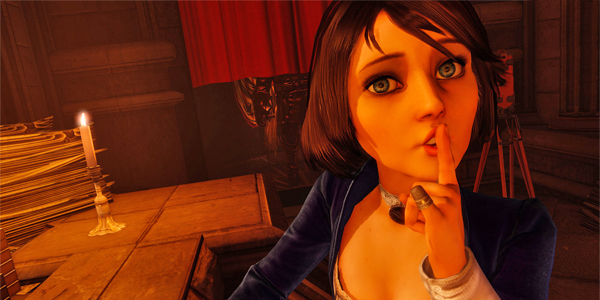
After one phenomenal entry and a sequel that almost went by without the barest whiff of interest - despite being pretty awesome - Bioshock returned by upending its underwater ways and taking to the clouds. The result was a title that was advertised to have a few more features than it actually could account for, yet still got a monumental amount of praise. The Case For: Infinite's portrayal of a city taking to the clouds and living by its own rules is an astonishingly original one; first for its jaw-dropping aesthetic and architecture, but also for how society itself has warped and changed without any global conscious to keep it in check. Plot-twists are plentiful and your interactions with young Elizabeth as you attempt to save her are endearing and relatable on a human level, leading to one hell of a final scene that'll have you scratching your head for days. The Case Against: Sadly the combat just doesn't feel good. Not only are you forever squeezing the trigger and only occasionally using some extra powers, but the ranking system for your weapons has barely any effect or variety. The city may look gorgeous and feel in-depth, but a lot of the reasoning behind why people even have these body-altering tonics (named Vigors) makes little sense, as oppose to the original setting of Rapture where a world of geniuses-gone-mad meant anything was possible. My Take: Although I really wanted to like Infinite, I thought every aspect of its narrative was severely underdeveloped. Booker accepts his mission and the flying city a little too easily, the relationship with Elizabeth felt way too forced to be believable, when you finally have a showdown with Comstock it's little more than an in-engine cutscene - and that terrible gunplay only brought about frustration over time. Give me the original Bioshock, or System Shock, any day.

3. Call Of Duty - The Post-Ghosts Future Direction
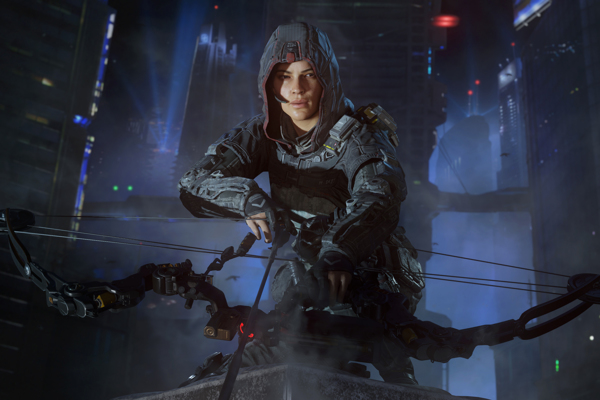
We all had a hell of a lot of love for Call of Duty at a time. Modern Warfare's completely revolutionary take on FPS multiplayer was so enjoyable and so addictive, it amassed enough goodwill for Activision to cash in on it for another six years. Until COD: Ghosts, that is. After seeing the formula get increasingly cranky, Ghosts was the tipping point; a game sold off the back of motion-captured dogs and the ability to slide into cover (woohoo!), as the developers knew they only had scraps left, yet were forced to sell you a Sunday roast with all the trimmings. The Case For: Although the world doesn't like to admit it, Call of Duty is a phenomenally well-produced and well-playing game. Advanced Warfare could've been the nail in the coffin had new guys Sledgehammer not knocked it out the park. Gunplay is tight and responsive, set-pieces are just as interactive as they need to be, and with Black Ops 3 continuing to add game mechanics and change the core feel of motion, there's a lot to like. The Case Against: Like with Assassin's Creed, COD has just gotten too far away from what the initial appeal was. The Advanced Warfare twist now means everything has to take place in increasingly distant futures, and while you can now boost and ground-pound out the sky, it's still too much of the same old same old when you actually pull the trigger. My Take: I'll admit, Ghosts put me off too - it's the first time since Modern Warfare 3 where it literally felt like an entry was being totally phoned in. But honestly, Black Ops 3 has completely blown me away so far. Its introductory sequence alone was like playing something as relentless as that one-take tracking shot from The Avengers, and that's a feeling no game has ever come close to. COD and its developers know exactly how much money they're playing with and exactly where to put it. When it's not trying, COD is as rote and boring as its reputation allows, but when it's firing on all cylinders and you're along for the ride, there's nothing better.

2. Destiny

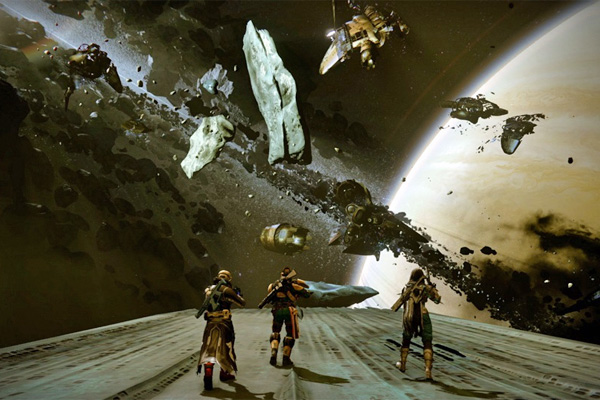
How to split a room in one word? "Destiny". Bungie's Halo-followup has since had a 'tell all' investigation from Kotaku, where we found out all about how the original pitch for the game was scrapped too close to release, resulting in 2014's product that although playing well, didn't live up to expectations whatsoever. The Case For: 'The guns fire well' is what any Destiny fan will tell you. And they do, the handful of base gun templates you can get your hands on are responsive and completely addictive, powering you through repeating missions and raids to see what other loot will drop and what else you can take out next time round. It's literally all about the gunplay, but Bungie have fixed the story stuff with The Taken King, and Destiny now is a far more robust beast than it was back at launch. The Case Against: Come on. We each paid $/£60 for an empty filing cabinet of a game; a structure to slowly be filled in over time, but ultimately worthless without those contents, many of which are still missing. Destiny's story was nonexistent at launch, its cutscenes and nomenclature made no sense, and the fact it was rushed out the door with not even a hint of what was really going on is still absolutely ridiculous. My Take: I did enjoy Destiny's combat and multiplayer while it lasted, but you just can't deny how out of place all the sporadic narrative segments feel. Since launch, the game has had multiple 'complete overhauls' - one removing Peter Dinklage's voice as the robot Ghost after overwhelmingly negative feedback - and it's true, the Taken King does offer something closer to what they set out to do. Case in point though? We were sold something that only just functioned on the most base level, with every other aspect of the game being a substantial disappointment, or something that was removed under the guise of selling it back to fans later down the line.

1. Fallout 4

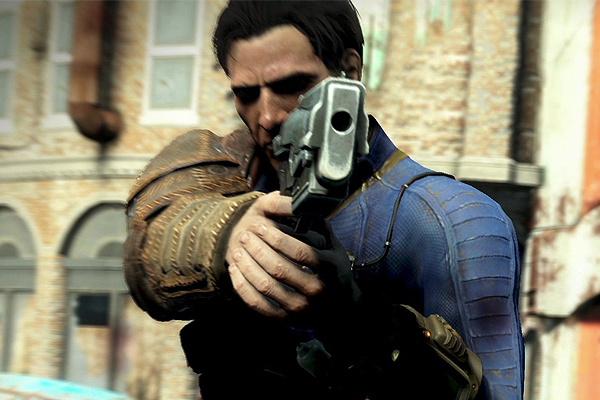
With Bethesda electing to keep Fallout 4 under wraps until they were only doing final bug-testing, it emerged fully-formed out of the ether back at E3 in June, 2015, only for the run-up to release being filled with hardly any glimpses of it in action. Now it's out fans are... divided, to say the least, and as the days since November 10th continue to roll by, Fallout 4's reception needle edges closer and closer towards 'Meh' from many very vocal players, as the critics sing its praises from the rooftops. The Case For: No one makes RPGs quite like Bethesda. They've proven themselves to be the absolute masters of the craft in Western markets, and Fallout 4 is a brilliantly interwoven system of loot-grinding, settlement-building and narrative payoff that encourages exploration, but rewards you considerably at every turn. The Case Against: It's less Fallout 4 and more Fallout 3.5. There's a distinct feeling of age when you're piloting your character around the Wasteland, and that comes from Bethesda reusing the same game engine as Skyrim - complete with all the animation quirks, bugs and crippling glitches that game had. My Take: There's definitely something weird about waiting so long for a game to come out - and noting the massive leap from Oblivion to Skyrim - only for Fallout 4 to feel so familiar. Going directly from 3 to 4 in the space of a few days really highlights just how much hasn't changed, and although the new gunplay does fix one of the worst parts about the older experience, there's hardly anything you could sell Fallout 4 on that 3 didn't already nail back in 2008. Let us know your thoughts on any of these games in the comments, and please create an account if you'd like to write for the site!

In this post: 
Fallout 4
 
Posted On: 
Gaming Editor
Gaming Editor

WhatCulture's Head of Gaming.