10 More Things Today's Gamers Wouldn’t Understand
 Please Note: This is a sequel article to a previous What Culture classic written by Rob Beames. You should check that out article first before reading this one! I dont like the phrase gamer, because it reminds me of some dude calling himself a musician because he plays crappy Led Zeppelin covers in his bedroom. I also dont like the phrase Wouldnt Understand because its condescending and inaccurate. That being said, I think it's important that the current generation of gamers understand the roots of the industry they're giving millions of dollars to. Just like that guy playing guitar in his room, if you don't make an effort to understand the history of the material, you're doing a disservice to those who pioneered the craft. Here are ten trends in modern gaming that are problematic, flawed, and detrimental to the video game environment. As a point of reference, I would like to mention that I was born in mid-1990, and my first memory of playing a video game involved beating goons over the head with trash cans in River City Ransom on an NES emulator in 1996.

10. Health Didn't Always Regenerate
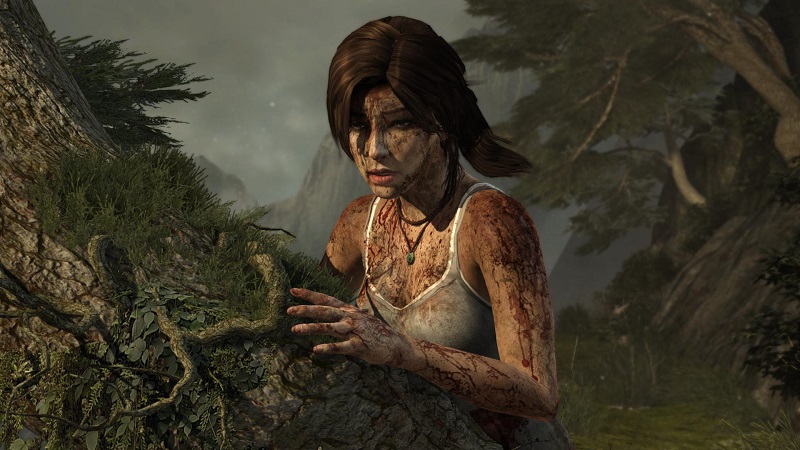

9. Great Graphics Can't Fix Weak Gameplay

8. Hype Can Be A Bad Thing
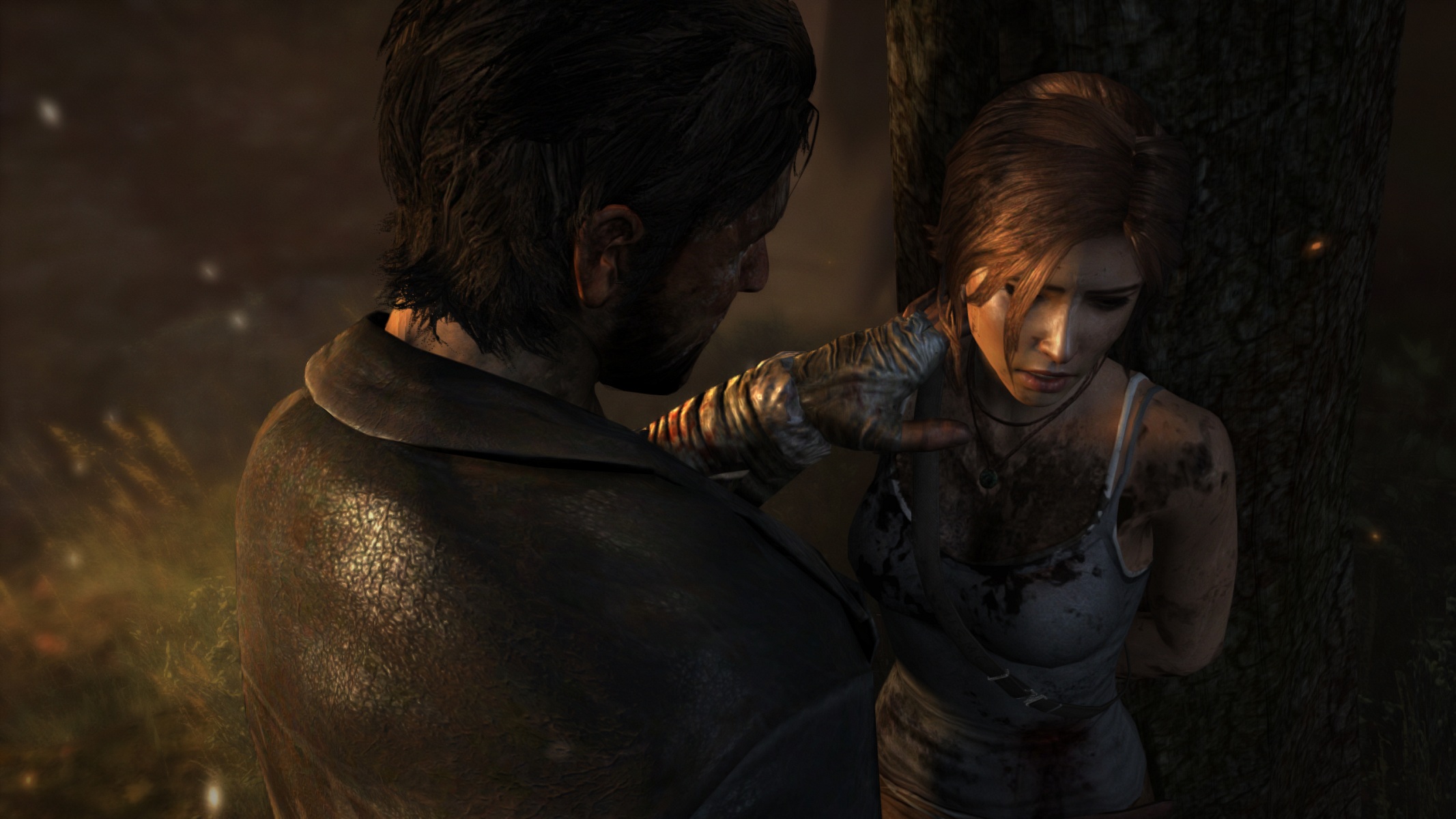
 I like to pretend I have an eclectic, esoteric taste in video games. But that's a lie. For every obscure video game I have on my shelf, there's a massively successful heavy hitter next to it. I mean, Katamari Damacy is sandwiched in between Grand Theft Auto and Portal 2, for Pete's sake. I'm a victim of hype just like anyone else. Sometimes I end up really liking the game (Bioshock Infinite, Borderlands 2), but most of the time it's $60 thrown out the window (Marvel vs. Capcom 3, Resident Evil 6). The problem with hyping up a video game is that for every budget-busting, live action TV advertisement, people ascribe value to that product. "Wow," they think, "this game is everywhere. It must be really awesome!". This isn't always the case. Remember Duke Nukem Forever? People waited more than a decade for this game, and as the release date drew closer, he had full-spread magazine ads, life-sized cardboard cutouts, and commercials on primetime television. But the game itself didn't even come close to living up to the expectations fans had drawn for it based on the publicity generated by ad campaigns. The new Tomb Raider fell victim to this same over-hype/under-performance situation that killed Duke Nukem. It was critically acclaimed and moved 3.4 million units during the first month of its release, giving developer Crystal Dynamics their most profitable launch in the history of the company. And yet, it failed to meet the projected 5 million units. Predicting a huge quarterly loss, Yoichi Wada resigned as the CEO of Square Enix, a position he had held for 13 years. In essence, hype is a toss up. It can either drum up excitement to boost sales or create expectations that simply can't be lived up to. As the old saying goes, "Any publicity is good publicity". Well, yeah, I guess. But watch how long it takes to alienate a fanbase when you tell them you're selling them a diamond when it turns out to be a pile of crap.

7. Games Don't Need To Be Hundreds Of Hours Long
 I think I played Fallout 3 and Fallout: New Vegas for a combined total of 400 hours or so. I logged another 100 in Skyrim. That's a downright embarrassing amount of time to spend doing something that's fundamentally useless. While I was playing them, a correlation occurred in my mind that went something like this: Ive spent so much time playing these games, they must be in my Top 5 favorite games of all time! Only after I had distanced myself from those games did I realize that in reality, those games really werent going to displace Skies of Arcadia or EarthBound in my Top 5. The only reason I had spent so many hours in-game is because Im a neurotic completionist, and I wouldnt stop until Id found every damn bobby pin in all of New Vegas. I wasnt playing because I was genuinely enjoying myself, but rather just because it was there. Its like a fat guy at a restaurant who was full 6 or 7 bites ago, but feels the compulsion to clean his plate because theres still food on it, even though hes damaging his body.


6. DLC Can Be A Waste Of Time For Developers And Consumers
 Believe it or not, games used to be released without any additional content. Developers didn't obsess over releasing additional levels or alternate costumes. Players were grateful and satisfied by the singular product that was produced. Now dont get me wrong, the compulsion to say That thing you gave me was awesome, and I want more! is perfectly logical, but the fact that game companies are now expected to release scores of supplemental content is a huge stigma for modern gaming.

A logical retort to this is, If you dont like DLC, then dont buy it! and I would say, Okay then, I wont. But sometimes, and Capcom knows whats coming, the content that people are paying money for and downloading is already on the disc itself. Youre not actually receiving new content, but rather youre paying 20 bucks for a tiny little file that allows you access to data that is already stored within the base game that you've already bought. Thats like spending $200,000 on a house, and then spending $100,000 on the keys to get in the door. It's a sinister way of squeezing money out of people that don't know better.

5. Games Were Actually Released When They Were Finished
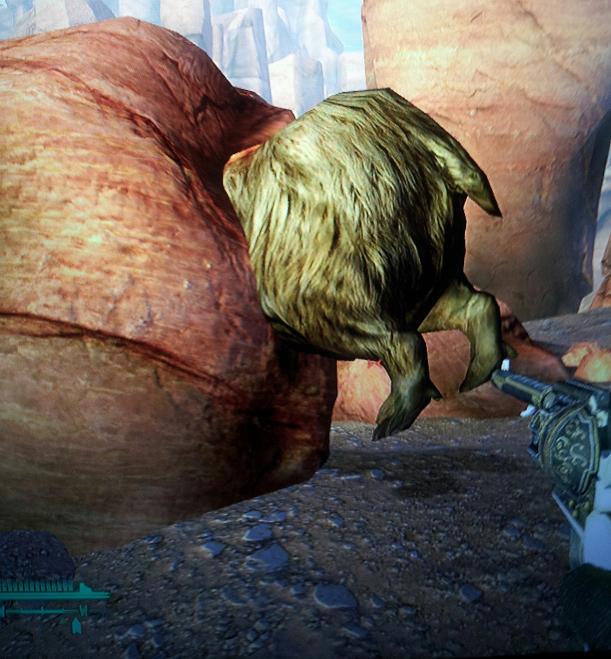
Half-Life 2 is one of my favorite games of all time. The gameplay is perfectly balanced, the shooting is fun, the puzzles are stimulating, and you can basically pick your own immersion level as you play through the game. There was a six-year gap between the original Half-Life and the acclaimed sequel, and despite a complicated console port and source code leak during development, Valve worked tirelessly to create a quality product that would be hailed by some as the greatest video game ever made. I didn't mind the wait, and I'm looking forward to the next game in the series. Fast forward to 2012. I'm playing through the verdant world of Skyrim on the Xbox 360. Sure, some NPCs spawn inside rocks and wooly mammoths might inexplicably fly straight up into the air, but I can understand why an established developer would want to release a huge game with a few glitches and fix them later. However, after a certain update through Xbox Live, my game stopped...working. It froze immediately after I booted it up. I spent hours researching fixes and workarounds, but to no avail. All I could to do was wait for the next update to come down the pipes and fix my problem, which it did. After a month.
4. Voiceovers Are A Blessing And A Curse
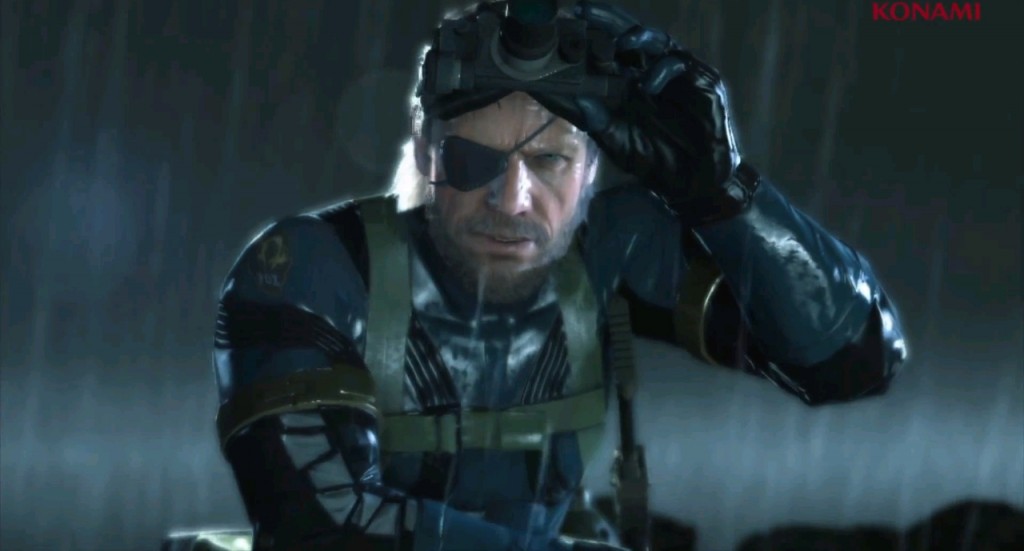
http://www.youtube.com/watch?v=rj8nHy6aA6E Modern gamers love their voiceovers, and why shouldn't they? You've probably played video games in an era were text boxes were king, and "voiceovers" were limited to Link screaming "Hyaaa!" over and over again (a condition that he has yet to overcome. I hope he never does). Games have come a long way since then, and voiceovers are becoming more and more prevalent in the modern gaming environment. Conceptually, this is a good thing, because it means you don't have to strain your tiny little brain by reading text. But sometimes, voiceovers cause just as many problems as they solve. Video games are meant to be an immersive experience. Ideally, you would forget about the Cheetos dust on your shirt and your mounting college loan debts for a few brief, glimmering moments and become Booker DeWiit, cynical trans-dimensional face-shredding extraordinaire! The real world melted away while you focused on getting Elizabeth out of Columbia in the most complicated way possible. The problem is that Booker and Elizabeth like to have conversations about quantum physics in the midst of a vicious firefight, and if you've ever tried to have a debate while automatic weapons are discharging from every direction, you'd know that it's a little difficult to hear. Now, let me be clear, in modern times, voiceovers are a huge part of characterization, and if Booker and Elizabeth didn't actually speak, the game would feel hollow. I'm glad most games have voiceovers, but it's the actual implementation of voiceovers that I feel can be improved. I have to turn on subtitles because I can't freaking hear the characters as they ponder morality in the middle of a warzone. Voice quality is also an issue. I'm a huge fan of the Metal Gear series, but Raiden's voice actor Quinton Flynn could not be more irritating. Sure, iffy writing can be a tough hurdle to clear, but in Metal Gear Solid 4, his performance is so grating and canned that I wanted Snake to put him in a sleeper hold and stuff him in a locker until he promised to be more convincing. The Elder Scrolls series is also a repeat offender, but for a different reason. In Skyrim, it feels like Bethesda only used 5 different voice actors. This is an issue because you can actually speak to a citizen about killing bandit leader, and then when you confront the villain, you find that he sounds exactly like the man that you received the mission from.

3. Gathering Resources Used To Be A Challenge
This is related to the first point I made about health regeneration. If I were to say to the frothing masses of gamers, Games arent difficult anymore, Im sure someone would bring up Demons Souls and how ridiculously impossible it is. Yes, its a tough game to complete, but its tough in the same way that bending a crowbar by repeatedly hitting yourself in the testicles is tough; it just leaves you frustrated and you wonder why youre even doing it in the first place. My point is that modern gamers are coddled by constant health, ammo, and mana pickups to ever have to worry about dying, or being inconvenienced in any way, really. The first Bioshock suffered from this imbalance. I was tripping over medkits every ten feet, and if I needed to use them all during a fight, I wasnt worried because A) If I lived, I could just walk down the hall or to a vending machine and get fully stocked again, and B) If I died, I would be revived at no cost or penalty. This problem plagues most shooters and adventure games, since every enemy you kill drops a weapon that provides you with a full magazine. This saturation of resources kills the challenge of a game, and the unbalanced gameplay that pervades most new releases is a far cry from the old-school, hard-scrabble games that established the industry.
2. Local Multiplayer Is A Lost Art
 Some of my most cherished childhood memories occurred in a tiny corner of a television screen. Back in the 90s and early 2000s, pretty much every game that was released contained some sort of local multiplayer aspect, even when it didnt make any sense. For example, the single-player campaign in Donkey Kong 64 revolved around the eponymous hero freeing his captive friends and saving his home. But the 4-player splitscreen multiplayer mode pitted each of the plucky primates against each other in a massive arena to fight to the death. Logical? No. Fun? Absolutely. Now that all consoles have online connectivity, the concept of local splitscreen multiplayer has largely fallen by the wayside. That's not to say that all developers have abandoned splitscreen modes, because Halo and Call of Duty have actually done a great job of keeping local multiplayer alive. I'm saying that the splitscreen multiplayer mode is slowly dying, which is sad because it's infinitely more enjoyable to have someone else in the room sharing the same experience than to listen to racist, homophobic 10-year olds rant about having sex with my mother.


10. There's A Fine Line Between "Innovation" And "Gimmick"
 An innovation is a groundbreaking concept that usually has never been seen before. A gimmick is a selling point that is highlighted by a producer in order to generate interest in a product. Basically, an innovation is what made games like Journey so revolutionary and a gimmick is what single-handedly destroyed the reputation of Sonic the Hedgehog. Yeah, the Kinect is a cool gadget, but I can't be immersed in a video game while moving all my furniture out of the way and flailing around like a spastic gremlin. The Kinect is a gimmick, and gimmicks are a solution to a problem that doesn't exist. Im not going to dust off my soapbox and wax poetic about the merits of the indie game genre, but I will say that being a part of a smaller, less capitalistic development team naturally leads to more organic and inventive ideas (Katamari Damacy, Ikaruga, Rez, etc).

Gigantic gold-plated franchises usually get stale after a while, which is usually when gimmicks are introduced as a means to stimulate bored fans, and get the attention of new ones. Tony Hawk did it with Ride, which came with a plastic skateboard peripheral loaded with low-quality accelerometers. The Nintendo did it with the Wii U, which features a touchscreen on the mammoth-sized controller that allowed you to look at inventory menus on a controller instead of a TV. And dont even get me started with zombies.
Want to play a tired tactical warfare FPS with zombies? Get Call of Duty. Want to play as an ex-mercenary cowboy who has to rescue his familyand then fight zombies? Get Red Dead Redemption. Even the first Borderlands, which I consider to be the best thing to happen to first-person shooters in ten years, had a zombie-related DLC. Modern gamers need to understand that innovation, not gimmicks, paves the way for a truly great experience, one that sticks in your memory and changes your perspective of what a video game can truly be. A player needs that moment of Whoa, Ive never seen that before if the game is going to stand out in a homogenous market.
