10 Obvious Video Game Features We Can't Believe Don't Exist
Are video games ever going to have holograms?

The release of the Nintendo Wii was ground-breaking due to its motion controls. This mechanic was so revolutionary that it felt crazy it took so long for a system to implement it into their hardware.
But here's the thing; motion controls have existed since 1983! The concept was first used by two consoles; the Atari 2600 and the Commodore. However, the controls sucked. It took 23 years before motion controls were precise enough to be used as a selling point for a gaming system.
But there are some concepts that seem far simpler than motion controls, and yet they are absent from modern gaming. We live in world with functioning VR, and yet pausing in a game's cutscene is still not a universal feature. We have controllers that can tap into the magnetosphere of the Earth, but we still can't use a keyboard for a console without hacking.
Now, some of these features do exist in a handful of games, but this just makes it all the more bewildering that they are not mainstream. With technology having evolved lightyears in the last few decades, it seems surreal that the features in this list are still not a universal part of gaming.
10. Welcome Back Feature

One of the most frustrating things about playing an open world game is forgetting where you are supposed to go. You may have stopped playing for a few weeks so when you come back to the game, you realise you you are clueless about your destination or objective. You might have even forgotten what the controls are!
This can get so frustrating, you may have to start again. Modern open world games can take over fifty hours to complete, meaning the chances of getting lost or forgetting where to go are far more likely.
A simple way around this dilemma is a Welcome Back Feature. This option would allow a brief recap of the story or controls.
The Legend of Zelda: Breath of the Wild uses a mechanic called The Hero's Path that shows the chronological path of your character from the very beginning to where he is now. You can access this on the map to see where you have already been and, more importantly, where you have yet to explore. A mechanic this helpful should be a necessity for every open world game.
9. Option For Adding Mouse And Keyboard

Many PC gamers are so accustomed to using a keyboard and mouse that they wish they could use the same set-up for consoles. Now, implementing keyboard controls for a console can be done through hacking, but there is no official method. If you are caught using an unofficial keyboard online for a PS4 game, you can be banned.
And that's the point. If some players are so eager to play a system with a keyboard that they are willing to hack it, that proves there is a market for it.
Obviously, this idea wouldn't be universal for every game or system. At the moment, keyboards are incompatible with the Nintendo Switch. Nevertheless, it would be nice to have the option. Considering how Xbox One runs on software built off the back of Windows, there's no reason why players shouldn't be able to use PC peripherals.
Microsoft have been talking about utilising a keyboard and mouse for their systems since 2017 so this will hopefully be incorporated into the Xbox One's successor. If it does well, keyboards may be implemented onto other consoles.
8. Interaction With Every Object

When you are exploring in a game, some objects can be moved, picked up, or destroyed while others are set and cannot be interacted with. But wouldn't it be amazing if you could interact with every single object in a game?
At first, you might think this idea is unfeasible since it would be time-consuming and expensive.
But that doesn't mean it's impossible. In Red Faction: Guerrilla, you can blow up EVERYTHING! That is not an exaggeration. This game uses an engine called Geo-Mod 2.0, allowing the player to destroy any object.
In the game, houses and skyscrapers are made of thousands upon thousands of bricks - just like a real building - and you can interact with every single one of these bricks. Because of this, there is no "set" animation when a structure crumbles, making it far more satisfying when the player unleashes hell upon one of these buildings.
Sadly, the developing company, Volition, was absorbed into Deep Silver in 2013, seemingly ending the Red Faction series. But just because the franchise is no more doesn't mean this feature can't be incorporated into other games.
7. Autosave When Battery Is Low

Imagine you are playing a game on the Nintendo Switch when the console warns you that your battery is nearly dead. You are out in the open, so you don't have a chance to charge. Your best bet is to get to a save point as soon as possible. For most games, you can either save your progress voluntarily, or it will automatically happen at key moments, like when your character enters a new area or picks up a crucial item.
But in some games, especially RPGs, you can only save your progress by reaching a specific object or location. One of the most frustrating moments in gaming is when the battery dies moments before you are about to save. This has happened to every gamer at some point, and you feel like tearing your hair out when you realise you have lost hours of progress.
So the question is this; why don't games automatically save just before the console dies? Obviously, this mechanic would only be applicable to certain types of games, but it is definitely a feature that gamers will appreciate.
6. Toggle God Mode

Some levels or bosses are so difficult, they have become legendary. Grim Matchstick in Cuphead is a nightmare. Has anyone actually ever completed the Water Dam segment in Teenage Mutant Ninja Turtles? And don't get me started on the bloody Turbo Tunnel in Battletoads. These sections are so tough, they make the rest of the game look like a walk in the park by comparison.
The problem with levels or bosses like this is they ruin the replay value of a game. Do you really want to play Crash Bandicoot again knowing it took over a hundred tries to complete the infamous High Road course? Do you want to give Final Fantasy X another go, knowing that Seymour Flux is one of the cheapest bosses in the franchise?
But there's an easy fix for this problem. Games should have a Toggle God Mode that makes your character invincible at the press of a button.
Now, this will obviously take away the challenge, meaning the game won't be as fun. That's why this feature should only be available after you completed the game.
5. Pausing Or Fast-Forwarding Cut-Scenes

There are a lot of features we want for games that still haven't been universally implemented because the mechanics would be too difficult. Experiencing virtual reality like Ready Player One would be a dream come true - but it's unrealistic.
But why can't a player pause a game during a cutscene? I mean, how difficult can that be?
If you press a button during a cutscene, either nothing will happen or it will skip to the next section. Because games are getting more cinematic, cutscenes are more important than ever as vital exposition is given and twists are revealed.
What do you do if you're watching a crucial cutscene when your phone rings or there's a knock on the door? Because inconveniences like this can cause the player to miss key moments in a cutscene, there should be a control to rewind so you can watch a certain section again.
Also, adding a fast-forward option would help with the replay value. When you are replaying a game, watching the same cutscenes over and over can be tedious for even the most hardcore players.
4. Adapting Bosses
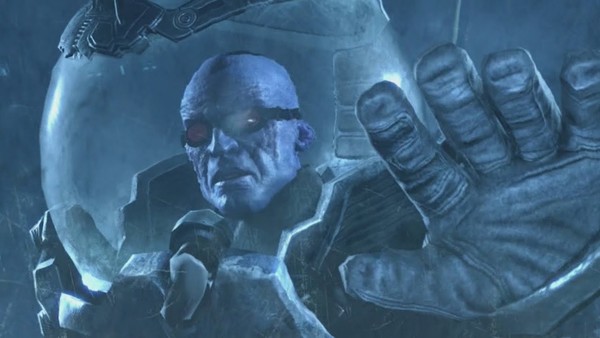
In most games, there are usually one or two main strategies to defeat a boss. The boss may adjust their strategy at some point in battle, forcing the player to find a new tactic to take them down.
But Mister Freeze in Batman: Arkham City takes it to a whole new level. Although there are twelve different methods to stun him, you can only use each method once. If you hide in the grate, he will rip it open. If you blast him with an EM-pulse, he will deactivate it. You can't beat him by doing the same thing over and over.
But after this ingenious battle, this concept is never used again for the rest of the game. The remaining bosses go back to having Batman performing the same one or two strategies to beat them. Why did the studio never make an adapting boss again for the rest of the franchise? Why don't ALL games do this?
A boss battle is supposed to be an epic moment for the player to implement everything they have learned up until that point. However, a boss feels anticlimactic if all you have to do to beat them is perform the same action repeatedly.
3. Classic Game Mods

Super Mario Maker was a fantasy come to life, since gamers were able to create their own Mario levels. Ironically, the program to make this game wasn’t originally intended to be used for players. It was going to be used as a tool to teach new developers how to make Mario levels. The developers thought it was so much fun, they agreed to release it as a game.
And yet, there is no talk of using this program for any other franchise. Imagine creating your own Pac-Man courses. Think of how awesome it would be to create your own Sonic the Hedgehog levels. In the remake of The Legend of Zelda: Link's Awakening, the player can create their own dungeons, proving a Legend of Zelda Maker game is possible.
Obviously, a program like this would be too complex for 3D games but it wouldn't be too taxing to recreate games with 8-bit or 16-bit graphics. The sales of the Mario Maker series shows this is a money-cow waiting to be milked.
But that's not the only feature of Super Mario Maker that should be made universal...
2. Insert Personalised Audio Files
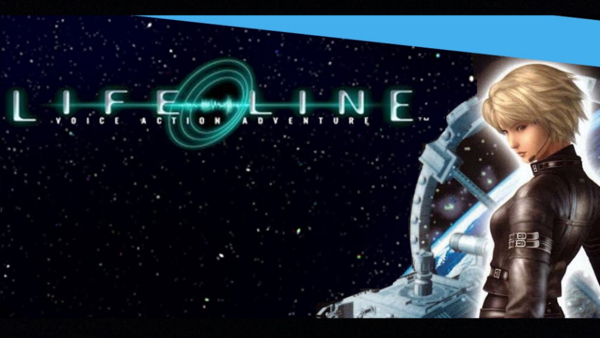
Lifeline for the PS2 was the one of the first games where the player had to move their character around through voice commands. To progress through, you need to tell your character to open doors, pick up items, or shoot enemies. Because voice command mechanics have proven to be imprecise on several systems, this type of gameplay isn't commonplace.
But there is another way the player can use their voice to enjoy games. In Super Mario Maker, you can customise your own sound effects by speaking into the controller's microphone. The possibilities of this mechanic are endless. When Mario stomps a Goomba, kicks a Koopa Troopa, or collects a coin, you can edit the sound effect to anything of your choosing.
Imagine how inventive it would be to have this feature in more games? Like Mario Maker, this feature would serve as a gimmick rather than something necessary to move the plot forward.
Nevertheless, it would be amazing and hilarious playing a game like Call of Duty or Final Fantasy, where you could program certain characters to say anything you wish.
1. Holograms

There is one gizmo that science-fiction has promised would be a part of the future: holograms. In sci-fi stories like Minority Report, Back to the Future II, and Star Trek, holograms are the norm.
Now, don't get me wrong. Holograms have existed since the 1960s. Nowadays, we have deceased singers like Tupac Shakur and Michael Jackson performing concerts as holograms. Unfortunately, no one has been able to implement this technology for gaming.
Although this would be the biggest leap forward for video games, it's easier said than done. Outputting peripheral images while making the texture sharp is difficult and expensive. Microsoft patented holographic technology, but it has proven so time-consuming that they have yet to incorporate it into one single game.
But that's not the only hurdle. If holographic games were available tomorrow, there's no way they could be sold for a reasonable price and make a profit. The tech might only work with a specific type of television. If these TVs don't sell, it could collapse the hologram game industry before it's out of the starting gate.
Holograms may be the most desired concept for gaming, but it's still a long way away.
Watch Next
Can You Handle Our Insanely Hard Video Game Quiz?
