10 Video Games That Tried To Change The Industry Forever (And Failed)
The bigger they are...

No matter the medium, every creative visionary (or money-hungry company, for that matter) is looking to create 'the next big thing'. Though there is success to be had in sticking to tried-and-tested formulas and being the very best at something people already know, the only way to become a proper phenomenon is to reinvent the wheel, and give the people something they've never seen before.
This is especially true in the world of video games, where technology is constantly evolving and creating the space for inventive studios to deliver an experience unlike anything else.
Obviously, this isn't easy to pull off. Doing something original is hard enough, and doing something original that's also good is nigh-on impossible. Consequently, for every Call of Duty or Grand Theft Auto, there's 10 Duke Nukem Forevers taking up space on the shelf.
They might not even be bad games like that (in fact, a lot on this list are far from it), but when it came to their ambitions of changing the industry forever, all of the following undeniably fell short of the mark.
10. DayZ

Without a doubt, DayZ was one of my most anticipated games of all time. What started out as a mod for ARMA 2, the survival shooter offered one of the most unique multiplayer suites ever, throwing a bunch of players into a zombie-infested open world and giving them a single life to make the most of.
It was rough around the edges, but that didn't matter because the concept was so tantalising. Spawning in, gathering weapons and making life-or-death decisions when coming into contact with other players offered an unbelievably tense gameplay loop, and hype only built as the project grew from a mod to a full game.
That's where the problems started though. When the title was an experiment, fans could brush off even the large issues, but when they put down money down for a game that looked like it would never leave early access, the enthusiasm slowly gave way.
By the time it actually released proper, other games like H1Z1 and PUBG innovated on its core ideas, and left DayZ in the dust to create the battle royale genre we know and love today.
9. The Quiet Man

It's easy to rip The Quiet Man to shreds. In hindsight, it was always going to be a Tommy Wiseau-level trainwreck, with questionable decisions ruining what's (on paper anyway) a rather inventive and noble pursuit.
The whole idea of The Quiet Man is that it tells the tale of a deaf protagonist, and in order to put players into his headspace, the vast majority of dialogue is muffled without subtitles, leaving the general plot to be pieced together through visuals.
It's a fascinating premise, and something video games as a medium are uniquely equipped to explore, but the problem is Square Enix's story was already pretty insane and out-there, and combined with confusing gameplay segments and head-scratchingly amateur live-action sequences, the whole thing ended up being a laughing stock.
Like Quantum Break before it, The Quiet Man proved that video games don't benefit from live-action scenes, and that the world isn't ready for whatever this mad plot had to offer.
8. Watch Dogs

Like a lot of entries on this list, Watch Dogs' reputation precedes it. The open-world actioner from Ubisoft was one of the first PS4 games fans ever saw, and its jaw-dropping visuals got everyone fantasising about what the next consoles from Microsoft and Sony would be capable of.
However, it turned out they wouldn't actually be capable of delivering what Ubisoft teased, and a major graphics downgrade debacle sank the new property at launch. That's not what made it a total disappointment though. What ultimately soured players was its failure to live up to the hacking gameplay that looked so inventive in the trailers.
Though Watch Dogs was a third-person shooter, the focus was always on the hacking. This wasn't a game about guns, but manipulating technology to create diversions, cause havoc, and take advantage of city blackouts. It was an incredibly contemporary mechanic, and looked like it was going to change how players interacted with video game worlds and the technology inside them.
In the final game, these mechanics were as shallow as a small puddle, and nowhere near revolutionised open world gameplay.
7. Alone In The Dark

Alone in the Dark 2008 is an extremely weird game. Pretty much nobody remembers it even happened, and yet the developers and publisher really thought they were onto a winner with this survival-horror reboot.
For one, the title eschewed convention and opted to frame its narrative like a TV show. Instead of levels, the game had episodes, which you could actually choose from in any order. If you wanted, you could skip right to the very end and see the final level, with a "previously on..." roundup playing before the episode kicked into gear.
I mean, there was no reason to, but the option was nice... I guess?
That was already unique, but its USP was the fire tech. Puzzles and gameplay all revolved around the admittedly lifelike (for the time) fire effects, and this element also took focus in pre-release trailers and hype videos.
The trouble was, the devs must have spent so much time getting the fire right that they didn't have time to craft a compelling game around it, while the TV framing didn't inspire other games to change up their storytelling either. The franchise itself disappeared after this reboot, being one of the many survival-horror casualties from the 2000s.
6. Crackdown 3

The reason Crackdown 3 is a constant staple on lists of disappointing games isn't because it's an outright terrible title (though it isn't great), but because it initially promised so much. Originally, this long-overdue sequel was going to show what Microsoft's cloud technology was capable of, giving players unprecedented access to city-wide destruction. The first trailers showed characters levelling entire cities, something other big releases simply didn't have the processing power to realise.
Of course, after multiple delays and no new news surrounding the game's cloud tech, it became clear that Microsoft's initial vision was little more than fantasy. When the sequel released, the destruction elements were limited to a multiplayer mode with a small slice of the city to play with, a far cry from the promise of the pre-release material.
Throw on top of that rote gameplay and an open-world formula that was already dated by the time the second game came out, and this disappointing threequel barely registered as a footnote on the Xbox One. If this was proof cloud technology was the future, the future ain't looking bright.
5. Shenmue
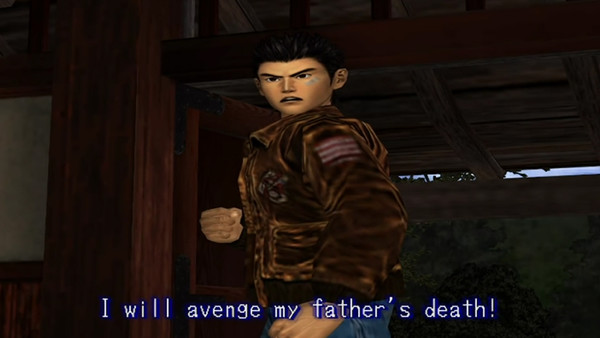
At this point, more people know about the story of Shenmue's development than have actually played Shenmue. The original two games were notorious flops, with budgets so high they rivalled top-tier games released today, decades later.
The 'problem', if you can call it that, was the simulation element. Though on paper Shenmue is a tale of revenge pursued via martial arts, the bulk of the game is spent living in the beautifully constructed world the devs created, and adhering to semi-realistic rules of everyday life.
You needed to drive forklifts, you needed to wait around until a shop opened to continue the story, and even the weather was modelled after real-life forecasts. This wasn't a world that you shaped, but one you simply existed in.
For a lot of people, that's exactly why they loved it, and Shenmue as a series has cultivated a die-hard fanbase. However, when you sink over $50 million into a project, you need more than the die-hard to support it, and sadly these hardcore systems put off the mainstream audience, and only the Yakuza franchise has really tried to mimic them since.
4. Spore

The concept at the heart of Spore is genius. The idea is that you play through the entire life of a single species, right from being single-cell organisms to the point where they're capable of space travel. It's kinda like a late-period Terrence Malick film, but somehow even more pretentious.
Like so many others on this list, Spore's "failure" isn't down to it being a terrible game or not doing something original, but because of the optics of its launch. Before release, the concept was enough to get players interested, and developer Will Wright (who also created The Sims) was eager to hype up how the final release would be the ultimate realistic game, and a grand simulation of life itself.
A game with this scope was never going to be as good as what players imagined in their head, especially back in 2008. Like No Man's Sky after it, the promises from the developers along with the imagination of players ultimately got far away from what Spore actually could deliver on, and when it came out it certainly made an impact, but not quite the one it was aiming for.
3. Fallout 76

Believe me when I say I take no pleasure in s*****g on Fallout 76. I was one of the few people who actually believed Bethesda could deliver a multiplayer game set in this universe back when it first launched, giving them the benefit of the doubt on the basis of their stellar track record. How foolish I continue to feel, then, in the wake of this never-ending trainwreck.
The thing is, the disappointment was felt so much because the idea at the heart of the game was genuinely promising: explore the world of Fallout without your friends, without sacrificing any of the core components you loved from Bethesda's other role-playing titles.
This should have been the game that proved you can have the quality storytelling and free-form exploration of a regular single-player RPG in a multiplayer environment, with the added secret sauce of dynamic PVP encounters. All it proved in the end, though, was that this compromised vision was better left to MMOs like The Elder Scrolls online.
2. Fable 2

It wouldn't be unfair to compare Peter Molyneux to a used car salesman. When he was in the game (of making, uh, games), the esteemed developer had everyone on tenterhooks, utterly convinced he was in the process of creating The Best Game Ever - even after he'd made the very same claims and failed to deliver on them multiple times over.
The worst offender was Fable 2, though. Peter promised the world with the original game, but there were hopes that, with the road bumps out the way and all hands on deck, he really could deliver on his mad vision with the sequel.
Though it's an example beaten into the ground over the past decade, the issues of Fable's hype really can be summed up by Molyneux saying that over the course of the game you could witness an acorn transform into a beautiful oak tree. That's how reactive and dynamic the world allegedly was.
Of course, nothing like that ever materialised, nor did the countless other features that were teased before release. Fable 2 isn't a bad game - hell, it's perhaps the best RPG on the Xbox - but it wasn't the monumental game-changer it was pitched as right up until release.
1. Defiance

Defiance is one of the weirdest video game experiments to ever get greenlit, and yet barely anybody even knows what it is.
Trion Worlds' third-person MMO was made in collaboration with the SyFy channel, and the idea was to have a video game series and a TV series that existed side-by-side and informed each other. The persistent world of the game could adapt to developments in the show, and the two properties would both continue the same narrative.
While there have been plenty of gaming tie-ins before, usually they're rushed out to capitalise on a brand, not made to share equal footing with the property they're based on.
Sadly, neither Defiance the game nor Defiance the show were all that good. Neither were outright terrible, but not special enough to justify the ambitious crossover plans, or the alleged $70 million price tag that came with the title's development.
Who knows, had it released after Destiny ushered in the live-service boom, SyFy's idea might have have survived.