10 Video Games They Were Right To Cancel
Cutting their losses was the right thing to do.

The intensely secretive nature of the video game industry means that there are so many more games cancelled than we as players are ever even made aware of.
But when an anticipated game gets a high-profile canning, it can certainly hurt.
It's tough not to think of any cancelled game and consider, "what if?" The fact that we'll never get to see the likes of Star Wars 1313, Fez 2, Hideo Kojima's Silent Hills, Prey 2, and so many other intriguing, ambitious titles is a huge shame.
And while we as players are basically conditioned to rake publishers over the coals for their oft-cynical business decisions, there are times where their logic for binning a game is absolutely water-tight.
Now to be clear, we're not dancing on the graves of any cancelled games here, but making sense of why the publishers made the decision to cut them loose, and how that ultimately reasoned out as the right choice all things considered.
On paper there were many who wanted to see these games come to market, but knowing what we do now, it's easier to appreciate why they were stopped short of the finish line...
10. TimeSplitters Next

In 2021, Deep Silver announced a long-awaited reboot of the beloved FPS franchise TimeSplitters, with original developer Free Radical Design even being reformed to oversee production with numerous key personnel from the earlier games returning.
Word went quiet for the next two years, but at the tail-end of 2023, Free Radical owner Embracer Group revealed that the company had been closed, in turn resulting in the cancellation of the new TimeSplitters.
Fans were naturally heartbroken, or at least they were, until subsequent leaks revealed that the original vision for "TimeSplitters Next" was to make it a third-person Fortnite clone.
The anonymous leaker not only posted gameplay footage of the project, but revealed that it was intended to be a free-to-play battle royale title - a direction most of the dev team themselves were against, let alone fans.
The leaker added that the Fortnite clone was eventually scrapped sometime in 2023, with Free Radical then focusing instead on a more conventional remake of the series' consensus-favourite entry, TimeSplitters 2.
While it's a damn shame that the TimeSplitters 2 remake will never see the light of day, it's totally logical that a Fortnite knock-off cynically posing as a TimeSplitters reboot got thrown in the trash.
9. Doom 4

Following the release of Doom 3 in 2004, it was simply a given that a fourth game would enter development soon enough, but it was ultimately another 12 years before the next mainline Doom game was released.
The reason for this? Id Software and Bethesda laboured over development of Doom 4 for years, which in its original iteration was basically a reboot of the franchise intended to mimic the gameplay of Call of Duty.
With its Earth-based setting, slower gameplay pace, abundance of scripted sequences, and regenerating health, fans disparagingly dubbed it "Call of Doom," and after five years of languishing in development hell, it was finally cancelled in 2013.
As frustrating as it was to go more than a whole decade without a new fully-fledged Doom game, this process did prompt id Software to go back-to-basics for 2016's reboot, which surpassed all expectations to deliver one of the series' very best entries.
Had the original Doom 4 been released and caught on with the Call of Duty crowd as intended, it would've forever changed the future of the franchise, and surely for the worse.
8. Spider-Man: The Great Web

A possibly controversial choice now, but earlier this year, leaks revealed that Insomniac Games were working on a live service multiplayer Spider-Man game called Spider-Man: The Great Web.
The concept trailer implies that five players would've been able to team up, taking control of not only Peter Parker and Miles Morales but also the likes of Spider-Gwen, Spider-Man 2099, and even Venom.
But by the time the game's existence came to light, it had already been cancelled "long ago." While this news left many lamenting that they'll never get to play it, it might ultimately be a blessing in disguise.
After all, with Crystal Dynamics' failed Marvel's Avengers game and Rocksteady's disastrous recent foray into live service fare with Suicide Squad: Kill the Justice League, is this really the route we want yet another fantastic AAA studio to go?
Taking Insomniac and manacling them to live service custodianship for the foreseeable future would've been a horrible outcome for them artistically, and if The Great Web's demise means that they get to keep making their cinematic, bloat-free AAA single-player games, then it's absolutely a price worth paying.
7. Fable Legends

Fable Legends was announced in 2013 - an asymmetrical, free-to-play multiplayer game set in the Fable RPG franchise, where four Heroes team up to do battle against a fifth player who, as the Villain, commands an opposing army.
Despite the game getting to the beta stage, it was ultimately cancelled in March 2016 after a reported $75 million had been sunk into it, at which point Microsoft also closed developer Lionhead Studios.
This was absolutely a case of Microsoft having the rip the plaster off and ditch a project that wasn't coming together. It's just a damn shame that it led to the death of Lionhead.
First and foremost, the player reception to Fable Legends' beta was wildly mixed, with many suggesting that it simply lacked the longevity to turn a profit as a free-to-play game.
And moreover, there were many who simply felt that it wasn't what they wanted out of the Fable franchise.
Microsoft evidently got the memo, as the upcoming Fable reboot is set to be a more traditional action-RPG title.
6. The Last Of Us Online

In June 2022, Naughty Dog confirmed that the planned multiplayer mode for The Last of Us Part II had expanded into its own standalone title, with a scale said to rival that of the single-player experience, while taking place in a part of the United States previously unexplored in the series - assumed to be San Francisco from concept art.
But reports of the game's troubled development began to emerge in 2023, as Sony reportedly "reassessed" the project's long-term viability internally, and rumours spread that the game had effectively been shelved.
Last December, Naughty Dog formally confirmed that The Last of Us Online had indeed been cancelled, and while the news was a crushing disappointment to the franchise's passionate fans, their rationale made the decision to pull the plug seem absolutely vital.
The developer explained that the game's scale and live service nature would've made it impossible for them to also develop the cinematic single-player games they've built their brand on.
And so, they either had to commit to becoming a purely live service studio, or focus on narrative-driven single-player experiences, with the company smartly choosing the latter.
A new multiplayer Last of Us game is a potential-rich idea, but at the expense of one of the greatest AAA studios in gaming history doing what they do best? Not a chance. This was the only choice to make.
5. WWE 2K21

There's no kind way to say it - WWE 2K20 was an embarrassing dumpster fire of a game.
As the first title in the series developed solely by Visual Concepts - taking over from Yuke's - it was painfully clear that they didn't have enough time or general resources to deliver a game of the expected quality.
From the overwhelming - if sometimes hilarious - ever-presence of bugs to the dated graphics and disappointing MyCareer mode, it was a game categorically not fit for release, resulting in scathing reviews from critics and fans alike.
The reaction was so vitriolic that it led 2K to cancel sequel WWE 2K21, in turn giving the series what many fans had said it needed for a long time - an extra year of development.
WWE 2K22 didn't end up releasing until March 2022 - almost two and a half years after 2K20 - and was largely embraced as a return to form for the franchise, while posting double the sales figures of its ill-fated predecessor.
The cancellation of 2K21 was a net good for the franchise, giving Visual Concepts the time they needed to get their house in order and prove they were worthy shepherds for the franchise moving forward.
Confirming this, both subsequent releases, WWE 2K23 and 2K24, launched to positive reviews.
4. Batman: The Dark Knight

Shortly after Warner Bros. greenlit Christopher Nolan's Batman sequel The Dark Knight, a game based on the movie entered development from Pandemic Studios, the studio behind Full Spectrum Warrior, Star Wars: Battlefront, Destroy All Humans!, Mercenaries, and The Saboteur.
During development, it was reworked from a more straight-forward action game into an open-world title, which caused major technical issues behind-the-scenes, and when EA realised that the game wouldn't be ready for Christmas 2008, they swiftly canned it.
Now, EA reportedly missed out on $100 million in revenue by cancelling the game, but the net-positive of this is that it also led the Batman video game rights to revert back to Warner Bros.
WB then promptly gave them to Rocksteady, leading to the brilliant Batman: Arkham Asylum and its numerous successors.
While it's an incredibly unfortunate by-product of the cancellation that Pandemic Studios was shut down mere months later, it's also clear that the project was doomed from the jump when you combine technical issues with a tight deadline.
As intriguing as the idea of a Dark Knight game inherently is, its death gave us a mostly fantastic franchise of Batman titles from Rocksteady, and frankly, it's tough to picture Pandemic's game being anywhere near as good.
3. Among Us 2

Much as making a sequel just seems like a logically capitalist thing to do where any hit video game is concerned, props must go to the Among Us developers Innersloth for appreciating the value of catering to their existing customers.
Though initially released in 2018 to little fanfare, the social deduction game blew up in early 2020 amid the pandemic, enough that by that summer, the developer began work on Among Us 2.
However by September 2022, Innersloth abandoned all plans for a sequel, deciding instead to focus on improving and optimising the original game to make it easier to provide content updates for their current player-base.
Beyond being an extremely pro-consumer move, this was just basically smart - it made Among Us an ecosystem and platform in of itself, ensuring that players weren't split between two games.
And though Among Us' fervour has certainly died down in recent years, it's still been a juggernaut cash cow for Innersloth - a small indie outfit who surely could've never imagined how popular the game would become.
2. Scalebound

PlatinumGames' co-op action-RPG Scalebound was initially announced for Xbox and PC at E3 2014, and was clearly intended to be a new tentpole IP for Microsoft.
Yet word went quiet on the game in the years that followed, and in January 2017 it was confirmed to have been cancelled.
Even though player reception to the gameplay footage released was certainly divided, there were nevertheless many heartbroken by its cancellation, yet once a clearer picture of the behind-the-scenes situation came together, it's easy to appreciate why Microsoft called it a day.
Though Microsoft caught a ton of flak for cancelling the game, PlatinumGames studio head Atsushi Inaba claimed in 2019 that it was a failure on the parts of both companies.
Furthermore, in 2021 director Hideki Kamiya revealed that Scalebound was canned due to both PlatinumGames' struggle to familiarise themselves with Unreal Engine 4, and their lack of expertise in building an online-focused game.
All in all, it's fair to assume that the game was in rough shape when it was nixed, and given that PlatinumGames' next attempt at an online action-RPG, Babylon's Fall, was an abject disaster, Scalebound was probably a dodged bullet all things considered.
There has been recent scuttlebutt of the game's possible revival, but in such a perilous, risk-averse time for the industry, it's pretty tough to take those claims seriously.
1. Too Human 2 & 3
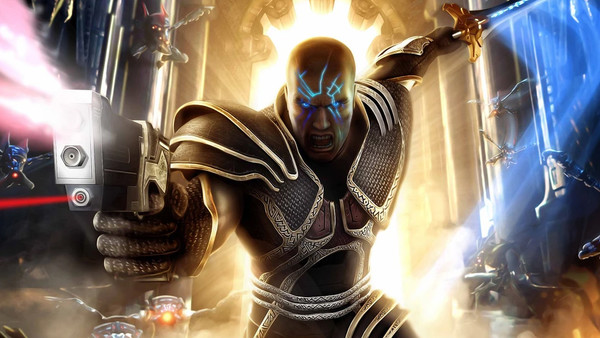
In an all-time great example of biting off more than one can chew, developer Silicon Knights partnered with Microsoft to develop action-RPG Too Human with the full intent of it being the first entry in an epic trilogy.
But after a lengthy development period of almost a decade, Too Human released to wildly mixed reviews, many deeming it a game that was ultimately too ambitious for its own good, while failing to nail down the gameplay fundamentals.
Couple this with the game's lackluster sales, and Silicon Knights losing a copyright infringement lawsuit with Epic Games - which resulted in all unsold copies of Too Human being destroyed - and it's no surprise that they followed up by cancelling production of Too Human 2 and 3.
This was a clear case of Silicon Knights cutting their losses following a turmoil-riddled development, even though the game did earn itself a cult of fans who would've loved to see the entire trilogy realised.