16 Best Video Game Trilogies Of All Time
Not once, not twice, but three times the charm.
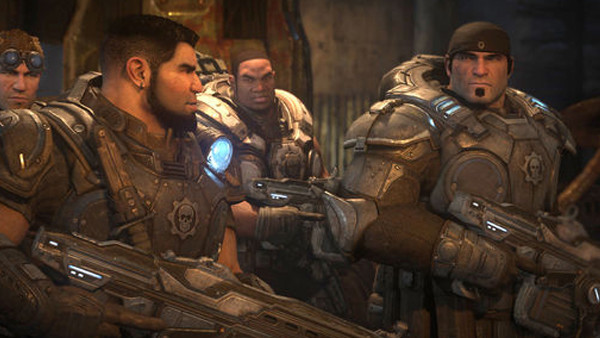
What makes a downright brilliant trilogy? In movies its usually a story that's stretched across three epic films, the first two withholding some key elements that the last can wrap up in one brilliant denouement of explosive narrative, character fulfilment and budget-bursting set-pieces. In gaming that general sense of pacing holds true, although the flip-side is when some developers just can't help themselves, continuing on well outside of what would've been a solid three-title release.
When you've got a good idea and fans are clamouring for more, putting out another instalment is a recipe for success - providing you don't remove almost everything people loved of course. Still, there are still those initial few games that either get left alone to live on in infamy, or get iterated on into something else entirely, leaving the originals as a defined body of work that'll fill the shelves of any self-respecting gaming buff for years to come.
So, what makes a downright brilliant trilogy in gaming? Is it sticking to a well-worn formula and releasing out the barest of incremental additions along the way, or is it building to one tremendously all-encompassing climax, the endpoint of which only feels more purposeful the more you view all three instalments in sequence? Answers in the comments, but not before you've checked out these ten candidates first.
16. Splinter Cell

Hideo Kojima may have invented stealth with Metal Gear on the MSX, but it was rival 3D franchise Splinter Cell that helped bring a much more serious take on the genre. Where Metal Gear had bombastic characters and ridiculous anime-styled cutscenes, Splinter Cell dealt specifically with the most realistic scenarios possible.
Realistic in an action-movie sort of context sure, but hero Sam Fisher easily stood toe-to-toe with Solid Snake in the gravel-voiced stakes thanks to veteran actor Michael Ironside, not to mention he was equipped with all manner of gadgets including the now-iconic triple-green light goggles, and the multifaceted SC-20K assault rifle. This was essentially Microsoft's answer to Kojima's revolutionary masterpiece, and through a fantastic sequel in Pandora Tomorrow it was with Chaos Theory that truly delivered one of the best games of all time.
For 2005 the graphics were unbelievable (and still hold up very well), Ironside's quips were plentiful, Sam's moves were expanded and the animation for everything was given an overhaul, making for an amazing sense of replayability that wouldn't return to the series until 2013's phenomenal Blacklist.
15. Sonic The Hedgehog

These days you'll be hard-pressed to find a Sonic fan with a title to champion outside of looking into the past and unearthing the "Oh hey, it's actually good!" likes of Sonic: Generations, but back in the 90's Sega was leading the platformer charge for any who thought Mario's cutesy approach was just that little bit too sickly-sweet.
Looking back Sonic's appeal is dressed up in a 90's 'gnarly-dude'-esque backwards cap, but considering the time he was released and the demographic that desperately needed targeting, Sonic (and to a lesser extend Knuckles) completely nailed the look of a character that wasn't slowing down for anyone, bringing the fight to the overly-sheeny world of Nintendo.
The blue blur has since been everywhere from hoverboard racing games to cameoing in Super Smash Bros. but not since the original run of games have their been a solid three in a row that showed Sega firing on all cylinders, sweating memorable levels with theme tunes you'd be humming for decades.
14. God Of War

Remember the definition of what makes a good trilogy hinging on taking one core gameplay mechanic and building extensively around it? God of War is the shining example of that, being that from the first to the third game (and beyond) you were partaking in humungous, epically-shot boss battle quick-time events, uttering many a badass machismo-line and above all, using the square, square, triangle move in abundance.
Seriously, Kratos' dual-chained combo might as well be up there with Ryu's down, diagonal, left, punch Hadouken, so engrained is it to any and all who played. That became both a help and a hindrance to God of War as a series, as for all the great many things it initially did perfectly, what followed was doubling down on giving you them with increasingly shiny graphics.
So let's say gameplay trumps all for the sake of this entry, as when it came to the actual feel of tearing a creature limb from limb as Kratos heaved and spouted righteous comments about avenging his family, from the opening Hydra boss to tackling Zeus himself on Mount Olympus, there have been few things quite so viscerally satisfying since.
13. Crash Bandicoot

Remember when consoles used to have mascots? You can essentially point to exclusive characters and say they represent a company's name, but back in the 90's Sony were looking for someone with the requisite 'attitude' to define their new Playstation, happening almost by chance on Naughty Dog's latest creation.
Luckily, thanks to some advanced rendering techniques and the compression of art assets on the disc, Crash and the luscious environments around him ran like a dream, popped with enough visual fidelity to rival animated flicks on the big screen, and ultimately had the tightest 3D platforming mechanics since Mario 64. It was a design philosophy the team would apply to their future products too, making each subsequent release just as much a knockout as the last - meaning that what Crash 2 set in place with it's level-selection and general sense of humour would be capitalised with Crash 3: Warped, introducing a bazooka to proceedings and furthermore adding to the colourful cast of characters.
Looking back you can see why Naughty Dog had to move away from the franchise and onto other projects, leaving poor Crash to the mercy of any other developer who fancied a go, but those three first games easily hold up as phenomenal examples of exactly how to do timelessly loveable 3D platformers.
12. Gears Of War

Another example of perfected gameplay taking precedence over cinematic tropes or the idea of all three games only making sense when played together, Gears' morphing of Resident Evil 4's gunplay to apply a pop-in, pop-out cover system ended up revolutionising third-person shooters forever more.
It worked a treat, being consoles like the 360 now had the requisite programming might to really pull off the visuals and impact of a high-octane firefight, and with developers Epic employing their Unreal Tournament-style ultra-violence, sequels Gears 2 and 3 would up the ante with some Fatality-esque Execution moves.
Throw in the fact that the heroes you were playing as were easily just as memorable as any 90's action hero - spouting one-liners at just the right time and gravel-throating their way through some apocalyptic exposition - and you had a trilogy of games that upped the previous one in every way. Gears 3 still has one of the most memorably affecting deaths in all of video games when a certain character sacrifices himself for the good of the cause.
11. Devil May Cry

One slightly naff instalment does not a bad trilogy make, and even if you take DMC2 as red, the first and third games are still lightning-fast excursions in how to deliver thrills in spades, topped off with memorable characters, weapons and a world that oozed style and charm without ever having to let up on the gas pedal for their duration.
DMC 2 is the 'dark sequel' that took hero Dante and made him into more of a shoe-gazing mumbler than the eccentric cocksure motormouth of the first game, but it still introduced some awesome moves like running straight up walls only to flip off them and continue your combo, as well as a sweet 'demon-infested city' aesthetic that the reboot of DmC would revisit in 2013.
Overall though, you'd be hard-pressed to find a game that does this style of action so impeccably well - especially for the time - and for all the glory God of War gets, there's always been far more on offer for combat aficionados here than in Sony's first-party brawler. Not to mention some of the most slickly-cool boss fights of all time whenever you tackle Vergil in DMC 3.
10. Resident Evil
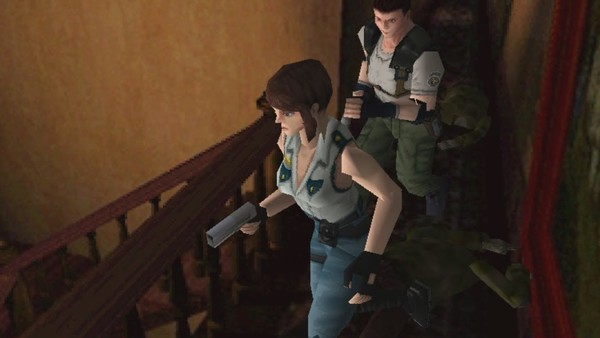
Recently on the receiving end of a phenomenal remaster, the original Resident Evil's design choices may feel antiquated to some, but for others its their childhood incarnate, making for a trek through the dilapidated Spencer Mansion one of nostalgia and restrictive camera-angle'd bliss.
Resi 2 then picked up where the second left off, fixing (or robbing you of) the hilariously terrible voice acting and upping the thrills along the way, leading perfectly into Resident Evil: Nemesis, and one of the first mainstream horror icons to come from a video game. Pretty much everyone has had a dream where they can't escape from an ever-pursuing foe, and the idea of coming up against this mutated Arnold Swarzenegger-esque sack o' meat (with a rocket launcher) made for many an impromptu scare, utilising the controls and pacing from the first two and hammering them home in some of the most exhilarating set-pieces the series had seen so far.
9. Jak & Daxter

Although Crash Bandicoot was one of Playstation's finest hours, Naughty Dog were just getting started. The first Jak and Dax essentially played it safe - as 'safe' as you can when you're feeling the pressure to create another loveable character on par with one of the most recognised icons around the world, anyway - but they still introduced the idea of an open world, with multiple quest-givers, a day-night cycle that showed off the gorgeous PS2 graphics and of course, more of that sublime platforming only they could pull off.
Naughty Dog note in their 30th Anniversary art book that it was only after GTA III landed that they "looked up" from the otherwise 'heads down and proceed' juggernaut work ethic they'd employed, and thus for Jak II and III, there was a noticeably darker tone in the hero's demeanour. Now Jak had access to a range of guns, a city-centric open world, cars to steal and a hoverboard to trick around the streets on.
To this day there's not one game since Grand Theft Auto that's completely nailed this formula quite like Jak II did, making each mission feel conducive to the plot and giving you a steady stream of unlocks whilst maintaining the core sensibilities of Jak and Daxter's soul that really brought everything to life. Jak III would do more of the same whilst going outside the city walls and expanding on Jak's powers, but taken as a whole this is the perfect marriage of a previously linear genre perfectly crafted for the new generation.
8. Silent Hill

The other side of the horror coin that's twinned with Resident Evil's cheesy approach to standard genre tropes and storytelling is Silent Hill's love of all things eastern-influenced.
From macabre visuals designed to fester on your mind long after turning the console off, to a story in the second game that still harbours one of the greatest twists in video game history, Konami and Team Silent's work on the franchise created quite the bedding of tales to be told going forward. Since the first three games the general idea of a town that plays on and realises your darkest fears or inhibitions is something that's taken the franchise everywhere from handheld devices to the silver screen, making a stop as a playable teaser in 2014 that was more fun than pretty much anything else in that year.
Fans of this and Resi continue to war on, and for every Nemesis or zombie-dog there's a Pyramid Head and a slew of deformed undead nurses to redress the balance, but neither would have such rabid fanbases had they not nailed these furtive few entries in the first place.
7. Metal Gear Solid

Depending on your penchant for out n' out craziness, you could see the direction MGS took after the relatively-believable first instalment (although on reflection, flying gas-masked telekinetic villains aren't the most relatable) as where creator Hideo Kojima looked to go one way, only to then dart the other and never return.
For everyone who did get on board, MGS2's bait n' switch to play as Raiden helped flesh out the mystique of Snake himself, alongside showing what happens when a creative mastermind like Kojima is let loose with new technology and a few books-worth of commentary on everything from war to politics, philosophy and anything in between. All three games take just enough influence from the filmic world and twin them with gameplay sensibilities and control schemes to make the whole thing identifiable as something less aping of the silver screen like say, The Last of Us, developing a cult following precisely because of that.
Snake Eater chose to again move away from what was expected narratively and delve into the history of the world, giving purpose and backstory to a different Snake whose machinations as an eventual villain overshadow the series, making for a brilliant trilogy-capper that featured some of the best boss battles in the franchise so far.
6. Batman: Arkham
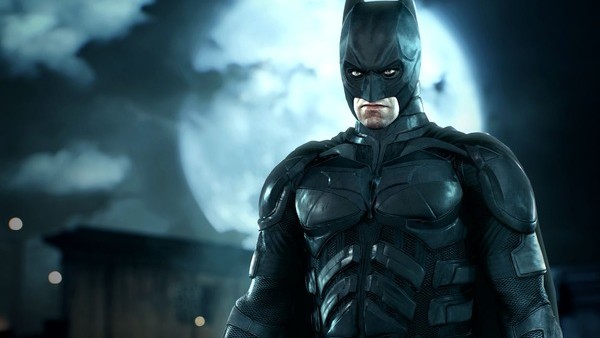
Referring to the Arkham series as a trilogy is a strange one, as plenty fans are willing to completely dismiss Origins - despite it having some spectacular Joker-specific scenes with Troy Baker's talents providing a brilliant stand-in for Mark Hamill. The general feeling of being 'more of the same' meant gameplay was still great fun, it just didn't have that Rocksteady-specific sense purpose you see again in Arkham Knight, but players had fun with it regardless.
Besides, Arkham Asylum and City are now downright legendary, the first proved you could do a superhero game with enough weight and purpose to make it appealing to those outside a love for the Bat-mythos, and the second taking everything you thought you knew about Asylum's structure to branch out into a full open-world chunk of Gotham.
The influence this had is still felt everywhere the 'Batman combat' appears (y'know, the whole one-button counter and combos leading to special moves thing) like in Shadow of Mordor. It wasn't just the combat though, you can tell in any screenshot from the trilogy that Rocksteady just get everything Batman is about (they leant their tech to Warner Bros. for Origins), from the visuals of Gotham with its pockets of colour showing signs of life worth saving, to Batman's sharp-eared character model that casts one hell of an imposing shadow. Arkham Knight can't come soon enough.
5. Uncharted
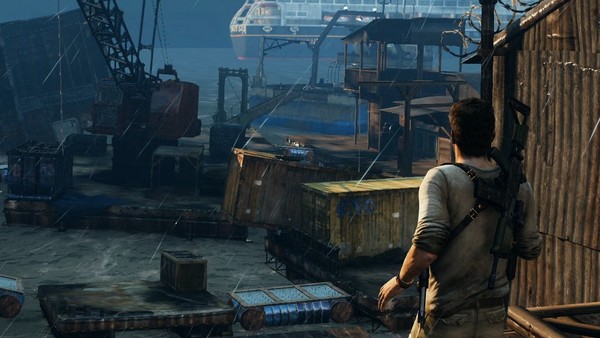
Weirdly, although Uncharted feels like it should always be referred to as this gigantic behemoth of game design, redefining the idea of how to shoot cutscenes and expositional dialogue in-game, Naughty Dog themselves noted in their 30th Anniversary art book that the reception for the first game wasn't anywhere near as rapturous as it feels upon reflection.
It wasn't until the second game where the E3 demo featured Drake just barely making it out of a collapsing building - with you playing every part of the gun battle within - that really got peoples' attention, along with Drake's "We were almost in that!" quip that endeared him instantly into the hearts of many. Following that it was off to the races, anyone who didn't already get aboard the Drake-train went back and played the first game, enjoyed the exemplary best-in-series part two and had fun with the Playstation hardware-stretching final instalment.
All three fit together nicely as the gaming equivalent of Indiana Jones, and even though there's more adventures coming up in Uncharted 4 (and probably beyond), this debuting trilogy is still one of the most astonishing action titles you can get your hands on.
4. Halo

Master Chief's foray into alien head-blasting started with an industry-shaking bang and only went up from there. Sure, depending on how invested you were with the story versus just enjoying the spectacle along the way it meant Halo 2's cliffhanger-style ending rubbed you up the wrong way, but boy did Bungie bring the fan-pleasing moments in part three, making for one hell of a trilogy-capper that also marked the final time they'd be working on a main series instalment.
Since their departure, 343 Industries have injected a more humanitarian angle into the Chief's purpose within the world and appear to be making their own mark on the franchise going forward, but it was with Bungie's definitive work on this original trilogy that really changed the world of shooters, and mainstream video game perception overall.
3. The Ezio Trilogy - Assassin's Creed

Bookended by an entry that rarely gets unanimous praise thanks to a little bit too much repetition in mission structure and another where too much pop-in and phoned-in game design had begun to grate, the middle three of Assassin's Creed II, Brotherhood and Revelations (also known as the Ezio Trilogy) is the best the series will ever be.
Why? Because thanks to the lessons Ubisoft learnt from the first game they were able to flesh out the amount of approaches you had to your kills, give you an incredibly likeable character in Ezio himself, refine the combat to be just the right amount of brutal and beautiful, and nail the present-day element of the plot to tie the whole thing together. Not only that, but Brotherhood gave you the option to stat-track an entire group of assassins that could be sent around the world on missions, whilst Revelations nailed one of the most emotional finales of any game in recent memory.
Forget everything the series has done wrong since Revelations (minus Black Flag's reprisal of sorts), back when AC was firing on all cylinders, it was near-untouchable.
2. Mass Effect

It's mighty hard to cast aside your feelings on 'that ending' when addressing the Mass Effect trilogy - too easy is it to linger on the last interaction you have with a property after the credits roll - as if you look back across the entire trilogy there's hundreds of hours-worth of impeccably-crafted content delivered through memorable characters and a universe that genuinely felt alive.
If EA hadn't got their grubby mitts on the DLC plans the ending of ME3 would've been far more palatable, as things like Leviathan and From Ashes went quite a ways to explaining just who the Star Child was, and what you could expect if you ever interacted with it. Back to what went well regardless of supplementary content, and from the first slow zoom-out as Captain Anderson read out your personal Shepard's backstory to barely making it through the Suicide Mission and having a thousand stories to tell at the close of ME2, if you start a new campaign over again you'll end up having just as many more epic experiences as the first.
Mass Effect is the newer generation's Star Wars, stuffed with races, technology and a million other galaxy-specific elements that will surely be pulled apart in the future.
1. Grand Theft Auto - 3D Universe

Incase you didn't know, both Rockstar and fans refer to the various incarnations of GTA as different 'universes' due to the technology behind them and the game engines used to bring everything to life. We're in the 'HD Universe' now following GTA IV, but GTA III, Vice City and San Andreas were all part of the 3D Universe, iterating massively from each subsequent instalment, yet all retaining the same core 'feel' thanks to the RenderWare game engine.
Onto the games though, and not any time soon will you see a string of games so endlessly influential and imminently replayable as the GTA series. 2001's part three landed with an medium-defining bang, inventing and perfecting open-world game design whilst delivering a set of characters and motives you could feel the importance of through every moment.
As if that wasn't enough, Vice City and San Andreas then went on to prove that not only could lightning strike twice, but it could birth a maelstrom of creative gameplay so memorable we'd all be reminiscing on the good times for generations to come.
What are your favourite gaming trilogies, and why? Are there any you'd add or remove? Let us know in the comments!