Fallout 4: 10 Biggest Questions Answered For New Players

What the vaults are really for, why it looks like the 1950s, who's fighting who and more.
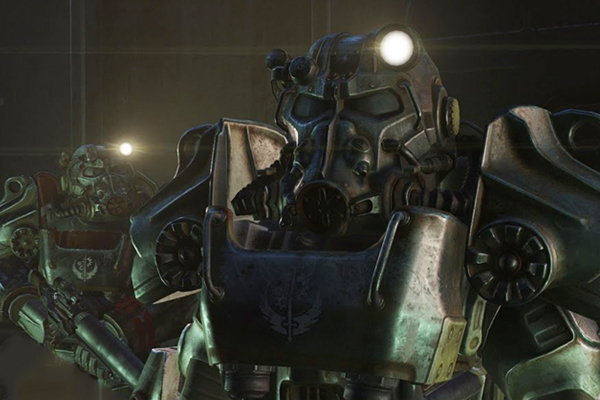
Fallout 4 review Launching on November 10th after years of speculation, if Fallout 4 lives up to its lofty expectations, there's a good chance you'll spend months living a life not too dissimilar to the game's populace; hiding from daylight, surviving on quick fixes of canned food, and slowly gaining a pasty, emaciated, some would say 'ghoulish' appearance. While there'll be a huge number of gamers coming to Fallout 4 after having played previous games in the series, there'll also be plenty who have never wandered the US wasteland before. If you're one of these people, then being spewed out from an underground vault into the wasteland could prove to be a disorienting experience. A couple of weeks ago, I outlined all the crucial backstory points you should know before heading into Fallout 4. But here, you'll find answers to all the niggling questions that you'll have when you start exploring the world; you'll learn whether you should shoot everything that looks like a zombie, the exact year the game's set in, and why fashion seems to have stayed in the 50s. You'll also get the latest info on the game based on the leaked footage, such as the map size and exact year the game is set in. Sure, such things won't save you from a raider ambush, but they'll give you an important perspective on the fascinating, unique post-apocalyptic world you're about to get lost in.

10. Why Does Everything Look Like It's Stuck In the 50s?

The distinctly 50s stylisation of the Fallout universe is something that those of us familiar with it just take as a given. The shark-finned cars (defunct, unfortunately), the music, the mannerisms of the people, all seemingly stuck in that fascinating, repressed period before the 60s blew culture wide open. If you're a newcomer to the series, you'd be forgiven for assuming that the great nuclear war that shaped the Fallout world happened in the 50s, and that cultural evolution essentially got put on hold for the next couple of hundred years while people hid out in underground vaults. But the nuclear war (known as the Great War, presumably taking over the prestigious name from World War I based on its much higher body count) didn't happen until 2077. The future of Fallout 4 is based on what 50s science and sci-fi novels (particularly the Worlds of Tomorrow) speculated the future could have looked like, not based on what we today think of the same scenario. Crucially, the Fallout timeline diverged with the real-world timeline in the 50s, because in the Fallout universe the transistor was never invented, meaning that the miniaturisation of technology that led to our world of smartphones and microchips never happened. Instead, science focused on harnessing atomic fusion, which is why so much machinery in Fallout runs on nuclear power.

9. What Year Is Fallout 4 Set In?

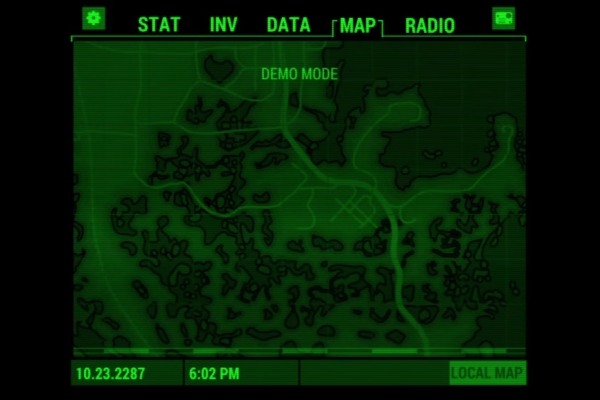
For a long time, Bethesda's word on the Fallout 4 timeline has been that it's set '200 years' after the Great War of 2077. This would've meant that the events in the game were happening in 2277, concurrently with those of Fallout 3. But the latest gameplay leaks reveal that this isn't entirely accurate, as players' Pip-Boy screens reveal the date to be 2287 - ten years after the events of Fallout 3 and six after New Vegas. This would fit logically with the series pattern up to this point, as each successive Fallout game took place later in the world's chronology than the previous one. It does, however, leave some people worrying that they should get clued up on the events of previous games in the series before playing the next one. Which brings me neatly onto my next point...

8. Is There A Connection Between Fallout 4, Fallout 3 and Fallout: New Vegas?

Although Fallout 4 is set in a different part of the country to the previous two games, the fact that it takes place some years later means that you might see certain minor effects of the events that occurred in the other games. The villainous Enclave, for example, is likely to be a shadow of its former power based on the events of Fallout 3, and we may find out which of New Vegas' multiple endings became the canonical one. With that said, Bethesda has a tradition of making each game in both its Elder Scrolls and Fallout series self-contained and narratively independent of each other. More so than with many other RPGs, you'll be able to jump into Fallout 4 relatively oblivious of what happened in the other games, but a broad understanding of the backstory will be a great way to have more context on certain things you see and hear throughout the game.

7. What€™s The World Like Outside Of The US?

It's very likely that most of the world in Fallout is awful, irradiated and barren, much like the US, but there's just no way of exactly knowing. In the lead-up to the nuclear war, Europe was in a drawn-out conflict with the Middle East over oil. When that war ended in a stalemate, the European Commonwealth (Fallout's equivalent of the EU) dissolved, turning Europe into warring nation states much like they were up to the early 20th century. When the world plunged into nuclear conflict, it's not entirely clear which countries outside of the US, China and Russia were affected, but it's highly likely that all the world's most powerful nations were hit. While Europe, much of Asia and North America are likely to have been equally ravaged by nuclear war, there's little word on the state of South America and Africa. With relatively little reason to have been targeted by the nuclear war however, there's a possibility that they were less affected, and - worldwide radiation aside - may be relatively intact. In summary, Fallout lore has done a great job of ensuring that the player knows little more than what anyone in the US wasteland knows about the state of the world. Part of the series' charm is that genuine sense of not knowing what's 'out there' in the big wide world - but all the signs suggest that it ain't pretty.

6. This Zombie Is Talking To Me! Do I Kill It?
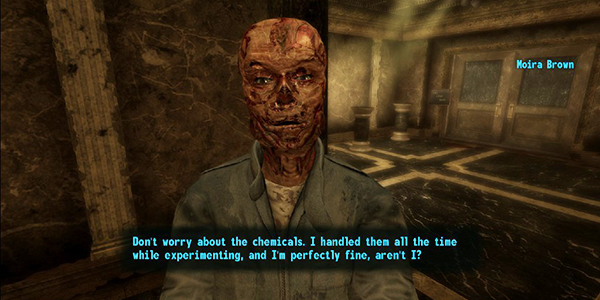
That 'zombie' of which you speak is actually a ghoul, and would probably take exception to being referred to as a zombie, or 'it'... although he/she has likely been called much worse things in their life, and 'ghoul' isn't exactly the most flattering term itself. Ghouls are people who have been exposed to huge amounts of background radiation, and suffered from skin decay to give them a horrifying 'ghoulish' appearance. The trade-off for this is an extended lifespan, and many ghouls are people who got stuck on the surface during the nuclear war but managed to survive. This means that some ghouls you'll meet will be over 200 years old. Much like pigeons, ghouls get a rough deal in society based on their unsavoury appearance, and are looked down on by many of the factions. But get chatting to them, and you'll see that they're just regular people, except a hell of a lot wiser and more interesting on account of their long, tormented lives. With that said, if you run into a stark-naked ghoul in a dark tunnel or in the wilderness at night, and it's screaming incoherently while running at you with its horrible, melted features flapping about, then kill it. These are feral ghouls, whose brains have deteriorated to function only on the most carnal level. Call them zombies or whatever else you like, but take them down, for everyone's sakes.

5. Is Anyone In Charge Here?

Nope. The United States government pretty much dissolved just before the bombs dropped, with key politicians hiding out in shelters around the country in anticipation of the Great War. These scattered members of the government went on to become the Enclave faction, zealously believing that they still had a claim to running the country. Even though the Enclave was arguably the most powerful faction in the US until the events of Fallout 3, it still wasn't accepted by any other group as the true government, and never really came close to being in a position to run the entire country. It's also worth noting that in the Fallout timeline, the United States was divided into 13 'commonwealths' some time after World War II, so regional power dynamics are based on these, rather than the 50 states that we're used to. Fallout 4 takes place in the New England Commonwealth. Though there is no one faction that controls the region, it looks like the tech-savvy Institute could be dominant. A key facet of the Fallout games is that the power vacuum in the US is behind many of the conflicts and intrigue in the series, with the player getting to have a key role in how these struggles pan out.

4. Who Are The Good Guys?

In the tough, morally dubious world of Fallout 4, it's not easy to outright call any of the wasteland's many factions 'good' or 'evil'. Because of the power vacuum, each faction has proven susceptible to greed, zealotry, and general power-tripping. But there are definitely some groups in the game that have better intentions than others, and the poster faction of the series, the Brotherhood of Steel, is the one you're most likely to ally yourself to. These guys believe in the preservation of technology, and using it to rebuild the wasteland for the sake of humanity. But while in the early Fallout games you ally with the Brotherhood to wipe out mutant threats (Fallout 1) and the decidedly nasty Enclave (Fallout 3), the Brotherhood does have its darker side. In New Vegas, the Brotherhood is paranoid and dysfunctional, hording its tech for itself and not wanting other people to reap the benefits. The latest Fallout 4 trailer shows the player taking down a 'Brotherhood Initiate' aircraft, suggesting that you'll have the option to side against the Brotherhood again. The trailer also presents the mysterious Railroad faction - which was also in Fallout 3 - as a potential ally.

3. ...And The Bad Guys?

While good-ness is difficult to define in the Fallout series, evil has - until recently - been pretty clear-cut. Sure, the Enclave was intent on rebuilding America, but doing so by wiping out everyone and everything that isn't 'pure' and completely radiation-free is just a bit of an 'Adolf' way to go about it. Yes, the Enclave - made up of the descendants of high-ranking politicians and former presidents of America - was a nasty piece of work beneath those eloquent, creaky facades. Though you don't really need to know the Enclave's questionable principles to know they're evil; in a world filled with dishevelled, scrappy-looking people, anyone who goes around wearing a suit and tie is bound to be evil, right? Just look at Half-life 2 and The Matrix. But after the events of Fallout 2 and Fallout 3, The Enclave is pretty much extinct, existing - as far as we're aware - only in the kind of remnants that we see in New Vegas. The Fallout 4 trailer suggests its place could be taken by 'The Institute', a faction that creates androids that are as emotionally intelligent as humans, then uses them as slaves. We know that this mysterious organisation will play a big part in the story, but knowing the Fallout games, it seems likely that you'll have some control over whether you side with them or against them.

2. What's The Big Deal With The Vaults?

Emerging from Vault 111 after a cosy 200 year snooze at the start of Fallout 4, you may think that vaults are the best thing in the world - aside from the fact that literally everyone apart from you died in that particular one (but hey, they wouldn't have been alive after 200 years anyway, right?). Vaults, however, are far more than just bomb shelters in the Fallout mythos. The US government commissioned 122 vaults to be built in 2054, with most of them being completed by 2074. But unbeknownst (weird word) to the population, these vaults were actually designed to study people under various conditions, with the majority of them being the site of cruel and unethical experiments. Vault 13, for example, was designed in a way that radiation would intentionally leak into it, so that the government could study what effect it would have on people (not a good one, obviously). Vault 112 was plugged into a virtual reality simulator run by a psychopathic overseer, while Vault 106 was filled with airborne psychoactive drugs that drove the whole place insane. Only a small number of vaults were built purely with the purpose of sheltering their inhabitants, and you're likely to hear a lot of talk in the wasteland about the terrible things that happened in the vast majority of them. If you're intrigued to read about the most shocking experiments that happened in Fallout's Vaults, you can find 10 of them here.

1. How Big Is The Map?

Fallout 4 has had more leaks in the last week than the dodgy doors of Vault 12. Inevitably, plenty of the lucky players who already got their hands on the game have gone out to find out how big the map is, so we've got a pretty got idea of what you can expect. One player managed to sprint across the whole wasteland in eleven minutes, which doesn't sound like a long time, but considering that you can walk across all of Skyrim and The Witcher 3 in two hours, it seems reasonable. The current consensus seems to be that the Fallout 4 map is 2-3 times bigger than that of Fallout 3, and of a similar size to Skyrim's. That would make it quite a bit smaller than the open worlds of The Witcher 3 and GTA V. Not that not having the biggest open-world map of all the is necessarily a problem. So long as the world is packed with events, eye-catching scenery and worthwhile quests, players should be perfectly happy exploring it for months to come. Also, it looks like Bethesda put a lot of effort into making the wasteland look more lively and detailed, so there there should be plenty for you to take in and appreciate. Do you feel better prepared for what awaits you in the Boston Wasteland? Let us know! Also, if you fancy yourself as a writer, then head on over to whatculture.com/write and show us what you've got!

Contributor
Contributor

Gamer, Researcher of strange things. I'm a writer-editor hybrid whose writings on video games, technology and movies can be found across the internet. I've even ventured into the realm of current affairs on occasion but, unable to face reality, have retreated into expatiating on things on screens instead.