How Death Stranding Should Have Ended
Hideo Kojima's masterpiece... or a total mess?
Of all the games Hideo Kojima has put together, Death Stranding might be his most... "out there".
A conceptual tone poem about togetherness, existential community and gift giving, done through the guise of a "hiking simulator" where 80% of gameplay is spent climbing mountains, dropping ropes for other players and delivering packages - it's safe to say VERY few people on this Earth could command the fortunes necessary to bring it to life.
Before I go any further I want to reiterate that Death Stranding should be treasured for that regardless, as even if you hated what was on offer, just be glad it exists. We're all likely in favour of pure ambition and risk, rather than another "clear the map one outpost at a time" cash-grab.
Anyway, like many eccentric creatives, Hideo Kojima would benefit from someone to bounce ideas off. The dart board to his onslaught of brutally on-the-nose suggestions, if you will.
Looking back at the Metal Gear Solid saga, that person was Kenichiro Imaizumi - Kojima's longtime producer, and someone who helped shape the franchise.
Sadly he departed in 2019, but it came after Hideo's games getting increasingly "more Kojima" over the years - culminating in MGS V being filled with supernatural fire demons and a half-naked woman who breathes through her skin.
With Death Stranding, though Imaizumi was on-hand for the majority, it's clear whatever influence he used to have on Hideo's wildest tendencies was completely gone.
Now, looking at trophy data, only 40% of all players saw the game through, and those chapter percentages drop off as the game goes on.
Why? Because the story - despite having EXCELLENT themes and intentions - is a total mess.
Again, I'll always champion everything Kojima puts out under a "freedom for creatives" banner, but man did it all fall apart, the more you played.
5. Lose That Dragged Out Mountain Sequence

Ask around and you'll quickly stumble upon the one part of the game that even its most ardent defenders thought was a slog: The snowy mountains.
I'll get to story stuff soon enough, but this sequence - coming right when it feels like things are escalating and the story is climaxing - stops everything stone dead.
Not only are you tasked with arbitrarily carrying items to multiple points on the same long distance triangle of locations, but Sam starts to move like he's in treacle. Plodging through knee-high snow, one lumbering footstep at a time, the game then has the gall to throw faster item degradation at you, AND you'll be trekking through various pockets of B.T.s, who will likely attack and ruin things further.
Clearly set up to test you as an ultra hard final third begins, it really overstays its welcome, severs the pacing and buildup, and worst of all, put thousands of players off continuing.
Tighten this part up, make it more cutscene heavy. Ditch the repetitive, "I forgot, I need one more item!" requests from these characters, and keep everything moving.
4. Die Hardman's Speech Should've Meant Something
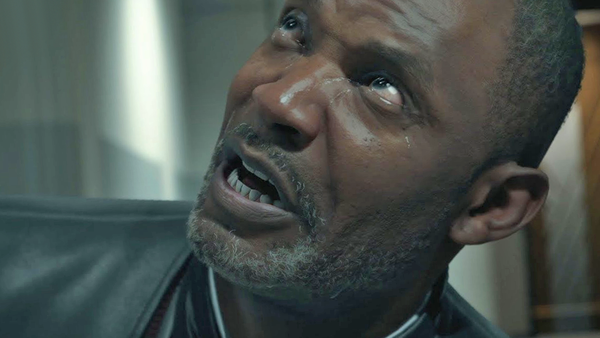
Right now, off the top of your head: Why was Die Hardman crying and sobbing uncontrollably at Sam's feet, in the closing cutscenes of the game?
Yes, "it's because he killed Cliff Unger" - he says as much directly before breaking down.
My question though, is: Was this something deftly built up across 50 hours of game time? A powerful connection between "John McClane" (yup, that's his name) and Cliff? Were Cliff's motivations as a man volunteering for an experiment, then being betrayed by a soldier he used to protect, actually explored?
HELL no.
Even with this scene, Die-Hardman's breakdown comes before you understand what he did to Cliff, and the character until that point was drastically under-written. The overriding takeaway is yes, this is one of the best digitised performances in gaming history, with Tommie Earl Jenkins delivering an incredible scene, but general confusion and yet more questions.
Rather than frame the closing third of the game around the relationship of John and Cliff - the fact McClane "loved him" as much as he did Amelie, and how he had to balance duty with emotion - we get ONE scene, which in retrospect feels out of order.
It's emotional by definition, but the buildup is nonexistent; the result more bewilderment and awkwardness from the audience than anything truly worthwhile.
3. Define Higgs' Role In A Cutscene, NOT A Text Entry
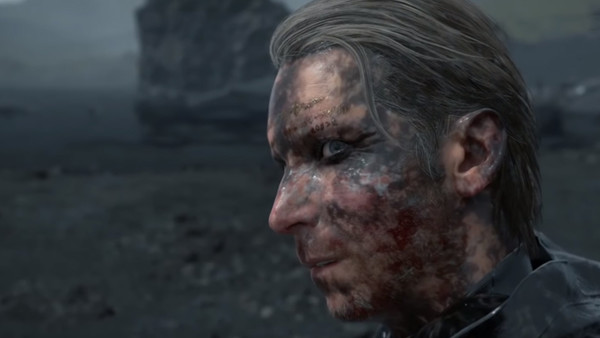
Higgs should have been this game's Liquid Snake - a character people love to quote, see every last concept sketch of, and whose screen-dominating presence immediately makes him iconic for future generations.
Sadly though, despite Troy Baker giving it his all as a screen-chewing psychopath, Higgs is utterly one-dimensional. He's evil because he's evil; he has crazy lightning powers "just 'cause", and though there's word of a rivalry between him and Fragile, it ultimately amounts to one cutscene with her being scarred in the rain, and little else.
To actually understand Higgs, you need to either read his missable diary entries, or you can track down his home base after a certain point in the story. Do neither, and your final interaction with him is a Metal Gear Solid 4-style final fight, where you trade blows as two life bars deplete, and slow-motion face smashes pop off all round.

To fix, Higgs needed some proper, in-game or in-cutscene character development. He can stay as a seemingly one dimensional "chaos particle" (hence the name) to a point, but when he has so much agency in the story - interacting with Sam, saying "you don't understand what's happening, do you?", even attacking Amelie or conjuring a giant version of her, making him want to destroy the world and nothing else feels spectacularly empty.
There's a reason the MCU's Thanos is memorable and nuanced, and Justice League's Steppenwolf is just an evil smush to be overcome.
In Higgs' final scene, when Sam journeys to his Beach - where the rules of death are different and you can die forever - why not visualise or have Higgs' talk about his uncle's physical abuse. Why couldn't Higgs' role as a rampant murderer be the reason his beach is so warped, and have that double as the explanation as to why Sam can now die.
You can read about his past, and how his morality warped as he realised killing was bolstering his DOOMs abilities, but that's it.
Fragile plays an important role in all this too, being his former boss and porter companion, but she only comes back at the very end to finish Higgs for good.
Ultimately, Higgs is another example of being underwritten where it counts, and having the majority of his 44 minute screentime devoted to taunting the player, referring to himself as a "boss fight", or threatening to end the world.
2. Tie The Game's Win State To Everything You've Done Beforehand
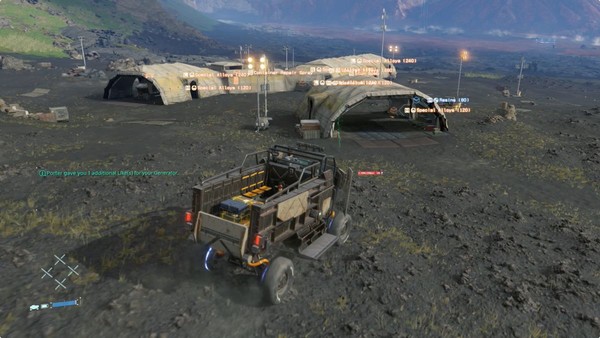
Back to gameplay, and one of the biggest takeaways Hideo Kojima wanted Death Stranding players to have, was a feeling of "omoiyari".
Omoiyari is the Japanese term for a sense of empathy between strangers. Kojima noted when talking to Gamespot that he was touched and inspired by the various way stations that exist on the trail up Mt. Fuji, where travellers will leave words of encouragement or advice for whoever is coming next, not knowing who that will be, or if they'll even be seen.
He also discussed the notion of a war widow receiving word of their partner being killed in battle, but the time taken for them to be notified means the emotional reaction is somewhat staggered; 'out of sync' from when the event happened.
All of this is the bedrock for what Death Stranding knocks out the park. At any given time you're charting a path through a harsh environment, for thousands of others whose only way to say thanks is leave a "Like" on your equipment. You can deliver peoples' dropped mail, group-build new roads together, retrieve stolen gear from marauding Mule bandits - all round it's a "multiplayer game", but without multiple players in the same exact space.
You can even tap the touchpad to see if another person is standing where you are in their respective universe, and you'll hear their Sam respond if so.
However, whilst all of this stuff is supposed to engender a feeling of companionship, caring and sharing, it's not reflected in the game's story or outcomes whatsoever.
You could live frugally, profiting off the roads others built, leaving your packages for people to pick up, taking resources all your own and giving nothing back. The game will still make Sam the saviour of the world, with the same cutscenes playing out.
The nearest thing Kojima programmed as to all your work paying off, is at the close of the game when you have to travel back to the beginning. You can use everyone's combined ziplines, roads and pathways to do so in a cinch, and it feels great.
That said, how much more would this sensation of hard work and making a societal, charitable effort pay off, if the only way to get the best ending was to really care?
-- Spoilers for Red Dead Redemption 2 --

To compare, Red Dead Redemption 2 takes a VERY strict stance on where Arthur Morgan ends up. Either you've lived well enough to tip your morality meter over the halfway mark, and you can die in peace, or you're 50% or lower, and you're put down like the dog the game thinks you are.
No middle ground, no "well eventually, I was totally going be good!". Red Dead draws a line in the sand; a measuring stick for players' sensibilities, and says "If you can't match this, you're done."
Hideo Kojima wanted Death Stranding to teach people the value of caring without seeing immediate rewards. Whilst that sentiment does still come through and I cherish it, it could've been delivered with a bullet if there were repercussions for those who didn't play as intended.
1. Ditch The Running Sequence & Reshuffle Those Final Scenes
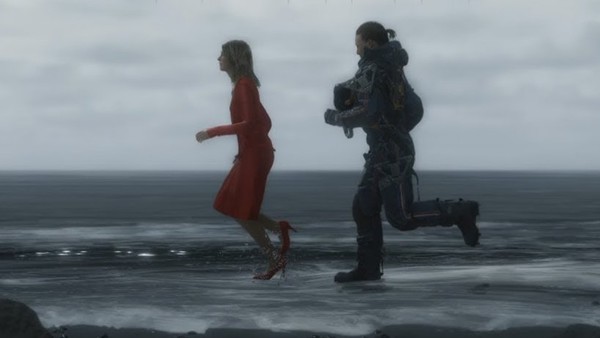
If I was restructuring the entire game I'd dive head-first into all the stuff with Amelie not even being real, as it's told to the player through one of Deadman's phone calls.
The information alone reshapes the entire game, and though full cutscenes attempt to legitimise everything, this massive last-minute swerve feels designed to confuse, and the final explanation is staggered in a ridiculous fashion, too.
Going on for a good hour or so - and coming after the heartfelt scene where Sam realises hugging Amelie is the only way for her to realise the value of human connection - you're then left to run around on her beach for what feels like an eternity.
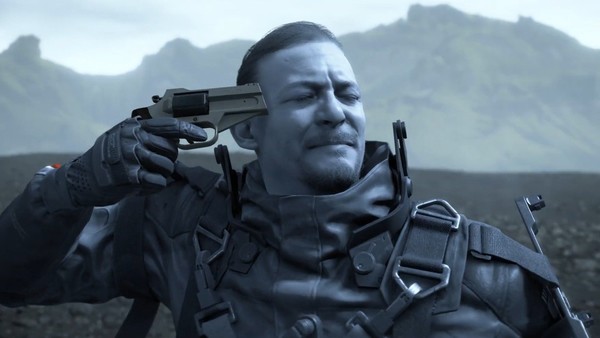
During this time you'll be fed a handful of "interactive cutscene" segments where Sam slows to a saunter, sits down, watches Amelie warp around him, and you're forced to pilot the camera, trying to understand what's being said. Besides the painfully terrible reveal of "Amelie" spelling out "soul that's a lie" because "Ame" is French for soul, this is just about the worst way you could have codified one of the most necessary pieces of information in the game.
Shuffle this around. Have Amelie tell Sam everything BEFORE pointing the gun at him, and have him still save her in return, if you'd earned that animation. Have all the information that results in Amelie's ethereal state and Sam being her foster son/brother, lead to her being saved because of it.
Because the point is: Sam still cares. Humans still care. In the face of world-ending circumstances, Hideo Kojima is flying the flags for real physical connection and empathy.
Bafflingly, all the scenes with Cliff being shot, Sam being BB, Die-Hardman breaking down and BB getting resurrected come AFTER all this too.
Sam and Amelie's scene should've been the final thing in the whole game; Death Stranding's version of Metal Gear Solid 4's "This is good, isn't it?" Big Boss scene, and a hug between mortal and immortal to save the world.

This would've been a MUCH better, resonant and memorable ending, versus the endless fades to black, restarts and stilted continuations that made up the one we got.