Pragmata Is Another Capcom Masterpiece (REVIEW)
Sci-fi third person action game with an eye for hacking is big on heart and low on flaws.
One has to wonder what secret fountain of genius Capcom is hiding away in their offices. So far in 2026, Resident Evil Requiem and Monster Hunter Stories 3 have both launched as some of the most successful entries in their respective series.
And then, proving good things come in threes, we have Pragmata - a brilliant, new third-person action game IP with a unique combat proposal and a delightful character duo.
Four years after it was originally meant to release and through the hellfire of multiple and indefinite delays, Pragmata has arrived with a big, confident smile on its face. Yes, they’ve done it again.
The game entirely takes place on a space station on the moon called The Cradle, home to the mysterious lunar research of the Delphi Corporation. Hugh Williams and his crew are sent in to investigate after the base goes quiet. Cut off from his team, Hugh discovers that the system’s AI - IDUS - has seemingly gone rogue. He also encounters Diana, an android built in the form of a young girl.
In order to make contact with Earth, the two elect to work together. Diana’s in-built hacking abilities means she can expose weak spots in the corrupt bots across the station for Hugh to take down with his firepower.
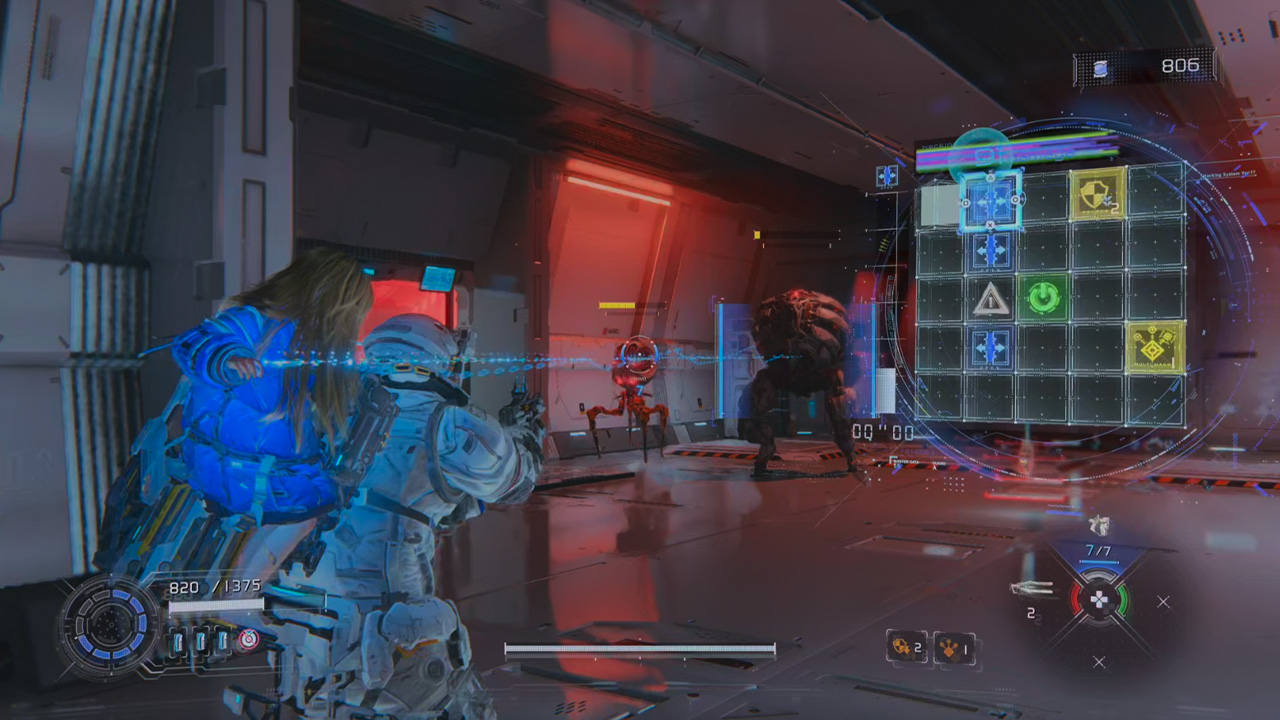
This juggling act is the game’s central feature, asking players to slow down and multi-task between navigating a hacking matrix and unloading Hugh’s units (the game’s weapons) to take down enemies. For the most part, you can’t have one without the other and you’ll absolutely need to figure out how to make the best of both. Thankfully, at least to begin with, most of IDUS’ soldiers are on the slower side, giving you plenty of time to work through the hacking grid.
The quicker you hack isn’t necessarily the better though, as Diana gains access to more “nodes” which fill this grid over time that offer different debuffs. Optimising your routes through these (or, in some cases, around them if you want to save their finite uses) is crucial to success, as well as your standard selection of thruster-dodges, weapon types and so on.
Offensive play is definitely on the slower side compared to some games, especially because most weapons have limited ammo and their value must be understood and used accordingly. Hugh’s primary unit refills over time, but it does so slowly meaning that there will be moments where you’ll be forced to move, assess and perhaps pivot your strategy before you can dish out more damage. Timing is an important key to the puzzle to get the most out of everything and it’s engagingly strategic.
In the early game it’s deceptively simple, but then Pragmata starts throwing curve-balls.
Diana can hack incoming missiles to send them back to sender, and Hugh must destroy radar dishes covering foes to clear the hacking field before it can be used. On the plus side, Diana gets more versatile as time goes on too. One node is multi-target, which hacks all nearby enemies. Pair this with the confusion node to initiate friendly fire, and suddenly the approach to taking down large groups of enemies changes.
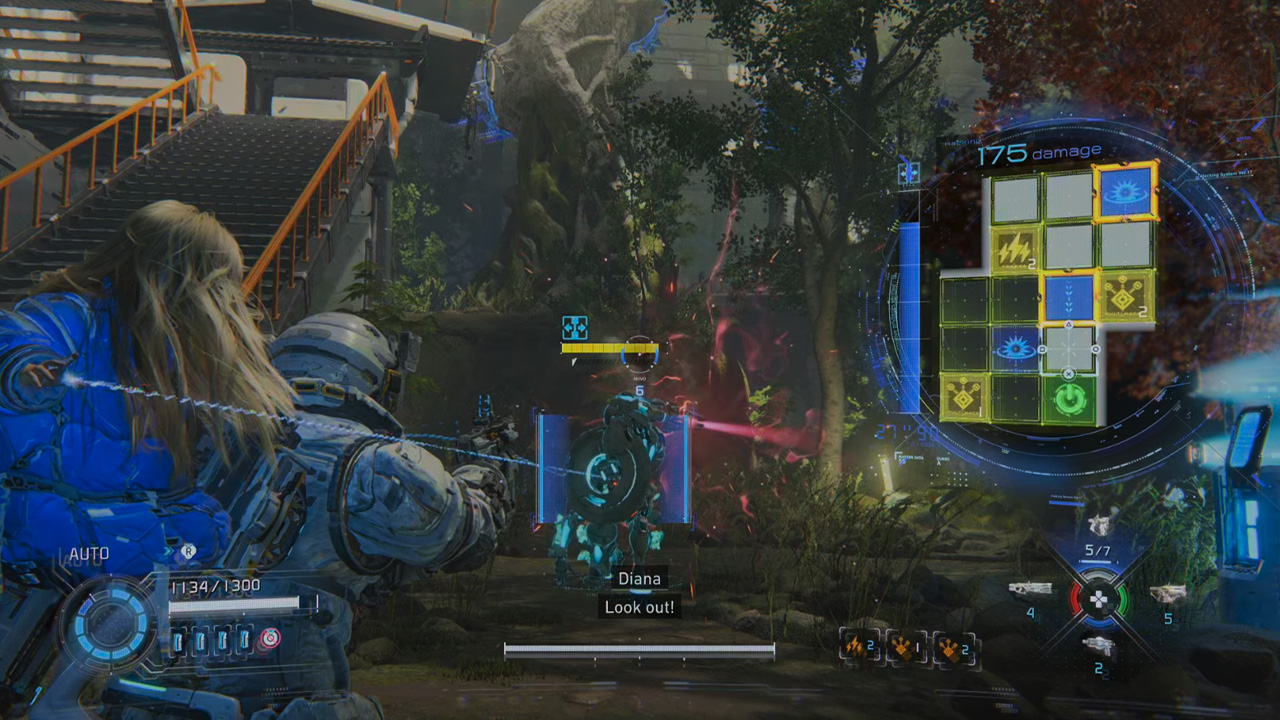
The core of Pragmata is the relationship between its two leads, and this is as true about the gameplay as it is about the story. Hugh and Diana need each other to get out of their dire situation; both in a general sense, and an immediate sense when angry bots are stomping towards them.
There’s an argument to be made that our little surrogate android daughter is one of the most useful video game NPCs ever, but the reality might be even sweeter. Both her and Hugh have clearly defined functions, that are separate enough from each other that you feel as though you’re playing as both characters simultaneously.
If Hugh is grabbed by a bot, it’s up to Diana to hack him out of its grasp. Hacking nodes and Hugh’s suit mods can work in tandem to create some real chaos. By the end of the game, when they’re both kitted out in abilities and you’re confident in your build, having them work in tandem is great. It feels like the ultimate video game teamwork, complete with the pair congratulating each other on a good job post-skirmish, and it’s all incredibly genuine.
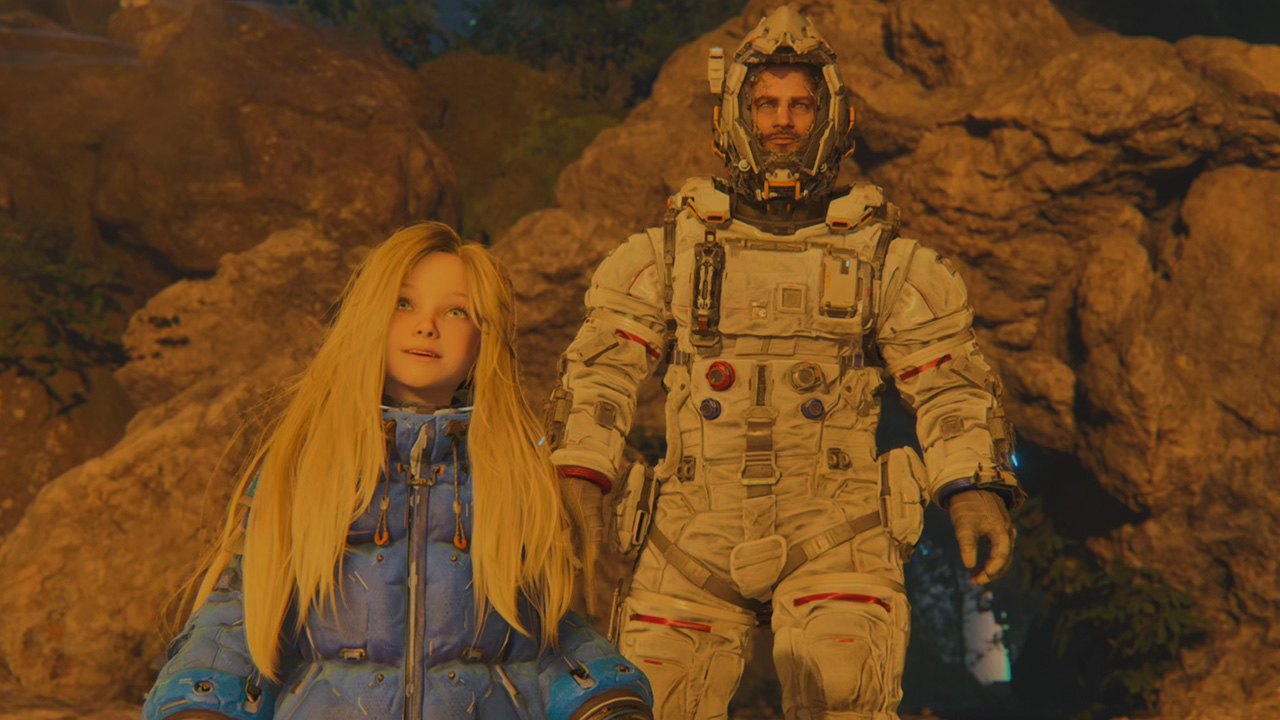
The character-work in Pragmata is masterful. Which is why, outside of the hacking-focused combat, its other key strength is The Shelter.
Pragmata’s campaign is linear in a sense, but its levels are composed of a handful of different tightly-designed sections, all with their own little checklist of collectibles. Rather than continue onwards, at certain points in each area players can opt to return to The Shelter to regroup. When they’re done, they don’t necessarily need to go back out exactly where they were and, instead, Hugh and Diana are free to revisit any section of any previous sector to scoop up missing goodies.
It’s much in the same way that The Hunter’s Dream from Bloodborne works (not a comparison I was expecting to make), and of course upon returning to an area all the enemies will respawn so you’ll have to bear this in mind. That said, on the plus side, this means it’s very easy to farm for lunafilament to spend on upgrades.
This means you get to dictate the flow and pace of things. You want to race to the end? Go right ahead, if you’re bold enough. Want to go back and get some more currency to power-up Hugh’s units or Diana’s nodes? That’s good too.
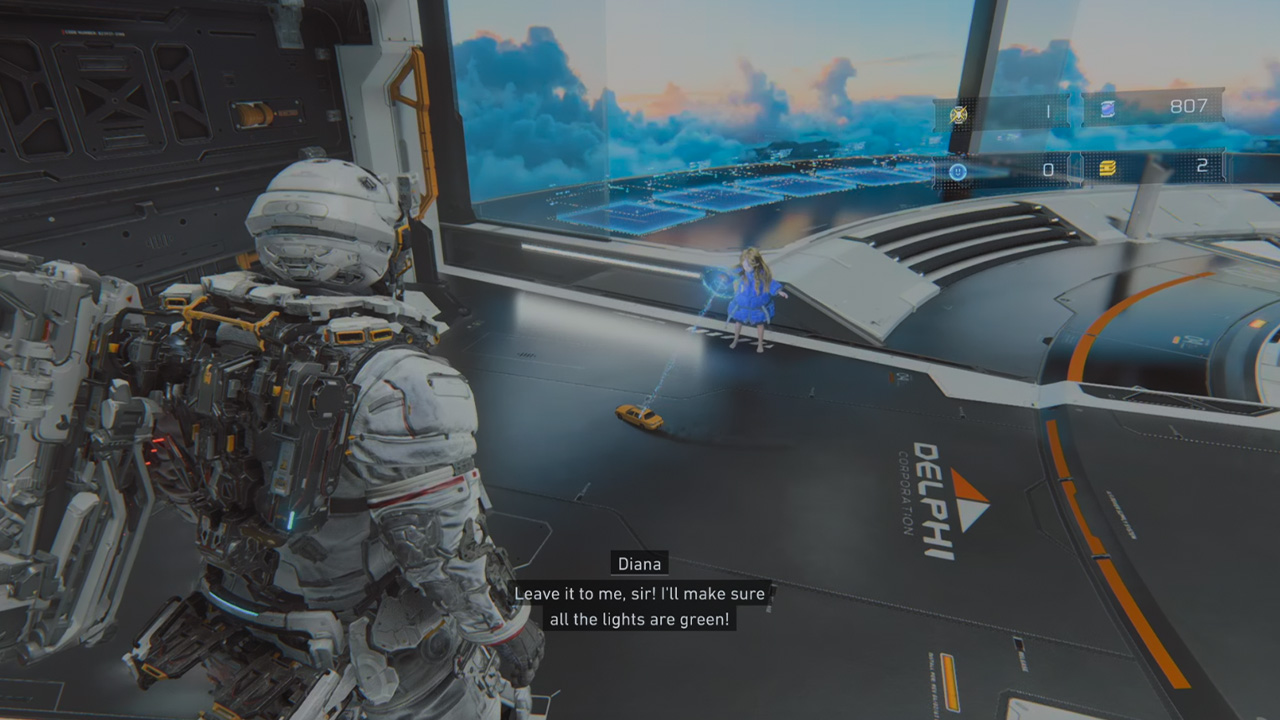
The Shelter is the pair’s safety from the dangers of IDUS and, more than just a spot to return to refill your health and ammo, it’s where the two get to truly exhale. Diana wanders around the space asking the kind of curious questions a six-year old normally would, and playing with toys recreated from Read Earth Memories that Hugh can gather from their exploration of the station.
This is the part where it’s easy to fall even more in love with the game. The catchy Resident Evil-esque safe room theme that plays and the kinds of interactions you can have with Diana really elevate what could’ve been, in a lesser game, an upgrade menu.
It is striking how incredibly well-written, animated and performed as a character Diana is. Whilst that is still apparent in the main gameplay portion of Pragmata, she becomes that little bit more endearing when she’s allowed to just be a kid. She and Hugh can continue conversations they started elsewhere on the station and make plans for when they get back to Earth together. Talk to Diana enough and she’ll present Hugh with gifts of her own in the form of crayon drawings. It’s absolutely adorable.
And Hugh is no slouch either. Despite making a crack at his colleague in the opening that living with kids “sounds rough”, Pragmata doesn’t make us suffer through another “resistant Father figure” storyline. Hugh and Diana connect almost right away so we can focus on building that rapport. He’s pretty straightforward as a character goes, but there’s the odd little infliction in his voice - usually in those softer moments - that really helps to give him warmth.
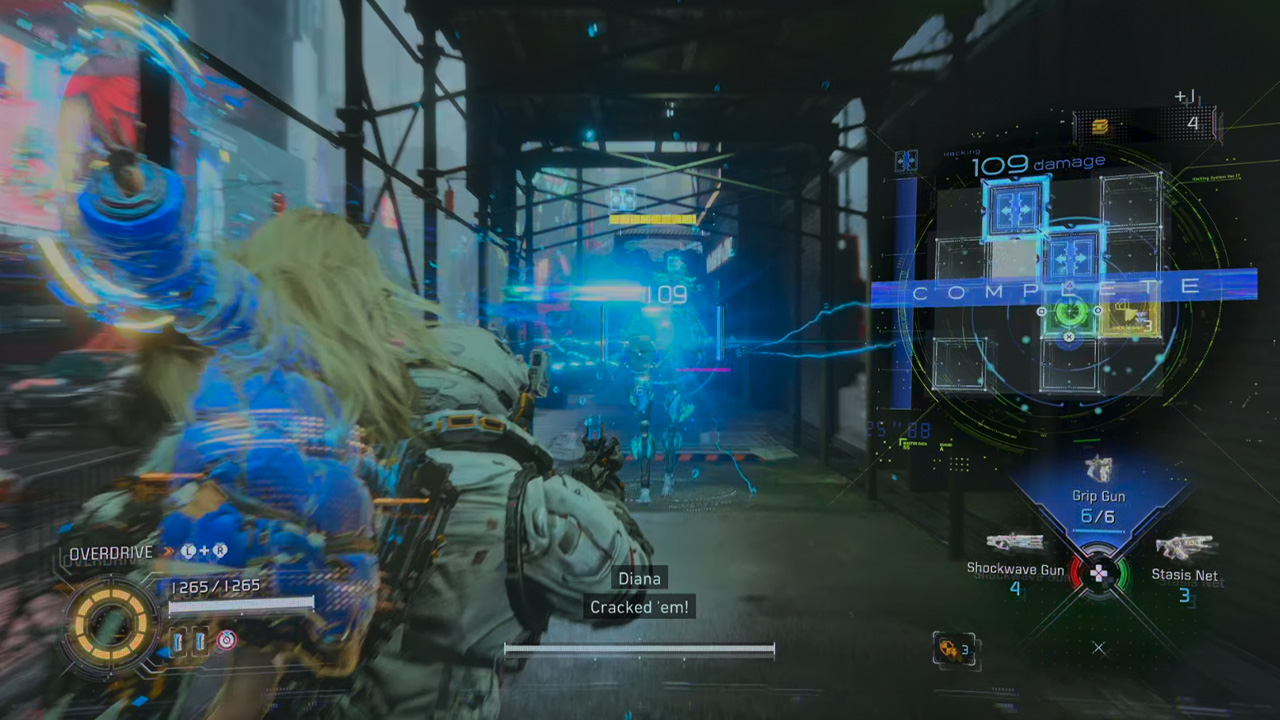
Pragmata is a strong looking game with a range of different locales. At the heart of it is the cold tin can of The Cradle in the even more cold nothingness of space. But, this is interrupted by essentially 3D-printed forests and the bright-lights of something resembling Time Square if someone took a gigantic magnifying glass to it. This stage stands out in particular, because of its wild, melty, dream-scape design. Overall, the game looks great and has lots of nice aesthetic details, like the light bouncing around the curves of Hugh’s suit. Importantly, and as is to be expected with Capcom titles at launch, the game ran flawlessly.
Truly, the criticisms of Pragmata seem entirely minor. IDUS’ bots do all look a bit similar - not necessarily in design but in the fact they’re all grey (and occasionally you get a red one). It’s the same kind of thing that perhaps could be levied against Horizon Zero Dawn for the same reason. The bots are all the same colour because they’re all of the same origin. That said, like Horizon Zero Dawn, Pragmata’s enemies all have functional variety, which means this isn’t a big issue.
The other one is Hugh’s controls. He’s weighty, heavy and clunky in the way that a bulky space-suit with little pocket-thrusters should be. Trying to move suddenly, or correct movement mid-jump, does sometimes feel like squeezing a bar of soap. Out of nowhere, Hugh will be pinging off into the distance.
This is never a problem in the main campaign as the game doesn’t particularly ever ask you to do any tricky platforming. However, in The Shelter’s Training Simulations, it's easily to find yourself falling to your simulated doom as you're tasked with jetting to a goal within a set time-limit.
However, one could argue that the difficulty of platforming as Hugh is very much accounted for. These training simulations aren’t supposed to be easy, as the rewards for them are well worth putting the time and swear words into. Hugh and Diana’s robot buddy Cabin will hand over coins that are spent on a bingo board that unlock various mods, nodes, cosmetics and even some lore.
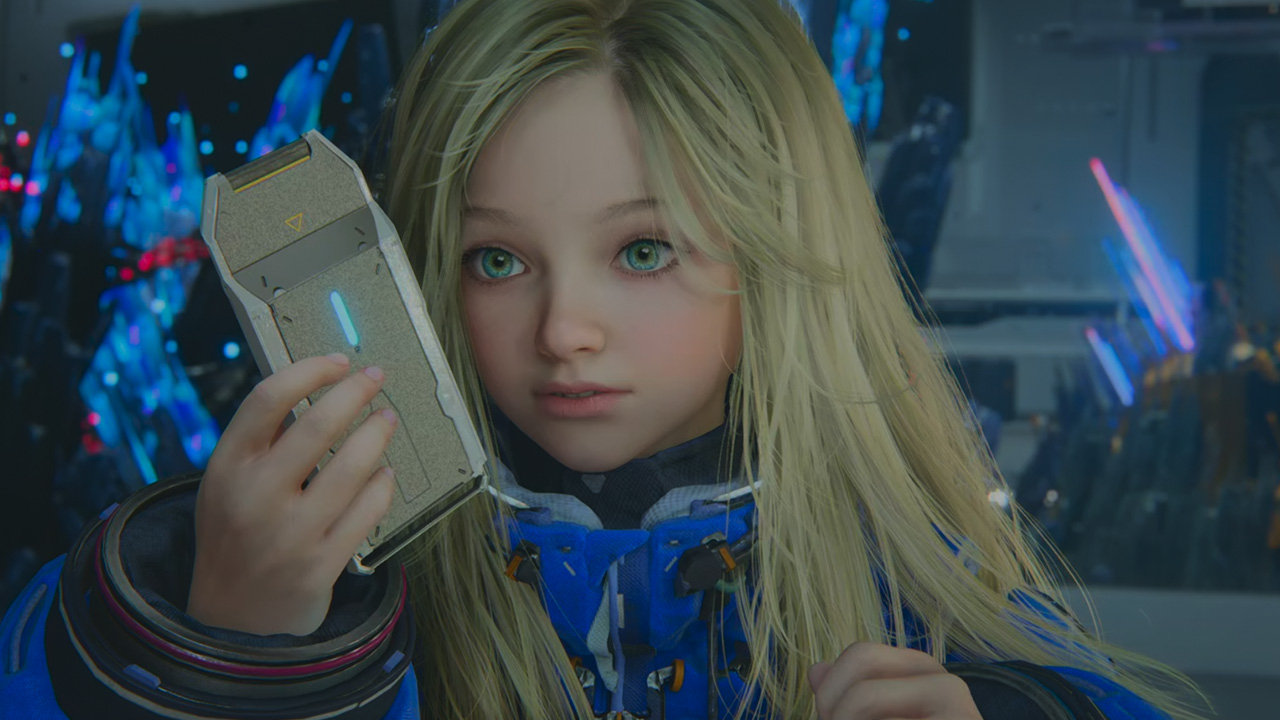
When it comes to the story itself, Pragmata doesn’t exactly do anything groundbreaking that you’ve never seen before. It’s in the way it presents itself that makes those elements sing. The majority of the game is about the interactions between Hugh and Diana and how that shapes their experiences, and the game has interesting things to say about the nature of artificial intelligence, especially considering the climate we’re currently living in.
Whilst the level design has a lot to compliment - tight, clever, makes great use of space - Pragmata has an almost amusing lack of objective variety. There’s a lot of “hack X number of locks around the area to open the big door” moments, to the point where the game even makes fun of it towards the end.
And, in all fairness, it feels like Pragmata doesn’t care. It knows its strengths are elsewhere, and that they’re enough to override issues like this. Would less repetitive combat dialogue be nice? Absolutely, but it's easy to look past this because of the game’s confidence in other areas.
If anything, it brings forth memories of Capcom’s 2024 AA-title Kunitsu-Gami. Not in the way that they play alike, but that’s precisely the point. Capcom has some of the biggest franchises in the world, many of which are at their peak. There’s an argument that they don’t need to make new IP. But, like Kunitsu-Gami, this is clearly built out from a passion for particular gameplay ideas and the joy that comes with exploring them.
It’s a video game that loves being a video game, with its arcadey flow and satisfying throwback shooter elements. And, even though the Gamer Dad trope is a road walked so many times at this point, it still manages to bring something new to the table because of its setting and how directly you’re tasked with interacting with that relationship.
When it comes right down to it, Pragmata achieves everything it sets out to do and it somehow makes it all look easy. But then again, it’s Capcom in 2026 and it seems like in the current era almost everything they do turns to gold.
Hopefully Pragmata doesn’t get lost in the shuffle of all their big name IPs this year because it’s a truly rewarding experience.
Review Score: ★★★★½
Game code supplied by publisher for review, played on PlayStation 5.