10 Unclaimed Treasures That Would Make You Filthy Rich

Fetch your treasure ship, there are billions in gold waiting under the waves.
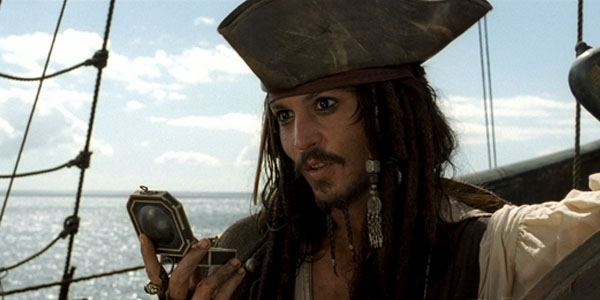
From Indiana Jones (the good) through to National Treasure (the not so good), films have often played upon the desire that resides in every single young boy that never really grew up, but only grew taller. The dream of finding untold treasure hidden away in a dusty tomb or a missing galleon filled to the brim with solid gold coins unseen for hundreds of years is a powerful one. To this day, people make careers out of gambling everything they have, buying a ship and heading out on the open waves with little more than hope and a rumour to guide them - only to return months later, haggard and with eyes filled with horror, clutching a single golden cup or a small, delicate emerald ring worth half a billion dollars alone. It is these real life mavericks who inspire the films, and the games like the Uncharted series or Tomb Raider; these mavericks who really go out there and find the treasures thought forever lost. There are plenty of examples of people who made their fortune with a single find. Even some of the entries in this article are only the remaining treasure that wasn't salvaged at the time of discovery, and was then lost again, waiting for a courageous person to come and claim what is theirs. If you have a taste for adventure, and a desire to become richer than Croesus, then click next and see where to start digging!

10. The Amber Room

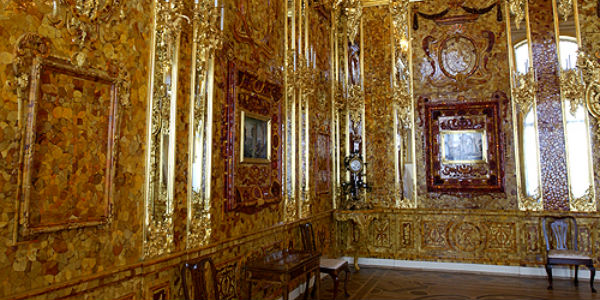
Modern Value: $170 Million Every good treasure story has one thing in common. At some point, in some way, the Nazis managed to find the treasure and hide it, leaving the location known only as "somewhere in europe" during their spate of destruction and theft in the latter years of WW2. This is no different, as the treasure originally came from Germany. The image above is of the current exact replica of the original Amber Room in Russia, but the original was a room made entirely of purest amber, inlaid in solid gold and polished mirrors. It was designed by Andreas Schluter between 1701 and 1709 and built in the Charlottenburg Palace in Prussia by Gottfried Wolfram of Denmark. Ungrateful king that he was, the king of Prussia Friedrich Wilhelm I gifted the room to Tsar Peter The Great of Russia to seal an alliance, and the room was rebuilt in the Winter Palace in St. Petersburg, where it was acknowledged as priceless. Unfortunately, invading Nazi soldiers discovered the room in 1941 and dismantled the room, sending it to Konigsberg Castle for display. Officially, the Nazi regime claimed the room was destroyed by an allied bombing raid in 1943, but there is significant evidence from Nazi footsoldiers who claimed shortly after the war that the room was removed and hidden with other stolen treasures, although they were not told where. Many have claimed to have found the room, but no one has ever produced any of the panels, amber, gold or mirrors. If it were found, a low estimate of $170,000,000 would be waiting for the discoverer. Better fetch your shovel.

9. The Treasure Of The Lost South African Krugerrands

South Africa CoinsModern Value: $250 Million In the late 19th century, the expansion of the British Empire was well underway and Africa was the continent of choice for unclaimed (apart from all the indigenous people, and foreign colonialists but they hardly count) resources. The second Anglo-Boer War (1899-1902) was fought between the British Empire and the South African Republic, ending in victory for the British Empire as they massively outnumbered the smaller republic and used troops from around the world. Apart from being the war that gifted the world with scorched earth tactics and concentration camps (invented by the British, made famous by the Nazis), the war also left a treasure that has been searched for unsuccessfully for over a century. As the Boers realised that their capital, Pretoria, would soon fall, the government took possession, both legally and illegally of all the gold they could muster. They emptied mines, banks, currency reserves and minted thousands of new coins. As the government relocated as Pretoria fell, much of the gold travelled with the President Paul Kruger as he fled the British. Eventually, Kruger reached the coast and fled by ship, but not before hiding the treasure in the wildlands of North East Transvaal, on very little notice, with very few men and supplies. It seems reasonable to assume that he hid it somewhere easily accessed like a mine or cave system, or in a shallow pit. To this day the treasure remains in the hiding place, although many claim to know where it lies, no one has ever produced any evidence. Local men often try to sell the location to rich and gullible tourists. Who knows, perhaps one of them really does know where the treasure is?

8. The Oak Island Treasure
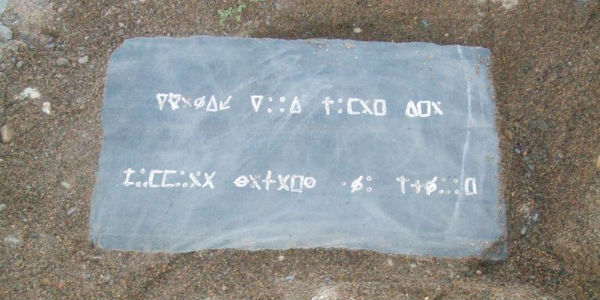
Modern Value: Unknown. The Oak Island Treasure Pit is famous among treasure hunters the world over. Purportedly the final resting place of the treasure claimed by notorious pirate lord Captain Kidd, the pit was discovered by a child in 1795, who roped in two of his friends to help him dig. After achieving the impressive depth of 10 meters, being stopped by layers of cut logs every three meters, the boys gave up when they hit a layer of flagstones, marked by pickaxe strikes. Many, many others have attempted to excavate the pit over the last few hundred years, setting up dedicated companies to do so, and attracting famous figures who want to find the treasure such as American President Franklin D. Roosevelt (who is often overshadowed by the more adventurous Theodore Roosevelt, perhaps a tad unfairly). That somebody built the pit is no longer a matter of speculation. Somebody dug a pit straight down for around 100 meters, leaving both flagstones and wooden layers to support the earthworks, as well as setting up boobytraps to stop the pit from being easily dug again. You don't build a pit of that depth on a small island in Nova Scotia in the late sixteen hundreds without a very, very good reason, especially as there was no way to get a large work force there, or any tools or equipment larger than a block and tackle. After a considerable depth, a stone plate was discovered with a mysterious note carved in an unknown language. After years of study and research, the note was finally translated to mean, "forty feet below, two million pounds are buried". At the time the flagstone was buried, two million pounds would have been a kings ransom. Today, it would be a frankly astounding sum of money, when adjusted for inflation and the added value of being sought after treasure is considered. Excavations only reached a depth of 72 meters, and when modern mines can run for miles into the ground, there really is no reason that the treasure has not been found. It's just waiting there for a determined person to claim it...

7. The Treasure Of The Temple Of Solomon
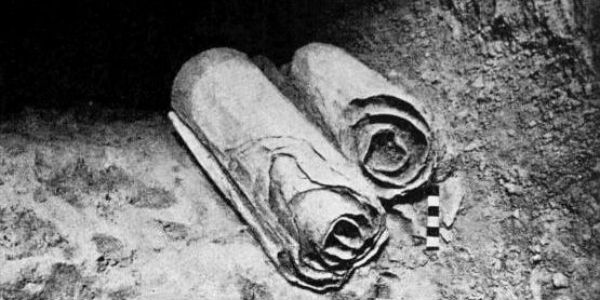
Modern Value: $1.2 Billion Everyone knows the name Dead Sea Scrolls, but very few people know that with the theological scrolls was a scroll unlike the others. This very special scroll was different to the 972 parchment and papyrus texts found, as it was made of copper, which would have been expensive and difficult to work with at the time the scrolls were hidden to protect them from the wars that were ravaging the land. The copper scroll was a found in two separate pieces, presumably split to protect the contents of the scrolls from any unworthy discoverers. The copper scroll was discovered in March of 1952, slightly separate from the other finds and more carefully hidden. The scroll has suffered badly from oxidation and was extremely fragile, meaning it would be some time before the scroll could be translated. Eventually however, the scroll was translated and it was discovered to be an extremely detailed list of 64 locations where large amounts of gold, silver, religious relics and treasure had been hidden. It was clearly intended to be retrieved and the treasure to be recovered, as it is written assuming that the reader is familiar with the places, locations and landmarks mentioned. Estimates have dated the scroll to around 110-30 BCE. Much of the land was ruled by Romans during and after this period, and it is not surprising to discover that the general theory held among historians is that at least some of the treasure was located and taken by the Romans, however, the sheer number of hiding places detailed means that it is unlikely that any occupying force would have found all of the treasure without the list and a local informant to detail the locations. As an example of the cryptic nature of the list, a short translation has been made public. "In the funeral shrine, in the 3rd row of stones. One hundred gold ingots. In the ascent of the "staircase of refuge', to the left-hand side, three cubits up from the floor are forty talents of silver. In the cave that is next to and belonging to the House of Hakkoz, dig six cubits. Within are six ingots of gold." It's the treasure map that keeps on giving! Discover one treasure, and you are filthy rich, discover two and you will never need to work again. Spend your days hunting down the other treasures! Solving ancient riddles, and recovering 64 individual treasures, not to mention the historical and cultural artefacts that are sure to accompany the most valuable resources buried during a time of war, occupation and persecution.

6. The Lost Crown Jewels Of English King John 'The Bad'
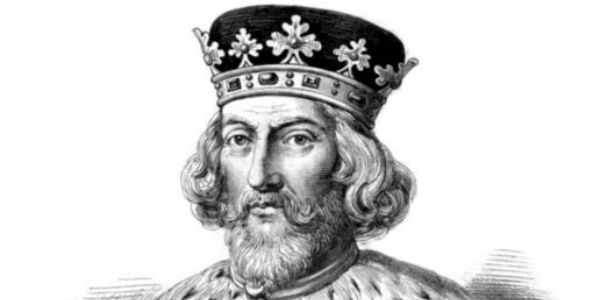
Modern Value: $70 Million King John of England (also known as John Lackland or Bad King John), ruled from 1199 to his death in 1216. Frankly, he was a terrible king, unprepared for the pressures of ruling and untrained in diplomacy, warfare or regality as he was the youngest son of Henry II and not expected to inherit much land or power at all, as he had four older brothers. It is the same King John who is regularly lampooned in the Robin Hood mythos, and Disney films as being a coward, a thief and a idiot, which from the evidence we have, he was. He was also the youngest brother of Richard the First (Richard The Lionheart), whom John attempted to unsuccessfully rebel against whilst Richard was fighting the Third Crusade. He overtaxed his people and his lords and barons, leading to the rise of outlaws like the fictional Robin Hood (which was a medieval term for outlaw, not a man's name), and studiously insulted his ruling nobility so much that they rebelled and created the Magna Carta, forming the earliest parliamentary democracy in the world and outlining the rights of a free man for the first time in history above the power of a King. Were these failings not enough, Bad King John also managed to lose the crown jewels of England shortly before his death. Whilst travelling from Bishops Lynn in the east of England to Newark Castle, King John took the safe route around a swampland known as The Wash, as he was dying of dysentery. However, his soldiers and carts of personal possessions took the riskier but faster path through the swampland. Included in the personal possessions of the king were the priceless crown jewels which were inherited from the Empress of Germany. As the tide rose higher, the soldiers were drowned in their armour and the heavy carts sank into the water and soft mud. The treasure, corpses, and possessions of the king were lost in the soft earth and have still not been recovered. King John died a few days later. Hundreds of millions in treasure and historical artefacts, perfectly preserved in the shallow mud around the English coast, just waiting to be found.

5. The Real El Dorado - Paititi

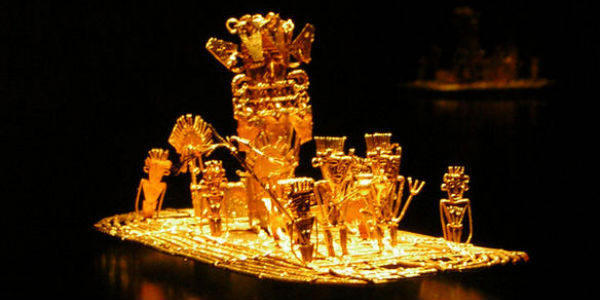
Modern Value: $1 Billion El Dorado is famous for being the city of gold! The lost centre of the wealth of the Inca nation. Unfortunately, it's probably not real. Beyond the Inca providing the Spanish with every piece of information they would need to conquer them, including the locations of all their cities, the legend is probably a corruption of an older legend about a Muisca Chieftain who would cover himself in gold dust before civic and religious ceremonies. In better news, El Dorado may not be real, but a lost city filled with gold most certainly is! Paititi, the city the Spanish never found. After forty years of war with the invading Spanish, the Inca nation had almost entirely retreated to Vilcabamba Valley, where they could easily defend against the invaders. Eventually, the Spanish managed to muster enough men in the new world to conquer the valley, but they found the city almost entirely deserted. People, livestock, treasure, food, almost everything had been spirited away in secret to somewhere in the rainforests of southern Brazil. Although conquistadors were sent, the Inca nation was never found, and nor was their final city filled with people, livestock and the treasure of an entire civilization. The legend of El Dorado was born, and the real city forgotten... Until the modern day! Using modern technology, in 2009 Google Earth images were analysed and found to show large areas of the Boco Do Acre region of southern Brazil had once held vast, vast settlements. Although surrounded by deep and dense jungle, it seems the fabled city of gold exists, and presumably it's treasures are still there. You can even see it for yourself on Google Earth at Latitude: 8°50'38.63"S / Longitude: 67°15'11.95"W. See you there?

4. The Spanish Treasure Fleet Of 1715
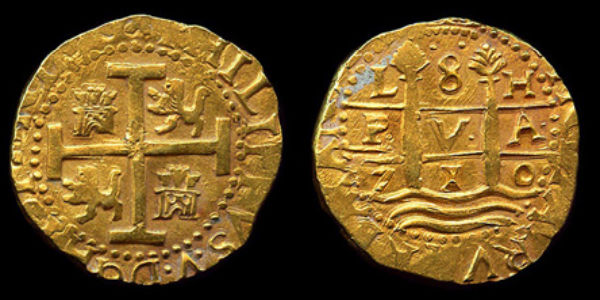
Modern Value: $2 Billion The new world was a wealth of untapped resources when it gained the interest of the european powers in the sixteen and seventeen hundreds; from gold, jewels, slaves, land, resources like potatoes and tobacco, it was a massively valuable continent ripe for the plucking. And pluck they did, Spain as much as any other major european power. The treasure fleets ferrying vast amounts of treasure back to Spain from the new world were so attractive that England actually began employing pirates as Privateers to simply take the treasure from them as they sailed home. The treasure fleet of 1715 was one of the largest treasure fleets ever assembled, filled with enough valuables to literally pay off all of the debt of Spain's new King Philip V, after his expensive war of succession. The fleet consisted of 12 large ships, from various Spanish Fleets and a single French merchant vessel, meaning a total of twelve ships with around $6 Billion worth of gold, silver, pearls, assorted gemstones and other valuable commodities spread out across the cargo bays. To avoid being an undeniably tempting prize for pirates and english Privateers, the fleet waited until the last possible day to set off for spain, cutting closer to hurricane season than any fleet had ever done before. Inevitably, a hurricane hit the fleet only a week after they had set off from Cuba. Over the next four years, around half the treasure was recovered by the Spanish Navy, pirates and English Privateers, however to this day, treasure still washes up on the shore of Florida from the fleet. Only seven of the twelve ships have been located, and only a tiny percentage of the treasure has been recovered from those ships after the initial four years of Spanish recovery. This means that around $2 Billion in treasure and unclaimed salvage is waiting off the coast of Florida. The ship thought to be carrying the most treasure, the lighter Carrack San Miguel, is thought to have been separated from the fleet the day before the storm, meaning it sank with a full compliment of treasure aboard, and hasn't been touched since. If found, it would be the most valuable wreck ever recovered.

3. Nuestra Señora De Atocha

Modern Value: $1 Billion The Nuestra Senora de Atocha was the best known ship in another Spanish treasure fleet, which sank in 1622 due to another hurricane. The ship sank in the Florida Keys while carrying gold, silver, copper, gems, jewels, expensive materials like jewelry, indigo and tobacco; all totalling about $1 Billion in today's market. The ship and fleet suffered a string of problems and bad luck. The amount of treasure arriving to load onto the ship was so huge that it took two full months to record and stow the cargo on the ship. Other ships of the fleet were unable to sail until they had been repaired, and others still were kept in port as storms wracked the coast of America. Eventually, after even more delays, the Atocha and her 27 other ships of the treasure fleet managed to convene in Havana, where they suffered more delays. They did not manage to leave for Spain until they were six full weeks behind schedule. Two days after they left Havana, a large, powerful hurricane drove the Atocha away from her fleet and onto coral reefs about thirty five miles from Key West. She sank quickly, drowning everyone on board, with the exception of three sailors and two slaves. The surviving ships returned to Havana, and reported the sinking. Five more ships attempted to salvage what they could from the wreck, and another spanish wreck, the Santa Margarita. They managed to recover around half of the treasure from the Santa Margarita, but the Atocha was not found until 1985. The ship contained large amounts of treasure, but the sterncastle, where the most valuable treasure would have been stored was missing from the ship. As recently as 2011, treasure was still being recovered from the sterncastle. Two silver spoons and a single emerald ring were found, the ring alone being worth around half a million dollars. Whomever manages to find the missing sterncastle and recover the treasure within will net around $1 billion. That is definitely a prize worth hunting, especially in such shallow water and knowing the position of the hull of the sunken ship. The sterncastle cannot be far.

2. Treasure Of The Flor De La Mar

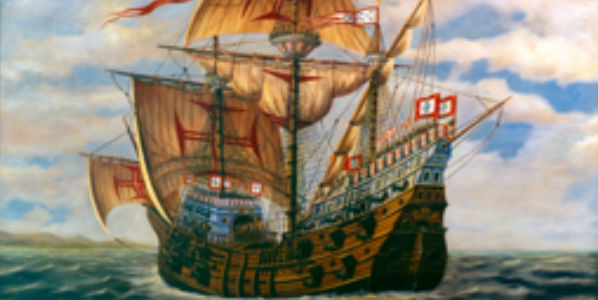
Modern Value: $2.6 Billion As far as ships with history go, the Flor de la Mar is a very strong example. The ship had travelled the world before it sank in 1511. At 400 tons, it was one of the largest Portuguese carracks built during the Portuguese age of seafaring. It was involved in the battle of Diu, the conquering of Goa and the capture of Malacca as Portugal extended her empire into the orient. The ships captain Alfonso de Albuquerque was a renowned seaman and able leader, and his ship was loaded with huge amounts of plundered treasure and war spoils from Malacca, as well as tributes to prevent war from the King Of Siam. Contemporary sources indicate that it was the largest amount of treasure ever assembled in the entire history of the Portuguese navy. She set off for Portugal, with four companion ships in the middle of 1511, but was caught in a storm near the Straits of Malacca. On the 20th of November, she sank on the reefs near Sumatra. The ship was torn in two by the storm and many young slaves drowned, along with all of the treasure aboard being lost. Captain Alfonso was rescued, however. Due to the inaccuracy of Portuguese maps of the oriental region, the location of the ship wasn't certain as she sank, and her two halfs may have drifted apart somewhat in the five hundred years since the sinking. To this day, not a single gold coin has been recovered from the wreck and the location is still unknown. The gold she carried alone is worth $2.6 Billion. When combined with the rest of the treasure left aboard as she sank, the wreck is not only historically priceless, but it may very well be literally priceless. However, estimates are not so enraptured by the marvel, and so very rough estimates of between $5-10 Billion has been made.

1. The Treasure Of The Knights Templar
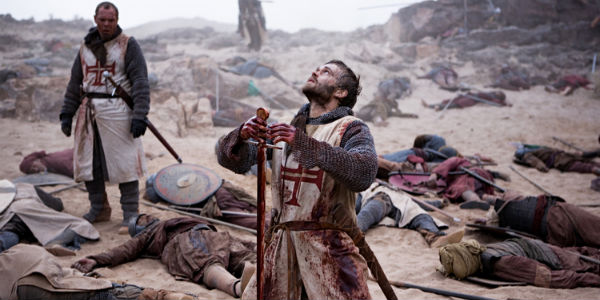
Modern Value: Untold Billions. The treasure of the Knights Templar is worth more than every other huge number in this article added together. The sheer number of relics, artefacts, wealth and treasure they possessed as a religious military order is astounding. Not only were they the richest military order ever created, but they were also declared a charity, and were that not enough, they invented a very early form of banking. This practice of lending and investing money made them hugely wealthy and powerful, but unpopular among those who owed them money. After 179 years of power, wealth and military might, they were finally forced out of the Middle East and those who owed them money, including Philip VI of France, and the Pope found they were not inclined to pay back what they owed. On Friday the 13th of October 1307, Philip VI arrested the leaders of the Order who were based in France and tortured them into confessing to heresy and devil worship. He seized their lands, their castles, their holdings and treasuries. However, when he opened the treasuries, they were almost empty. So where had the treasure gone? As the order was not tied to a single country, their castles and holdings covered much of Europe, and well into the Middle East. Knights across Europe quickly hid their portable treasure, and those with foresight left their landed holdings. A month later Pope Clement II gave an order of Pastoralis praeeminentiae, which instructed the heads of every catholic state to arrest all Templars they could find and to capture every possession they had. Their possessions were to be given to another religious order, more in control of the Pope, the Knights Hospitaller. Only some heads of state complied with the Pope, as he wasn't well liked or powerful enough to enforce the rule, mostly relying on Philip VI of France. Those who did reported that the vast majority of the treasure that should have been in the castles and garrisons of the Knights Templar was missing. Across Europe the story was the same. The latest evidence appears to show that the Templars had spies in every echelon of the church, and were well aware that their time was up. In fact, the large majority of Knights were never seen nor heard from again, very few were actually arrested. Several thousand noblemen, as well as several large fleets of ships simply disappeared, at the same time, across much of the world, apparently without any form of communication. A fleet of 18 ships stationed at La Rochelle in France simply sailed out of the port on the night of 12th October 1307, before any move had been made against the Templars and were never heard from again. In 2002, a document was discovered in the archives of the Vatican that shows that Pope Clement II quietly absolved the Templars in 1308, indicating that he had private dealings with Templars well after he had declared the order excommunicated. The question remains, where did the vast wealth and treasures of the Knights Templar go? Where did their fleets of ships sail for? Some say Scotland, as Templar insignia has been found in castles there, built well after the order was supposedly disbanded, others say elsewhere. What is certain however, is that gold, silver, large amounts of coin, jewels, jewellery, gold and silver plate, land deeds, religious relics, weapons, armour, horses, ships, documents, historical records, Saracen trophies, Christian artefacts, Muslim artefacts, curiosities and royal regalia all disappeared and not so much as a single scrap of paper has been recovered. Untold billions, wealth beyond imagining, richness beyond Bill Gates and Croesus await whoever can solve the riddle of where the Templars went in 1307. To find such a treasure might well catapult someone to being (almost) the richest person on earth. Any treasure we've missed? Do you have one corner of a treasure map and you'd like to find the other corners? Are you a Knights Templar, being hounded by young men in white hoods and you want to talk? Comment below and let us know exactly where we should be looking for the next big find! We'll share with you, honest...

 
Posted On: 
Contributor

A Video Game Writer and Editor based in Central London, who has a background in Theatrical Lighting, Directing and Playwriting.