15 Awesome Names For Things You Never Knew Had Names

Be prepared to become the best Scrabble player in the world.
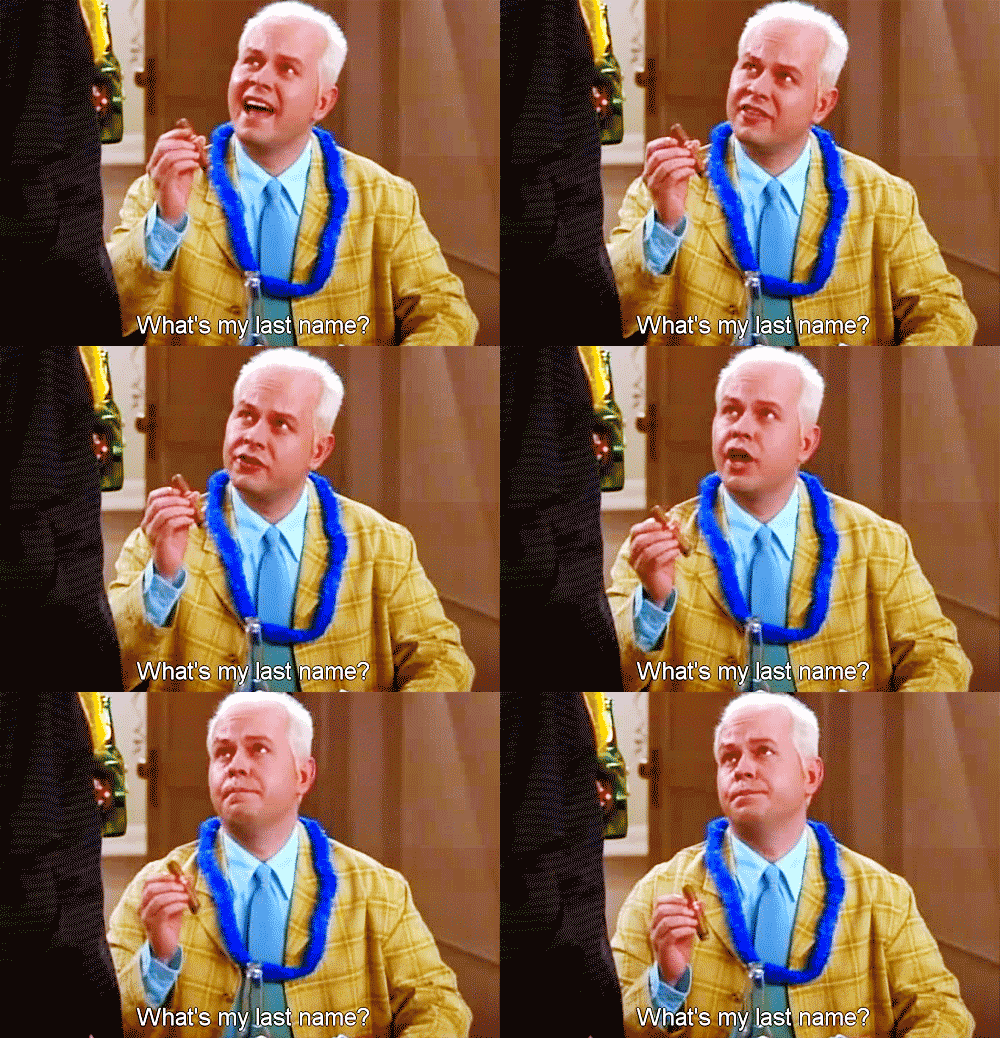
Ever get the feeling that there€™s a word at the tip of your tongue but you just can€™t seem to remember it? Well, there€™s a word for that. As it turns out, there are words for pretty much anything you care to think about. (There€™s probably a word for that too). Though it might seem in certain situations that the language is limited, it is really anything but: language evolves as its speakers evolve, and as the boundaries of our world have been pushed to our utmost capabilities, it only makes sense that there are words for all the bizarre minutiae €“ be they objects, concepts, or something else entirely €“ that has been thought up over these many years. Now, most people don€™t get up and read the Oxford English Dictionary for fun, and so they live their whole lives in the dark about some of the more obscure words that have been thrown into the mix without their knowledge. But for no longer €“ type some of these words into Microsoft Word and odds are you€™ll get a red squiggle and no suggestions. It€™s time to embrace some of the more peculiar elements of this delightful, frustrating, and occasionally flat-out bizarre language. (Take solace, English speakers: at least it€™s not German, where there is very literally a word for everything, and many more besides).

15. Grawlix

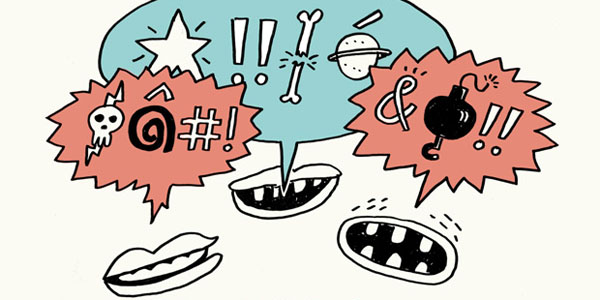
You've all seen them, some of you have probably used them, and the more potty-mouthed of you have at one point or another wondered why the hell they€™re even necessary €“ but now you can consider yourself among those who actually know what the random censoring symbols in comic books and strips are called. That€™s right: the f@#%ing things actually have names! The term €“ not in widespread use €“ was apparently introduced by American cartoonist Mort Walker in the 60s to signify a spiral-shaped symbol used to denote curse words in comics, but has now expand to refer to the more common string of symbols denoting profanity in many visual mediums. @#%$ yeah!

14. Muntin

Rear Window Have you ever wondered what the thin strip of metal or wood separating the panes in your window are called? Probably not, but in any case, they€™re called €œmuntins€ and, despite their ubiquity, they aren€™t actually all that useful. Up until the mid-19th century, it was simply far more economical to produce smaller panes of glass for windows, making the muntin a necessary architectural aspect. Now, the practice of dividing windows, because we€™ve been doing it for so long, is simply more architecturally attractive. These are not to be confused with the similar €œmullion,€ which are elements that separate entire windows, or else with €œastragal,€ which seal gaps between double doors €“ love €˜em or hate €˜em, you've got weeks€™ worth of windowed words over here.

13. Tittle
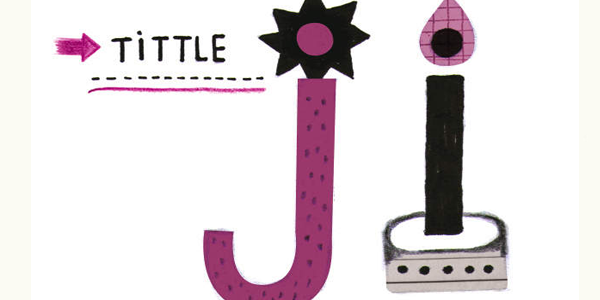
Not to be confused with something that may need grawlix to censor it, a tittle can actually be found in the word €˜tittle€™: it refers to the superscript dot on the lowercase I or J. Like most words on this list, it is rarely used, its most prominent usage being in the Bible at Matthew 5:18:
For verily I say unto you, Till heaven and earth pass, one jot or one tittle shall in no wise pass from the law, till all be fulfilled.
Even then, it€™s used figuratively. Its lack of use may have something to do with the fact that, in English, as you dot all your €˜I€™s and have no diacritics, there€™s just not much use for it. For an example to the contrary, some Turkish languages include both dotted and undotted €˜I€™s representing different phonemes. In still other languages, the tittle is not even used on €˜I€™s to distinguish a plain €˜I€™ from one that has a diacritic, such as í.

12. Apricity

Snowedin2 Gif Apricity was a word denoting the feeling of the warmth of the sun, specifically on a cold winter€™s day €“ something that you've all felt with great relief at one point or another. Coming from the Latin €œapricus€ meaning €œwarmed by the sun,€ the word itself sounds charmingly like the image of sunlight twinkling on fresh snow. Although denoting a fairly specific phenomenon, it€™s hardly less necessary than three different words for window-separating elements; however, this word is largely obsolete now. Here€™s hoping you can bring it back in vogue in time for the upcoming winter, because it really is quite delightful.

11. Contronym

A contronym, also known as a self-antonym, is a word for the rare words that have homographs (words that are spelled the exact same way) that are also antonyms (words with opposite meanings). Essentially, these words can themselves act as their own opposites, a bizarre idiosyncrasy of this endlessly fascinating language. There are a few examples of common contronyms in English: one prominent one is €œinflammable,€ which can either mean €œcombustible€ or €œnon-combustible,€ making it a fairly useless word. Mostly, we now use €œflammable€ to denote things that catch fire spontaneously so that, well, they don€™t. €œRent€ is another example, in that it can refer to either borrowing or lending (or the heartwarming, Tony-winning musical); €œscreen€ can mean to show or to conceal; €œoversight€ means supervision, but an €œoversight€ goes unnoticed. And there are surprisingly more examples besides for a language who€™s main purpose is clarity of communication.

10. Paresthesia

Paresthesia sounds like a dramatic medical condition, but in reality, it€™s just a word for the prickling sensation that you get when your limbs fall asleep, also commonly referred to as €œpins and needles.€ Which, when you get it, does sometimes feel like a dramatic medical condition €“ thankfully, it€™s most commonly a transient symptom, meaning it€™ll go away after you get off your computer for a few minutes. Paresthesia is most commonly caused by a temporary restriction of blood flow to an area of nerves, typically if you€™ve been sitting on that body part for too long, but can also be caused by some viruses that cause tingling. If your paresthesia is chronic, it usually means there€™s an actual dramatic medical condition involved interfering with the function of neurons or blood circulation.

9. Estival

A technical term similar to €˜autumnal,€™ or €˜vernal,€™ estival means that which has to do with summer, like the estival solstice, for example. Although nothing extraordinary, and quite rarely used, it seems almost like a wasted opportunity for poets and laymen alike: what better word could there be than an adjectival form of €˜summer,€™ denoting the best things about everyone€™s favourite season? In actuality, though, the real missed opportunities are numerous and widespread, and they all have to do with every single summer music event that could have been called an €œEstival Festival.€ Seriously.

8. Mondegreen

You've all done it, and you've all felt extremely stupid about it after the fact. Seriously, there is nobody in the world who has not created a mondegreen €“ there was even a short-lived, Aguilera-featured meme about it. Though it sounds like an abstract art piece, creating a mondegreen just means mishearing song lyrics and substituting similar words in to make it make sense. The term originates from an essay by Sylvia Wright who misheard a line from the ballad €œThe Bonnie Earl o€™ Moray,€ mistaking the line €œAnd laid him on the green€ for €œAnd Lady Mondegreen.€ Psychological explanations state that humans do this upon mishearing because of our brain€™s attempt to understand the song by making assumptions to make sense out of nonsense. Others suggest that mondegreens tend to be less plausible than the actual lyrics, but because you're stubborn creatures, you €œlock it in€ to your brains. Whatever the case may be, the line €œConcrete jungle whipped cream tomato€ shows that Jay-Z€™s Empire State of Mind is a far more culinary tune than anyone would€™ve thought.

7. Petrichor

Fans of Doctor Who might be familiar with this beautifully poetic term that means the scent of rain on dry earth. It is etymologically derived from the Greek for stone (petros) and ichor, the blood of gods in Greek mythology. Though a poet€™s dream, the actual term was derived by researchers who found that the distinctive and pleasing scent comes from an oil emitted into the soil from certain plants in dry spells. When it rains, the oil is released into the air, along with certain other compounds, producing that crisp, familiar smell of freshness and renewal.

6. Eggcorn

Another word about words, eggcorn refers to the linguistic phenomenon that occurs when a misinterpretation or mishearing of a phrase makes just as much sense as the correct version of that phrase. The term itself is an eggcorn of the word €œacorn,€ which isn€™t the best example of an eggcorn, funnily enough. Eggcorns can often occur when one replaces an unfamiliar or obscure word with a more common one in their mind; a common example is €œold-timer€™s disease€ as opposed to €œAlzheimer€™s disease.€ Another such example is €œex-patriot€ substituting for €œexpatriate.€ Eggcorns aren€™t to be confused with malapropisms, which create a nonsensical phrase. Eggcorns themselves are a charming insight into the flexibility and variability of our language, but just the fact that the word exists is in itself delightful: we have a word for words that substitute for other words to make a word, or words, that makes sense. God bless the English.

5. Zarf

Though it sounds like something off of Star Trek, this bizarre-sounding word is perhaps even more strange for how commonplace they are: a zarf refers to the cardboard holder of your handle-less disposable coffee cups. Most people refer to these as sleeves, but that€™s not half as cool as this Arabic term from €“ wait for it €“ the thirteenth century. Yes, they had coffee back then, and in Turkey, it was an even more complex and ritualized process than the Starbucks order of the girl in front of you. Back then, they were made of silver, gold, or brass and were often heavily ornamented with gems or engravings, and were used €“ as they are now €“ to protect the fingers of the drinker. Some were made of wood and were favoured for wood€™s natural scent, and still others were meticulously made from tortoiseshell, horn or ivory. Though it seems excessive compared to our own paperboard sleeves, what with Starbucks€™ astronomical prices, one would think they could throw in a gem-set tortoiseshell zarf with our PSLs€

4. Skeuomorph

A skeuomorph is a type of object or design aesthetic that retains ornamental design cues from structures that were necessary in a previous incarnation of the object, but are now obsolete. Though it appears to be a word for something that€™s oddly specific, skeuomorphs are far more ubiquitous than you realize €“ just ask anyone who owned an Apple product prior to iOS 7, what with iBooks€™ wooden bookshelf, the compass, the voice recorder, the notepad, and the calendar all resembling their old, real-life counterparts. Although Apple, and many others, have moved away from skeuomorphic design, skeuomorphs remain in many facets of our lives: most of our phone cameras retain a shutter-click sound despite the fact that it€™s unnecessary (and unnecessarily complicates creep-shots), for example.

3. Lethologica

We€™ve all felt that horribly elusive but perfectly right word caressing the tips of our tongues tantalizingly as we struggle to recall it, and all the mental anguish and subsequent relief that comes with it €“ turns out, it has a name: lethologica. Lethologica strictly refers to a debilitating disorder where this occurs frequently, but can refer to this universal phenomenon. The tip-of-the-tongue scenario occurs regardless of age, gender, or Native language, endlessly frustrating people from all walks of life. Though the causes of it are largely unknown, there are a few postulations about it: one, that it occurs when the memory of the word isn€™t strong enough to recall the word but enough to induce the state of lethologica, and another that posits that tip-of-tongue states arise when one tries to piece together a word from different clues.

2. Semantic Satiation

If you€™ve been reading these words about words for long enough, for some, the word €˜word€™ might stop looking or sounding like the word €˜word,€™ or indeed like a word at all. If that sentence came true for you, then €“ congratulations! €“ you€™ve just experienced semantic satiation. Semantic satiation refers to the phenomenon when a word is repeated enough times that it loses meaning for the reader or listener, who then perceive the word temporarily as meaningless sounds. Really, saying any word or name out loud enough times €“ or even staring at it for long enough €“ can trigger semantic satiation. Neurologically, this phenomenon is caused by rapid repetition causing the neural activation associated with the meaning of that word to become reduced in intensity with each successive repetition. In actuality, this phenomenon lets you know when you should stop reading and go to sleep when you€™ve stared at the word €œcheese€ and repeated it to yourself five hundred times to the point where nothing means anything anymore.

1. L€™Esprit d€™Escalier

Though technically cheating, as this is a French term, but so are half of English€™s other common phrases €“ they have a certain je ne sais quoi €“ so onto this delightful phrase: l€™esprit d€™escalier, literally €˜staircase wit,€™ refers to that endlessly frustrating predicament of having thought of the perfect retort after the argument is done. It happens far too frequently; we get flustered and sputter at our opponent, and then, three hours later in the shower, we come up with a smooth and incredibly witty rejoinder that would have been the perfect finisher to the argument. The term itself comes from French philosopher Denis Diderot, who described a scenario where a man becomes overwhelmed by an argument and can only think clearly au bas de l€™escalier, or at the bottom of the stairs, after having left the gathering. Any strange and wonderful words that you can think of? Any that should definitely have been showcased here? Let us know in the comments below!

 
Posted On: 
Contributor

Canadian student. Spends probably an unhealthy amount of time enthusing over musicals, unpopular TV shows, and Harry Potter. Main life goal: to become fluent in Elvish.