27 Astonishing Things You Didn't Know About London

18. There Are Several "Ghost" Stations On The Tube
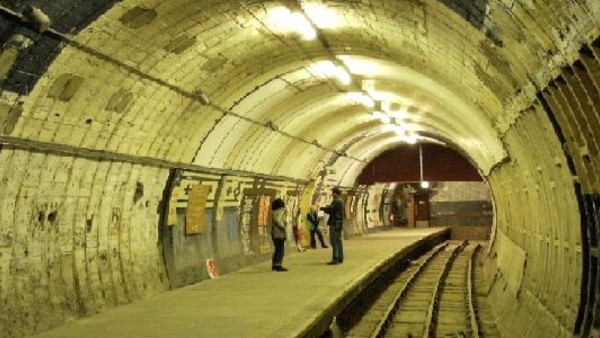
Given the Tube has been running for over 150 years, it's not surprising there are a few disused stations. The most famous "ghost" station, British Museum, is found between Tottenham Court Road and Holborn. Other ghostly stations include Churchill's wartime bunker of Down Street, York Road, and Aldwych, pictured above. Due to its reasonably intact nature and accessibility, Aldwych has been used in films such as V for Vendetta.

17. There Are A Thousand Plague Victims Under Aldgate Station

Ghost stations aren't the only spooky aspect of the Tube. Aldgate East Station on the eastern edge of the City of London, for example, is built on the site of a mass grave for Black Death victims. The last great outbreak of bubonic plague in London occurred in 1665, although there were cases going back to 1499. This outbreak killed approximately 100,000 Londoners and, at its height, accounted for 2000 victims in just two weeks. The incredible death toll required the use of communal graves, with the dead being stacked five deep. Every time passengers use this station, they are treading on over a thousand corpses.

16. Eel Pie Island Was Once A Royal Seduction Spot

There's a pleasant little island on the Thames in Twickenham that's only accessible by boat and a single footbridge. That island is called Eel Pie. The island got its curious name from the eel pies that its inhabitants sold to passing river traders. This island has two major claims to fame. The first is that, during the 1500s, King Henry VIII used the island as a secluded spot to, ahem, "court" his many mistresses. At least when he was playing about on Eel Pie Island, he wasn't ordering executions...

15. And Then It Became The Centre Of A Musical Revolution
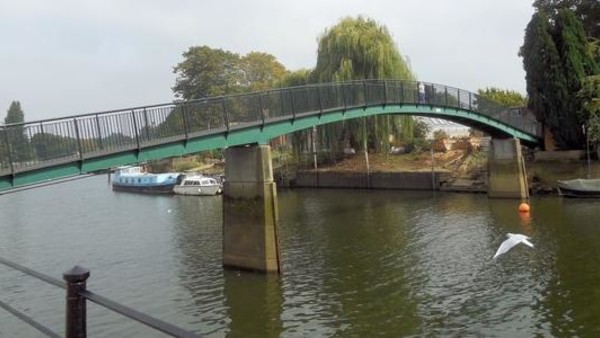
From 1830, Eel Pie Island enjoyed another, no less raunchy, phase. With the establishment of Eel Pie Island Hotel, the island slowly became a popular resort. Things really took off during the 1950s and 1960s, when the hotel played host to numerous gigs. Musical legends who graced its ballroom included Pink Floyd, Black Sabbath, David Bowie and The Rolling Stones. When the hotel closed, the building became a hippie commune. But eventually the structure was condemned and torn down, and the island returned to its sleepy, pre-rave days. Visitors now are only allowed across the footbridge twice a year for the summer and Christmas markets.

14. There's US Soil Under The Statue Of George Washington In Trafalgar Square
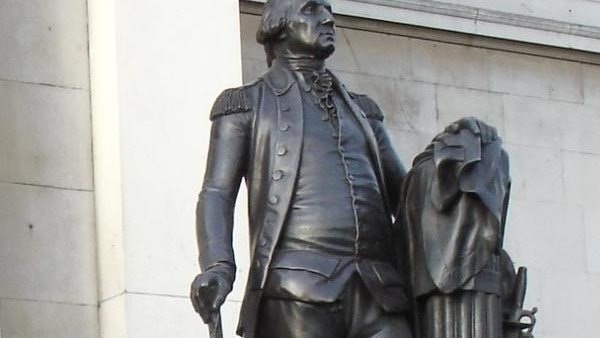
In 1921, the Commonwealth of Virginia gave a bronze statue of George Washington to the people of Great Britain. This sounds like a wonderful gesture, right? But there was a problem. The US President had proclaimed that he would "never again step foot on English soil". And Trafalgar Square, where the City of London wanted to put the statue, is most certainly on British soil. The City of London and the people back in Virginia came up with an ingenious solution - they put some genuine US soil under the statue, allowing the President's effigy to stand on untainted American dirt. Problem solved!

13. There's A Secret Bar At The British Film Institute
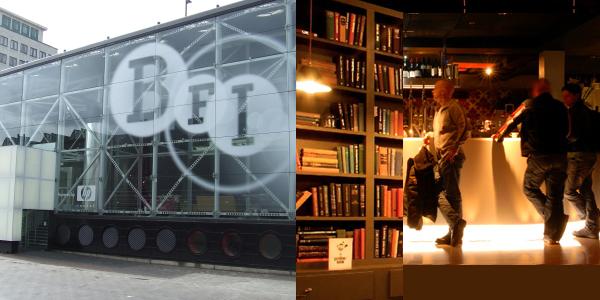
Plenty of visitors to the much-loved British Film Institute (BFI) in Southbank, just under Waterloo Bridge, know the Benugo Bar. It's a cosy place to grab a meal or a drink during intermission. But, amazingly, the bookshelf in the bar contains a secret door! When this door is opened, visitors find a long, dark corridor that leads to The Drawing Room, a hidden bar that serves cocktails and nibbles to those who know how to find it.

12. Wooden Roads Were Tried Out (And Failed For A Hilarious Reason)
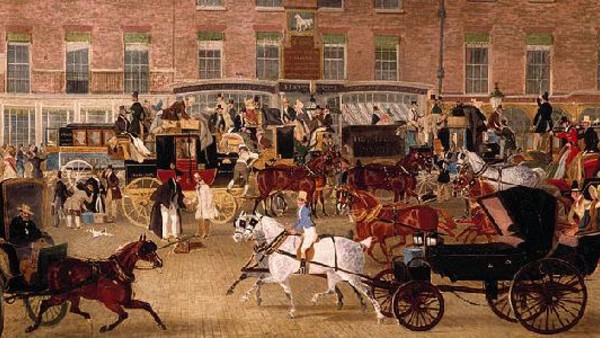
In the middle of the nineteenth century, various private companies tried to come up with a road surface that would allow heavy loads to be more easily pulled by horse-drawn carriages. Experiments showed that carriages could get better traction on a wooden surface and so a small number of main roads in and around Piccadilly had wooden blocks installed. But this experiment in wooden paving failed miserably after only a few weeks. The short reason was "horse pee". The trouble was, the wood soaked up the urine of all the passing horses and stank beyond belief. The pong of the ammonia, in fact, was so bad, it began to discolour the fronts of the nearby shops. On the plus side, the enormous amount of pee seemed to actually reduce the wear and tear on the road surface, meaning that the inventive piece of road engineering might have worked, if only it hadn't reeked so much...

11. Queen Anne's Statue Faces A Pub Because She Liked A Tipple... Or Ten
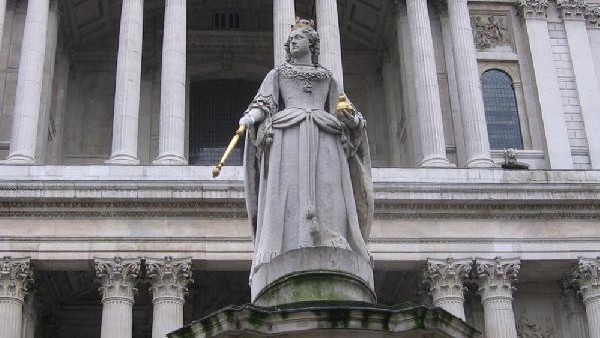
Outside St Paul€™s Cathedral is a statue of Queen Anne, who was the monarch when St Paul's was erected. This statue, rather unfortunately, used to face a gin shop (pub). It's unfortunate because Queen Anne had a well known drinking problem. In fact, her addiction was so widely mocked that there was even a song poking fun at the statue's placement:
Poor Queen Anne, left in the lurch, facing a pub, back to the church!

10. Shoreditch Is Named After The Place King Edward's Mistress Died

Shoreditch is arguably most famous for being the east London home of Doctor Who's fictional Coal Hill School, the first location seen in the long-running BBC series. But Shoreditch has many other fascinating features. For a start, even the origin of its name is interesting. Legend has it that Shoreditch is named after King Edward IV€™s mistress, Jane Shore. Tragically, she died penniless in a ditch in the East End, giving her name to the place where her body was found.

9. Big Ben Isn't The Tower's Name

Here's one fact about London everyone should commit to memory. The iconic clock tower on the corner of the Palace of Westminster is not called Big Ben. The bell inside the tower is Big Ben. The tower itself is now called the Elizabeth Tower (it was renamed to commemorate Queen Elizabeth II's diamond jubilee in 2012). Prior to that, the tower was properly referred to as the "clock tower", although journalists in Victorian times labelled it incorrectly as St. Stephen's Tower. Actually, St. Stephen's Tower is the small tower above the public entrance. This isn't at all confusing, is it?

In this post: 
London
 
Posted On: 
Contributor
Contributor

Mike has lived in the UK, Japan and the USA. Currently, he is based in Iowa with his wife and 2 young children. After working for many years as a writer and editor for a large corporation, he is now a freelancer. He has been fortunate enough to contribute to many books on Doctor Who over the last 20 years and is now concentrating on original sci-fi & fantasy short stories, with recent sales including Flame Tree, Uffda, and The Martian Wave. Also, look for his contribution on Blake's 7 to "You and Who Else", a charity anthology to be released later this year. You can find him on Tumblr at https://www.tumblr.com/blog/culttvmike