4 Key Philosophers That Will Make Your Brain Hurt

Remember "There is no spoon"? Yeah that, but a million times more taxing.

Of the many ongoing and unanswered questions in philosophy - one of the most enduring and famous - is the debate on mind versus matter. What are they? Are they separate or the same? How do they relate? While many opinions and arguments have arisen over the years, they can be boiled down to a pair of perspectives: Rationalist and Empiricist. Rationalists give primary concern to the Mind and work primarily in the field of epistemology; the study of knowledge. Empiricists by contrast give primacy to Matter (the physical world), and are more concerned with the ontology (the study of being) of what exists. These two types of questions, 'what are we?' and 'what can we know?' have guided much of the development of human society and while there may never be definitive answers of either, the asking of them has historically occupied an important place socially and culturally. Let's look at four of the most important figures in philosophy and trace their line of argument from ancient Greece to Eighteenth Century Germany and see what they have to say about who we are and if we can know it. Then you can impress your friends at the next party.

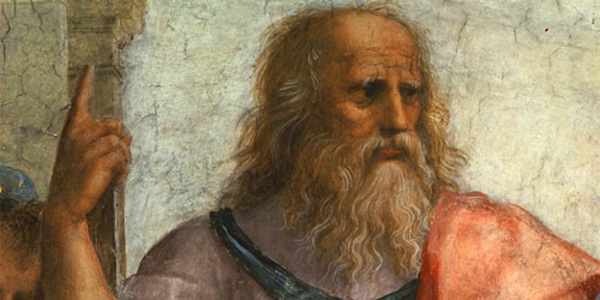
4. Plato (428-347 BCE)

A student of Socrates, Plato lived through some of the worst political upheavals in ancient Greece. This social turmoil formed the basis of his dialog, The Republic, where Plato describes his ideal state and lays out his complete theory on what actually exists (ontology) and how we can know it (epistemology). Plato claims that the most real things in the world are the Forms; perfect metaphysical prototypes of all physical things. From chairs to emotions, anything earthly owes its existence to its pure Form, and the ultimate reality everything is based upon - the Form of the Good is also the ultimate object of knowledge. Sadly, access to the Forms, therefore access to true knowledge, is restricted. Only philosophers can grasp the Forms and truly know anything, the rest of us are stuck in the material, non-conceptual world of Beliefs and Opinions. The Republic is ultimately concerned with the possibility of political justice, but by claiming that the foremost leader would be the Philosopher-King, Plato bases his social theory on metaphysical ideas. What exists in the world are only impure shadows or representations of transcendental, immaterial objects and we can only know them (i.e. know anything) if we are part of the most elite class of humanity all others must answer to: the philosophers. A bit restrictive then yes? Carry on...

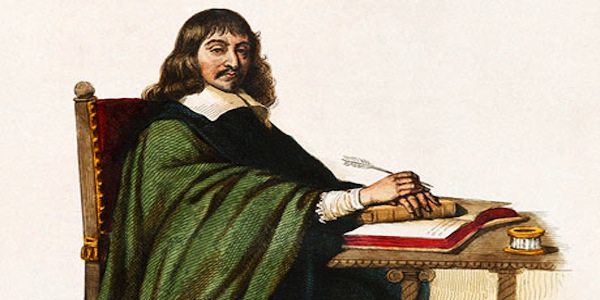
3. Descartes (1596-1650)

Rene Descartes is considered the father of modern thought, and in his Meditations on First Philosophy he coins perhaps the most famous phrase in all philosophy. €œI think therefore I am€ perfectly sums up Descartes€™ conclusion that the fact he is a 'res cogitans' (a thinking thing), proves that the mind is more real than the body and that we are capable of truly knowing only a small class of abstract clear and distinct perceptions (I exist, God exists etc.). Descartes method of radical (hyperbolic) doubt denies the existence of the physical world and leaves only the mind of the Meditator (Descartes) as something actual. While everything in the world is only a product of faulty and deceptive sensory organs, the mind that produces the doubt itself must exist and its primary attribute must be thought. But wait, if he can doubt everything, why can€™t he doubt the thought itself? Perhaps the mind itself is a lie. No, he says, the mind€™s existence is guaranteed by the necessary existence of God who, in his perfection, would not deceive or lead astray. Descartes€™ groundbreaking mind/body dualism, inspired by the recent advancements in physics by Galileo, forever altered the course of philosophical thought and late-night stoner pontification. His rationalist conclusions; that the mind exists separate from and prior to the empirical (physical) body, drove a stake through the heart of Aristotelian materialism and dominated the world of deep thought for the next one hundred years.

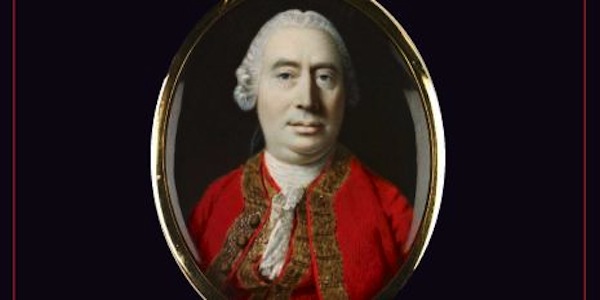
2. Hume (1711-1776)

Descartes€™ Mind/Body duality created a rupture between the rationalist and empiricist camps, and it was not until 1748 and David Hume€™s Enquiry Concerning Human Understanding that the good ol€™ human body got its due. The Enquiry was Hume€™s attempt to make the ideas presented in his overlooked A Treatise of Human Nature more accessible to a wider audience. In both books he claimed that the immediacy of the human body and its sensory experience makes the material world the sole justification for any knowledge we might possess. Since the physical world is all we can know, anything we think is either an Impression (sensory experience and emotion) or an Idea (memories, beliefs, math). This means that everything we understand about the world is through the perception of either a Matter of Fact (experienced-based, non-contradictory events) or a Relation of Ideas (contradictory, mathematical truths not reliant on experience). As all we know is what we directly experience in any given moment, we can have no rational justification for believing in anything beyond that experience. Unfortunately, this includes the foundation of all our basic scientific knowledge: cause and effect. He said we cannot prove A causes B since all we have in our experience are two separate events, A and B. We cannot experience the causal mechanisms, so we cannot say we know them, therefore our science is based on probability; we are used to seeing two events occur together and it is only from habit that we believe they are somehow connected. In other words, the mind is not built to acquire truth, only to drive our habit of believing things are true.

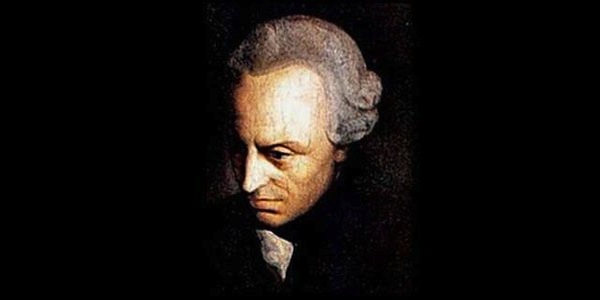
1. Kant (1724€“1804)

Immanuel Kant read Hume€™s Enquiry and spent the next ten years in solitude crafting his reply. When he finally published The Critique of Pure Reason in 1781, his work would forever alter the philosophical landscape and reconcile the estrangement of the Mind and the Body. Kant answered Hume€™s so-called €˜skeptical challenge€™ by claiming that all experience is some combination of a priori (before experience, mathematically and logically true), a posteriori (experience-based), analytic (the predicate is only an analysis of the subject) and synthetic (predicate adds information about the subject). €œAll bachelors are unmarried€ is an example of an a priori analytic statement, while €œAll bachelors are unhappy€ would be both an a posteriori and synthetic statement. His conclusion was that the structure of the mind is built to create and justify synthetic a priori ideas: it has the ability to conceptualise abstract thoughts (a priori) and develop new knowledge (synthetic) based on these thoughts. Kant, a mathematician, was the first to put into scientific language such an idea, and his detailed methodology of proof remains a vital approach to such theory to this day. By bringing together the Rationalist and Materialist camps with his necessary-for-experience union of the abstract mind and the sensing body, Kant gave theoretical justification for the radical and groundbreaking work of the Enlightenment in areas such as science, politics, and religious thought. Still with us after that, or perhaps you've reconsidered your entire position in the universe? Let us know in the comments!

 
Posted On: 
Contributor
Contributor

David Wagner is an author/musician who splits his time between Oakland, CA and Istanbul, Turkey. David has published two novels, both available on his website, and as a fan of movies, comics, and genre television, he is happy to be working with WhatCulture as a regular contributor.