9 Places We Could Build Space Colonies
"A new life awaits you in the off-world colonies!"
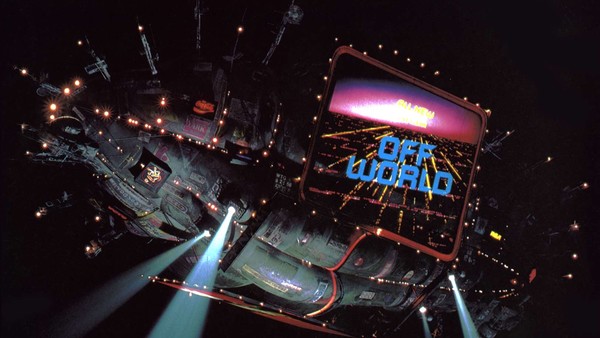
Depending on who you talk to, the future of the human race is either bleak or extraordinary.
There are those who think that we'll never make it off our little planet, but you don't need that kind of negativity in your life. There are also plenty of people who hold the view that humans are destined for the stars and that, one day, we'll have the entire solar system for a back yard.
The more we learn about the solar system and the galaxy beyond, the more potential second homes for humanity we find. Granted, we haven't found anywhere with lush, rolling countryside and a Tesco Local just yet - life in an off-world colony is likely to be as different as you can imagine.
Some could see us living beneath the waves in a subterranean ocean, in others we could be living above the clouds in huge floating cities, but some might be able to offer us a way of life that we might just recognise from home.
We're already making baby steps towards Mars and, more than 40 years after the last human left, people are beginning to eye the moon up again with renewed interest.
Who knows, the first off-world colonies could be a reality in your lifetime - but what would they look like?
9. Moon
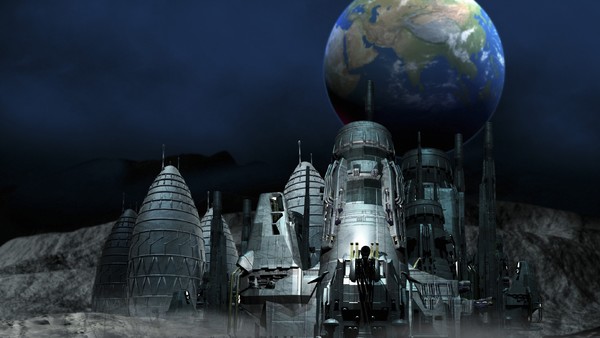
Aside from the man-made stations and satellites that swarm around the Earth, the Moon is our nearest neighbour, making it a good candidate for the human race's first off-world colony.
Those living on the surface of the moon would have to be the indoorsy type, as its diminutive size means that it has no hope of holding on to any kind of atmosphere - artificial or otherwise.
You probably wouldn't want to build a life there - a moon colony is more likely to be a kind of port and industrial base.
With its pseudo-gravity, the escape velocity is much less than on Earth, making it a good "rest stop" for ships heading to more distant destinations, although, we don't yet know what the low surface gravity (around 1/6 of that on Earth) would do to the human body over a long period of time.
8. Mars
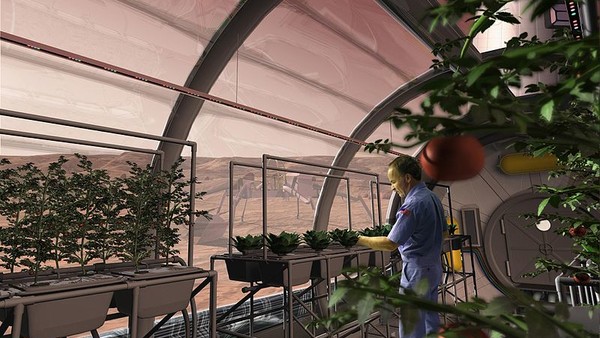
We pretty much take it for granted these days that humans will someday set up shop on the Martian surface, but what would life be like on the red planet?
Again, Mars' atmosphere leaves a lot to be desired. As well as the whole not-being-able-the-breathe thing, the thin Martian air would mean that temperatures on the surface average at a frosty -55°C. Dust storms can block out the sun for months at a time and its gravity is just 1/3 that of Earth.
Early settlers would live in pressurised habs, perhaps 3D printed from the martian soil itself, and at least partially buried beneath the ground to protect the inhabitants from the worst of the radiation that pummels martian surface.
If we find that life on Mars is valuable enough to throw some money at it, future generations could look into modifying its environment to make it more human-friendly, perhaps artificially bulking up the atmosphere or even liberating some of the water currently locked up in the polar ice cap.
We could indeed one day grow potatoes on Mars, just like in the movies (yes, complete with that kind of fertiliser)
7. Venus

Moving away from the the more well-trodden ground of space colonisation, Earth's other sister planet, Venus, could be another good candidate for an off-world home from home.
You certainly wouldn't have any of the #ThinAtmosphereProblems of the moon or Mars, as the atmospheric pressure at the Venusian surface is at least 90 times that on Earth. Again, not ideal, but with a bit of resourcefulness, we could still make our home on this toasty planet.
Suspended in floating cities, 50km above the planet's surface, colonists would enjoy temperatures of a much more manageable 40°C. The atmospheric pressure would also mean that we would never have to worry about explosive decompression and might not even have to wear space suits outside - just breathing equipment.
Although the sulfuric acid-containing clouds might seem unfriendly, it would be possible to extract enough water from them to fill Lake Michigan. Twice.
6. Titan
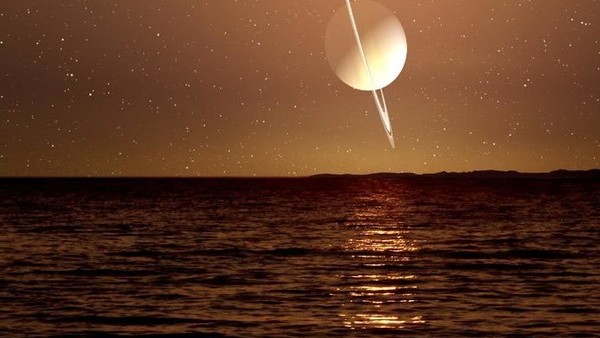
Right, real talk, one of the major reasons why we would colonise somewhere like Titan, is that it has lakes filled with hundreds of times more liquid hydrocarbons that all of the oil and natural gas reserves on Earth. The stuff literally rains from the sky.
In many ways, the Saturnian moon is possibly one of the most habitable places in the solar system. It has an atmosphere rich in nitrogen and methane, and there is evidence for the existence of liquid water and ammonia beneath the surface. The water could also be used to produce breathable air.
Rather excitingly, the atmospheric density to gravity ratio on Titan would also mean that it would be possible to strap on a pair of wings and flylike a bird ... if you can bear the 179°C temperatures (a minor detail).
The only thing is that Titan is so habitable, that some scientists think there's a chance that something could already be living there. With any luck it will be of the microbial variety, but maybe space tourists of the future will have to brush up on their Titian before visiting.
5. Europa
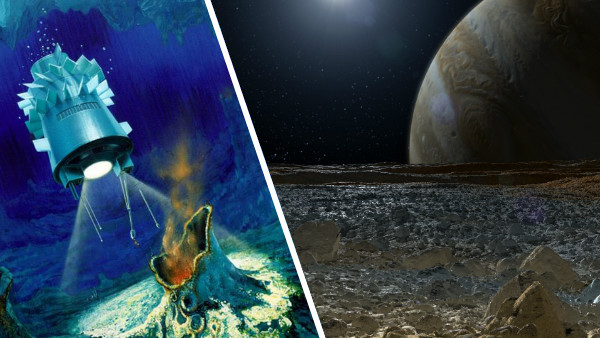
If we think outside the box a bit, we can open up whole new worlds (literally).
Europa, the fourth-largest moon of Jupiter, is considered to be one of the most habitable places in the solar system alongside the Earth and Titan.
It is thought that there exists a vast ocean of liquid water beneath the moon's icy surface. Not only would this provide settlers with enough water to survive, but it could be broken down to produce breathable oxygen and even rocket fuel.
Granted, Europa tends to sit smack in the middle of Jupiter's powerful radiation belts, but colonists could protect themselves by descending beneath the surface, into the subterranean ocean or in air pockets in the ice itself.
The moon is considered such a good candidate for off-world exploration, that the Artemis Project produced a rough plan for its colonisation back in 1997.
Plus, the view at the surface would include a spectacular "Jupiter rise", which is surely worth the trip on its own.
4. Asteroid Belt

You might wonder why anyone would want to colonise a cold, lifeless space rock with no atmosphere, but setting up space bases in the asteroid belt could have its advantages.
For a start, asteroids are rich in all kinds of resources needed to fuel a space-faring civilisation. Precious metals, rare gases and liquid water could be mined and exported all over the solar system. Many smaller asteroids also pass closer to the Earth than our own moon several times a decade before heading off some 500,000,000 kilometers away from Earth, making them a kind of hop-on-hop-off transport system for the solar system.
Isaac Asimov even proposed the idea of building cities inside hollowed-out asteroids. The combined area we would be able to cover by doing this too all of the asteroids in the belt would be the equivalent of a mile-high city covering the entire surface of the Earth.
We could potentially locate the main asteroid belt base on Ceres, a dwarf planet within the belt itself and accounting for a third of its total mass. Given its low gravity and fast rotation, Ceres would make an ideal spot for a space elevator.
3. Dyson Sphere

The Dyson Sphere treads that fine line between science fiction and science future.
Generally speaking, a Dyson Sphere would be used as a way of gathering massive amounts of solar energy. The basic concept consists of a structure, either a kind of shell or swarm of satellites, enclosing a star and gathering the energy it boots out. Although it's more of a gigantic solar panel than a space colony, there's no good reason why we could live on it as well.
Life aboard a Dyson Sphere might be similar to a space station. You wouldn't experience day and night cycles in the same way as on a planet, as it is designed to constantly face the sun.
That's if you were present to experience it. There are some who think that a Dyson Sphere would be the preferable means by which to power something called a Matrioshka Brain. This is a giant super-computer to which the entire population can upload their consciousness and live in a virtual reality world.
Depending on your recommended daily dose, you could argue that this might have already happened.
2. Interstellar Starships

If we ever want to leave our own solar system, we'd either better get working on that warp drive, or consider the possibility of generation ships.
Due to the massive distances that would need to be covered between stars, the humans that set off from Earth would not be expected to reach their destination, but live, reproduce and die on the ship, passing it on to subsequent generations. These ships would be like flying cities or even countries. Society would have to be strictly organised, as the vacuum of interstellar space is no place to have a mutiny.
Alternatively, these could be Sleeper Ships, with the crew placed into suspended animation for the duration of the journey. The obvious drawback here is that the crew would then be a few thousand years behind the rest of the human race by the time they woke up.
Ships powered by nuclear fission might well be able to achieve speed of 10% the speed of light, cutting travel time to stars such as Alpha Centauri to a much more manageable 45 years or so.
1. Exoplanets
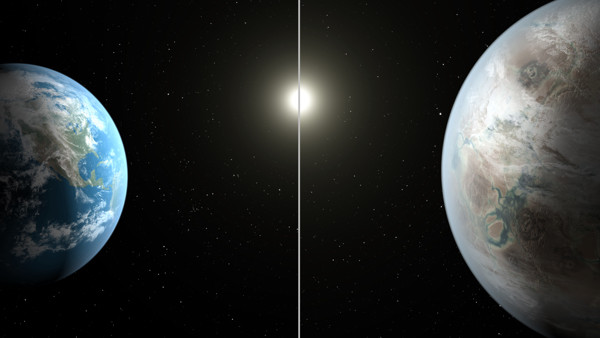
So we've got our generation ships going, which way to we point them?
The star, Gliese 667 C, is 23.62 light years away and plays host to at least three rocky planets thought to be in the habitable zone. It is actually a triple star system of two orange dwarfs and a red dwarf, so the skies would be pretty spectacular and some think it would be a good candidate for colonisation.
Alternatively, we could head to Kepler 442b. This exoplanet was dubbed Earth 2.0 when it was discovered in 2015, due to its similarity to our own planet. At 1,100 light years away, it's a bit more of a trek, but experts think that there is a high chance that this planet could be habitable for humans.
Where would you like to live if you had the chance? Let us know in the comments.
Hey, you. Yeah, you. You want some more science? Like us on Facebook or follow us on Twitter for your next fix.