10 Doctor Who Episodes We Were WAY Too Harsh On
Is Love & Monsters REALLY that bad? No, no it isn't.

Doctor Who has always been a show of… varying quality. Speak to even the most devoted fan, and they will undoubtedly have a list of episodes they absolutely cannot stand. Even Steven Moffat, one of the series' most successful showrunners and writer of more Doctor Who episodes than any other writer, went through a phase of deriding the entire classic series as "crap."
This obviously gives fans ample fodder for creating (and arguing over) "worst episodes ever" lists. And while the majority of stories that are frequently seen in these lists probably do deserve to be there, there are a few that have built up something of an undeserved reputation over the years, with general fan consensus overtaking the episodes' actual quality when they come up in discussion.
From otherwise-decent episodes overshadowed by questionable individual moments, to low-key stories that had the misfortune of being broadcast between all-time classics, to experiments that didn't quite pay off, here are ten episodes from throughout the years that, in retrospect, we might have all been a bit too harsh on.
10. Boom Town
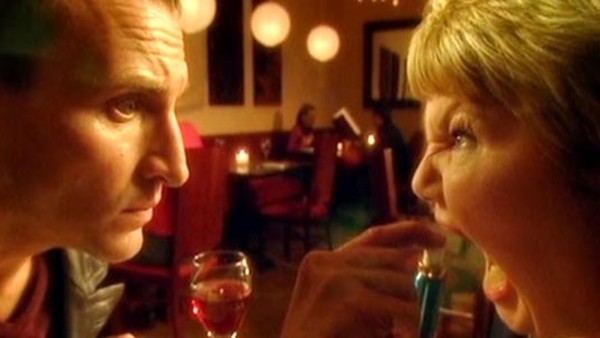
While Series 1 is considered a resounding success after returning Doctor Who to TV screens, revamping the show’s format, and introducing Christopher Eccleston as a new modern take on the Doctor, one of the episodes generally seen as a low point is Boom Town.
Though not necessarily hated upon first broadcast, it was generally seen as a dud episode – a low-stakes, slow-paced filler sandwiched between two all-time great two-parters (The Empty Child/The Doctor Dances and Bad Wolf/The Parting of the Ways).
Viewed outside all of the excitement and momentum of 2005 and Series 1’s success however, and Boom Town’s perceived negatives become its strengths. Amidst all the chaos of new companions, world-ending Dalek threats and regenerating Doctors, Boom Town allows the TARDIS team to slow down, giving us our only real glimpse of how the Nine/Rose/Captain Jack dynamic works on an average adventure.
Boom Town also contains one of the best (and most underappreciated) scenes in all of Series 1, when the Doctor and Margaret Blaine go for a hot dinner date. It's a simple dialogue scene that's equal parts funny and dark, providing more valuable insight into the Ninth Doctor’s war-damaged psyche, while giving Eccleston and Annette Badland some brilliant little moments to play off each other.
9. The TV Movie

The 1996 Doctor Who TV Movie has never had a particularly solid reputation within the fandom.
A one-off, failed pilot for a prospective American reboot of the series, its melodramatic tone, greater emphasis on action and romance, and younger more dashing Doctor was seen as sacrilege in some corners of the fandom at the time. And to make matters worse, it also failed to capture the imagination of a new audience, making all of its changes – and the development hell it endured to get there – seem utterly futile.
But in the years since, so many of the TV Movie’s perceived sins have become normalised. Though seen as a massive break with tradition at the time, it was in fact just the show once again changing with the times, as Doctor Who does better than any other franchise.
The film’s more romantic and action-oriented take on the Doctor went on to serve as something of a blueprint for the revival series, while Paul McGann's Eighth Doctor has continued to grow in appreciation to the point that he's now a firm fan-favourite, and is usually the first name thrown around whenever potential Whoniverse spinoffs are discussed.
In a way, the TV Movie was ahead of its time. Though you'd have a hard time convincing fans of that in 1996!
8. It Takes You Away

Most people’s memories of It Takes You Away tend to be focused on a single moment at the end: the bit where the Doctor has a heartfelt conversation with a sentient universe posing as a frog.
Admittedly it’s a very surreal image, and compared with the rest of the episode’s fairly low-key visuals we’re not hugely surprised it’s the bit that has stuck in most fans' minds. However, its enduring reputation as “the one with the talking frog” has led to a lot of people forgetting just how good the rest of the episode is.
Rewatch it again with fresh eyes, and It Takes You Away is actually one of the most heartfelt stories of the Whittaker era, cleverly exploring themes of loss, abandonment, and grief. Not only that, it’s one of the few episodes from Series 11 & 12 that uses the four-person TARDIS team to its advantage, with Graham, Ryan, and Yaz all having their own unique perspectives on what’s happened, influenced by their own life experiences.
Even the Doctor’s final conversation with the Solitract-frog can be heart-wrenching if you can look past the inherent absurdity of the visuals. Saving the day in a way other than simply “defeating the baddie” is always a nice change, and Jodie Whittaker really sells that the Doctor genuinely does consider the Solitract a friend, and is sad to see them go.
7. Day Of The Daleks

Updated special edition DVDs of classic Doctor Who episodes are a contentious issue within the fandom. Is there anything to be gained from replacing old, outdated effects with new CGI? Or is doing so simply removing the charm that made those original episodes so good?
But if there’s one episode where this debate is reasonably one-sided in favour of modern DVD effects, it’s Day of the Daleks. An intriguing political thriller involving human rebels travelling back in time to try and assassinate someone – only to cause the very war they’re trying to avoid – the story had all the elements that would make it seem like it was on track to be an early '70s classic.
There is, however, one issue: the entire story builds towards one final confrontation between UNIT and the Daleks – a confrontation that is sadly undercut by the episode’s budget, meaning that there were only three Dalek props available. Hardly an epic battle, is it? Worst of all, one of those was the gold-painted Supreme Dalek, making it impossible for the production team to disguise that the intended “invading army” was, in fact, a trio of Daleks wobbling about a field. The end result was so anticlimactic that it completely overshadowed the rest of the story.
This is where the DVD special edition comes in. While there are many replacement effects and CGI additions, its main selling point is the increase in the Dalek invasion force, giving the final conflict the scale that was intended, and allowing the rest of the episode to shine unencumbered.
6. Dragonfire

Dragonfire is an episode that regularly crops up in Doctor Who supercuts, compilations, and lists, and it’s almost always for the same reason: it contains one of the worst cliffhangers in Doctor Who history. And while there’s no arguing that the Doctor inexplicably deciding to hang himself off a cliff for seemingly no other reason than the episode getting close to the 25-minute mark isn’t utterly ridiculous, it does rather overshadow the rest of the story.
Because beyond its bizarrely literal cliffhanger, Dragonfire is actually a fairly enjoyable and well-put together example of late-80s Who. It features a unique setting, fun plot, the return of Sabalom Glitz, and, perhaps most importantly of all, the introduction of fan-favourite companion Ace and her trusty Nitro-9 explosives. And the cherry on top: one of the most shockingly graphic deaths in the show’s history, where the BBC’s effects crew pay homage to Raiders of the Lost Ark and melt the villain’s face on screen.
And while it’s unlikely to end up an example of how the show gained a new lease of life right before cancellation (like Remembrance of the Daleks or The Curse of Fenric), it is still representative of how Doctor Who was still putting out good stories into the late 1980s.
5. Wild Blue Yonder
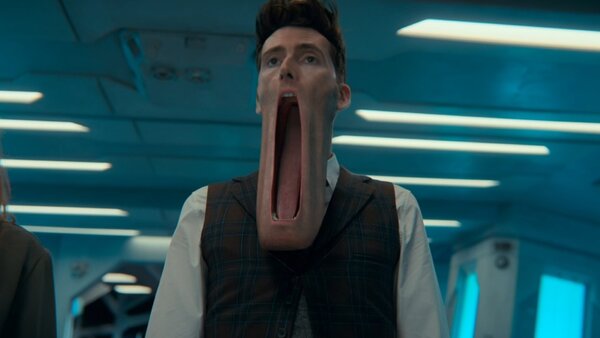
At the time of the 60th Anniversary Specials’ airing, Wild Blue Yonder seemed like a bit of an odd one out. Sandwiched between the return of Donna Noble in The Star Beast and the Toymaker’s return (and Fifteenth Doctor’s arrival) in The Giggle, it was hard not to see the comparatively conventional middle entry as a bit of a placeholder – a single standard adventure to fill the space between two important event episodes.
In the time since though, the fandom has broadly come to view Wild Blue Yonder as the best of 2023’s specials. While the aforementioned big events were certainly exciting to watch live, the episodes that surrounded them weren’t necessarily anything special – and at times arguably struggled under the weight of all the introductions, reintroductions, and major lore changes.
By comparison, Wild Blue Yonder stands out in being simply a very good episode of Doctor Who. It’s intriguing, scary, exciting, and the only real opportunity for David Tennant and Catherine Tate to slip back into their old roles and have a properly traditional Doctor-companion dynamic, unencumbered by bi-generations, returning '60s villains, and half the cast of Series 4.
It's also got Wilf at the end too. Love to see Wilf!
And as the RTD2 era went on it turned out that Wild Blue Yonder might actually be the most important of the three specials, with the Doctor’s salt line having monumental influence on the subsequent series.
4. The Trial Of A Time Lord

In many ways, it’s actually surprising that Trial of a Time Lord ended up being as good and coherent as it is. Possibly the season of Doctor Who with the most stacked against it from a production standpoint, it saw the show returning after an 18-month hiatus, with a reduced episode count, and absolutely decimated budget.
The producers’ solution? Combine the season's four stories into one gigantic story arc involving the Doctor being put on trial by the Time Lords for his crimes of interference.
The results are infamously mixed, with the Trial of a Time Lord arc quickly devolving into a barely-followable legal drama that would randomly interrupt stories just to reiterate what had already been said, and to cram in some more back-and-forth verbal sparring between the Doctor and his prosecutor (and would-be executioner) the Valeyard.
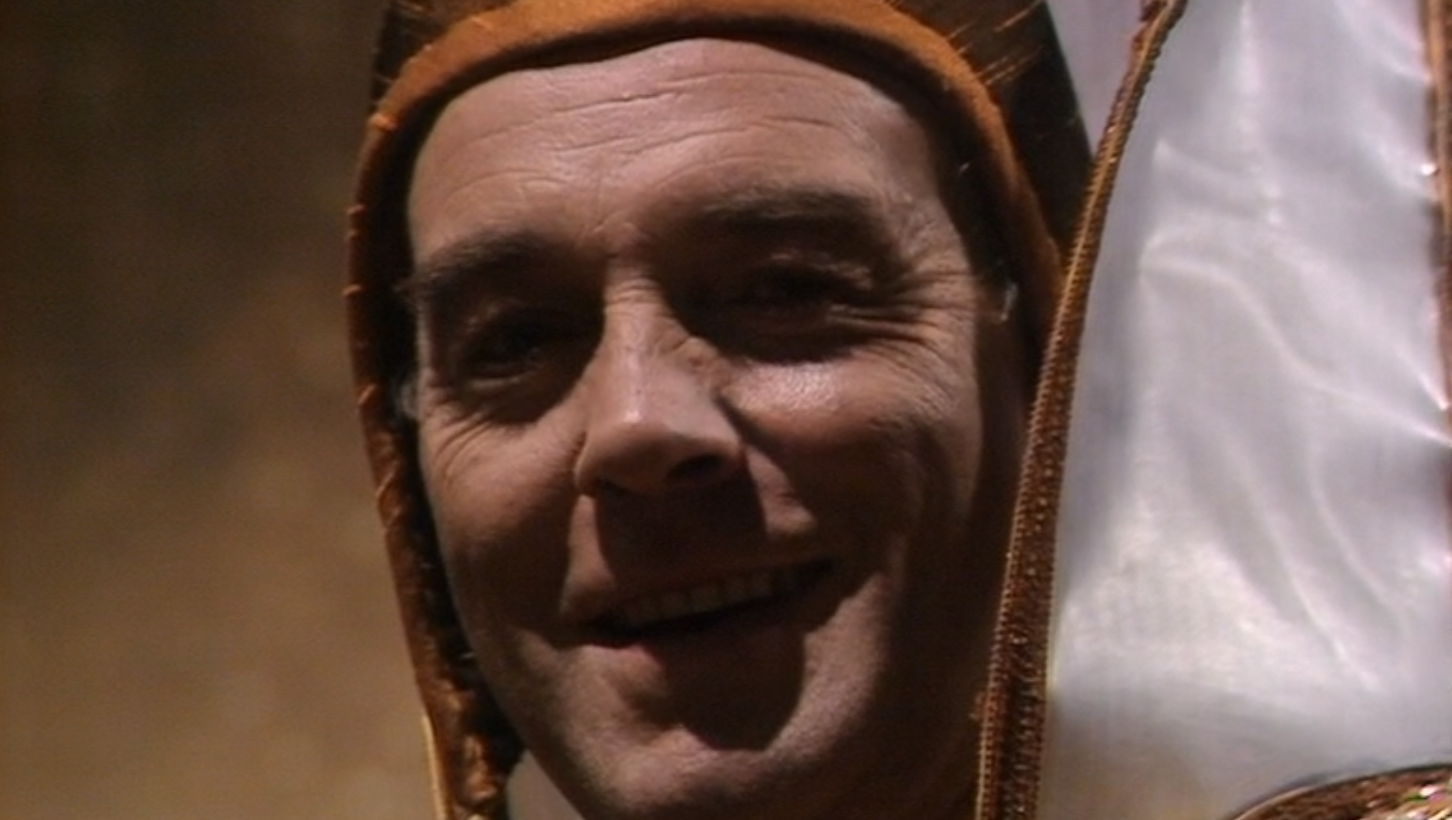
But while the overarching trial concept ended up something of a failed experiment, the episodes within this framing device do actually have some merit to them.
The Mysterious Planet is, admittedly, one of Robert Holmes’ weaker efforts, but Mindwarp is one of the Sixth Doctor’s very best outings, with its uniquely bleak tone and unusually grim fate for Peri proving highly memorable. And Terror of the Vervoids is fun in its own ridiculously campy way, with some truly terrifying – if slightly iffy-looking – creature designs.
Even the trial itself has some redeeming qualities, if only in how unintentionally comedic the Sixth Doctor’s endless reaction faces are, and how funny it can be to try and decipher Gallifrey’s utterly incomprehensible legal system.
3. Love & Monsters
Love & Monsters is probably the revival series’ first generally accepted “bad” episode. There were of course mixed reactions beforehand, with episodes like The Long Game, Boom Town, and The Idiot’s Lantern coming in for a fair amount of criticism, but Love & Monsters might just be the first time since Rose that the entire fandom came together and agreed: “this episode sucks.”
Recently though, Love & Monsters has undergone a bit of a reappraisal.
There are still some dodgy elements, like the Abzorbaloff’s design never quite working onscreen, or the extremely misguided and bizarre slab fetish joke. But other elements, like the relentlessly down-to-Earth approach (even by Russell T Davies' standards), and LINDA’s dynamic as a group have aged pretty well.
It could be argued that in a lot of ways, the episode was damned by being the first proper “Doctor-lite” episode in the show’s history. And while later episodes like Blink and Turn Left would inarguably improve on this format, they also massively benefitted from Love & Monsters having set the precedent that not every episode is going to have the Doctor.
Watching it back knowing this rather than expecting a more traditional episode, it’s easier to appreciate the things it does right... as well as its missteps.
2. Warriors Of The Deep

If there's any story that could hold the undesirable title “the episode that killed Doctor Who”, it’s 1984’s Warriors of the Deep. Infamously, BBC One controller Michael Grade used a scene involving the episode’s Myrka monster as evidence of why the series was past its prime and deserving of cancellation.
And the thing is… you can see why.
Doctor Who might have a reputation for wobbly sets and bubble-wrap monsters, but the Myrka is, even by '80s Who standards, quite rubbish, and impossible to take seriously. And the less said about someone trying to karate-kick it to death, the better. The rest of the production design doesn’t fare much better, with the script’s leaky, dangerous undersea base being primarily realised as bland white corridors.
Looking past the production design however, and there are still elements worth appreciating in Warriors of the Deep. Contrasting the tensions of the Cold War with the armies of the Silurians and the Sea Devils is engaging, while the Doctor’s final, melancholic statement that “there should have been another way” is one of the best endings of any Fifth Doctor story.
Sure, it has its problems, and I'm not trying to claim that it’s some ignored masterpiece on the levels of The Caves of Androzani. But it’s also not as irredeemably bad as something like The Twin Dilemma, and it’s at least worth another watch before dismissing it.
1. Sleep No More

While Series 9 is often heralded as one of the high points of revival Doctor Who, if there's an episode that's considered the series’ low-point, it's undoubtedly Sleep No More.
Its found-footage format (which was already overdone at the time) failed to strike a chord with the fandom at large, and in the years since it has been relegated to the status of a “failed experiment” that is the one black mark against an otherwise high-quality series.
However, being the worst episode of a good series isn’t necessarily the same thing as being bad, right? Sleep No More has suffered unfairly under the weight of comparison with such strong episodes like The Zygon Inversion and Heaven Sent, and it made a respectable attempt at bringing the found footage genre to Doctor Who. It also incorporated it into the episode’s narrative in a unique way, with the twist reveal that the episode has been created by its villain as a way of spreading the sleep virus proving genuinely quite shocking.
And sure the idea of monsters composed of the sleepy-dust found in the corner of peoples’ eyes might be a little ridiculous... but so are gigantic radioactive maggots, robotic Egyptian mummies, and shop-window dummies with hidden laser guns in their hands.