10 Game Of Thrones Moments Ripped Off From History

Prepare yourself for the real-life Red Wedding.
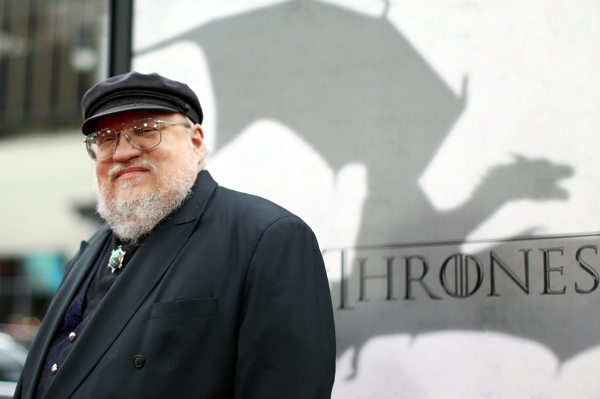
Game Of Thrones is a tantalising tale of scandal, deceit, treachery and medieval kings jostling for supreme power, storylines which have already played out in real life across the globe. Book readers may be lording it over the TV viewers with their knowledge extending beyond HBO's adaptation, though historians could possibly be laughing at everyone, with some people going as far to suggest George R.R. Martin has laced his books with direct clues from history as to who will ultimately win the war. Martin has done a remarkable job of painting the phenomenal world in which Thrones is set, and while a lot of the similarities with real-life history are more than likely coincidental, certain inspirations he has drawn from history have spiced up the entire story. He's entirely at ease with discussing the idea of using real history, saying: "There's really no one-for-one character-for-character correspondence. I like to use history to flavor my fantasy, to add texture and verisimilitude, but simply rewriting history with the names changed has no appeal for me. I prefer to re-imagine it all, and take it in new and unexpected directions." Martin hasn't directly 'stolen' entire plots or characters from history, though don't be fooled, he has most certainly drawn aspects from history. Let's take a look at 10 similarities between the real world and events that have taken place in the TV series.

10. Jamie Lannister Is Gottfried von Berlichingen

Jamie Lannister was born into a noble family and was a world-renowned knight with fearsome sword-skills before he lost his hand. Gottfried von Berlichingen, a.k.a. Gotz of the Iron Hand, was also born into a rich, powerful family and his hand was blown off by a cannon during a battle, though like Jamie, he returned to combat training with a prosthetic hand to regain his strength and former talents. Gotz' was also famed for the catchphrase "er kann mich am Arsche lecken" which translates directly as "he can lick/kiss my arse," which could quite easily be spoken by Lannister with his sly, cocky sense of humour.

9. Joffrey Is Edward Of Lancaster

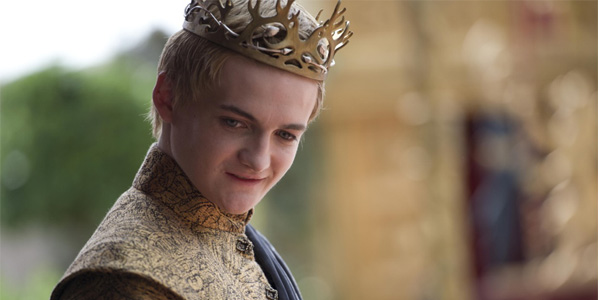
Just look at that smirk. Look at it. Jack Gleeson did a fantastic job of making every Game Of Thrones viewer hate King Joffrey to the absolute maximum. It's scary to imagine Joffrey as a historical figure, but indeed he shares some strong links with Edward of Lancaster, son of King Henry VI and Margaret of Anjou, who many believe Joffrey's mother Cersei is based upon. Edward was allegedly born from an incestuous relationship, while a key figure from Milan at the time described him by saying: "This boy, though only 13 years of age, already talks of nothing but of cutting off heads or making war."

8. Joffrey Died Like Attila The Hun

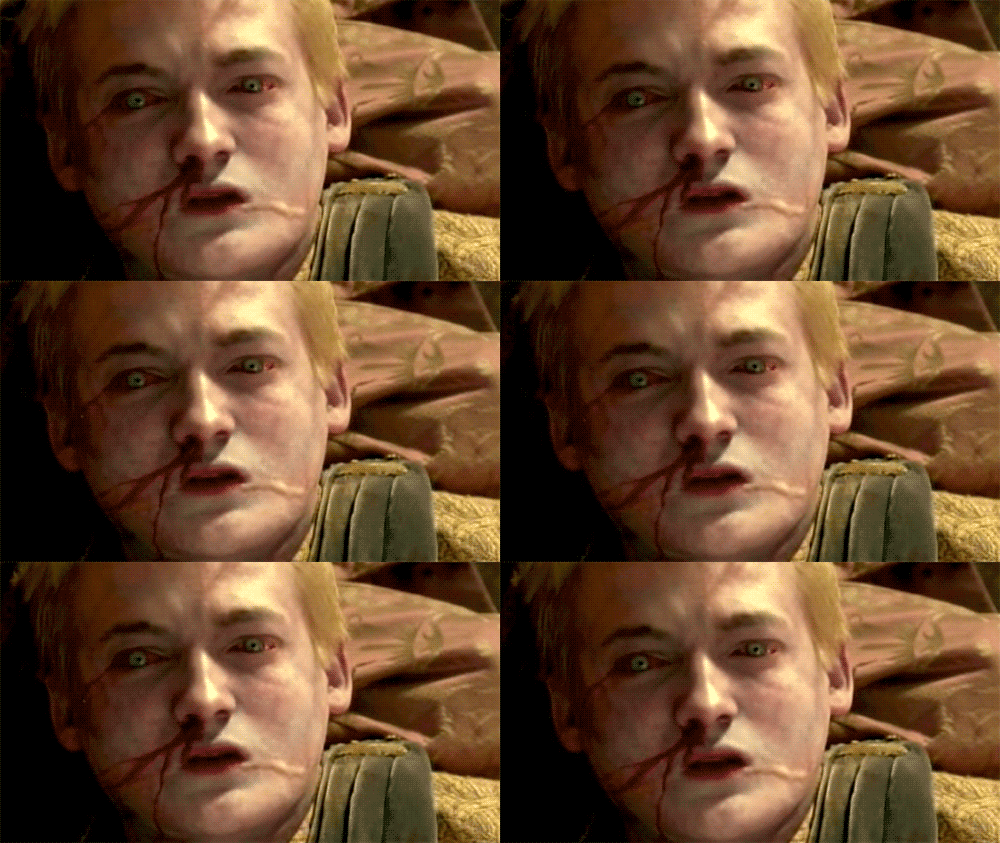
Joffrey was finished off in one of the most distressing death scenes on the show, a brutal end to a brutal boy, though his death is similar to a famous historical character. Attila The Hun also died at his own wedding, sparking a murder mystery to span centuries, similar to the intrigue that surrounded Joffrey's demise. One of the strongest theories is that Attila was poisoned by a group of conspirers who wanted him dead, as he lay with blood running through his nose. Where've we heard that before?

7. Petyr Baelish Is Thomas Cromwell

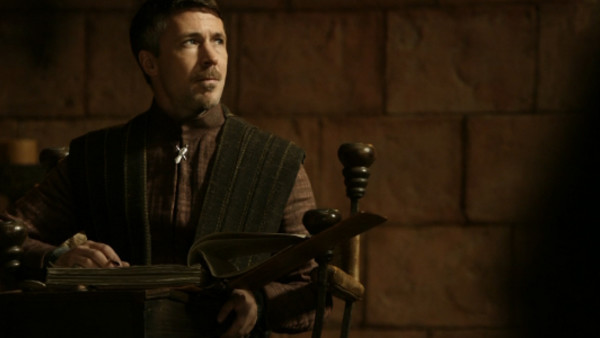
Lord Baelish is an insane character and is basically responsible for every major event in the Game Of Thrones series. He pushed the first domino, and the rest came tumbling after. Thomas Cromwell, like Littlefinger, wasn't born into a high family, and instead rose through the hierarchy of society into a position of power that also involved dealing with finances. Again, similar to Baelish, Cromwell is responsible for causing multiple deaths - including that of Anne Boleyn - though they rarely came from his own hands. He would manipulate, lie and corrupt others into killing.

6. Daenerys Is Henry VII

However despicable Daenerys' brother Viserys was, he was in line to take the Iron Throne before Robert's Rebellion took place, casting him and Daenerys across the Narrow Sea into exile, though after 'receiving his golden crown' Daenerys stepped up to becoming the contender for the throne. Henry VII shares a similar story. His father Henry VI was conquered in the Tower Of London, leading to the young Henry VII fleeing across the English Channel to France where he bided his time. He was the rightful heir to the throne, but had to wait for his chance to cross the sea and take the crown. Both Henry and Daenerys used dragons as their emblem, but will Dany succeed like Henry once did?

5. The Battle Of Blackwater Bay Happened

The Battle of Blackwater Bay was a stunning scene in Game Of Thrones, with the bright green wildfire tearing through Stannis Baratheon's fleet as he sought after taking his rightful seat on the throne. It shares stark similarities with The Second Arab Siege Of Constantinople. The Arab troops on the ground could not breach the castle walls of the Byzantine city, while their fleet was rapidly disbanded by Greek Fire. Like wildfire, Greek Fire continued to burn on top of the water, making it incredibly effective against ships, and any surviving Arab forces sunk as they retreated from the city.

4. Theon Greyjoy Is George Plantagenet

Theon Greyjoy was a political hostage, held in Winterfell and treated kindly by the Starks, like one of their own. He grew close with Robb Stark, who commanded the Northern armies, but jealousy saw him defect back to his father, Balon Greyjoy's side and invade the North himself. George Plantagenet was brother of Edward IV and sided strongly with York during the War of the Roses, before he, like Theon, defected, joining the Lancaster armies. He chose unwisely, and after Edward won, George was executed, drowned in wine. Theon is clinging to a fraction of his life after being warped into 'Reek' by the newly-titled Ramsay Bolton, though he has suffered greatly by losing...important parts, as well as taking constant physical and psychological beatings.

3. The Wall Exists

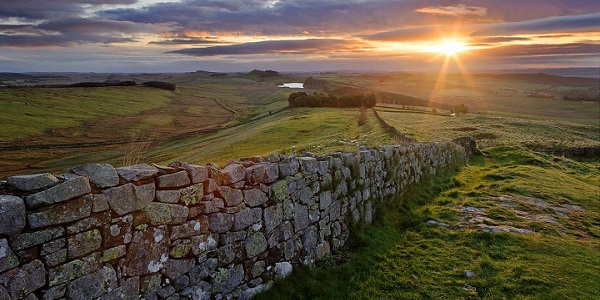
Westeros is a sprawling land full of rolling countryside, major cities, hills, farms, mountains, and a substantial coastline. It has a politically-charged capital, and a 'Narrow Sea' separating it from foreign lands. It's Britain. If you need any more convincing that Westeros is based on our beloved island, take a look at Hadrian's Wall. Romans built the structure from sea to sea in order to keep the invading Scots away (have you noticed the amount of ginger wildlings, by the way?) Martin confirmed the inspiration: "Certainly the Wall comes from Hadrian's Wall, which I saw while visiting Scotland. I stood on Hadrian's Wall and tried to imagine what it would be like to be a Roman soldier sent here from Italy or Antioch. To stand here, to gaze off into the distance, not knowing what might emerge from the forest. "Of course fantasy is the stuff of bright colours and being larger than real life, so my Wall is bigger and considerably longer and more magical. And, of course, what lies beyond it has to be more than just Scots."

2. The Red Wedding Happened (Many Times)
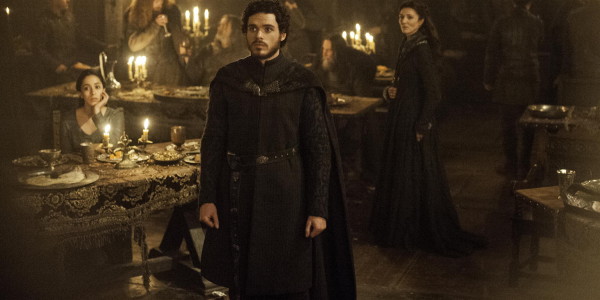
It's the most heart-breaking, savage and downright disturbing scenes in the entire series, the Red Wedding turned song and celebration into death, as Walder Frey's men quickly tore the Stark family apart at a wedding feast. But it has already taken place in the real world, labelled as The Black Dinner. The King of Scotland was fighting the Douglas clan when he granted an Earl from that family safe passage, and a feast in Edinburgh Castle. When the feast was over, a single drum began to beat, and the Douglas men were slaughtered. Also, there's an equally disturbing tale from Japan, referred to as the Kojiki. It's a part mythological, part truth-based story around Japan's first ruler Emperor Jimmu, who invited all of his political rivals to a wedding, before ordering his men to butcher every one of them while he sang.

1. The Entire Series Is Inspired By The War Of The Roses

War Of The Roses George R.R. Martin has confirmed that the series is loosely based around The War Of The Roses in 1455, as the Yorks and Lancaster battled it out in England. Those names sound familiar, right? (Starks and Lannisters.) Martin discussed the influence of historical fact with author Bernard Cromwell, saying: "Fantasists enjoy certain freedoms that historical novelists do not. I can surprise my readers by killing kings and other major characters, but the fate of the kings and conquerors in the real world is right there in the history texts, we know who lives and who dies before we ever crack the novel open. "When battle is joined at Helm€™s Deep and the Pelennor Fields in Tolkien, or on the Blackwater Rush and in the Whispering Wood in my own fantasies, the outcome of the fight is unknown until the author reveals it on the page, but the historical novelist is bound to trod the road laid down by history." There's a definite factual vibe running through A Song Of Ice And Fire, but Martin isn't afraid to break all of the rules and deviate from history in order to pen a breathtaking story, something that he's in the process of achieving.

Contributor
Contributor

What Culture contributor. NCTJ accredited Sports Journalist. Regret-filled Sunderland AFC season ticket holder. Optimism-filled NFL fan. Lover of all things Game Of Thrones, Breaking Bad, Walking Dead & more.