13 Darkest Doctor Who Endings Ever
So much for Doctor Who being a family show...

Doctor Who isn’t exactly ‘gritty’ television – it’s episodic, prime-time, family entertainment, which often caters to the casual viewer. Other series, like Harry Potter, might ‘grow up’ with their audience, getting darker as they progress, but the circular nature of Doctor Who, and its long history, mean that this approach doesn’t really work.
The result? A show that tonally slingshots all over the place.
Sometimes it feels almost entirely aimed towards a young audience, but the next week, it’s dealing with mature and dark themes. This isn’t a criticism – it’s one of the strengths of the show, made possible by its mostly anthological format. It’s one of the things that makes this show so unique.
In this list, we’re going to look at thirteen times the Doctor’s luck ran out, ditching the usual reset buttons and status quo resets and leaving us with an ending that was decidedly lacking in sunshine and roses. We’re mostly going to discount ‘part one cliffhangers’ here, with a handful exceptions, as these are often hopeless by design but immediately remedied the next week.
In other words, here are some of the times that this ‘family show’ left us depressed as hell…
13. Cold Blood

In this episode, Rory dies.
"Big woop", I hear you say. "He dies in every episode."
And while, absolutely, Rory’s deaths become less and less convincing with each passing fake-out, this one felt saddeningly real (in spite of him having also died in the previous story, Amy’s Choice).
This death is the one that stuck though (for a few episodes at least). In the closing moments, out of absolutely nowhere, Rory takes a laser shot to the chest for the Doctor. He’s clearly in a huge amount of pain, and the show doesn’t play down the realistic panic and fear of death like it normally does. It’s quite a harrowing sequence, with Rory, despite his heroic sacrifice, not going out with a lot of dignity – it feels like he’s gone too soon, like this shouldn’t be his end.
And then to add insult to injury, he begins to be eaten up by the crack in time, erasing him from existence. Arguably the darkest part of this sequence is the Doctor forcibly dragging a sobbing Amy to safety, practically throwing her into the TARDIS so she can’t get back out to say goodbye to her dead fiancé. He doesn’t allow Amy to save his body, ensuring that Rory, along with his sacrifice, will be forgotten, which happens moments later as Amy springs back to normal as if nothing has happened.
The Doctor, who is still aware of what has happened, chooses to keep this from Amy, who is oblivious to the fact that her husband-to-be has just been killed.
Eleven really doesn’t mess around, does he?
12. The Caves Of Androzani

The Fifth Doctor had a relatively easy run. It was an era where the show got a little too comfortable, and the perils faced by the Doctor were somewhat lacking (apart from his biggest enemy – a swimming pool).
Enter legendary Doctor Who writer Robert Holmes, who, returning from a long hiatus, rather agreed with this sentiment and decided to put Five through hell during his regeneration story. The result? One of the best-regarded stories in the history of the show.
The Fifth Doctor and his companion, Peri, are infected with a deadly disease, with mere hours to spare themselves from a grisly death. Five spends the entire episode being shot at, chased, and generally bullied by everyone he meets, all in search of a cure, which he eventually succeeds in procuring, only to accidentally drop some of it and be left with enough for a single person.
Nobly administering the remaining cure to Peri, he lays down and begins one of the more traumatic regenerations the Doctor has endured – paralysed, hallucinating, and slowly burning up from the inside. He tries to fight back, but sees a vision of the Master, who basically tells him to curl up and die already, which he promptly does.
It's unsettling in a way that regenerations rarely are, capping off the Fifth Doctor's cheerful tenure in dramatic fashion indeed.
11. Face The Raven

The ending of Face the Raven delivers one of Doctor Who’s most devastating farewells – the death of Clara Oswald (and yes, Hell Bent dislikers, this still counts. Clara dies here. Eventually).
Having taken a miscalculated risk by willingly accepting the death mark meant for Rigsy, Clara traps herself into a contract that can only end in her death. There are no timey-wimey tricks here, no last-minute rescues. This isn’t a huge, world saving sacrifice – Clara attempts to save Rigsy and due to her own recklessness, gets herself killed. It’s a tragic culmination of her arc, and her death scene is brutal by the standards of this show. Clara’s screams of agony are muted for the audience, but for the only time in the revived show, we watch a companion die, permanently, on screen – dead body and all.
But it’s what happens to the Doctor once he realises Clara is doomed which really solidifies Face the Raven’s placement on the list.
The Doctor immediately snaps, going full Time Lord Victorious at the drop of a hat. Twelve inhabits this cold, ancient and terrifying creature, abandoning his name as he threatens to bring Ashildr’s life crashing down on her. Capaldi is perhaps the most terrifying a Doctor has ever been in this scene, and we know it’s not just for show.
The episode ends not with the usual triumphant return to the TARDIS, but with silence, grief, and a Time Lord spiralling towards vengeance. The perfect set-up for the perfect episode to come.
10. Doctor Who And The Silurians

The ending of Doctor Who and the Silurians shares a lot of DNA with Cold Blood and is another textbook example of the ‘humans ruin everything’ style of ending. After the Third Doctor has spent seven episodes trying to broker peace between humanity and the Silurians, it all goes horribly wrong.
But before then though, the Doctor has finally got through to the Silurians and for the most part has solved any further conflict with the trigger-happy humans. He entrusts his buddy, the Brigadier, to keep them safe. And Doccy Who wouldn’t have one of its loyal companions and main protagonists do anything bad, like say, a war crime, right?
Wrong.
As the Doctor walks away, exhausted yet hopeful, the Brigadier blows up the cave system, wiping out the defeated Silurians in a flash. The Doctor turns back, horrified. There’s no big showdown, no final speech, just a quiet look of betrayal.
It’s a chilling moment, wrapped in rubber suits and ’70s synths, but make no mistake – it’s one of the bleakest, most thought-provoking finales in Classic Who. Peace was possible, but humanity, quite literally, blew it.
9. Father’s Day

Father’s Day is an emotional watch throughout, but the ending even more so.
When Rose convinces Nine to let her witness her father’s death, she impulsively rushes in to save him from the oncoming car instead. Nine throws his toys out the pram and berates Rose, but honestly, he should've seen this one coming, and the Reapers of death that come to devour everyone are sort of on him.
Throughout the episode, the Reapers kill a whole lot of people, but the real heartbreak comes when Pete Tyler figures out what’s gone wrong. He realises the only way to fix the timeline is to let history happen as it should (i.e. he needs to willingly ignore the Green Cross Code). In a quietly devastating act of heroism, he walks out into the street and allows the car that was meant to kill him do just that, restoring time and resurrecting the Doctor in the process.
Rose finally gets to be with the father she never got to meet, but it’s devastatingly temporary. She sits with him as he dies, but at least this time he isn’t alone, and he is dying for a reason – to save his daughter.
It’s bittersweet, and the net result leaves Rose with actual memories of her father, but that doesn’t make it any less crushing to watch a young girl lose her Dad all over again.
8. Dot And Bubble
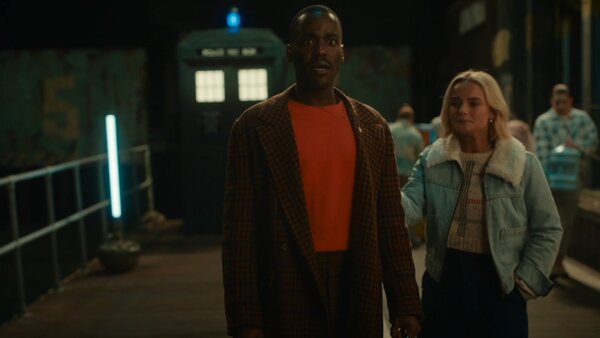
The newest era of Doctor Who hasn’t gone too dark on the whole, but the ending of Season 1’s Dot and Bubble is particularly bleak and frustratingly avoidable.
We spend the episode following the waste of oxygen that is Lindy Pepper-Bean, a character so detestable that the monster of the week only turns evil because it hates her so much.
The first truly dark moment in the episode comes as Lindy turns on her saviour, Ricky September, to save her own skin, and we get a particularly brutal scene in which Ricky gets lobotomised by an angry ping-pong ball. But that’s not the worst of it.
We then find out the true reasoning behind the hostility of Lindy and her detestable little cabal of wannabe influencers. In short, they’re massive racists, and boy, the episode does not sugar-coat their treatment of Fifteen towards the end. It’s a tough watch. Despite their lack of gratitude and general disgust at his existence, Fifteen tries to save them, he still tries to be the Doctor. But they’d sooner doom themselves than accept his help.
This was the moment Ncuti solidified himself as the Doctor (and it was among the very first scenes he filmed, so bravo). It felt depressingly real and will live long in the memory.
7. Demons Of The Punjab
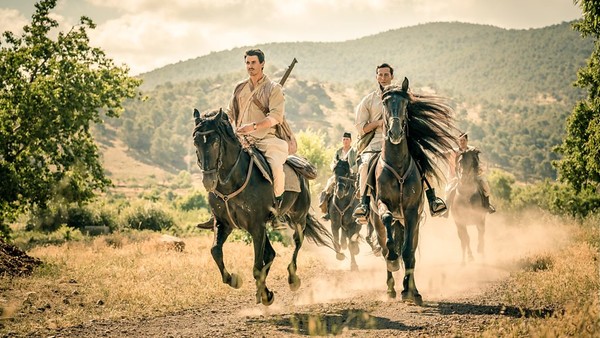
Demons of the Punjab is a different kind of story – one without an alien threat (despite there being a perceived one), and ultimately, a tragic ending that Thirteen and company are powerless to stop. It’s a right tear-jerker.
When Yaz asks the Doctor to take her back to meet her Nani as a young woman, the gang are dropped right into the Partition of India – already a fairly heavy topic for the show.
As tensions rise, Yaz discovers that her Nani Umbreen is about to marry a Hindu man called Prem, a man who is, notably, not her grandfather.
While the fam (ugh) are busy investigating mysterious ‘demons’ plaguing the area, they’re blind to the real bloodbath looming on the horizon. As it turns out, these demons aren’t malicious at all, they’re witnesses, honouring those whose sacrifice is lost to history by standing by in their final moments. In a cruel turn, it transpires that they’re here for Prem. He is doomed to die, and can’t be saved, else Umbreen may never remarry and Yaz won’t be born.
Prem is ultimately killed on his wedding day, betrayed by his own brother, who has been swept up in the rising hatred between the Hindus and the Muslims. The scene is beautifully shot, and given tons of room to breathe.
It’s an ending that doesn’t rely on spectacle. It’s a story based on real events and tragedies, and the script is deeply respectful of that.
6. The Doctor Falls

Truthfully, half of this list could have been Peter Capaldi episodes. During his years, the show strayed into darker territory than ever before, and his big finale (not including the coda that is Twice Upon A Time) is no exception.
World Enough and Time and The Doctor Falls focus on a core cast of five characters: Twelve, Bill, Nardole, The Saxon Master, and Missy. By the end of part two, all five of them are dead. Twelve is gunned down by Cybermen while buying a small group of survivors a few years of life; Bill is shot through the heart, converted into a Cyberman, and turns into a ghost puddle; Nardole is trapped in a hopeless last stand and is implied to have eventually perished; and Missy and the Master kill each other. Crushingly, the Doctor never finds out that Missy has changed her ways.
This is a story of sacrifice, without hope, witness, or reward. It’s the most quintessential statement of what the Doctor is, and his speech to Missy and the Master, while bleak as just about anything, summarises the bread and butter of this character better than perhaps any other moment.
This is one of those episodes that would actually work as a permanent finale to the show, but it’s probably for the best that this wasn’t the case, because what a traumatic ending.
5. The Girl Who Waited

The ending of The Girl Who Waited is a knife to the heart disguised as sci-fi.
Upon arrival on the resort planet of Apulapacia, Amy is accidentally stranded in a timestream where days pass in minutes, and by the time the Doctor and Rory are able to get to her, she’s been on her own for 36 years. Older Amy has survived alone, feeling totally abandoned, in a dystopia which is trying to kill her every day. Seeing Amy like this is crushing enough as it is, but we’re here to talk about the ending.
After a past version of Amy is restored and meets the hardened, older version of herself, the Doctor tells them he can save them both. Older Amy, who has come to hate the Doctor, reluctantly lets her guard down, even beginning to trust him again… and then he betrays her.
It turns out only one Amy can leave, and at the last second, the Doctor slams the TARDIS doors shut on older Amy, leaving her for dead. He then washes his hands of it by putting the decision in Rory’s hands! Eleven is stone cold in this episode, doing what he needs to do to save ‘his’ version of Amy, but at the expense of his empathy.
There’s no happy ending, no reveal that the other Amy never existed – just the Doctor betraying his best friend and Rory having to deal with the death of his wife.
This is a heavy one.
4. The Waters Of Mars

The ending of The Waters of Mars shows us just how dangerous the Doctor could be without rules. This is the closest we ever get to the Doctor being the antagonist of an episode, and seeing him play god is chilling.
What starts off as a formulaic (but still excellent) base-under-siege story pivots aggressively with the reveal that everyone on Bowie Base One is doomed to die, and worse yet, that their deaths are fixed points in time. The Doctor is forced to walk away as these people he respects and admires are picked off one by one in brutal fashion... until something in him snaps.
No one is forcing him to play by the rules anymore. So he returns, risking the future of the human race, and saves Adelaide, Yuri, and Mia – not out of compassion, but simply because he can. More than that, he absolutely revels in doing so, and is borderline unhinged.
Back on Earth, Adelaide sees what the Doctor has become, and his dialogue paints him, in no uncertain terms, as the villain. Realising her death still needs to happen to keep history intact, Adelaide calmly enters her home, and takes her own life. It’s a truly shocking move from a show like this and it leaves the audience reeling. Our protagonist has forced these horrible circumstances on Adelaide to feed his own ego, and almost robbed her of her dignity in death.
3. The Pandorica Opens

For the most part we've tried to avoid 'Part One' cliffhangers, as they're bleak by default. But this one is so hopelessly bleak that we couldn’t help it!
The Pandorica Opens ends in spectacularly gloomy fashion: the Doctor is trapped inside the Pandorica, with no hope of saving the day.
But good news! Rory is back… and he’s secretly an Auton duplicate.
Wait, it’s going to be okay. Amy is beginning to remember him, and she’s getting through to him! Nope, he’s just shot her.
At least River is still out there with the TARDIS. She must be the one to save the day… what do you mean it exploded?
And just to top off this feel-good ending: the stars are going out. Literally. The universe starts collapsing, and the screen fades to black on what might be the worst day the Doctor has ever had. The entire universe dies, right here, right now, for real.
Never has an episode ended so disastrously poorly for everyone involved. The only thing that stops this being higher up is the fact that, because it was a part one, we knew it was going to be resolved.
2. Earthshock

Classic Who, much like its modern counterpart, isn’t too great at permanent companion deaths. Most of the Doctor’s friends get happy endings, even if they originally seemed like tragedies.
So imagine the shock when the first time the show ever killed off a long-term companion, they chose to do it to a child. While Adric was not particularly liked by the audience at the time, his death at the end of Earthshock was a watershed moment for the show.
With a Cyberman ship hurtling towards planet Earth, the best that the Doctor and the gang are able to do is bump the impact date away from the present day and into the prehistoric past, where it will be responsible for wiping out the dinosaurs. As they flee the ship before it’s too late, Adric stays behind, wanting to take one more stab at averting the crash altogether... and he fails.
The episode ends on this truly shocking and sobering note, and Adric’s death is never undone, with the credits rolling in silence to the visual of Adric’s shattered badge. Somehow, this relatively unpopular character managed to secure his legacy by traumatising a generation of young fans.
This seems to be a rare ‘fixed point’ in the show’s canon that even the likes of Big Finish seem to respect, and that sense of finality makes it a strong contender for the most impactful companion exit of all time.
1. The Family Of Blood
In what is possibly David Tennant’s shining story as the Doctor, we see Ten hiding from the titular Family of Blood by transforming himself into the very human (and very charming) schoolteacher, John Smith.
We spend almost two entire episodes with John, who is a good and honest man. We come to care about this character, watch him fall in love, and then, when we’re fully attached to him, he’s faced with a horrible choice: sacrifice himself and his blossoming relationship to bring the Doctor back and save the town, or sacrifice many lives to remain John Smith, with his love by his side.
Spoiler alert: he chooses heartbreak.
John Smith might be gone, but the Doctor feels his loss immensely, and it pushes him down a cold path by way of revenge. The punishments that Ten devises for these villains are cold and cruel, essentially damning them to an eternity of suffering – there are few scenes in over sixty years in which the Doctor is seen to be quite so malicious as this.
But the real gut punch? Joan. The Doctor offers her a place in the TARDIS, but she sees through the cheerful façade. She wants John Smith – and he’s gone. The Doctor is thoroughly roasted by Joan and coldly dismissed, having stolen her chance of happiness away from her.
It's a story and an ending unlike any in the show. It shakes you to your core, one of those rare Doctor Who adventures that refuses to pull a single punch – and is all the more memorable for it.