15 Cult Sci-Fi TV Series That Ended Way Too Soon

Fans weren't OK when these series ended and still miss them now. Do you?
Watching science fiction on TV can be rather depressing. A viewer gets used to the characters and setup of a particular series, begins to feel excited about what's going to happen next, and then - curses - the programme is promptly cancelled. There are so many shows that have been axed long before their natural ends that a full list would be enough to make a grown man break down and cry. There's a multitude of reasons why something would be cancelled - there weren't enough viewers, they couldn't be sold to enough markets, they weren't exactly what the network had in mind, and so on. Of course, every now and then a programme fails to return even when it's a hit: the 1998 vampire mini-series Ultraviolet is one example of such an oddity. The first and only season was actually watched by a large number of people, but the show made the error of tying up all its major plot points neatly by the end. By contrast, there are more than a few series that did stick around long after they began to whiff. Caprica never did find enough of a spark to justify its existence (sorry, Caprica lovers) and should have been put down earlier than it was. Ditto for The Event, which... um... wasn't one. But programmes can pull off the trick of lasting for what feels like pretty much the right length of time. Star Trek: The Next Generation ran for a healthy seven years and it felt right to many fans when Picard and company sailed off into the distance, destined to only return in films of variable quality. Babylon 5 also lasted its full allotted span, if not exactly in the way its creator wanted originally. Nevertheless, countless programmes end far too early and - frustratingly - usually just as viewers are getting to the good bits. Here are 15 series where the axe fell long before what viewers there were were ready.

15. The Tripods

The BBC/Seven Network adaptation of John Christopher's books lasted for two seasons (1984-1985), managing to cover the events of The White Mountains and The City Of Gold And Lead. Although the scripts were written for the third season, which would have adapted The Pool Of Fire, the conclusion to the trilogy was never filmed. And this was a real shame, since the onscreen realisation of the Martians was spectacular and the second season was a vast improvement on the first. Had the production team been allowed to complete work on the trilogy, the final adaptation would undoubtedly have been the best. As main character Will Parker comments at the end of season 2, "Has it all been for nothing?" Sadly, with long mooted plans for a film version apparently coming to naught, it would seem so.

14. The Hitchhiker's Guide To The Galaxy

In 1981, viewers were distracted from their digital wristwatches by the hugely improbable adventures of an ape descendant called Arthur Dent, his friend Ford Prefect (who was not, as it turned out, from Guildford), and the two-headed Zaphod Beeblebrox. Oh, and a paranoid android. Along the way, the Earth got demolished to make way for a hyperspatial bypass. But that was fine because Arthur discovered that the planet had been specially built so that mice could run a multi-millennia-long computer program to discover the real ultimate question (to which the answer is, obviously, 42). If none of this makes sense, shove a Babel fish in your ear. Sadly, the pitch-perfect casting of all the main characters, the sublime animation of the Guide's contents, and the genuinely funny jokes were not enough to earn a return to TV for the hitchhiking gang. Douglas Adams, the writer, wanted to make a second TV series using ideas from an aborted Doctor Who script but his plans fell apart for reasons not entirely clear to this day. However, these story ideas were, in the end, used as the basis for the third Hitchhiker's book: Life, The Universe And Everything. So, as the Guide itself would advise, don't panic.

13. Dollhouse

Unsurprisingly, Joss Whedon has more than one entry on this list. Here's the first: his 2009 show, Dollhouse, which lasted for only two seasons rather than the hoped-for five. The action revolved around Echo (Eliza Dushku), an Active or "Doll" with temporary personality implants and skills. She gradually learns who she really is under all the personality wipes and what the company controlling the Dolls really wants. Thanks to two "Epitaph" episodes set in the future (one at the end of each series), fans discovered how things turned out. But much of the character development that was supposed to happen in the meantime had to be ditched in the rush to finish the story. And that's a shame because the fun of a television show is as much in the journey as in the destination. Like many series, Dollhouse got better as it went along. But as soon as it had found its feet, Fox cancelled the series.

12. Dark Skies

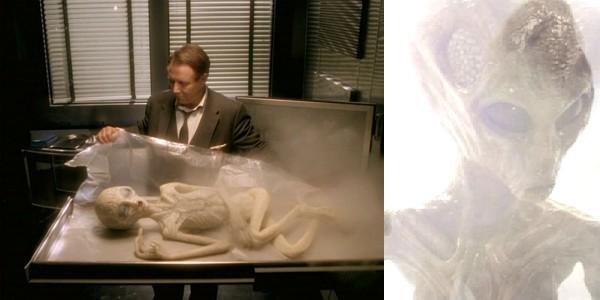
Dark Skies was the epitome of a series that ended long before its story was told. And it was going to be such a good story. For the duration of a single series (1996 to 1997), viewers learnt that "History as we know it is a lie" through the eyes of a 1960s all-American married couple. Initially, these preppy heroes battled invading Greys and the shadowy government group, Majestic 12, with the help of various real-life historical figures. Then they actually joined up with the covert organisation. Once on the inside, they discovered that the Greys were, in truth, controlled by parasitical aliens called the Hive. When Jeri Ryan (in her pre-Voyager days) was added to the mix a few episodes in, the series really took off. Due to the common cause of low viewing figures, Dark Skies was cancelled before the intended end of even the first season. The last episode was a masterpiece of the unexpected that saw the female lead possessed by the Hive, her husband sneaking aboard the mothership to rescue his son, and the director of Majestic 12 being murdered. A flashforward even showed the Hive ruling a ruined Earth. As seems typical, five seasons were originally planned: each season covering a decade of history up until the final battle. There was so much that could have been done with the premise and so many questions left unanswered - for one, did the Hive win and is Earth currently secretly ruled by aliens?

11. Space: 1999

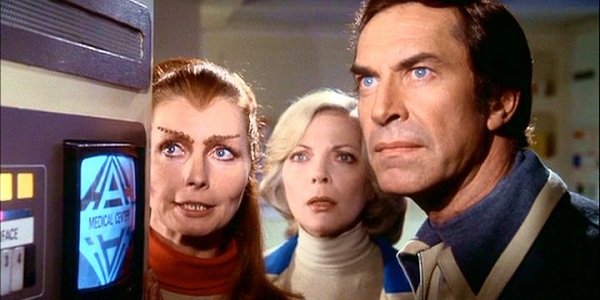
In this live-action Gerry Anderson production, the crew of Moonbase Alpha, along with the actual Moon, were accidentally blasted off into the far reaches of space. From 1975 to 1977, audiences thrilled to the melodramatic adventures of the crew as they attempted to get the Moon back to Earth, encountering a variety of alien menaces along the way. One of the beings they stumbled into turned out to be a friendly shape changer, Maya, who then joined their ranks, providing the writers with a hugely convenient plot device for solving any number of tricky predicaments. The two seasons garnered respectable ratings but then the owners decided to spend their money on more lucrative projects, causing plans for Year Three to be unceremoniously dumped. The fate of the Alphans was never officially shown but a fan-made short depicted the survivors abandoning the Moonbase for an Earth-like planet. Interest continues in furthering the adventures of the Moon dwellers, with a reboot titled Space: 2099 currently in development. Hopefully, if the new series makes it to the screen, the re-imagined adventures will manage a happy ending for the unlucky Alphans. Fans always wanted to know if the Moon could find its way home.

10. Space: Above And Beyond

Chalk up another programme that was intended to run for years with multiple story arcs that, in the end, got canned after a single series. In 1995, (a few) viewers saw a band of raw recruits learn the ropes as they fought a desperate war against the aggressive alien "chigs". With its sub-plots of artificially grown soldiers, "silicates", and a government conspiracy, Space: Above and Beyond had a lot of story potential. Despite these solid ideas and decent effects, it couldn't find a large enough audience and the series ended with many of the cast seemingly killed in action. If a second season had been made, several of these characters would, indeed, not have made it. Rather, new characters were planned, including an unlikable female commander for the 58th Squadron. The ideas for the second series are certainly interesting and provide a tantalising glimpse of what could have been.

9. Stargate Universe

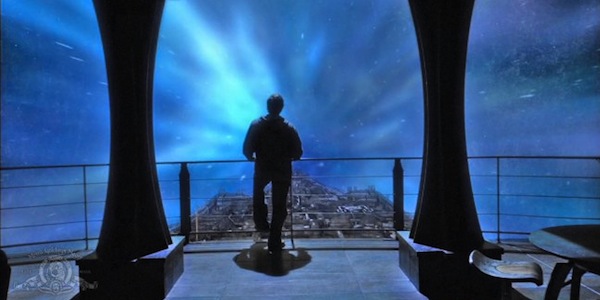
Yet another casualty of declining ratings, the last installment in the Stargate franchise, Stargate Universe (or "SGU" for short), ran for only two seasons from 2009 to 2010. In this doomed offering, a group of humans flee an off-world colony through a stargate by dialling a longer-than-normal address and find themselves aboard an Ancient spaceship called Destiny. They are forced to work out how the ship operates in order to survive, gradually discovering amazing devices and features on the massive ship. In the last episode, they go into suspended animation so they can turn up fresh and rested for a movie-length conclusion, which - uh-oh - didn't get made. Whilst the series may not have been as exciting as it should have been, it was well acted and had excellent effects. Robert Carlyle turned in an especially memorable performance as the misanthropic lead scientist; a performance that was reason enough for more episodes by itself. SGU was a series that needed more time to fully develop - but viewers simply weren't willing to give it that time.

8. Sapphire And Steel

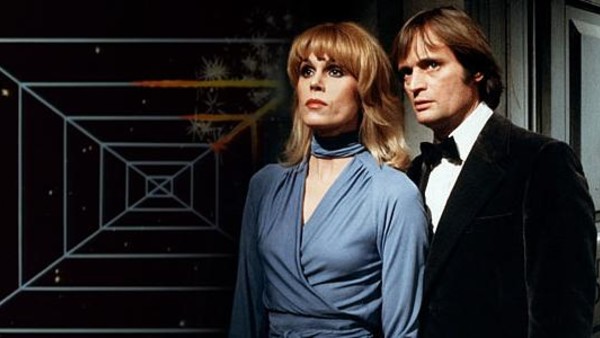
Calling Sapphire aAnd Steel "creepy" doesn't do the series justice. Over the course of six adventures (1979-1982), these extraterrestrial operatives were sent by higher powers to mend damage to time, with stories occurring in a haunted railway station and in an eerie old house etching themselves indelibly into viewers' memories. After years of scaring viewers silly, they were trapped in a motorway café at the end of their last story. Audiences looked forwards to seeing how they'd escape in the very next adventure - only there wasn't one. The series was abruptly cancelled due to stars David McCallum and Joanna Lumley being busy and the network being reorganised. It seems there are times when good ratings aren't enough to dodge the bullet. This dour end-of-season cliffhanger was never meant to be the final fate of the two otherworldly agents and so fans were thrilled when Big Finish produced follow-up audios. These stories hinted that fellow agent Silver had rescued them from the trap, allowing for more chilling missions. However (spoliers!), in typically sinister Sapphire And Steel fashion, these audios conclude with the surprise that all the spin-off stories were illusions and the two operatives are really still trapped. Forever. Brrr. But way to go, Big Finish.

7. Angel

Angel is the perfect example of a programme cancelled at its creative and critical height. In its fifth season, the programme underwent several creative boosts, with Spike joining the cast of characters, the demon Illyria taking over the body of another regular, and Angel being placed in charge of a law office belonging to arch-villains Wolfram & Hart. The popular show lasted from 1999 to 2004 and would probably have returned for a sixth season if only Joss Whedon hadn't pressed The WB for an early decision on renewal. Unable to commit so early, the network instead chose to cancel the ratings-grabbing programme, much to Whedon's astonishment. Fans everywhere were equally aghast. Comics, so often the last haven for continuing science fiction shows, once again provided the means for showing what happened next. Thankfully.

6. Dark Angel

What does it take to get good ratings for a science fiction programme? Dark Angel had it all: it starred Jessica Alba, it was produced by James Cameron, it had great effects - and all that still wasn't enough. This programme, which aired in 2000, lasted only two seasons before succumbing to viewer ennui. A third season would have revealed the connection between the blood cult of Season 2 and the genetic engineering Manticore plot of Season 1, with the Earth being threatened with annihilation unless the genetic tinkering possessed by Max (Alba) and her ilk can be spread to the entire human race. Again, this programme died just as viewers were getting to the good bit.

5. Star Trek: Enterprise

Unusually for a modern Star Trek offering, Enterprise only lasted four seasons (2001-2005). All indications were that the producers were gearing up to showing the legendary Earth-Romulan War in the unmade fifth season. Perhaps if they'd got to the point sooner, viewers would have been more engaged. The war was finally detailed in a series of novels, providing fans with some sense of what would have been. But for Enterprise to have ended properly, the war should have been shown in all its spectacular glory on TV. As for how the TV series did end, the final episode turns out to be a holodeck simulation being watched by The Next Generation's Riker and Troi, which is an odd way to try and tie up four year's worth of story lines.

4. Crusade

Crusade was the 1999 continuation of the Babylon 5 universe. The series was supposed to detail how the crew of the Excalibur searched for and found the cure to a plague threatening the human race before moving onto other story arcs. But the programme was cancelled by TNT before it even aired and all fans saw was a depressingly short run of 13 already completed episodes. The cause of the cancellation is curious - series creator J Michael Straczynski believes TNT feared Babylon 5 fans wouldn't watch any other TNT shows so the network tried to manufacture reasons for backing out of the deal. Sadly, Sci-Fi (before they became Syfy) tried to snatch up the series but couldn't find the money. Fans can only imagine what would have been.

3. Torchwood

The Doctor Who spin off, Torchwood, has a chequered history, only having two regular seasons followed by two mini-series in all the time since 2006. The last of these mini-series, Miracle Day, started with good ratings but gradually lost viewers as it went on, although the story is a well-crafted and gripping tale. At the end of Miracle Day, there was a sense of new life being breathed into the property. The new supporting character, Rex, had survived to join Torchwood properly and Captain Jack and Gwen were all fired up and ready to tackle new threats. Except those new adventures never materialised. Torchwood's creator, Russell T Davies, has said the programme is now on indefinite hiatus for "personal reasons". By contrast, the co-producers of Season 4, Starz, have indicated they'd be happy to consider a fifth outing for Captain Jack, if only RTD would write something. While fans wait, it seems an upcoming series of BBC radio plays may be their best chance of hearing Captain Jack's voice again.

2. Blake's 7

The hopeless and ultimately doomed struggle against tyranny that characterised the four seasons of Blake's 7 (1978-1981) is still fondly remembered today. Helping to keep the flame going is the absolutely stunning cliffhanger ending of Season 4 that demands a "what happened next". In the final episode, the paranoid leader of the freedom fighters, Kerr Avon, murders his best friend, the former leader, Roj Blake, before realising that Roj never did betray him. Then Federation guards burst into the room and order Avon to lower his weapon. Avon, standing astride the dead Blake, simply smiles and raises his gun. The screen fades to black and countless shots ring out. Have pity, BBC, and tell fans whether Avon lived to fight on. Critics can (and do) malign the effects, but Blake's 7 was a series where the bad guys won - and how often does that happen?

1. Firefly

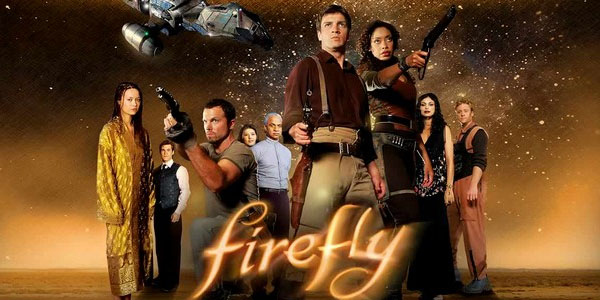
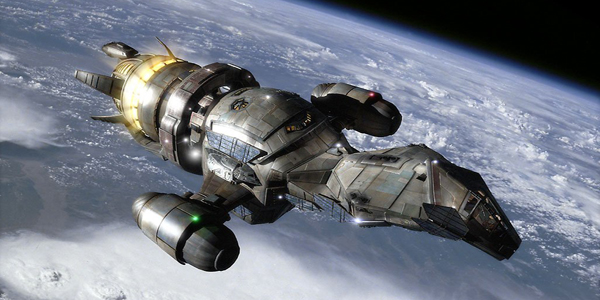
The programme that had the most life left in it when it was cancelled has to be Firefly. The 2002 Joss Whedon wild west pioneers of the future show was axed before the end of its first season, at precisely the moment all the creases had been ironed out and viewers felt that the show knew what it was doing. Fortunately, the gang returned for the Serenity film in 2005 that resolved most of the the main story lines with considerable panache. Understandably, of course, Brownshirt fans continue to pine for further misadventures to this day and have even made a fan film. With most of the Firefly universe left unexplored at the time of cancellation, it's undeniable there were several more seasons of episodes that could and should have been made. What do you think? Are there other cult TV programmes that should be on this list? Let us know in the comments section!

Contributor
Contributor

Mike has lived in the UK, Japan and the USA. Currently, he is based in Iowa with his wife and 2 young children. After working for many years as a writer and editor for a large corporation, he is now a freelancer. He has been fortunate enough to contribute to many books on Doctor Who over the last 20 years and is now concentrating on original sci-fi & fantasy short stories, with recent sales including Flame Tree, Uffda, and The Martian Wave. Also, look for his contribution on Blake's 7 to "You and Who Else", a charity anthology to be released later this year. You can find him on Tumblr at https://www.tumblr.com/blog/culttvmike