18 Twin Peaks Easters Eggs, In-Jokes And References You Need To See
The Owls Are Not What They Seem.
There once was a time when TV shows and movies weren't littered with nods, winks and in-jokes. The creators would simply tell a story, we'd all watch, and anything that lined up nicely with future instalments or their subsequent work was just considered a by-product of a thorough artistic process. God, it was dull.
Thankfully now there's virtually no summer blockbuster or must-watch series that passes us by without a hundred clever little quips, props and references. It's very much "the thing" these days, but the tradition dates back a lot further than the bag of Walt's Blue Meth that crops up in The Walking Dead. Whilst the actual origins come from bored computer programmers in the 70s, one of the first serial-easter-eggers in TV was none other than David Lynch; and the cavalcade of subtle items and ideas that he littered Twin Peaks with.
The show set the bar for a lot of future TV tropes, so the revelation that Lynch was sneaking wink-wink gags into it a good 20 years before it became the norm shouldn't exactly rock you to your core. That said, even hardened fans of the show will likely do that open-mouthed-double-cheek-slap thing at the level of thought and depth that went into some of these.
18. The Black Lodge Floor Was In Eraserhead

Probably the most iconic visual device in the whole series (although I'm sure we could debate this point long and hard) is the floor of The Black Lodge. Immediately striking not just because of its garish black and white pattern, but because of its juxtaposition to the bright red walls, it's become a defining set for both Lynch and TV as a whole.
However it wasn't the first time it made an appearance, with Lynch using it as Henry's lobby floor in his 1977 film Eraserhead.
Whether you want to see it as proof of the elaborate world-connecting theory surrounding all of Lynch's work, a subtle nod to his previous works, or because he simply couldn't think of another floor pattern, is entirely up to you.
17. ...And On Leland's Coat
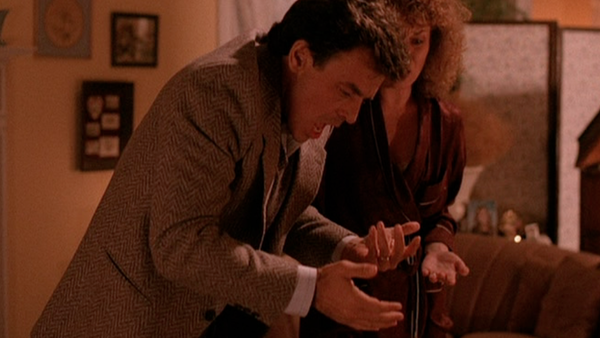
In fact, The Black Lodge wasn't even the first time the floor pattern had appeared in the Twin Peaks...
In our opening episode, with Leland Palmer completely overcome with the grief of losing Laura, he begins dancing round the room with a picture of his departed daughter. As his movement steadies and the camera gets closer, we can see that his sport coat comprises the exact same pattern as the floor of the black lodge.
Given the revelation later that (huge spoiler alert) Leland was the one who killed Laura - while possessed by Bob, himself some sort of spirit connected to the Black Lodge - it's a huge, huge piece of foreshadowing.
16. The Great Northern Conventions
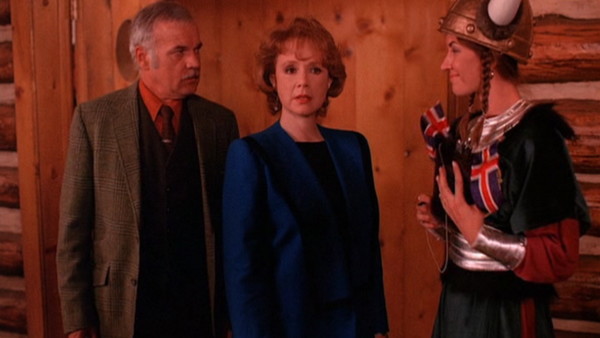
Think 'running jokes in TV' and you're probably already doubled over recalling those couch gags from back when the Simpson's was good. However Twin Peaks had its own recurring fun, with occasional director Lesli Linka Glatter using a trademark cue in each other 4 episodes she took charge of.
In each instance, whenever the story would turn to the Horne's hotel, there would be a convention of some description taking place there. Norwegians, cheerleaders, whatever took the writers' fancy.
15. Diane

Much debate has surrounded the identity of "Diane", the recipient of Agent Cooper's many voice annotations he records over the course of the show. Friend? Colleague? Lover? Complete fabrication of Cooper's mind to compensate for the loneliness he felt from losing his wife?
Well, after hinting at a connecting theory between most of his works, David Lynch has gone so far as to say that the concept for the film Mulholland Drive actually came from his spin-off idea for Twin Peaks. It obviously changed a lot from the original idea, but the one factor that remained was the character of... Diane.
14. Presidential Motto
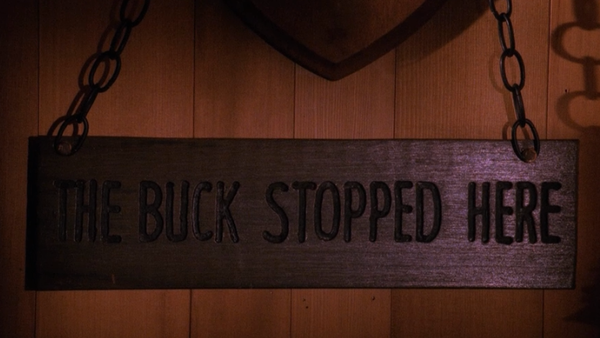
A classic Lynchian case of something operating on more levels that you'd first think, the hunting trophy that Sheriff Harry S. Truman's is both a glorious play on words and a massive nod to the character's inspiration.
Whilst "The Buck Stopped Here" is obviously a clever reworking of the famous expression "The Buck Stops Here", the origin of that original phrase was the motto of a former US president. Which president, you ask? President Harry S. Truman. Subtle, but brilliant.
13. Missoula
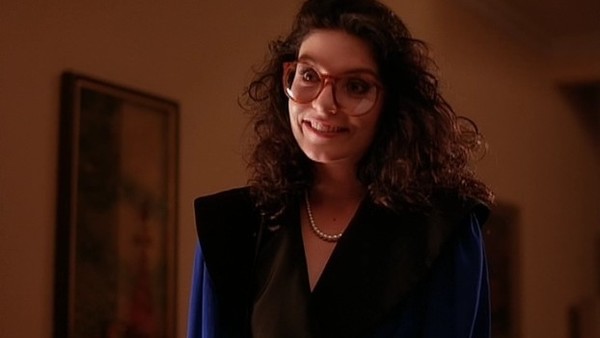
Twin Peaks was never a show that explored its characters back stories in too much detail, and what details it did disclose were usually integral to the plot or left deliberately vague. However when Maddie Ferguson arrived in Episode 3, she reveals that she's travelled all the way from a place called Missoula, Montana.
As well as being another sleepy mountain town, with a look feel and size similar to Twin Peaks, Missoula just happens to be the birthplace of David Lynch himself.
12. Mark Frost's Cameo
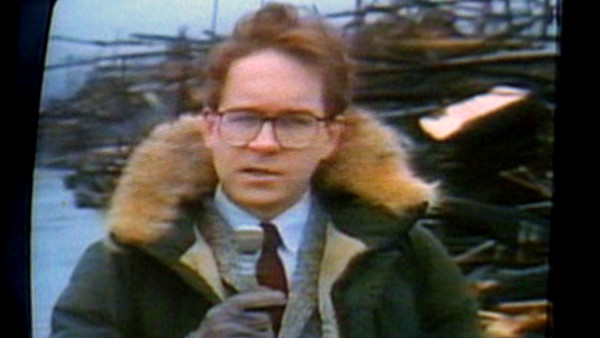
While the bulk of the credit for Twin Peaks is rightly laid at the door of the Lynch residence, the show would never have been the critical success it was without the efforts of Mark Frost; the novelist, screenwriter, director and film producer who's credited as the show's co-creator.
While Lynch took a supporting role as the FBI's Gordon Cole, Frost can only briefly be glimpsed on a television set as the news reporter covering the burned down mill.
11. Links To The Fugitive

David Lynch has gone on record with his admiration of the 1960's TV series The Fugitive. Most of us know the concept because of the 90s action film starring Harrison Ford, but ABC (who also ran Twin Peaks) showed 120 episodes of it over 4 series back in the day.
Not being one to let an opportunity for a reference pass him by, Twin Peak's one-armed man is named Gerard after the detective from The Fugitive. That detective just so happens to be pursuing Richard Kimble, a man framed for murdering his wife by, you guessed it, a one-armed man.
10. Walter Neff Was A Nod To 40s Noir
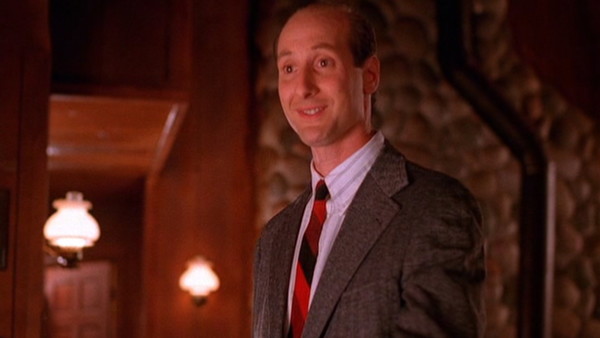
Another one of Lynch's favourite oldies was Double Indemnity, the 1944 Noir classic that's still to this day considered one of the greatest works of American 20th Century cinema. A story or deceit and misdirection centred around insurance agent Walter Neff.
In Episode 6 as a precursor to the mill being burned down, Catherine is visited by an insurance agent needing to obtain her signature for the new policy. That insurance agent's name? Walter Neff.
9. Doctor Jacoby's Based On A Real Person
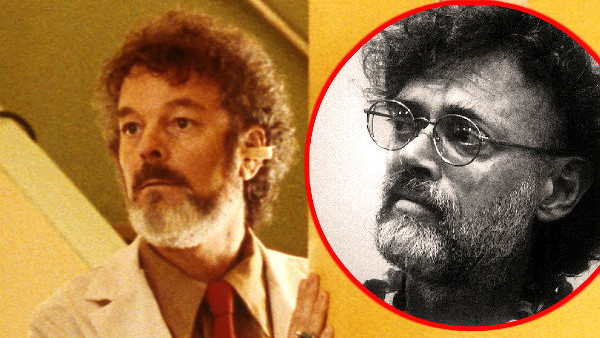
As well as taking inspiration for his favourite works of fiction, David Lynch also found inspiration from some of the real world's more colourful characters. None were more obvious that Doctor Lawrence Jacoby, the highly eccentric psychiatrist and secret lover of Laura Palmer, who was was almost a carbon-copy of ethnobotanist Terrence McKenna.
Beyond the, frankly, startling physical similarities, Jacoby's dress sense, mannerisms, and dialogue were all modelled on McKenna. Even his career path bears similarities, with Jacoby mentioning his time spent in Hawaii and McKenna founding a botanical reserve in the 80s. The most subtle nod of all though is Jacoby's mushroom lamp, which Lynch inserted into his office as a reference to McKenna's extensive writings on psycadelia.
8. Waldo Lydecker
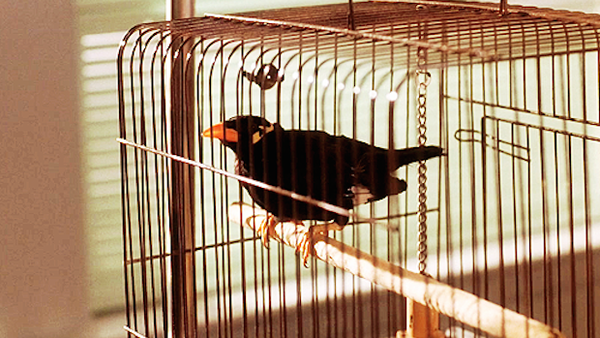
In Episode 4 we're introduced to the character of Dr Lydecker, the veterinarian Cooper believes to be connected to Bob in someway. During the search of his offices, Andy finds a file for the bird believed to have attacked Laura Palmer, named Waldo. Now, Lynch's love of 40s Noir is well documented, and putting those two names together gives you a major character of that era, a man named Waldo Lydecker.
Interesting enough in its own right, but all the more fascinating when you learn that Waldo Lydecker was a charismatic newspaper columnist in the 1944 film... Laura.
7. Gordon Cole
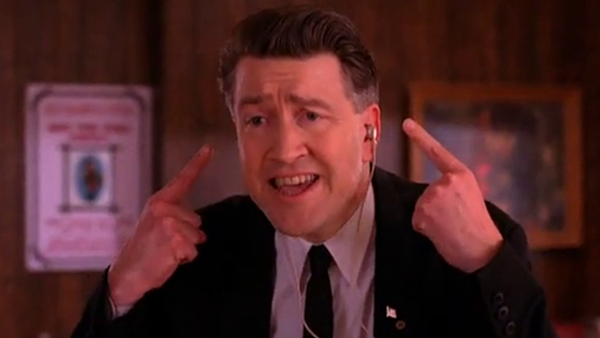
When quizzed on his favourite movies and directors (which is pretty much the go-to question in every interview he ever does) Lynch always reserves special praise for one man and one film above all others, regularly talking about the impact it had on his approach to filmmaking .
"I love Billy Wilder, Sunset Boulevard in particular, and I've watched it over and over. I loved the world Billy Wilder created."
Lynch being Lynch he wouldn't let a film with such personal significance to him go unmentioned in Twin Peaks, and it's the minor character of Gordon Cole - little more than a movie executive with a handful of lines in the film - who's name makes it into the show. Lynch himself taking up the role of the deaf-as-a-post FBI chief.
6. Marilyn Monroe

One fact about Twin Peaks that's often glossed over, is that it originally started as Frost and Lynch trying to put together a screen adaptation of a Marilyn Monroe biography. The project was scuppered when they failed to get the book rights, so instead they set about converting what they'd already written into a TV drama.
Many of the original plot points were left in, most specifically that Laura mentions in her diary that she's going to tell the world the truth about the "famous and important man she is having an affair with". Days after both Laura and Monroe wrote this in their diaries, they were found dead.
5. Ben Horne's Vegetables
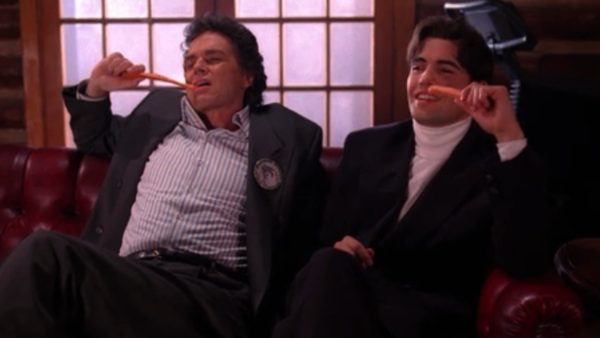
When Ben Horne decides to "turn over a new leaf" and mend his errant ways, Lynch begins on a visual cue to gradually illustrate his improvement in character.
Renowned for his cigars up until this point in the series, Lynch steadily starts replacing them with assorted vegetables. Instead of smoking in scenes, he's pictured nibbling on carrots and celery, even taking to offering them to other characters in the same manner. The change in prop was also, the story goes, a catalyst in making actor Richard Beymer (briefly) quit smoking.
4. Lost Highway

While Mulholland Drive bears a number of similarities to Twin Peaks - as a result of it starting out as a spin-off - Lynch's most divisive film Lost Highway is out and out part of the same universe.
While the nods and winks between the two aren't anywhere near the sort of level people have come to expect from something like the MCU (Deputy Andy doesn't make a cameo, and there's no mention of logs with special powers for example) the main connection between the two is the Black Lodge
It also helps that Lynch has gone on record to say that the two are set in the same universe as
3. Kyle MacLachlan's Brother
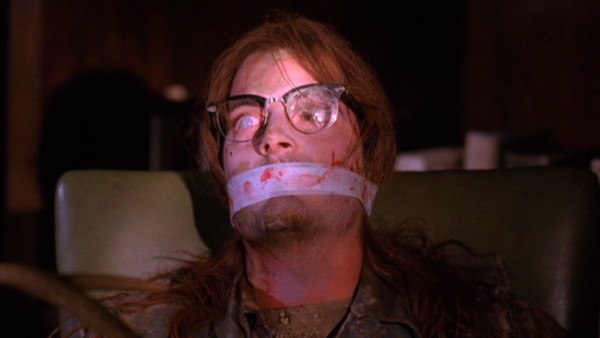
In a classic case of "be careful what you wish for", Kyle MacLachlan's brother spent the better part of Season 2 pleading to be allowed a spot on the show. Despite his brother telling him that all the parts were cast and there was nothing he could do, he persisted.
It paid off towards the end of filming, when a spot as an extra opened up that Kyle thought his brother would be absolutely perfect for. Windom Earle's first murder victim. Not quite the big speaking part he was after, but still a spot on the show nonetheless.
His wasn't the only family cameo though, as Lynch's own son Austin Jack crops up as the grandson with the hands full of corn when Laura visits one of her Meals on Wheels clients.
2. Bonus Entry: Hank Jennings Isn't Jean Valjean
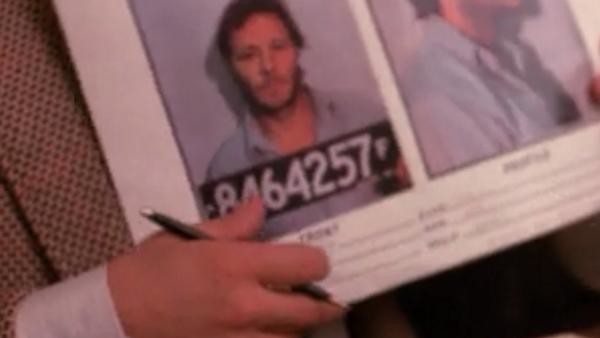
Doing the research for this article, the one Twin Peaks Easter Egg that routinely crops up as fact is that "Hank Jennings' prisoner number was 24601 - the same as Jean Valjean's in Les Miserables". It's been so widely circulated that's it's pretty much taken as fact.
Now, if I might be the Javert in this situation (the police officer obsessed with recapturing Valjean. Christ, read a book), a small semblance of detective work proves that, simply, it isn't true. In Episode 4 Lucy can be seen holding Hank's file and, lo and behold, his prisoner number is the far less catchy and interesting 8454257.
If you're curious, that number's the decimal code for a pretty deep shade of purple, but I can't find anything to tie that into. Sorry.
1. I'll See You Again In 25 Years
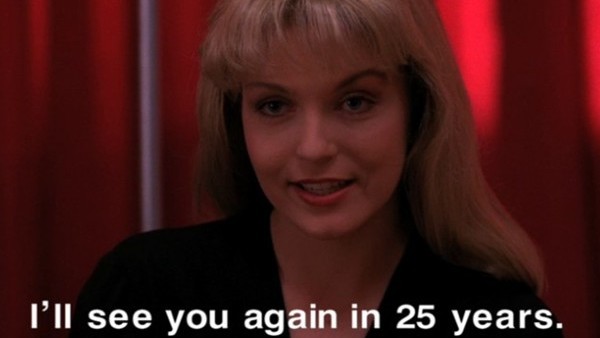
In the only possible place to finish we go to Laura Palmer's now infamous words to Agent Cooper. Specifically that he'll see her again in 25 years.
At the time, little more than a cryptic phrase with very little connotation or meaning (like almost all of the dialogue in the Black Lodge), now a seemingly impossible piece of foreshadowing. When the new series airs in 2016, it will mark the show's 25th anniversary, perfectly mirroring Laura's words.
Whether this is deliberate or merely a fortunate coincidence Lynch hasn't been kind enough to reveal yet, but given the level of complexity and forward thinking the show demonstrated over its two seasons, there's every bet it was in his mind the whole time.