20 Easter Eggs You Didn't Notice In American Horror Story

11. €œEdward Mordrake: Part 1€ Is One Big Halloween Homage

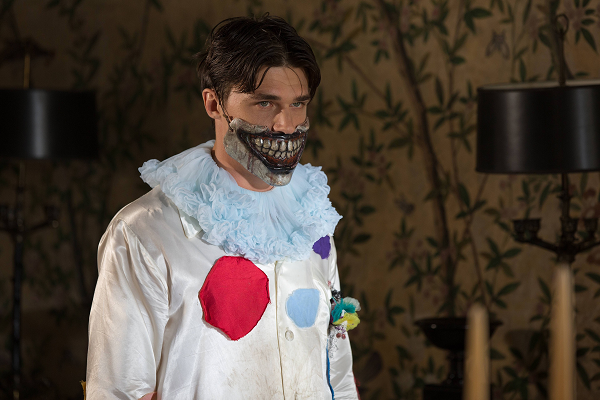
American Horror Story isn't shy about its pop culture ancestors. Angela Bassett's three-breasted woman in Freak Show is a non-too-subtle nod to the Martian sex worker with the same in Total Recall, Rosemary's Baby is all over the first season, but there's only classic of the horror genre that they just can't stop dropping references to. John Carpenter's original Halloween is widely regarded to have started the slasher subgenre, so maybe it's appearance in the American Horror Story melting pot isn't all that strange. But it gets referenced so much, from the figure glimpsed between sheets on a washing line to basically the whole of season four episode €œEdward Mordrake: Part 1€. Twisty The Clown's stalking of the carnies is very clearly modelled on Michael Myers terrorising the population of Haddonfield, including shots of him hiding behind a bush on a pavement as a well as a whole section filmed from his point-of-view from behind a mask. Apparently Halloween is a favourite of Ryan Murphy and Brad Falchuk.

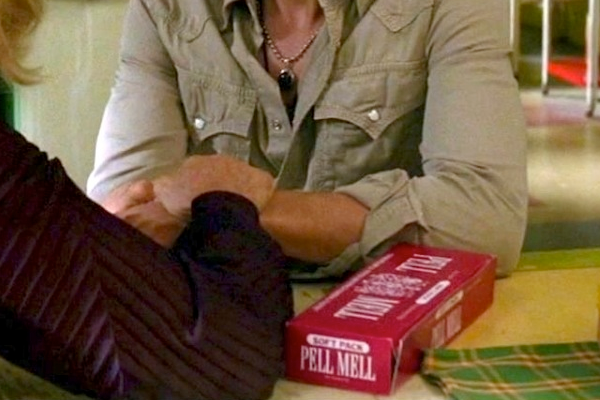
10. Those €œPell Mell€ Cigarettes Mean Something

Is there anything in American Horror Story that isn't significant? The plot of every season can apparently be figured out by the cryptic animations in the opening titles. Showrunner and creator Ryan Murphy claims that the top hat and coffee cup seen in the fourth season in some way an important clue as to what will happen in the fifth bunch of episodes. Amongst the more obtuse references in the show are all the creepy things concealed by the production designers. One of the smartest €“ and certainly the smallest, an Easter Egg you could easily miss €“ were the cigarettes bought by Travis for Constance in one episode. The red carton and design looks like the classic €œPall Mall€ brand In actuality they're branded with the name €œPell Mell€. Probably just avoiding having to pay rights to the actual brand name, right? Actually, Pell Mell is a phrase meaning €œin a confused, rushed, or disorderly manner€ or €œhelter-skelter€. That certainly sums up the relationship between the failed actress and her boy toy pretty well.

9. Dr Arden's Cane Is From Dark Shadows
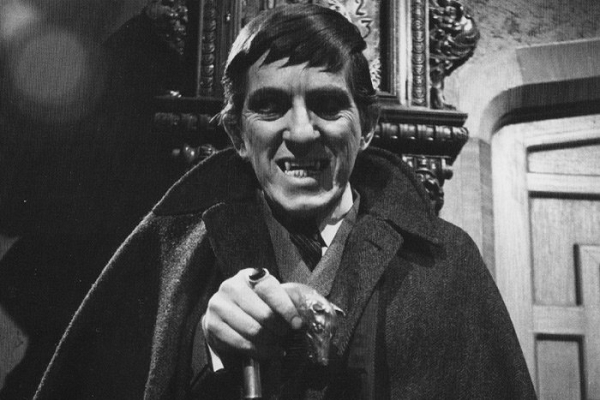
When he was a child, Brad Falchuk's grandmother had a very unusual punishment to mete out when he misbehaved. She made him watch the cheesy old gothic soap opera Dark Shadows. €œI would sit there and be very afraid, and then the next day I would say, 'Nana, I want to watch the program again.' I just loved feeling scared,€ he remembers. The cult show recently got new life thanks to a Tim Burton-directed movie, but before that it was mainly remembered as being a singularly odd series that followed the bad acting, melodrama and cliffhangers of regular soap operas, but with a cast that included vampires, ghosts, and all manner of other ghouls. Originally Falchuck wanted American Horror Story to be his €œversion of Dark Shadows, where there are creatures and a soap opera and sex.€ In the end, he settled for Dr Aden in season two carrying a replica of the silver wolf's head cane carried by Barnabas Collins, the lead character of Dark Shadows, during his time at the Asylum.

8. Kit Walker Is A Superhero

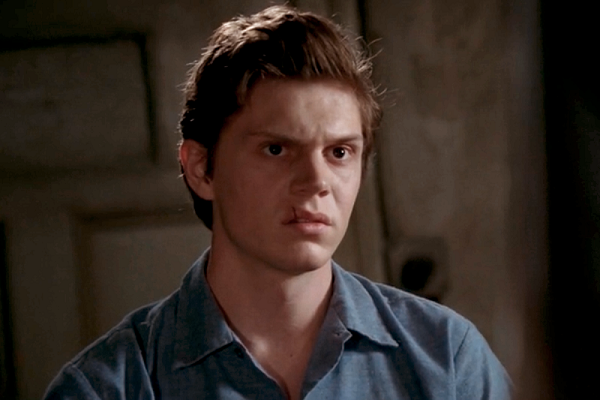
Evan Peters gets all the good roles in American Horror Story. All the roles that involve him being a crazy mass murderer of some sort, anyway. In Asylum he's Kit Walker, a gas station attendant whose marriage to a black woman in the age of segregation caused a certain amount of controversy. Then he got sent to the asylum for killing people. One of the central mysteries of the season was whether or not Kit Walker, the name of Peters' character, was actually responsible for the so-called Bloody Face. It later turns out Dr Thredson was the man behind them, but there was a pretty major clue that Kit was innocent in the form his Easter Egg-y name. Because Kit Walker is also the alter ego of The Phantom, a pulp character who was very much a predecessor of modern superheroes, created by Lee Falk and featured in books, magazines, comics and even a slightly ropey 1996 film starring Billy Zane in the eponymous role. See? The AHS character was destined to be a okay in the end.

7. Edward Mordrake Was A Real Person

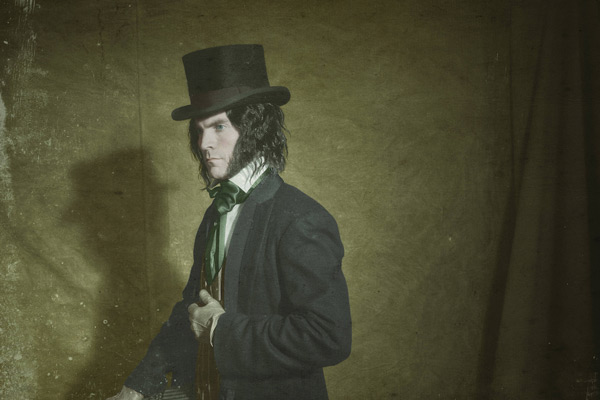
In Freak Show, the fourth season of American Horror Story, Edward Mordrake is a privileged 19th century English noble, born with a second face on the back of his head who told him to do bad things. So far, so Voldemort in Harry Potter And The Philosopher's Stone. In the show he's long dead, but superstition claims he returns every Halloween... Perhaps the spookiest thing about Mordrake is that he actually existed. He was a real person, not just character invented for the show. Apparently heir to an English peerage, Mordrake really did have an extra face on the back of his head, although it didn't actually whisper to him at night and try and convince him to murder people. It was, however, a source of great shame for Mordrake. Folklore had it that the face could be seen to smile and sneer while Edward was weeping over his condition; he begged surgeons to remove his €œdemon face€, now identified as likely being a form of of Diprosopus, but before they could he committed suicide at age 23.

6. The Murder House Has A History Of Being A Scary Set
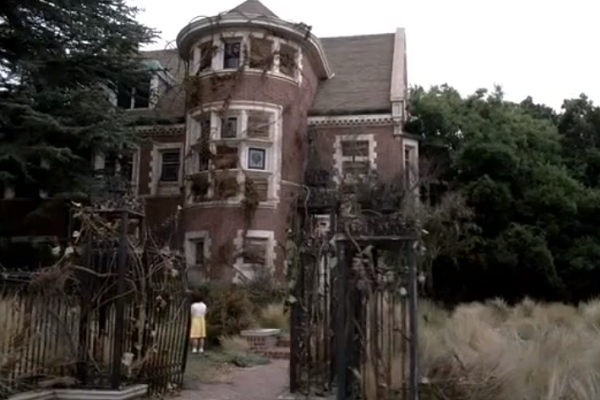
The eponymous Murder House from American Horror Story's first season is an actual place. You can visit it and everything. Situated at 1120 Westchester Place in Los Angeles, it's better known as the Rosenheim Mansion, built in 1908 by architect Alfred Rosenheim as his own residence. But its famous legacy doesn't begin and end there. Before Ryan Murphy and co rocked up to transform it into the epicentre of all manner of spooky goings on, it was also used in episodes of the equally terrifying Alfred Hitchcock Presents, The Twilight Zone, The X-Files and Ghost Whisperer. It was also used in less scary projects like the original Spider-Man and Seabiscuit. It may be most recognisable to fans of camp horror telly, however, as the Frat House location on Buffy the Vampire Slayer's 1997 Halloween special €œFear, Itself€, where a curse makes the character's fears manifest themselves as real, terrifying visions. Which is actually not far off the plot of Murder House, actually...

5. Sal Mineo's Death Is An Infamous Urban Legend
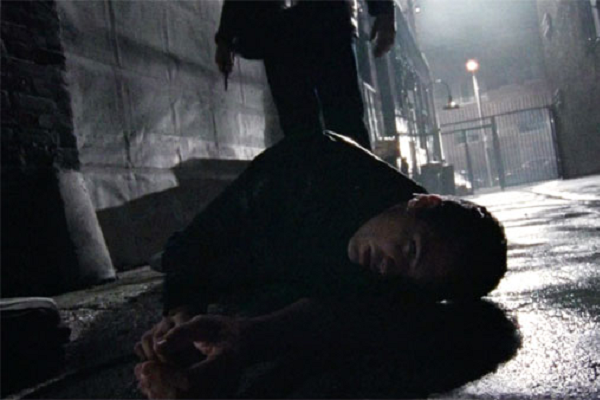
€œMurder House€, the third episode of American Horror Story's first season, continues the penchant for riffing on both the history of horror films and actual spooky history. In the episode Vivien boards the Eternal Darkness Tour, a guided tour of LA's most notorious murder spots, in an attempt to learn more about the creepy house she just moved into. Amongst the stops on the tour, including the Harmon's new murder house, is the supposed spot of of actor Sal Mineo's murder. Mineo was a real Hollywood star, appearing opposite James Dean in Rebel Without A Cause, whose promising late-career blossoming was curtailed when he was stabbed in the heart by a robber and bled to death. This episode propagated a long-standing rumour that Mineo, who was openly bisexual in an age when America wasn't all that accepting of different sexualities, had been trying to pick his murderer up. The man actually had no idea who the actor was, and he also stabbed him just once, rather than the dozens of times depicted in the episode.

4. Loads Of Old Horror Film Scores Are Used
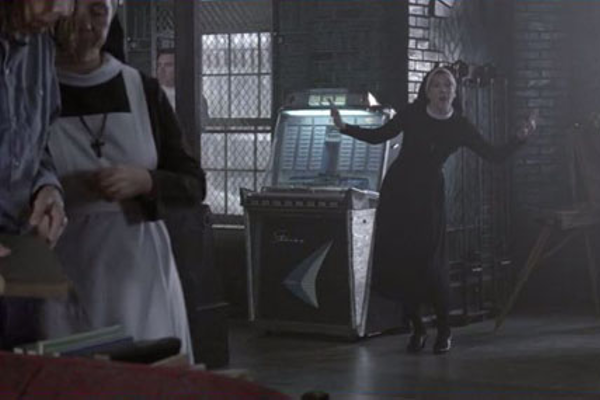
With its gleeful use of recognisable tropes, actors and plot twists, American Horror Story is more a ridiculously over-the-top homage to horror cinema than anything else. Sure, you might have seen it all before, but the show mashes up so many disparate influences it winds up making something totally fresh, new, and disturbing. One of the more direct ways American Horror Story plugs into its past is the soundtrack. The show mostly uses orchestral scores, with occasional pop tracks, some of which might sound familiar to you. That's because whoever's in charge of the music mainly pulls from the soundtracks of old horror films and uses them in suitable places. So far the series he utilised the scores from classics like Bram Stoker's Dracula, What Lies Beneath, Psycho and even newer films such as Insidious. If you'd been racking your brain as to where that familiar whistled tune came from, that's €œTwisted Nerve€ from the film of the same name €“ also used in Quentin Tarantino's Kill Bill Vol 1.

3. The Songs In Season Four Were Purposefully Anachronistic
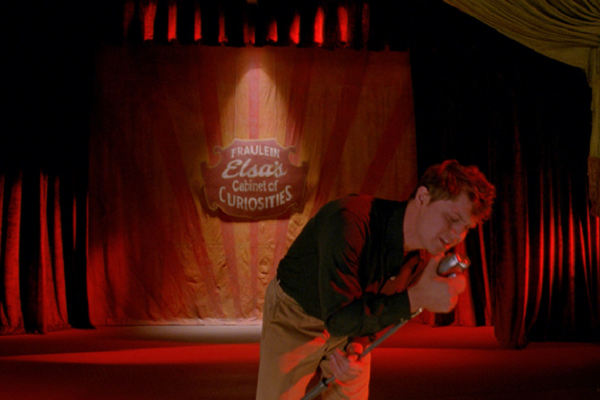
American Horror Story has a pretty intense fan following €“ as does nearly everything Ryan Murphy is involved in (except you, The New Normal, sorry) €“ but with it come haters that are nearly as obsessive. The backlash for the fourth season, Freak Show, focussed mainly on the amount of anachronistic songs used in the series. Mainly set in 1952 Jupiter, Florida, the fourth season was about one of the last remaining freak shows in the United States. Killer clowns did not help their plight. What did was the characters singing their hearts out €“ it all got a bit Glee €“ albeit with songs that, more often than not, had been written years after the show's period setting. Murphy explained that this was intentional. He didn't really care about being anachronistic. All the song were chosen because the artists who originally wrote and performed then, including David Bowie, Lana Del Rey, and Nirvana, all deemed themselves or were deemed €œoutsiders€ or €œfreaks€ €“ just like the characters singing them on the show.

2. Each Season Gives A Clue To The Next

American Horror Story creator Ryan Murphy has been teasing for ages now that each season if the anthology show is in some way connected. Some of those connections have started to become clear (ie Pepper, who appeared first in Asylum and then turned up in Freak Show too). Others are a little more subtle and easy to miss. Because Murphy likes to plan ahead, each season of the show so far has featured a clue as to the subject matter of the next. The first season hat a lot of references to madness and people being committed, which lead into the second season €“ Asylum. Murphy also hinted, before the season two episode €œThe Name Game€ aired, of another such clue. It turned out to be Sister Mary Eunice playing the song €œI Put A Spell On You€, which foreshadowed the third season. Meanwhile, the premiere of the fourth season featured Fiona saying that social networking will lead to witches being looked upon as €œsome viral freak show€, which is a little less subtle, since it literally featured the next season's title.

Contributor
Contributor

Tom Baker is the Comics Editor at WhatCulture! He's heard all the Doctor Who jokes, but not many about Randall and Hopkirk. He also blogs at http://communibearsilostate.wordpress.com/