Celebrating Doctor Who's 50th Anniversary: 50 Pivotal Story Arcs
12. Army Of Ghosts/Doomsday 2.12-2.13
 Responsible for starting a tradition of truly epic companion departures, this two-parter is the story of how the Doctor comes to be separated from declared-forever companion Rose. Leading up to this novel and incredibly emotional separation, is a truly different battle for the Doctor where he faces not one, but both of his greatest enemies, the Daleks and the Cybermen simultaneously. So alongside establishing a need for pomp, circumstance and grand tragedy whenever a future companion leaves the TARDIS (ok, Martha's debatable), it's is the first time we see two major Doctor Who monsters coming together and it leads to a stand-off not only with the Doctor but among themselves. If nothing else, the combination was worth the Dalek-Cyberman slanging match alone.
11. Terror Of The Autons 8.1-8.4
 Terror of the Autons was an easy choice for a couple of reasons, it is the first story to feature Jo Grant, who is best summed up at least initially by this line from the Brigadier: "Nonsense. What you need, Doctor, as Miss Shaw herself so often remarked, is someone to pass you your test tubes and to tell you how brilliant you are." Thankfully this era of attitude toward companions or assistants did not last long. It is also the start of the Master as the Master, who establishes himself from scene one as the puppet-using, life-as-tools-to-his-ends character he normally is. The Doctor's disdain for him is well established here, even before he and the Master meet again for us to see. It also introduces the feature of Time Lords to hypnotise, something that reaches a peak in the next Doctor's era as he uses it as well, but is evoked in nearly every future appearance of the Master.
10. The End Of Time 4.17-4.18
 While there has been significant backlash against this lengthy story by some who disapprove of the long farewell tour had by the Tenth Doctor in his regeneration story and his comments about regeneration as death, I think it is hard to deny that it opens a door to make regeneration as important to the Doctor on-screen as it is to those in the viewing public and the behind the scenes team. Also, this story also served to reintegrate Gallifrey and the rest of the Time Lords into Modern Who before the Day of the Doctor picked up the ball and ran with it. Atop this, and equally importantly, it started a new chapter in the rivalry between the Doctor and the Master by making them true allies even if only briefly and offered more about the Master's character than we have ever known before.
9. Waters Of Mars 4.16
 Doctor Who has done a number of stories on what the consequences of altering time, especially fixed time, are. While it's been handled a number of different and fascinating ways, perhaps the most compelling way the universe says no to the Doctor is its ability to course correct, and therefore subvert the Doctor's attempts to break the rules of fixed time. Waters of Mars has one of the most heartbreaking course corrections we get to see on Doctor Who, as the one person he wanted more anything to save still dies. It is also an important story for the speech that proceeds that pivotal moment. The Doctor by this point has gone absolutely drunk with power. He makes a reference to some of those he has saved, as dismissively "little people" and perhaps worse still, he calls himself "Time Lord Victorious" as the winner of the Time War. It serves a reminder, unlike and above any other, that the Doctor is not naturally good. It is not inherent in being a Time Lord, or a result of his travels. Instead, it's a personal choice he is making and continues to make.
8. Trial Of A Time Lord 23
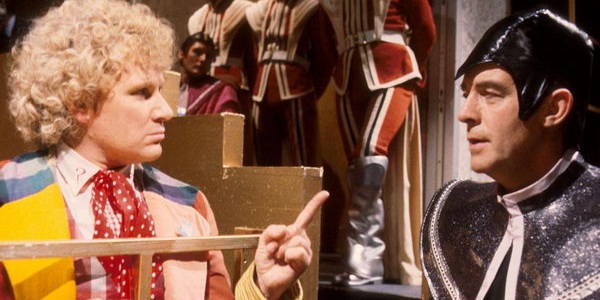 I toyed with the idea of originally making two separate recommendations for Trial of Time Lord as the massive season long fourteen-parter is subdivided in four parts. Had I done so, I would given priority to the second and fourth serials within this longer story, known as Mindwarp, or parts five through eight, and The Ultimate Foe, or parts thirteen and fourteen. Mindwarp is most valuable for being the end of companion Peri, who serves in some ways as a display of the Time Lords' cold, dispassionate, and therefore sometimes cruel ways. The ending to this epic battle begins in part thirteen with some unexpected help from the Master perhaps a spark of their future camaraderie and uneasy alliance when against a common enemy like we see in End of Time who brings companions Melanie Bush and Sabalom Glitz to help the Doctor's doomed defence. The identity of the Valeyard is quickly revealed as are the less than pure motives behind the Trial itself. However, the extra-long serial is undeniably greater than the sum of its parts, be they seen as one, two, four, or fourteen. Not only because the trial and the character of the Valeyard still come up in discussion of Doctor Who onto the present, but also because the trial serves as one of the rare opportunities the Doctor confronts just how in-between he has become. While the modern era of Doctor Who has become about just how human the Doctor is or is not, this serial is Classic Who's last attempt at establishing just how timelord he is.
7. The Daleks 1.5-1.11
 The original Daleks are a good enough reason to watch this one. Their voices are incredibly amusing and watching the Doctor and his company work out what they are is particularly delightful. I think the general amicable attitude that has cropped up among them makes this serial particularly pleasant even in the sections with less action. It is one of the lengthiest serials, so if you wanted to watch just a single part of the lot I recommend part three The Escape. However, I've only narrowly put it above part four, The Ambush. This part sees companion Ian stuck in a Dalek suit, and preparing to make a heroic go-on-without-me sacrifice. What really makes this serial a list maker is it that contains so many elements which ultimately make Doctor Who what it has become: strange planets, and war, and humanoids, and companion bravery, and negotiation by the Doctor, and just a touch of comedy. A truly classic serial and an enjoyable start for the Doctor's greatest enemy.
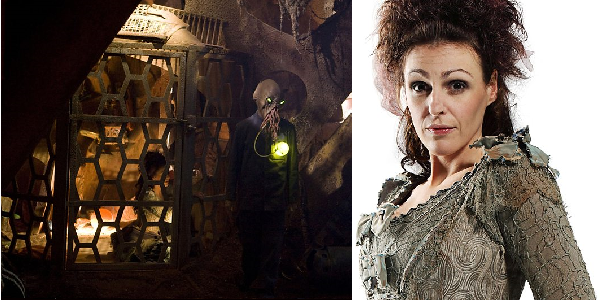
6. The Doctor's Wife 6.4
5. Dalek Invasion Of Earth 2.4-2.9
 No truly historical list could skip this serial, perhaps the most well-known of all of the original Doctor's adventures. This grim four-parter is most important for being the first ever companion departure. Here we see the Doctor say goodbye to his granddaughter Susan, setting him up for the pattern of inevitable goodbyes that will follow him for the rest of his lives. Additionally, this serial is responsible for establishing a lot of the horror factor behind the Daleks. There is this idea introduced of Dalek human hybrids introduced called Robos, who "go mad" once the Daleks are finished using their transplantation-altered minds. Perhaps an early test drive of the Cybermen, this lethal fate was to have insane Robos dashing at their brains, unable to handle the atrocities they had committed while exterminating other humans. The story is surrounded by death, the scale of which we have not seen before. We can understand why Susan stays behind with a local man, David Campbell, to continue fighting the fight still left to be waged there, and to rebuild.
4. The Tenth Planet 4.5-4.8
 It's hard to tell what is more historic about this serial, the first appearance of the Cybermen and their planet Mondas, or the very first regeneration of the Doctor. These first Cybermen still have exposed human flesh, their hands are not yet part of the conversion. They also sport a more flesh-like outer shell, have head lamps, and walk with a more natural, human gait than their more modern cousins. There is a real sense of tragedy in this one. You grow to feel bad for the Cybermen, who want so badly just to survive and save their planet, even though no one wants them to kill humanity to do it. You also feel for the humans caught in the immediate crossfire, and cheer companions Ben Jackson and Polly Wright's efforts to help, which makes you forget why the Doctor's not doing more. And then it hits you again, he is dying. The regeneration itself is rushed and only occurs at the closing moments of the serial, giving you a hint of that same confused feeling you would have had watching it for the first time. A truly brilliant end and beginning.
3. An Unearthly Child 1.1-1.4
 If it's not clear why I am recommending this one, you are certainly reading the wrong list. It makes the list for being the first serial and is on the list, primarily for that basis. It introduces us to the first companions, the First Doctor, first trip in the TARDIS, the first whoosh of the materialising sound...you get the point. Were it not for its status as the inaugural serial it is not worth much of a mention. The Doctor's granddaughter, Susan, and companion Barbara Wright spend most of the serial displaying their signature shrieking, the man's man attitude of companion Ian Chesterton is appalling, the wildlife noise of prehistoric earth sounds like a puppy whining, and the 'cavemen' who are the focus of most of the plot are absurd. I do recommend sticking it out to see the wrestling match toward the very end of the serial. Good comedy, there. Still despite its faults there is something to be said for knowing where it all began and getting a true sense of just how far the institution has come in fifty years of space-time travel.
2. Genesis Of The Daleks 12.11-12.16
 Genesis of the Daleks is truly momentous in as number of ways. Principally, because it establishes the back story of the Doctor's greatest enemy the Daleks. We understand, better than ever by this story's close, who they are. The circumstances of their creation explain why they are so bent on purity and elimination of the other, and even why they use the word exterminate. This is the first story to feature the Dalek's creator Davros. This story serves to answer why anyone would create the Daleks. The backdrop of the thousand years multi-era war of the original human inhabitants of Skaro, is supposed to be solved by Davros's great peace creation. But Davros himself mad with power wants to rule "above gods" and would gladly destroy all life everywhere for that purpose. Thorny moral discussions concerning the price of peace make this an especially weighty serial, as it strives to answer whether any price is too high, whether any course of action is too extreme. While the many war-centered stories of Doctor deal with this issue to varying degrees, here it becomes the focus of the story. In a superb twist of irony, both Davros and the Time Lords seem to agree that there is no price too high with the latter being willing to subvert the creation of the Dalek race, just to achieve such an aim. The Doctor famously wonders whether such a right is given to any person or group, whether anyone can really decides with clear conscience who should live and die. While the serial is wrapped neatly for the characters, by and large, the moral question seems to remain somewhat open. I think this serial is a major shift for the Doctor as well. So much of early Doctor Who is focused more on an idea akin to 'let us get out of this mess', indeed the original rule one was to never rewrite history. Then as we transition to previous incarnation he is under the control of UNIT. Here in some ways is the first step of the Doctor choosing his own destiny, even while hired as the world's ultimate contract killer.
1. The Day Of The Doctor
 A few days ago I could have not imagined that the story celebrating the anniversary could itself top this list. Even though we were indeed promised a plot that was game-changing, I had a lot of doubts, as many of you might recall. Whether we love or hate the outcome, the reintroduction of Gallifrey and the plot-twisting revelation that things are not as we have always known them to be, combined with now giving the Doctor the task to find (as opposed to run away from) his home, is a fundamental change of direction with consequences that not only impact how we perceive Modern Who, but ripple outward affecting the Doctor's entire journey. As if that were not enough, it also fleshed out a brand new Doctor in the gap between Classic Who and Modern Who, shed light on the Last Great Time War itself, updated our mental picture of Gallifrey and tied up a couple of other loose threads, including why the Doctor is not better equipped to help his other selves when they get together. There you have it. Fifty pivotal story arcs, one for every year since that first opening drumbeat. Whether as small as a new companion climbing abroad or heading off the TARDIS or as grand as a complete shift in narrative structure, each of them in some way changing the adventures of the world's most beloved time-travelling space alien. This list also, much to my surprise, features nearly every companion, and contains a narrative picture of each Doctor along the way. There are many, many great stories omitted from the preceding list. I look forward to your comments about the equally grand adventures that missed my cut along the way. What would your top ten look like?