Doctor Who: 10 Things We Learned From Into The Dalek

The information that the latest episode of Doctor Who threw at us...
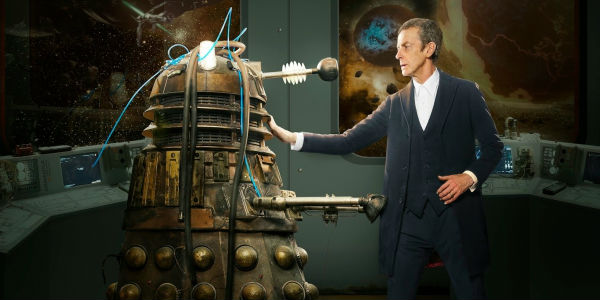
Well you can€™t say that Steven Moffat doesn€™t like to change things up. While last week€™s series opener Deep Breath left us all asking more than a few questions, conversely Into The Dalek has been a definite learning experience. It€™s filled with subtle continuity nods, new characters, ethical exploration, blowing things up, and a massive amount of technical information about the Daleks. It has so much going on that you€™d practically need to take notes just to keep up with all of the information it bombards you with. But since Doctor Who isn€™t supposed to be watched while taking notes (in some fan circles it€™s probably a crime sentenced by forced Regeneration and exile on Earth), we€™ve taken the liberty of doing it for you. Everything you need to know about the Doctor€™s latest skirmish with the Daleks as well Clara€™s new love interest Danny Pink, and the reappearance of Missy. So here it is: our handy cut out and keep guide to Into The Dalek and what we learned from it. Except don€™t try cutting it out. You€™ll damage the computer and possibly yourself. Mainly the computer though. So remember to breathe and don€™t be lasagne as we look at 10 Things We Learned from Into The Dalek...

10. Rusty Is Still Out There

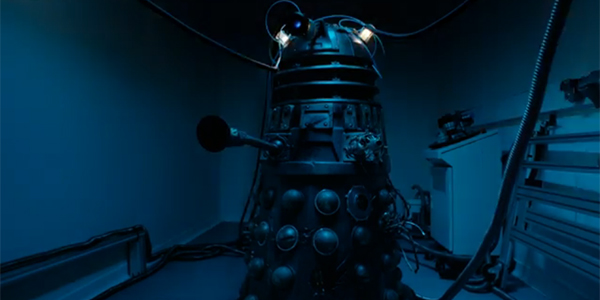
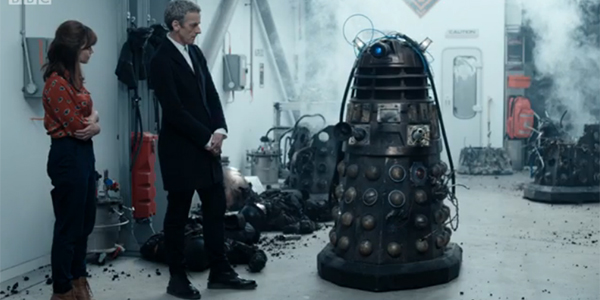
Will we ever see Rusty again? Well the only real answer to that at the moment is maybe. He tells the Doctor he has to go with the other Daleks but what happens after that? Does he slowly destabilise parts of the Dalek Empire? Assassinate key figures of the Dalek military? Fake his own death and join a ragtag bunch of rebels in fighting the Dalek war machine wherever he finds it? Actually, someone get the BBC€™s spin-off department onto that last one. Currently, Rusty€™s fate is wide open. But that wasn€™t always the case. The post-production script and rough cut of Into The Dalek from the Marcello Camarge cache of leaked episodes both include a death scene for Rusty. In the rough cut, after the thoroughly rattling €œYou are a good Dalek€ remark; Rusty teleports onto the Dalek ship, gives a final cry of €œDeath to the Daleks€, and self-destructs taking the entire ship with him. While he won€™t be cropping up again in Series 8 since the removal of his death scene happened fairly late in the game as far as production goes, there€™s nothing to say we won€™t be seeing the battered old crackpot at some point in the future.

9. Heaven's Not Just For Robots

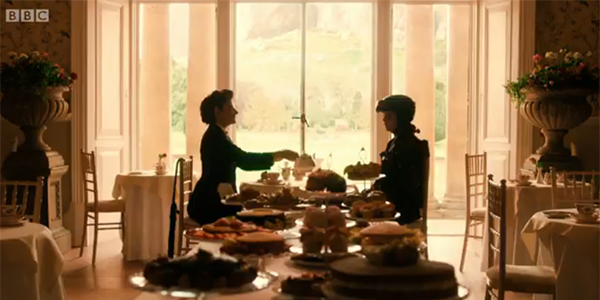
Even though it€™s all about the Daleks (well, Dalek), Into The Dalek also takes a brief moment to further Series 8€™s Promised Land story arc by handing over another one-off character to the custody of Missy. Rebel soldier Gretchen Carlisle sacrifices herself after not doing much else during the episode so that Clara and Journey can get to Rusty€™s CPU, and ends up in Heaven. Which is apparently a well kept English country house with a substantial buffet and a Scottish Mary Poppins pouring the tea. But while this scene is incredibly brief and only moves the story arc on by the tiniest amount, it tells us one important thing: Heaven€™s not just for robots. As well as killing our theory about Heaven being some kind afterlife or trap for robotic life-forms set by the Cybermen (Series 8 is incredibly heavy on robots and cyborgs), Gretchen entering Heaven both poses and slightly answers the question of what is the criteria to get there. The question of what specifically makes people go there is still largely unanswered but Gretchen€™s entry seems to provide us an answer: die because of the Doctor. Both the Half-Face Man€™s and Gretchen€™s deaths stem from an encounter with the Doctor and they are both welcomed to Heaven shortly afterwards. It€™s not really a concrete answer but we€™re certainly getting there.


8. Who Danny Pink Is

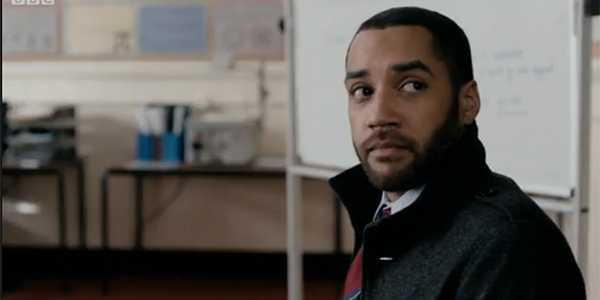
Despite Rusty being the focus of Into The Dalek, the episode also took some time with its bookending scenes at Coal Hill to introduce and give some development to new character Danny Pink. Although the BBC€™s publicity material gave us a fair amount of information on Danny (recurring character, Coal Hill teacher, Clara€™s love interest), they still managed to keep a lot back and use the Coal Hill scenes to gradually build up his background and personality. One of his most significant traits is the curve ball of him being very awkward and shy around women (or maybe just Clara). A surprise given Samuel Anderson€™s tendency to play ladies€™ men such as Fingers in Gavin And Stacey and Ross Kirk in Emmerdale, and that Danny€™s first scene is him in full authoritarian mode while training army cadets. Despite this, right from the off he€™s marked down as definitely not being a Rory or a Mickey. He has the Rory-ish quality of sort of being second fiddle to our female Companion but his military past automatically gives a him lot more competence and life experience. Which ties into the biggest thing about Danny that we learnt from Into The Dalek...


7. His Secret

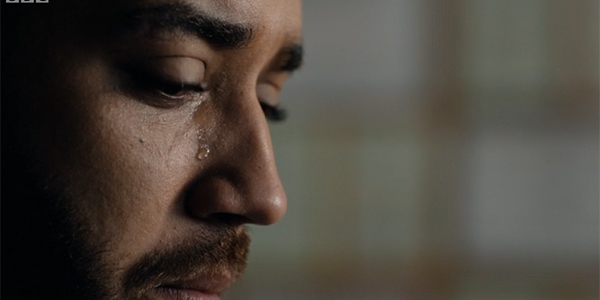
While this is set up as a character point to be revisited in a future episode, the way it€™s written makes it so incredibly clear what Danny€™s secret is that they may as well have flashed up a sign saying €œDanny killed a civilian€ during that scene. In all fairness though, for now the audience are left completely in the dark about the circumstances. Meaning that all currently we know is that somehow and for some reason, Danny was responsible for the death of an innocent. And although what we€™ve seen means he€™d be very capably keeping it in check, the implication that he might be suffering from post-traumatic stress disorder is there. We€™re able to work out what Danny€™s secret is but what remains to be seen is how the Doctor and Clara will take it. And although this is severely lacking in anything resembling subtlety, you have to give Steven Moffat credit for having the cojones to introduce a recurring character that killed a civilian and is implied to have PTSD into the mix. We€™re not in Kansas anymore, Toto.

6. Clara Still Doesn't Know Who The Doctor Is
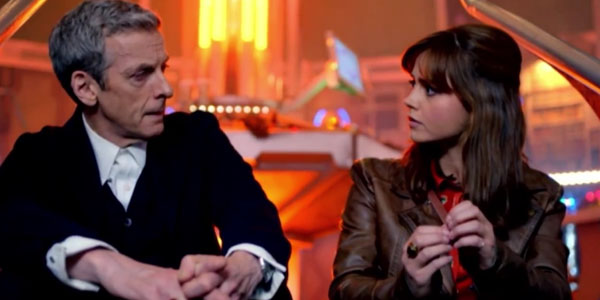
Mixing the recurring plot devices of the Doctor turning up late to see his Companions and Clara only travelling with the Doctor occasionally, Into The Dalek picks up where Deep Breath left off with the Doctor fetching coffee (Looks like he is the fetching sort after all). Just three weeks later and several hundred miles away. This carries on the tradition of a new Doctor and Companion team€™s first two adventures happening in sequence, allowing the audience to gradually gauge the new character dynamic and let it grow at its own pace rather than the Doctor and Companion suddenly being best pals from all their offscreen adventures together. It also lets a minor story arc continue as Clara is no more the wiser about what the Twelfth Doctor is like since we last saw her. Which makes this episode almost as much a journey for Clara as for the Doctor. She€™s seeing the fully Regenerated Doctor in action for the first time and has to come to terms with how he does things, and how different he is to her Doctor for the first time. And it€™s a story that€™s still progressing since Clara€™s still unsure about whether or not he is a good man after their adventure inside Rusty.

5. A Good Dalek Is Possible

While we€™ve seen this happen several times before, it's usually the result of a massive genetic rewrite of the Dalek, or time travel-induced insanity. What we haven€™t seen until now is if it€™s possible to take a bog-standard Dalek grunt and turn it good. And as Into The Dalek revealed, yes it is possible. It€™s reliant on incredibly fortunate circumstances and takes a staggering amount of effort but yes, a good Dalek can be created. If you€™ve got the nerve and the ability to shrink yourself down to a minute size, enter the Dalek, restore its suppressed memories and then do some technical jiggery-pokery that allows you to enter its mind and share your soul with it. Oh and your memories need to be lacking in overt hatred since that€™ll just make things worse. Actually, you know what, just shoot it. It€™s easier and the Dalek would want it that way. The definition of everything we know a Dalek to be has been turned on its head with this revelation, which proves that there is good in just about anything. But it takes the right person to realise a Dalek€™s potential for good. And that person isn€™t the Doctor. Because as Rusty said...


4. The Doctor Is A Good Dalek

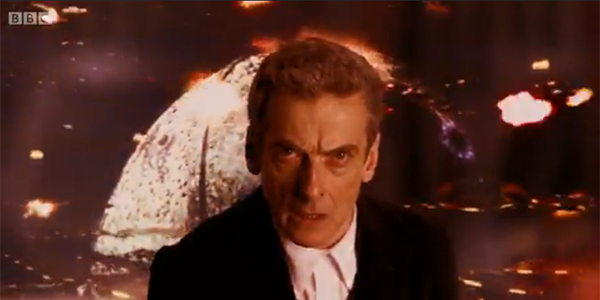
Well from a certain point of view at least. What will most likely be remembered as this episode€™s most memorable moment in years to come is Rusty€™s parting shot at the Doctor: €œI am not a good Dalek. You are a good Dalek€. And when you think about it, he€™s right. However pure his intentions may be, the Doctor€™s never-ending fight against evil causes a lot of collateral damage and often results in the death of both the good and the innocent. And aside from their morals and intentions, the Daleks and the Doctor are not so different when judged by their actions. Both have taken lives, destroyed, and manipulated. They have even both committed genocide at some point in their lives. But the one thing that really makes Rusty€™s declaration that the Doctor is a good Dalek ring true is how he acts when faced with the Daleks. Apart from one or two moments where the collateral damage would have been to too great, the Doctor never hesitates to get medieval on the Daleks. It€™s one of the few instances where he€™ll basically stick two fingers up to pacifism and be happy to start killing. Well, not happy but you get the idea. In an interesting case of €œHe who fights monsters€; facing down the Daleks often makes the Doctor himself into something comparable to a Dalek.

3. The Daleks Made The Doctor

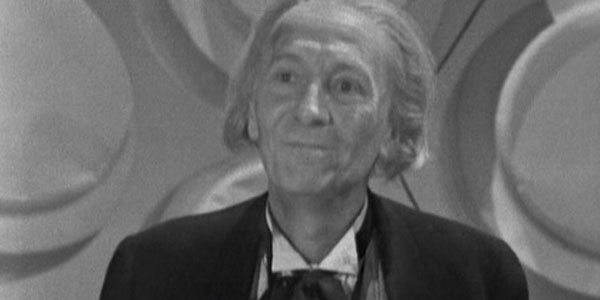
BBCBBCAlthough this would make sense for anybody who has seen the first few stories of Classic Who, Into The Dalek marks the first time it has been made officially canon. Everything the Doctor is fundamentally comes down to his first trip to Skaro in 1963€™s The Daleks. While inside Rusty, the Doctor tells him this and it all goes back to the Doctor€™s initial moral ambiguity. In the programme€™s first story An Unearthly Child, the Doctor is shown to have incredibly flexible morals; abducting Ian and Barbara in order to hide his identity, and later attempting to smash a caveman€™s head in with a rock. An Unearthly Child is all about surviving. But The Dalek is where things change tack for the Doctor. At the start, the Doctor still has a lot of moral ambiguity but it€™s being faced with a life-form as repugnant as the Daleks that truly awakens the fire of wanting to do right in the universe in him. That first encounter with the Daleks is the moment where the Doctor is truly born, and when he sets out to make the universe better. If they were still alive and had legs, those Daleks would be kicking themselves.

2. Who The New Doctor Is
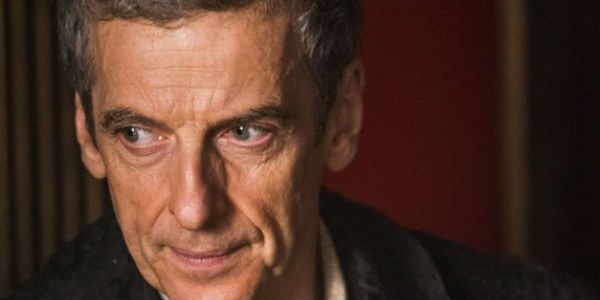
In New Who, the pattern has been that a Doctor€™s first episode will introduce them but their second episode will provide the moment that nails down who their Doctor is. For the Ninth Doctor, it was killing Cassandra. For the Tenth, it was his ultimatum to the Sisters Of Plenitude and healing the Flesh. The Eleventh had the polar opposites of getting involved on Starship UK because of a crying child, and later deciding to lobotomise the Star Whale. And the Twelth... Well there€™s quite a few. Which is fitting since the Twelfth Doctor comes across as an amalgamation of traits from previous Doctors. The costume and the redesigned Tardis console room invoke the cultured scientist of the Third Doctor; he still has some of the Eleventh Doctor€™s absent-mindedness and speech patterns, the Tenth Doctor€™s established hate of the military skyrockets, and it€™s all wrapped up in the ego and borderline callousness of the Sixth Doctor. But the two moments that really hammer home who the Twelfth Doctor is are once again polar opposites. The first is decision to take of advantage of Ross€™s impending death and his complete disregard of it later when they€™re literally standing in him while in the Dalek€™s protein pool; €œHe€™s the top layer if you want to say a few words€. And the second is his constant attempts to create a good Dalek. Those moments encapsulate who this new Doctor is: callous and egocentric but at the same time; desperate to find good in the universe and even create it if he can. Temperamental but still a man of significant moral character.

1. How The Daleks Work

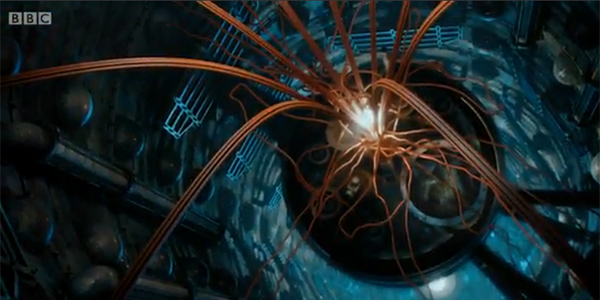
BBCBBCIn a very surprising move for an enemy so ingrained into Doctor Who€™s history and owned by another party (Dalek creator Terry Nation€™s estate), Into The Dalek goes beyond just being a run of the mill sci-fi romp by greatly expanding the central Dalek mythos in more detail than any story since Genesis Of The Daleks (1975). But rather than going into Dalek history as Genesis did, Into The Dalek is a comprehensive look at the nuts and bolts of how a Dalek functions. By virtue of it largely being set inside a Dalek shell, Into The Dalek is practically a televised Dalek owner€™s manual. But the most important aspect of this isn€™t how much information we are provided with, it€™s that it€™s new information; finally nailing down how a Dalek works other than it being a racist squid in a metal tank with a sink plunger and an egg whisk attached. As well as fun little bits and pieces that serve the story like the Dalek shell being outfitted with robotic antibodies to repel intruders (though a fat lot of good that did against the Movellan virus), we also get an insight into how the Daleks stay alive apart from the panels on their midsection collecting solar energy. This is thanks to the rather unsettling addition that the Daleks still need protein to stay alive. Which they get by liquefying their enemies and consuming the remains. Though presumably that happens offscreen since Into The Dalek is the first time we see it happen. But most importantly is that we learn how the mind of the Dalek works. The Kaled mutants are still genetically engineered to hate. No writer would be brazen enough to retcon that. But the latest and most significant addition to the Dalek mythos is that this genetic engineering isn€™t permanent and requires constant computer reinforcement and memory suppression. It almost makes you feel for the genocidal nutcases a bit, doesn€™t it. What did you learn from Into The Dalek? Let us know in the comments section below...

Contributor
Contributor

JG Moore is a writer and filmmaker from the south of England. He also works as an editor and VFX artist, and has a BA in Media Production from the University Of Winchester.