Doctor Who 10: 7 Big Questions About The Pyramid At The End Of The World
2. Who Are The Monks?
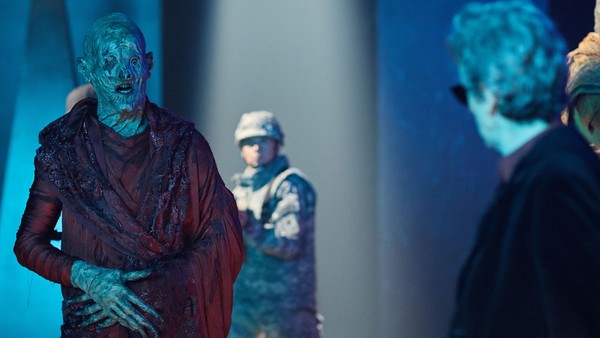
Exactly why the aliens are called monks is unclear. There’s
nothing particularly monastic or theological about them: they choose love over
worship, consent over obedience, and free will over divine intervention.
Moffat has said that it’s a title given to them by others, which might seem an obvious point; the same holds for other ‘villains’, such as the Weeping Angels or the Emoji-bots. But it’s looking more and more likely that the name is a placeholder until the monks' true identities are revealed. The only logical reason to withhold the truth is that they are a familiar foe.
The most plausible suggestion is that they are either pre or semi-converted Mondasians, with this three part mini-adventure a set up for the return of the original Cybermen in the series finale. Their ability to string together sentences whilst barely moving their mouths is certainly reminiscent of the silver foes. The name may have been inspired by Kit Pedler’s original pitch of the Cybermen as ‘space monks’. To add to the speculation, the image of the monks watching the unfolding events on their screen is reminiscent of the iconic moment when the Cybermen were revealed in Earthshock.
Another option is linked to the earlier suggestion that the pyramid might be a TARDIS. Could they be connected to the return of the Master? It’s hard to see why the emotionless Cybermen would want to be loved, but it’s almost the perfect description for the only version of the Master to have had a wife and to have craved the adulation of the human race as Harold Saxon. The monks could be Time War victims, zombie-like creatures from his TARDIS, or perhaps even versions of the Master himself. In fact, the whole thing could be a reality twisting deception on his part, a ploy to get Missy out of the vault.