Doctor Who: 10 Most Annoying Elements Of Nu-Who

Just in case the internet has run out of rants.
If you think that you're about to read another nostalgic diatribe about the jolly good ol' days of the first Doctor Who eras, then please reconsider. While for some it is hard to understand that you can't have the longest running sci-fi show of all time without constantly changing it, it is this author's opinion that the show started in 2005 (dubbed "Nu-Who") has become a worthy and often superior protraction of the show cancelled in 1989 (dubbed "Classic Who"). But between Nu and Classic many forget that they're still watching Doctor Who and that this revival itself is about to celebrate 10 years of existence in 2015. No one can deny the fact that, ever since Eccleston's all-but-too-short run, the show has steadily and painstakingly climbed and fought its way up, only to reach new peaks of popularity and to embrace the view of its widest audience ever. While even during the first two or three seasons Doctor Who retained some of its tendency for shabby costumes and special effects, this isn't even the case anymore. Simply put, the once-cult Brit show has finally grown up into the phenomenon it has always deserved to be. But it's not without flaw, and how could it be? Theoretical perfection is boring. No, this is about the flaws that keep getting repeated or that are created through repetition. You know, those that are so annoying that they become a distraction. Here's 10 such elements.

10. Repetitive Incidental Music

Doctor Who Music Of The Spheres Don't worry, no one is about to bash Murray Gold or anything. He's doing a tremendous work considering that he's been the show's sole composer since the 2005 revival. Which leads us to our problem. Brilliant as he is, how much diversity can a single artist have? In a show that constantly changes its cast, production crew and writing team, how come Murray Gold is the only one to stay after so long? During the Classic days, Dudley Simpson was the main composer of Doctor Who until the 80's. But he wasn't the sole composer. He had 62 episodes that used his scores, and while that's not so far away from Gold's 97 stories and counting, his reign was not absolute, as composers came and went along during the ever changing show. What that meant was a greater soundtrack diversity, even though it was all mainly made on synthesizers. Some scores were memorable, others almost ruined episodes, but it surely wasn't as homogeneous as today's constant compositions. Yes, it's great that each Doctor has his own theme, but how many times can you listen to (the otherwise superb) "I Am The Doctor" before you instinctively switch off your sonic receivers (or ears, if you want to call 'em that)? It's true that Doctor Who has never sounded more epic but does it always have to be about boastful orchestral music? There are exceptions, like the very catchy theme of Doomsday, but every fan of old sci-fi knows that there's nothing quite like those timeless eerie electronic scores. Even the title theme has lost a bit of its mystery after it was rearranged, so why not occasionally bring back some early synths or even theremins? Especially now that Capaldi's reign tries to bring back a bit of that Classic era feel. No one would mind if Murray Gold takes an episode off just once in a while.

9. Season Structure
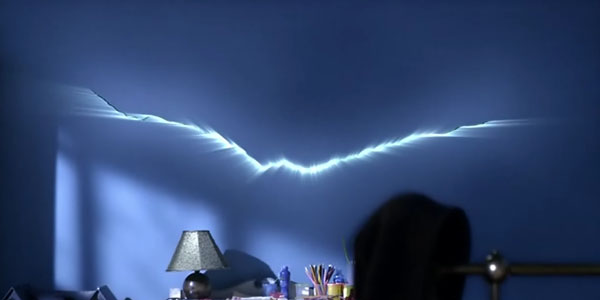
One must fully understand that, no matter for how long a TV show has run, it should never be only about celebrating the past. And while Doctor Who is more than on par with any contemporary TV show, one can't help missing some of the old elements of the series. A lot of Whovians complain about the lack of proper cliffhangers during any given season. Now, exciting as they are, most of them are nothing more than artificial narrative devices. Simply put, there aren't any cliffhangers in real life. In order to make a successful film or TV show, no matter the genre, an artist should perfectly understand the audience's mature sense of awareness. This is nothing more than an intellectual trait developed during the evolution of post-modernism and our continuous exposure to it. Just look at how self-referential Capaldi's era is; even in Matt Smith's time characters had the obnoxious habit of saying "Doctor Who" way too often. So while a cliffhanger abuse would be definitely dated, the procedure is not obsolete. What fans really want is the return of the two-part episodes that abounded during Russell T Davies' helm, but which Moffat has just seemed to forget about. This is strange because some of his best stories had two parts and such a structure was often found in the first two seasons of his reign. Not only did it make room for proper cliffhangers, it also helped to better underline the story arcs. Now here's the other annoying element of the modern season structuring. No one is arguing against the importance of story arcs, but against their execution. RTD was the master of this; regardless of how satisfying the conclusion would turn out to be, he threw around just enough information to keep you interested. Moffat's arcs have been hit and miss. Season 6 (also unofficially called "River Overflow") was convoluted to the point of implausibility and the ending just did not satisfy. Season 8 and Capaldi's first had a predictable and unengaging arc but the finale was most rewarding. Moffat's most balanced had to be "The Impossible Girl" arc, but even that was ruined by a few poorly written episodes. So until the current showrunner truly finds his balance, this overlong entry about structure will be split into two parts...

8. Christmas Specials

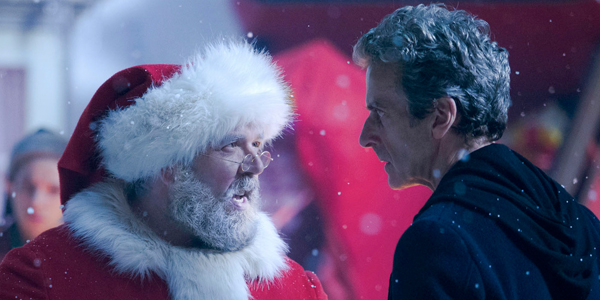
What can be more relaxing than watching your favorite TV show on the most joyful day of the year? No one really minds getting Doctor Who for Christmas, it's just that many a great story were completely ruined by the obligatory festive references. Matt Smith's swan song, The Time of the Doctor, is the perfect example. The addition of the random town called "Christmas", full with enchanting snow and pretty lights, completely ruined the incumbent atmosphere that was set up on the first visit to Trenzalore. And that's just one of the problems that that episode had. It would be unfair to consider all of the Christmas specials as annoying. Who can forget David Tennat's excellent debut in The Christmas Invasion or the first part of his exit in The End of Time? Voyage of the Damned was good and Smith's first special A Christmas Carol remains his best. Also, Capaldi's recent Last Christmas didn't disappoint but one shouldn't expect to ever see any of these on any "Best of Doctor Who..." list. While Moffat will make sure to cover his plot holes with Christmas ornaments, it was Davies who, again, knew how to balance the story elements a little bit better and write a special that wasn't so obviously... Christmassy. Still, most of the time, the holiday will enclose the writer's creativity, leaving room for only a forgettable episode. Even though the Classic series had but one festive episode (that seems to be lost forever), no one can really expect that the Nu-Who tradition of Christmas specials be discontinued. Who in their right mind would want Doctor Who to not make money? But what if just once they go on a different planet like... oh, I don't know, Gallifrey? Most fans would be curious about the Time Lords' take on some form of Rassilontide or Omegamass or whatever they'd call it.

7. Infatuations & Dramas

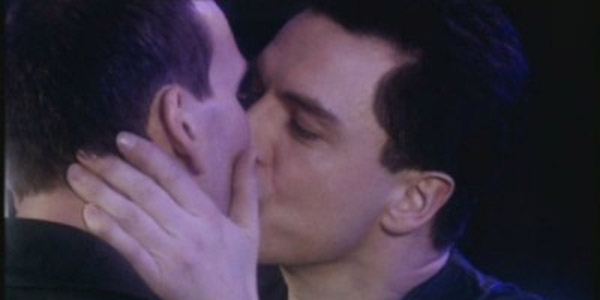
Doctor Kissing Captain Jack So, the Doctor returns in 2005 and he looks like a badass. One season and a Billie Piper kiss later, he regenerates into the wet dream that was David Tennant. Some have glanced at Matt Smith in much the same way, but with added chin. It's realistic if you think about it. One day, a benevolent, powerful, good looking alien comes and takes you on a long trip around the Universe, just because he saw some potential in you. Technically, he sees potential in everyone, so imagine just how lucky you are. Surely, you'd fall in love or at least make room for some yet undeveloped Stockholm syndrome type of eroticism. However, since its revival, the Doctor had five female companions and all but one fell for his (more or less intentional) charms. Add the one love interest to rule them all, River Song, or refer to other episodic companions such as Astrid Peth or Christina de Souza or even Queen Elisabeth I... For goodness sake, Doctor, no wander you never see the Daleks coming. Even if most fans loved Rose during her run, many have had a change of heart because of how many times the "companion in love with the Doctor" storyline has been repeated or hinted at. Eccleston wasn't even the first kissy Doctor, as Paul McGann's first attempts at a romance were being booed nine years in advance. Russell T Davies' meticulous transition made sure that no one booed at Rose but soon, companion infatuations became so annoying that they had to bring in an old school Doctor type to remind the audience that they're still actually watching a sci-fi programme. But guess what? Even if Capaldi is no longer a romantic Doctor, romance is ever present in the show. Just when the Amy, Rory and River soap opera was over, Clara brought in one of her own. Yes, Danny Pink is a failed relationship and while that's original, it doesn't make it any less annoying. More than ever, Doctor Who is now a character drama. Even though Clara is probably one of the best companions of all time, a lot of Whovians have turned against her simply because they felt she was just shoved down their throats way too often. Think what you want about this idiom, but the effect is still suffocating.

6. Good Guy Doctor

Retrace. The Doctor returns in 2005 and he looks like a badass. The Ninth is traumatized by the events of the Time War and viewers see just how dark he can get when he contemplates killing a very confused Dalek. But that all slowly changes as the writers insisted more and more on how everyone's favorite Time Lord abhors violence, and guns especially. Tennant's Doctor was even friendlier, although he had a few dark twists that eventually lead to his darker "Time Lord Victorious" final arc. But a dark place was not where the show was heading. Even if Matt Smith's incarnation was brilliant, his ever so child friendly interpretations were sometimes close to being obnoxious. His darker side was finally shown after he lost Amy and Rory but until then, viewers had to endure two and a half seasons of spewing catchphrases and flying a TARDIS with the power of pirouettes. It was all because Moffat wanted to make Eleven's run feel like a fairytale, one that children wouldn't understand anyway because of its over-complicated arcs. Admittedly, Moffat did take full advantage of the possibilities of time travel but he did make a mess of things while being innovative. More on that later. Now, Peter Capaldi's Doctor is tasked to bring back a meaner Doctor, not unlike the classic incarnations. The task is difficult, of course, as a lot of Who's broader audience was formed during Smith's lovey-dovey years. While fans take pride in the Doctor being one of the only superhero (of sorts) who doesn't use violence, they should also be aware that he was never meant to be a wuss. The Doctor can and will fight when necessary and, on very rare occasions, he will even use a gun. This isn't only about Pertwee's Venusian aikido or Colin Baker's more violent incarnation. Tom Baker himself would often throw a punch and he was the one with probably the strongest sense of morality. All Doctors preferred brain over brawn but when brain commanded action, none hesitated. Inspiring as his intelligence may be, just occasionally making him fight out of necessity (and be good at it) would make the character no less awesome.

5. Fix-All Sonic Screwdriver

mattsmithsonicscrewdriver By now, everyone's already realized that the Sonic Screwdriver is the most obvious cheat tool that a writer has ever had. No doubt it makes great sales in the toy department and, to be fair, a guy as smart as the Doctor would posses some sort of multipurpose gadget. So while the Second Doctor first brought it up as a way to actually unscrew screws, no one really minded when the Third Doctor started using it to open doors and detonate land mines. In the 1980's, producer John Nathan-Turner did away with it just to make life harder for the writers. But the 1996 movie and then Nu-Who inexplicably brought it back. And thus the abuse began. It may be understandable that the Doctor points the Sonic around just to somehow collect data. But when conclusions to otherwise great episodes (like The Power of Three or Flatline) are reduced to "Doctor points Screwdriver, villains bugger off, everyone lives", you can't help but feel cheated. Sometimes, the "non-weapon" can even produce a very green looking sonic force-field (like in The Rings of Akhaten) or, you know, just resurrect a woman while forever entrapping her in a slab of concrete (like in Love & Monsters). There's no arguing here. Moffat is so aware of this that he often makes fun of the tool. The War Doctor had some really funny lines about it in The Day of the Doctor while in the more recent Death in Heaven, Clara casually asked the Doctor: "Just point and think, yeah?". Who knows, maybe one day the Doctor will break the fourth wall completely and just heroically demand of his companion: "Set it to plot device!"

4. Ever-Changing Time Rules
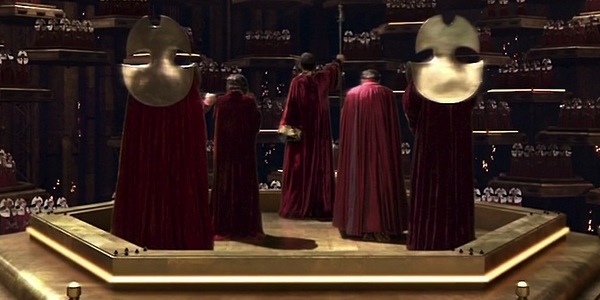
The Classic Series had the Time Lords which were, to some extent, the go-to game masters and rule keepers of the Whoniverse. One can picture them as a metaphor for show's screenwriters that never got tired of sending their hero on dangerous missions. When Nu-Who established their demise, a lot of writers had their own go at inventing mind-bending time rules, regardless of what others had already sort of established before. In Eccleston's Father's Day, for example, the Reapers are introduced and are said to replace the Time Lords when time paradoxes need fixing. But that is their only episode, even though paradoxes keep happening. Later, fixed points in time are introduced (The Fires of Pompeii). It is insisted upon the fact that the Doctor can't change them... until he totally can (The Waters of Mars). Also, it is said that once you see one version of the future, that version becomes set and you can't change it anymore. But then you can (see the whole Trenzalore arc). What's more infuriating is that, when a screenwriter requires it, the Doctor can't fix things that are obviously fixable, à la The Angels Take Manhattan. So what's it gonna be, then? This isn't even nitpicking, but one can't help but point out the obvious. There is little doubt that Steven Moffat is a genius but that doesn't mean that all the criticism he gets is without reason. What he did with the Eleventh Doctor's arc was probably ahead of its time, although "time" is probably one concept that he just took for granted. That or "logic". The Twelfth Doctor's run has been much smoother in this aspect thus far and Moffat should be encouraged to keep it that way, at least until the Time Lords make their inevitable return. Hopefully they'll put the Doctor on trial again and judge him for all those paradoxes, Universe resets and being generally confusing.

3. Meaningless Monster Encounters

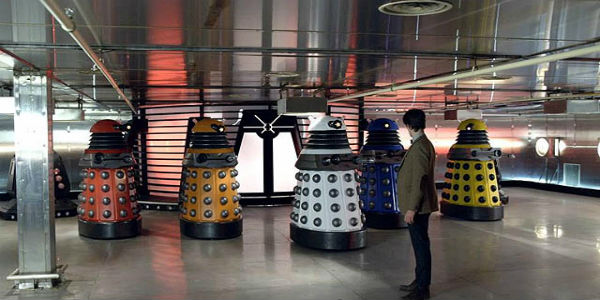
Victory Of The Daleks 600x300 No hero is a hero without some form of antagonism. This is basic storytelling logic that has existed since stories started being written. If there are other civilizations out there that can create art without conflict, then good for them. Meanwhile, here on Earth, even our real history can't exist without it. Conflict is part of humanity's fabric. So, while real-world dramas can deal with more subtle forms of both inner and outer conflict, horror and fantasy are usually bound to have evil personified by all sorts of villains and/or creatures that have been spawned by the writer's imagination. Science fiction can go more ways. You can have the obvious extraterrestrial enemies or you can create major universal or even terrestrial crises that the chosen protagonist needs to resolve. Now, it is a known fact that Doctor Who has explored and experimented with all forms of science fiction over its years in operation but no matter how many good episodes of hard sci-fi the serial can boast, fans will always come back because of already established alien-monster icons like Daleks or Cybermen. It is a Nu-Who trend to call upon such beasts even if the plot doesn't necessarily require them. Again, Matt Smith' regeneration is a good example of this. In The Time of the Doctor you have Weeping Angels that only show up for a few seconds, only to be never seen again. There are many more examples: the Zygons in The Day of the Doctor, the Cybermen in Death in Heaven, Hitler in Let's Kill Hitler... See? This is true for all types of villains: historical or invented, recurrent or episodic. Series 8 improved on this and brought forth some very interesting new monsters indeed, particularly the Teller in Time Heist and the Boneless (horrible name, by the way) in Flatline. Not only were they good but the plots revolved around them. But back to ranting, there probably wasn't a more blatant monster misuse than the whole affair with the Pandorica at the end of Series 5. Which leads to the next entry...

2. A Doctor Larger Than Time & Space

In his 50+ year history , the Doctor did indeed have enough time to make himself known throughout all the dimensions of the Universe. The Time Lord's on screen age is a continuous source of debate but last time he claimed he had lived for more than 2000 years. Earth years, supposedly... Does the TARDIS also translate extra-planetary time measures? Anyway, back to the point. It does seem logical that after you save planet after planet and defeat threat after threat, at least some of the top universal baddies would at least say "hi". Even the First Doctor was memorised by the Daleks fairly quickly. But to go from that to making an allied alien fleet (made of Daleks, Cybermen, Sontarans, Draconians, Autons, Zygons and whatever else was there) just go away with a speech is dropping the suspended disbelief with a loud unconvincing bang. Yes, they weren't there to shoot him down, but to trap him in a giant box. This actually further proves the point. The trend started in Silence in the Library when the Tenth Doctor made himself aware to the Vashta Nerada. It then seemed like a nice touch. Yes, the character should have enough history and gravitas to scare his enemies a little, but winning wars with speeches is just boring, no matter how non-violent the Doctor is supposed to be. Just like during Tom Baker's run he used to not-die a lot, during Matt Smith's he just seemed to win by presenting himself... a lot. So then the question is, are aliens just going to stop attacking Earth now because they know it's protected by the Doctor? The Boneless did, but then the lethal Speech & Sonic combination sent them home crying. The point is, fans want the Doctor to be more smart than boastful and to actually see him struggle to defeat his enemies, be they old or new. Moffat acknowledged this problem at the end of Series 6 when the Doctor himself said that he was getting "too big". He even tried to make the Daleks forget him at the beginning of Series 7. But none of those promises really stuck. And why did his name suddenly become the most important question in the Universe, anyway? How can a character actually be mysterious if he just goes around giving everyone his CV? With so much information about him going about the galaxies, the only mystery left is why he hasn't been defeated properly yet.

1. The Internet

THIS is the most annoying thing about Nu-Who. This list and others like it. Everyone is too busy posting an opinion instead of enjoying the show. Steven Moffat is probably one of the best known screenwriters on the planet that isn't also a director. It's hard not to criticize him. But there are at least three things he's doing right: holding your attention, keeping the show fresh and understanding that Doctor Who continuously changes. Capaldi's first season as the titular Time Lord was unlike anything fans had seen before in terms of character development (and yes, this author is perfectly aware that there's a complaint about that lower on this list). However, many - including Clara, for some reason - were disappointed that the Doctor wasn't boyfriend material anymore. Nu-Who is not devoid of problems but the same people who are reluctant to change will be the first to complain if the show would just get stale. But it's not just opinions on the internet that are ruining Who. Think about the leaks of Series 8. Think about how flat the Missy reveal felt because everyone was expecting it and making polls about "Who is Missy?". Michelle Gomez's great acting fixed all that and everyone was too busy praising her instead of chortling "I told you so!". But usually, everyone's opinion is so much in everyone else's face that one forgets what his of her real opinion was in those few seconds between the end credits and the Facebook wall. Spoilers are much easier to get nowadays, too. Sometimes the BBC even gives them. No wonder "our" opinions are never quite taken seriously. But what about the way Doctor Who actually uses the internet? A lot of extra material is posted online. By far the most memorable minisode to date was Paul McGann's return in The Night of the Doctor but when the cheers died down, everyone started posting about how he should have at least a full episode. Which is what they probably should have done in the first place. The internet can give access to a lot of information, so much that it is now taken for granted. Our attention spans have become shorter, thus missing one of the main lessons that Doctor Who still tries to teach us: everything is important. What did you think of this list? What element of Nu-Who annoys you most? Leave your comments below.

Contributor
Contributor

Adrian Serban lives in Bucharest, Romania where he has studied screenwriting and film criticism. But it's not all about artsy European dramas for him, as he's also a fan of horrors, kung-fu flicks and sci-fi films of all eras. Monty Python and Doctor Who are two British institutions that changed his life for the better. Or so he thinks.