Doctor Who: Listen - 7 Failures Which Destroy The Story

A few problems the script writers really should listen to.

Broadcast this past weekend, Listen was the latest episode in Doctor Who to try and established just who Capaldi's incarnation of the iconic Time Lord truly is. From the manic beginnings with a lengthy regeneration story to a shocking ruthless streak in Into The Dalek, then some plain old silliness in Robot of Sherwood, series eight seems to be trying everything and anything. Listen now took things a step further, but with mixed results. While a chilling tale with excellent writing and direction for the most part, by the end just about everything falls to bits. Those already writing to complain in the comments section should know that this isn't slamming the episode as a whole, primarily the final act where the script goes completely off the rails. Yes, the bedroom scene was fantastic, yes the segments in the future were brilliantly done, but it's hardly a tale without a few obvious failings even at those points. It still could have worked but unfortunately the episode ultimately pulls a Lost, so that important conclusion with all the answers completely torpedoes this promising tale. If you want praise, go elsewhere, this is going to focus on a few obvious failings which seem to have gone over the heads of far too many members of the audience. Expect spoilers to follow, as here's the seven failings which destroy this story.

7 . A Sudden Start, A Lack Of Motivation
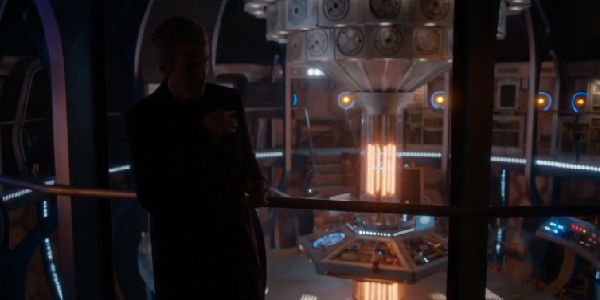
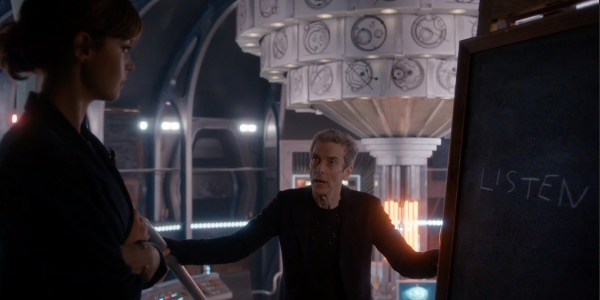
The introduction to the episode shows the Doctor on a manic search, trapped in his own thoughts and drawing up personal theories. Being one step away from Russel Crowe in a shed thinking up government conspiracies, it's one of the first moments which could have defined this Doctor. No incarnation of the character, on audio drama or television, has ever behaved in quite this manner and it shows the sort of individual he has become upon getting a new lease on life. Unfortunately, as with many things on this list, it falls to bits as soon as the ending is revealed. The introduction is fairly elaborate, building upon the idea behind the Doctor's theory and presenting possible proof which strongly suggests he may be right, that his manic swing may be driven by the fact he is actually onto something. It re-enforces it with the idea everyone has the same dream as the one he describes, even shows it happening, but then the script tries to be smart about it and turns this into a long lost memory exclusive to the Doctor. The motivation behind the Doctor's actions was already dubious, but it could be accepted thanks to the fact the story was obviously going somewhere. Now the audience is simply supposed to accept that it was an old fear, an old nightmare that has never been mentioned before. All of a sudden, after over a thousand years without it ever coming up, we're suddenly supposed to accept that out of the blue he has become obsessed over this. For something so critical to his character, there is no trigger, no moment which ever addresses why he is only now confronting this, nor even why his last twelve incarnations never brought this up. Even ignoring the fact we've seen the Doctor's deepest fears presented on the show several times over, not one of which ever involved this, it comes completely out of nowhere and ends just as quickly with nothing truly addressed.

6. Fan-Service Over Substance

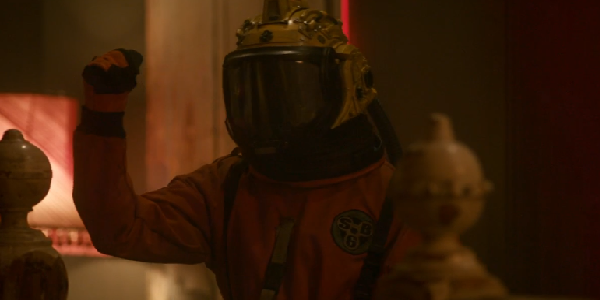
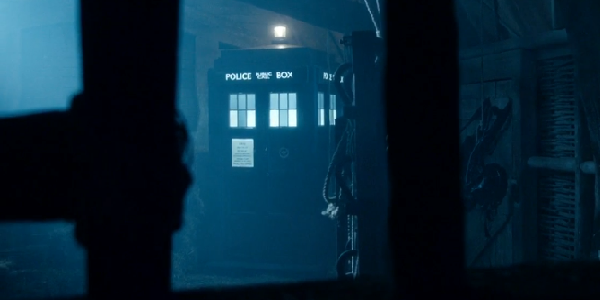
When you go back through the episode it's obvious there was a great deal of fan-service and efforts made to appease longtime viewers of the show. The spacesuit so frequently used during David Tennant's tenure is wheeled out again, we learn that the barn seen in The Day of the Doctor was important to his life, and the line €œFear makes companions of us all€ is delivered as a call-back to the first Doctor Who serial. The problem is that these aren't there to really build upon the story so much as distract the audience from failings in the tale, and once you get past them big problems begin to appear. Take the ending again for example. We see that it is supposed to link into the Doctor's history, re-visits him at a young age and potentially sets up his entire future ideology by leaving a toy behind. It's supposed to say to the fans "here, this is how this all started!" but it instead comes across as if the writer's just pulled a Monster A Go-Go. The episode, after even featuring entire scenes with a alien in the same room as the TARDIS crew, suddenly claims that there was never any kind of creature in the episode and tries to put it down to the Doctor's imagination. The episode has just openly wasted the audience's time, even outright lied to them, and it's now trying to get away with it by reminding viewers of better moments from the franchise. Ultimately, when you really dig into the episode, you soon strip away the veneer of cleverness rand find beneath very little which actually works.

5. The All-Important Clara

One thing Doctor Who should never do is allow the companions to start to overshadow the Doctor or hinge too heavily upon their presence. While the Doctor can continue thanks to the trick of regeneration, companions will come and go quite frequently. Even beloved figures such as Sarah Jane-Smith and Brigadier Lethbridge-Stewart only re-appeared a few times throughout the shows run and remained as a constant presence for a handful of years. While friends of the Doctor and important to his life, the writers never felt the need to buff up their importance by making them utterly, completely integral to the Doctor's entire history. This is a mistake the current series keeps making with its companions, but Clara has been an especially bad offender of late. Along with suddenly having her rescue the Doctor at every single last point in his life ever, and introducing him to the TARDIS, the show now has her influence his core beliefs. By visiting him as a child we're supposed to accept that she not only created his worst fear but also managed to inspire him to be a soldier without a gun. It's ham-fisted at best and jammed into the episode without any build-up or real justification to have her make such a monumental impact upon the Doctor's life, and it's damaging to both characters. On the one hand we run the risk of learning far too much about the Doctor's past, his history and allowing him to become far too human. In the past the Doctor was always an outsider, an enigma even during his most compassionate and social incarnations, yet here the recent show keeps going out of its way to introduce these moments. On the other, we have Clara being made ever more important by writing her into being an ever more crucial part of the Doctor's background. This makes her Clara weak in comparison to others as she can't stand up on her own, and the writers need to justify her importance by shilling her more and more moments where she has influenced the main character in some dramatic way. This sort of approach isn't building characters or developing ideas, it's gradually wrecking this generation of Doctor Who. It's not as if Steven Moffat, or writers for Doctor Who in general, don't have the benefit of prior mistakes to help avoid these failings. Especially given that the entire Cartmel Masterplan was intended to help avoid the show descending into the very grave they're now digging.

4. No Respect For Established Rules

This is not a problem unique to this script, but many recent Doctor Who stories have a major failing: They keep ignoring established rules. This was bad enough during Into The Dalek with the Doctor claiming there was no such thing as a "good" dalek, but Listen really takes the cake. A major point in the series established upon its return was the fact that certain areas of time were locked, with the TARDIS unable to visit them or travel to those locations. Others were immutable, they could not be changed and more ideas were established over time. One of the really big time-locks was placed upon Gallifrey and the time war as a whole, preventing the Doctor ever travelling back into its past. Even before then the Doctor had never done this, shooting all the way back into his homeworld's history, but now Listen just happens to do it because he suddenly can. We're given no real reason for this beyond a fleeting mention that the Doctor has turned the TARDIS' safeties off, and nothing else. It's a handwave at best and leave a massive amount of problems and big questions which are never addressed. Even without going into the bigger problems within the episode, many ideas and facts set up in Listen are either completely ignored or promptly abandoned in order to get to the final scene on Gallifrey. The entire sequence involving the various incarnations of Danny and his later identical ancestor? Ultimately meaningless and the questions, rules and ideas given there will lead to nothing save one possible object. The opening with the Doctor questioning where the creatures with perfect hiding capabilities are, establishing the idea behind their abilities and existence in history? Abandoned entirely and made meaningless in favour of something completely different. The fact everyone has the same nightmare, and that this is a key point the Doctor's whole theory hinges upon? Completely forgotten in favour of something entirely different. It's a bait and switch of the worst kind, and when the writers don't respect the very details they establish why should the audience do so.

3. Stale Ideas From Better Stories

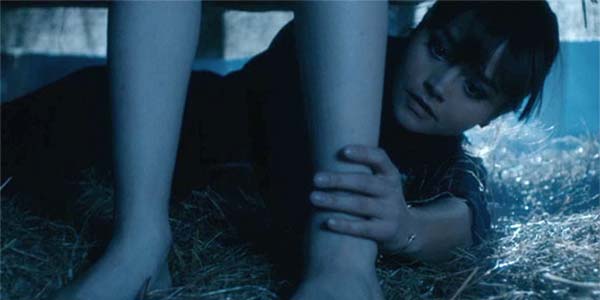
To be completely blunt with this one a staggering amount of the story, from the ideas to the villains, are completely recycled from old tales. It doesn't take much to start picking out when and where so many old ideas have been copied and pasted from elsewhere, then cobbled together to make this shambling Frankenstein monster of a script. Just for starters we have a monster which hides in plain sight, has influence over you and your surroundings but is hidden away where you can't see it. It's the Silence by any other name. Monsters which are primordial fears and are the subconscious cause for so much fear within sentient races? A good idea we've seen done far better with the Weeping Angels and the Vashta Nerada. Monsters under the bed? It's The Girl In The Fireplace all over again. The end of the universe angle? Both featured extensively in Utopia and Hide, and were core to each story seen there. A thing lurking on a nightmare world dominated by one colour, hammering rhythmically against an exterior door and trying to get in? Hello there Midnight! A companion going back in time to completely alter those she knows and the Doctor himself? Take your pick, there's been more of them in the past few years than in several decades of serials. It wasn't too long ago that, for any of its failings, Doctor Who could always be praised for its willingness to try new things. Writers would brazenly throw themselves at brilliant new concepts, and no matter how they failed, the continuity problems or even the logical fallacies you could always at least appreciate that determination. It's what gave us the Weeping Angels, it's what gave us Midnight, it's what gave us some of the Eleventh Doctor's most memorable tales, but this one seems to be just resting upon its laurels, giving the audience more of what it's seen before with few to no alterations. A few fans were already voicing their concerns over this sort of thing when the Silence were introduced after the Vashta Nerada, but if this sort of story starts becoming a trend the franchise could be in for some serious trouble.

2. Nothing Is Resolved

If you're ever given the chance to re-watch Listen, please do so but then ask yourself a question - what was set up and then resolved? Think about it for a minute, of all the ideas actually introduced in the story's opening, what actually brought this tale to a real close after it was set-up during the first act? Nothing. The story tries to pull a major twist in the final moments, but thanks to how it is handled it only creates new problems and questions rather than resolving anything. There is an alien out there exactly as the Doctor describes, the audience sees it and sees clear evidence of its existence within the TARDIS itself, so claiming there was nothing simply does not work. We never learn the truth behind Orson's history nor does he offer much to the tale beyond throwing the audience through a brief loop, leaving his story and the impact Clara had on Danny's life still in question. Worse still, the Doctor never gains the answers he so desperately craves. Given his manic obsession behind finding the information he seeks, he's given no reason to stop now and in all likelihood would immediately continue upon his mad quest thanks to Clara's refusal to be honest with him. To put it simply, nothing here really adds up and the ending to this story can barely be considered a conclusion at all.

1. The Doctor's Childhood

One of the big taboos in the franchise is going too far back or showing far too much of the Doctor to the audience. The Doctor is supposed to be forever an outsider, a renegade, but here that's chipped away again with the script opting to show yet more of his history. We previously covered just why a prequel looking into his past would cause so many problems, and even the man who helped bring back the show with staggering success vetoed the plans to look into the Doctor's childhood. Given the way he is set up, the Doctor is the rare example of a character who only works when he is shrouded in a fair degree of mystery, allowing future stories the freedom they need to continue and develop into the next incarnation. It's one of the reasons the story lasted so long, for all the times the Master or others with knowledge of his life on Gallifrey were introduced, they were so carefully handled that it never intruded upon who the Doctor was. By throwing in elements like this, the show runs the risk of being tied too closely to one show-runner's vision of him or limiting future possibilities with the character, which could cause serious problems if the BBC expects this to last as long as the classic series did. Of course, this isn't the only problem here. We also have how Gallifrey was presented to audiences. Say what you will of the classic series' occasionally garish looks and wacky garbs, but the old Time Lords, as human as they might have looked, were pushed to be alien. It looks dumber now because we're several decades on, but the chrome walls, flowing robes and high technology were all there in full force, informing the audience that this was a high tech society. Here? What we see of Gallifrey beyond the Time Lords looks more akin to an Amish settlement than a high tech race of time travelers. The barn and the Doctor's clothing look as if they've been taken straight out of the sixteenth century and there's no indication that the people there are aliens in any way. Have a few more problems you want to suggest or do you disagree with these failings? Please leave your own suggestions in the comments below!

In this post: 
Doctor Who
 
Posted On: 
Contributor
Contributor

A gamer who has played everything from Daikatana to Dwarf Fortress. An obsessive film fanatic valuing everything from The Third Man to Flash Gordon. An addict to tabletop titles, comics and the classics of science fiction, whatever media they are a part of.